
新兴产业培育

Search documents
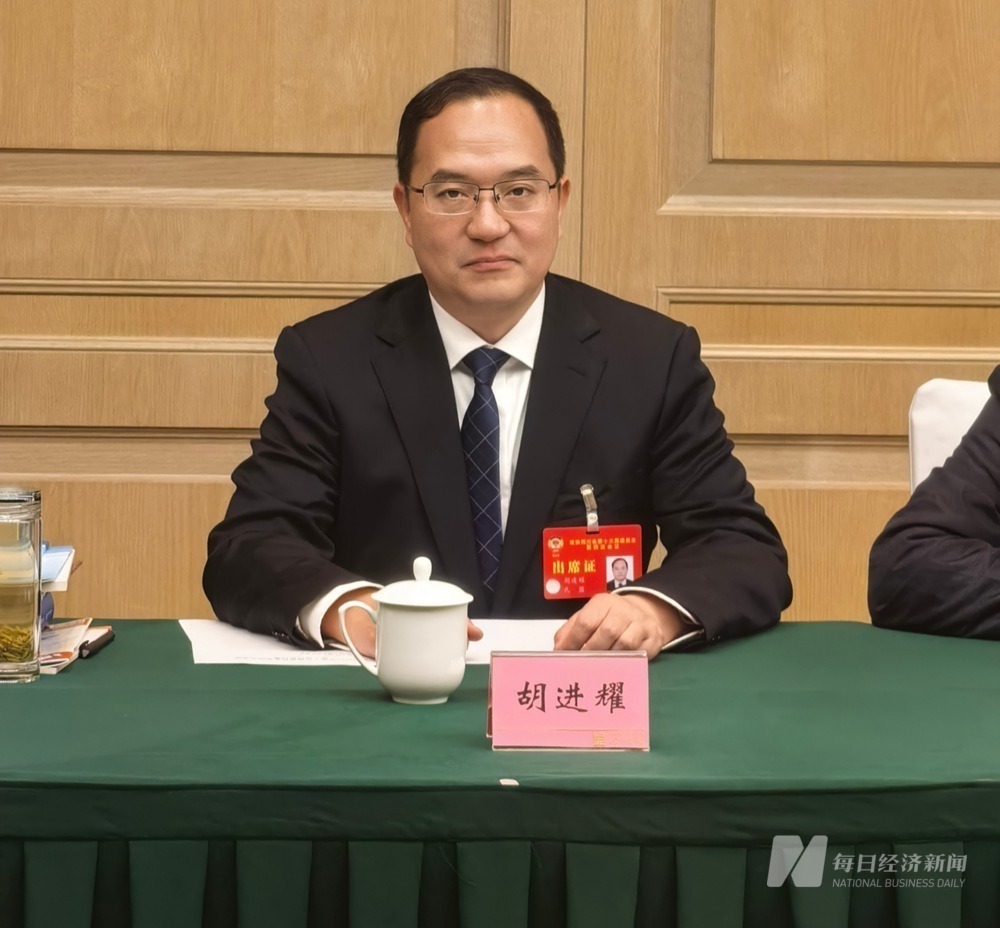
四川省政协委员、绵阳市副市长胡进耀:加快提升核医疗和稀土永磁材料能级,培育壮大新兴产业
Mei Ri Jing Ji Xin Wen· 2026-02-04 10:54
Core Viewpoint - The Sichuan provincial government aims to accelerate the cultivation of emerging industries, particularly in nuclear medicine and rare earth permanent magnet materials, to enhance the province's economic development and establish Mianyang as a key industrial hub in these sectors [1][5]. Group 1: Emerging Industries - Mianyang is focusing on building a "587+" modern industrial system to promote breakthrough developments in emerging industries such as rare earth permanent magnet materials and nuclear medicine [1]. - The city is suggested to be included in the provincial "14th Five-Year Plan" for industrial development to support its ambition of becoming China's fourth city for magnetic materials [4][6]. - Mianyang has established a comprehensive industrial ecosystem for rare earth permanent magnet materials, with significant research capabilities and resource availability [2][4]. Group 2: Nuclear Medicine Industry - Sichuan province holds 80% of the national capacity for medical isotopes and has developed a full industrial chain from isotope preparation to clinical application [5]. - Mianyang is recognized as one of the four key areas in Sichuan for developing a world-class nuclear medicine industry, with several national and provincial innovation platforms established [6][7]. - The city is encouraged to optimize approval processes for innovative products in nuclear medicine to facilitate large-scale development [5][6]. Group 3: Collaboration and Development Strategies - Mianyang is advised to collaborate with neighboring cities like Leshan, Chengdu, and Luzhou to enhance the nuclear medicine industry through shared resources and expertise [7]. - The focus should be on reducing costs through local supply chains and accelerating the commercialization of core technologies in nuclear medicine [7]. - There is a need to address bottlenecks in the nuclear medicine industry by integrating mature products into insurance schemes and establishing industry standards [7].

大抓产业:“焕新”与“育新”并重
Xin Lang Cai Jing· 2026-01-22 22:13
Group 1: New Energy and Technology Development - Zunyi Navi Intelligent Manufacturing Co., Ltd. is one of the three global companies mastering bio-carbon-based solid-state battery technology, establishing a production line that will generate an annual output value of 4.4 billion yuan after phase one completion [1] - The project covers an area of 233 acres and aims to attract upstream and downstream enterprises in the new energy sector to Zunyi [1] Group 2: Traditional Industry Upgrading - Guizhou Hangtian Tianma Electromechanical Technology Co., Ltd. has successfully transitioned from a traditional electromechanical manufacturer to a new materials solution provider, winning a project for polyimide insulation materials [2] - The company’s self-developed polyimide foam material has broken the dominance of foreign companies in high-end markets, with applications in critical fields such as ship cabin insulation and aerospace thermal protection [2] Group 3: Resource Utilization and Industrial Integration - Zhenjin County is focusing on the integration of phosphorus, coal, water, and gas resources to attract investments in the new energy battery materials industry [5] - The county is developing a chemical park with supporting infrastructure to create a systematic industrial ecosystem, enhancing the internal circulation of materials and energy [5] Group 4: Logistics and Export Growth - Guizhou's international logistics system has improved significantly, with the Guizhou International Land Port handling 4.46 million tons of goods and achieving a container throughput of 185,000 TEUs since its operation [6] - The Guizhou International Collection and Distribution Center, which began operations in September 2025, has already achieved over 300 million yuan in bonded import and export value within two months [6] Group 5: Local Industry Export Success - Eleven local liquor companies successfully exported through the Zunyi Comprehensive Bonded Zone, achieving an export value of over 24 million yuan, a 200% increase year-on-year [7] - The zone provides comprehensive support services to local enterprises, facilitating their entry into international markets [7]
西宁开发区谋划“十五五”重大项目287项
Xin Lang Cai Jing· 2026-01-12 19:03
Core Viewpoint - Xining Economic and Technological Development Zone aims to establish five key areas: new quality productivity, technological innovation, green low-carbon demonstration, industrial transfer, and open economy, with a total investment of 277.7 billion yuan for 287 major projects [1][2]. Group 1: Development Strategy - The development strategy focuses on stabilizing silicon, expanding energy storage, deepening non-ferrous metals, coordinating computing power, and nurturing new quality [1]. - The dual-driven approach of "emerging industry cultivation + traditional industry upgrading" is emphasized to activate the industrial upgrade engine [2]. Group 2: Project Implementation - A special leadership group has been established to ensure the implementation of the five key areas, with responsibilities and annual targets clearly defined [1]. - The "one project, one special team" mechanism is introduced to address challenges in project initiation, land use, and financing [1]. Group 3: Industry Focus - The development zone will leverage Qinghai's green electricity advantages to focus on green computing power, artificial intelligence, and hydrogen energy [2]. - Key industries such as photovoltaics, lithium batteries, and non-ferrous metals will undergo special technical transformation actions to advance the value chain towards high-end [2]. Group 4: Investment and Resource Allocation - A focus on chain extension and strengthening will be implemented, with a targeted industrial chain investment map developed to attract projects from key regions like the Yangtze River Delta and the Pearl River Delta [2]. - The operational model of "management committee + company" will be promoted to streamline project initiation and approval processes, reducing project landing cycles by over 30% [2].
多部门发声,2026年要做这些事!
中汽协会数据· 2025-12-30 09:13
Core Viewpoint - The article outlines the key initiatives and policies for 2026, focusing on fiscal policy, employment, consumption, investment, urban development, and technological innovation to stimulate economic growth and improve living standards. Fiscal Policy - In 2026, a more proactive fiscal policy will be implemented, including expanding fiscal spending, optimizing government bond tools, enhancing transfer payment efficiency, and improving expenditure structure [1][2][3] Employment and Income - The government will strengthen basic social security and promote employment and income growth by coordinating various funds to support job retention and entrepreneurship [2][3] Consumption Promotion - Significant efforts will be made to boost consumption, including funding for the replacement of old consumer goods and optimizing subsidy standards [3][4] Investment Stabilization - Measures will be taken to stabilize investment, including increasing the scale of central budget investments and utilizing various government investment funds [4][5] Urban Development - High-quality urban renewal will be prioritized, focusing on community improvements, public space enhancements, and safety projects [6][7] Industry and Technology - The focus will be on enhancing industrial technological innovation capabilities, supporting emerging industries, and promoting AI and other advanced technologies [8][9] Infrastructure Development - The construction of cross-regional and cross-basin transportation channels will be accelerated to support urban integration and rural revitalization [10] Energy Transition - The share of renewable energy will be increased, with significant additions to wind and solar power capacity, and a focus on future energy industries like hydrogen and nuclear energy [11] Healthcare and Social Security - The government aims to improve maternity insurance coverage and ensure direct disbursement of maternity benefits to insured individuals [12] Real Estate Market Stabilization - Policies will be implemented to stabilize the real estate market by utilizing existing housing stock for affordable housing and other social needs [13]

适当增加中央预算内投资规模
Zhong Guo Zheng Quan Bao· 2025-12-14 20:19
Group 1 - The National Development and Reform Commission (NDRC) will enhance government investment funding, including the use of new local government special bonds and an increase in central budget investment to stabilize investment [1][2] - The NDRC aims to implement the "14th Five-Year Plan" effectively, ensuring alignment with the strategic intentions of the Central Committee and improving the quality of planning [1][2] - Measures will be taken to boost private investment and optimize investment rules, with a focus on major engineering projects and effective project scheduling [2] Group 2 - Consumption will be stimulated through new policies, including the promotion of trade-in programs for consumer goods and the removal of unreasonable restrictions in the consumption sector [2] - The government will address "involution" competition and foster new growth drivers by enhancing capacity governance in key industries and promoting emerging industries [2][3] - Comprehensive reforms will be deepened, including the establishment of a unified national market and the removal of barriers to private economic development [2][3] Group 3 - High-level opening-up will be expanded, focusing on both attracting foreign investment and promoting outbound investment, particularly in the Belt and Road Initiative [3] - A dual control system for carbon emissions will be implemented to promote a comprehensive green transition, with strict controls on new high-energy projects [3] - Employment and public welfare will be prioritized, with efforts to enhance public services and ensure the stability of essential goods [3] - Public resource allocation will be optimized in response to demographic changes, with a focus on education resource planning [3]
四川“十五五”规划建议:培育壮大新兴产业和未来产业
Zheng Quan Shi Bao Wang· 2025-12-10 01:04
Core Viewpoint - The proposal by the Sichuan Provincial Committee emphasizes the cultivation and expansion of emerging and future industries, aiming to strengthen strategic emerging industry clusters and promote innovation in various sectors [1] Group 1: Strategic Emerging Industries - The focus is on enhancing the biomedicine, rail transportation equipment, and energy-saving environmental protection sectors as national strategic emerging industry clusters [1] - The development of provincial strategic emerging industry clusters includes new display technologies, integrated circuits, drones, and nuclear technology applications [1] Group 2: Future Industries - The proposal outlines a forward-looking approach to developing future industries, concentrating on sixth-generation mobile communication, quantum technology, biomanufacturing, hydrogen energy, nuclear fusion energy, deep space exploration, brain-computer interfaces, embodied intelligence, and advanced semiconductors [1] - There is an emphasis on accelerating breakthroughs in key core technologies and establishing incubators and pilot zones for future industries [1] Group 3: Innovation and Application - The initiative aims to promote the application of new technologies, products, and scenarios, enhancing the industrial ecosystem and establishing centers for the promotion and application of new scenarios [1] - A mechanism for growth in investment and risk-sharing in future industries is to be established to accelerate the large-scale development of emerging industries [1] Group 4: Support for SMEs - The proposal encourages the specialized and innovative development of small and medium-sized enterprises (SMEs), fostering "gazelle" and "unicorn" companies [1]
竞逐未来五年:十地区“十五五”制造业发展蓝图解析
Xin Lang Cai Jing· 2025-12-08 12:25
Core Insights - The article discusses the "14th Five-Year Plan" proposals from various provinces in China, focusing on the strategic directions and pathways for manufacturing development from 2026 to 2030 [1][10]. Group 1: Traditional Industrial Base Transformation - Provinces like Liaoning and Heilongjiang emphasize "transformation" and "upgrade" during the "14th Five-Year Plan" period, with Liaoning planning to implement advanced manufacturing clusters and a "2211" industrial system [2][11]. - Heilongjiang aims to integrate traditional industries with emerging strategic sectors [2][11]. Group 2: Accelerating New Industry Cultivation - Provinces such as Guizhou, Shaanxi, and Henan focus on cultivating new industries to achieve a "leapfrog" development [3][12]. - Guizhou aims to optimize its economic structure by enhancing industrial contributions and developing six key industry clusters, including advanced equipment manufacturing and digital economy [3][12]. - Shaanxi plans to enhance manufacturing quality and efficiency, focusing on advanced equipment manufacturing and smart manufacturing [3][12]. - Henan prioritizes high-quality development of the real economy and aims to build a modern industrial system with a focus on advanced manufacturing [4][13]. Group 3: Coastal Provinces' Manufacturing Upgrade - Coastal provinces like Fujian and Guangdong leverage their strong manufacturing foundations to focus on the real economy [5][14]. - Fujian emphasizes smart, green, and integrated development in its manufacturing sector, aiming for a modern industrial system supported by advanced manufacturing [5][14]. - Guangdong's plan outlines a clear path for manufacturing development, emphasizing the importance of the real economy and advanced manufacturing [5][14]. Group 4: Integration of Local Resource Advantages - Provinces such as Ningxia, Inner Mongolia, and Hebei focus on converting local resource advantages into industrial strengths [7][15]. - Ningxia plans to cultivate new industrial clusters in modern chemicals and clean energy while upgrading traditional industries [7][15]. - Inner Mongolia aims to expand the application of "new energy + industry" by leveraging its energy resources [7][15]. - Hebei innovatively promotes "shared manufacturing" to enhance production efficiency across its industrial clusters [7][15]. Conclusion - Despite varying development focuses, provinces exhibit a high degree of convergence in their paths toward high-quality manufacturing development, aiming to create a resilient and competitive national manufacturing network [8][16].
经济日报金观平:传统产业升级也是新质生产力主战场
Jing Ji Ri Bao· 2025-11-29 02:15
Group 1 - The core viewpoint emphasizes the importance of new quality productivity in optimizing China's economic structure and transitioning from traditional to emerging industries, which is crucial for building a modern industrial system [1][2] - New quality productivity is defined as an advanced state of productivity that aligns with new development concepts, encompassing both the growth of emerging industries and the upgrading of traditional industries [1] - Traditional industries account for approximately 80% of key manufacturing indicators such as value added and employment, highlighting their essential role in economic growth and job creation [1] Group 2 - Development strategies must be tailored to local conditions, leveraging regional advantages to avoid ineffective blind pursuit of emerging industries [2] - The direction for upgrading traditional industries includes high-end, intelligent, and green transformations, necessitating technological innovations and integration with AI and big data [2] - Encouragement of innovation in regions with strong capabilities and resource advantages is essential for the successful transition from traditional to emerging industries [2][3]
财政部:完善财政科技经费分配和管理使用机制,加强科技资源统筹配置
Sou Hu Cai Jing· 2025-11-07 09:51
Core Viewpoint - The Ministry of Finance emphasizes the need to accelerate the cultivation and development of new growth drivers, focusing on industrial innovation and technology supply, as well as promoting the transformation and upgrading of the manufacturing sector [1] Group 1: Policy Initiatives - Strengthening the supply of key core technologies and actively fostering emerging and future industries [1] - Enhancing the allocation and management of fiscal science and technology funds to improve the effectiveness of technological investments [1] - Increasing support for the digital transformation of small and medium-sized enterprises (SMEs) to promote specialized and innovative development [1] Group 2: Market Environment - Advancing the construction of a unified national market, ensuring equal treatment of various business entities in fiscal subsidies and government procurement [1] - Creating a favorable environment for business development through equitable policies [1]
联检科技:公司将锚定新能源、双碳、生物医药、消费品等领域展开深度布局
Zheng Quan Ri Bao Wang· 2025-10-10 08:12
Core Viewpoint - The company aims to become a comprehensive inspection, testing, and certification organization with a focus on technology-driven quality ecosystems, emphasizing sustainable development and innovation [1] Group 1: Company Mission and Vision - The company is committed to the mission of "empowering quality ecosystems through technology" and adheres to a collaborative philosophy of "co-consultation, co-construction, and co-sharing" [1] - The company prioritizes customer-centric approaches and values the contributions of its workforce, aiming for sustainable development and continuous innovation [1] Group 2: Strategic Focus Areas - The company plans to deepen its investment in sectors such as new energy, dual carbon initiatives, biomedicine, and consumer goods [1] - There is a commitment to expanding overseas markets by establishing localized operational teams to provide region-specific testing and certification services [1] Group 3: Competitive Strategy - The company aims to enhance its international market share by collaborating with internationally recognized institutions to obtain international certification qualifications [1] - The strategy includes a "one test, multiple certifications" approach, gradually building a new industry cultivation model that integrates technology breakthroughs, industry aggregation, and capital-driven initiatives to enhance overall competitiveness [1]