
无边界扩张

Search documents
追觅科技的万亿狂想与资本迷思
Sou Hu Cai Jing· 2026-02-06 04:36
Core Insights - The company aims to achieve a target of 1 trillion yuan in revenue within three years, with a workforce of 200,000 employees [3][4] - The founder advocates for a culture of openness and individuality, contrasting with traditional low-profile business practices [3][4] Historical Background - The company originated from an innovation workshop at Tsinghua University in 2015, focusing on high-speed digital motors for vacuum cleaners [5] - It officially established in 2017 and quickly joined Xiaomi's ecosystem, leveraging its platform for initial market penetration [6] - In 2020, the company shifted to a "de-Xiaomi" strategy, launching its own brand Dreame and establishing smart factories, achieving a breakthrough in high-speed digital motor technology [7] Market Expansion - The company has a clear market expansion strategy, first targeting overseas markets and high-end products before moving to domestic and mass-market segments [8] - By 2018, it began international expansion, employing a precise market strategy rather than a low-price approach [9] - Significant market share achievements include over 35% in Germany for robotic vacuums and being the top-selling brand in Italy for floor washers [10] - During the 2024 Prime Day, sales reached 180 million yuan in Southwest Europe, up 80% year-on-year, and 79.32 million yuan in North America, up 102% [11] - In China, the company holds over 60% market share in the high-end robotic vacuum segment priced above 5,000 yuan [12] Business Diversification - The company has expanded from a single focus on cleaning appliances to a broader ecosystem including smart cleaning, major appliances, smart kitchen devices, personal care, and outdoor equipment [13] Aggressive Expansion Strategy - In 2025, the company announced a shift to "boundaryless" expansion, entering the ultra-luxury electric vehicle market with a model aimed at competing with Bugatti [14] - The founder's vision includes creating the first trillion-dollar ecosystem, which is 20 times the current market value of Nvidia [14] - Financially, the company has shown consistent growth over six years without external capital, maintaining a leading net profit margin in the industry [14] - Projected revenue for 2025 is expected to exceed 15 billion yuan, a 72.2% increase year-on-year, with a net profit of 1.04 billion yuan in the first three quarters [14] Technological and Legal Challenges - The company has filed 6,379 patents globally, with 3,155 granted, focusing on high-speed motors, AI robotics, and visual recognition [16] - It faces challenges with patent infringement lawsuits, with 68 ongoing cases, including 28% related to invention patent infringements [18] IPO Strategy - The company plans a "batch IPO" strategy starting in late 2026, with multiple business units going public across global exchanges [19] - Recent actions include acquiring a controlling stake in a listed company for potential reverse listing [19] - The company is actively promoting its capital strategy, including significant year-end bonuses and partnerships with major events [19]


追觅员工内千人群怒怼CEO,这场面谁见过?
Xin Lang Cai Jing· 2026-01-18 13:23
Core Viewpoint - The internal conflict at Chasing Technology highlights the tension between ambitious corporate goals and employee concerns about practicality and execution [4][8][16] Group 1: Internal Conflict - An employee publicly challenged CEO Yu Hao in a company-wide chat, questioning the feasibility of his ambitious claims about surpassing Nvidia and achieving a market value of one hundred trillion USD [4][6][12] - The employee's remarks sparked a significant reaction among colleagues, indicating a deep-seated frustration with the company's direction and leadership [6][14] Group 2: CEO's Ambitious Vision - CEO Yu Hao expressed a bold vision for Chasing Technology, claiming it would become the first company to reach a market value of one hundred trillion USD, a figure that dwarfs Nvidia's current valuation of 4.5 trillion USD [7][15] - He promised financial freedom for all employees, suggesting that their families would not need to work as the company would support them [6][14] Group 3: Employee Concerns - Employees are anxious about the company's rapid expansion into various sectors, including electric vehicles and space mining, which they feel dilutes focus on core competencies [7][15] - The internal backlash reflects a broader concern that the ambitious goals set by leadership are unrealistic and disconnected from the day-to-day realities faced by employees [8][16] Group 4: CEO's Response - In response to the criticism, Yu Hao downplayed the employee's remarks, stating that the ambitious target is a long-term goal rather than a short-term objective, and emphasized the company's profitability over the past six years [7][15] - His dismissal of the employee's concerns did not quell the controversy, leading to increased public discussion about the company's direction and leadership style [8][16]
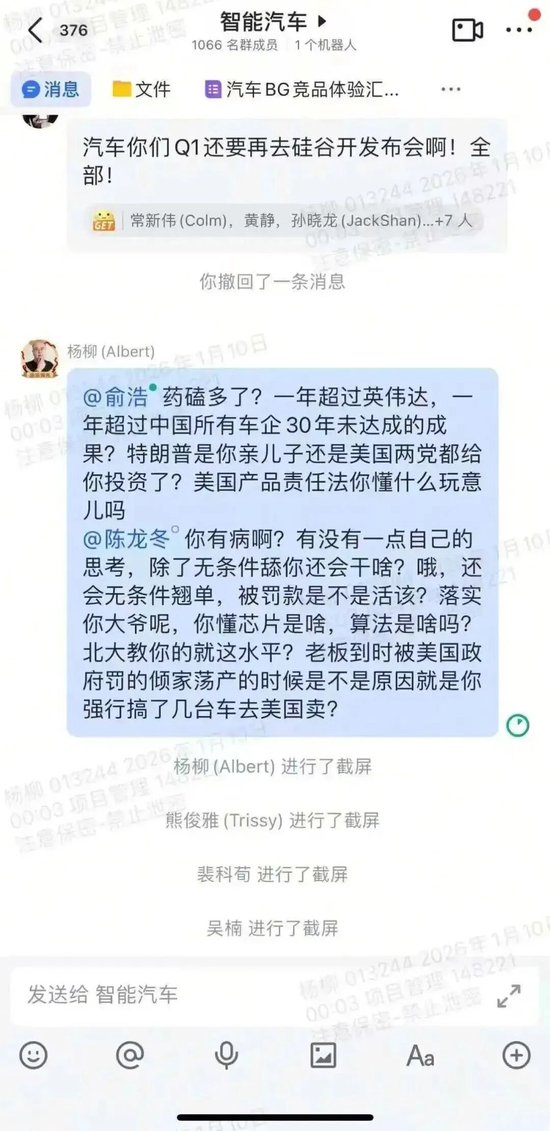
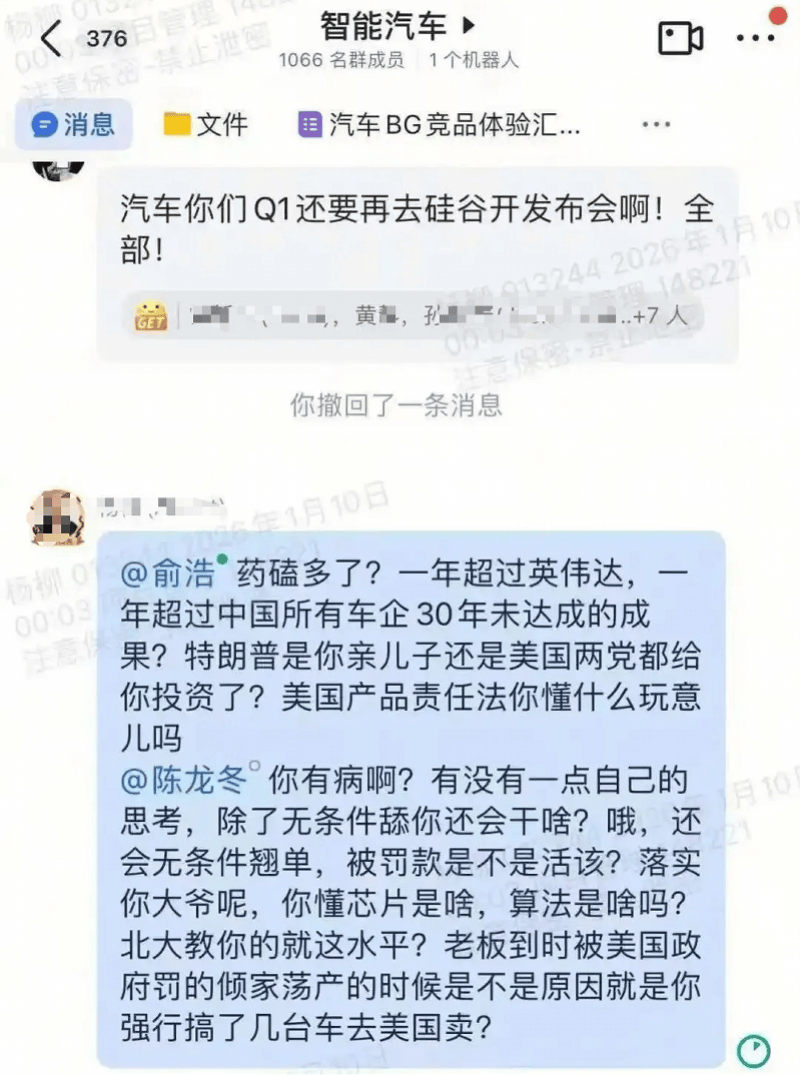
追觅员工“贴脸开大”怒怼CEO俞浩,质疑无边界扩张太激进
Sou Hu Cai Jing· 2026-01-16 13:42
Core Viewpoint - The internal conflict at Zhaomi Technology, sparked by an employee's public criticism of CEO Yu Hao's ambitious strategic goals, highlights potential management issues and raises questions about the feasibility of the company's recent aggressive expansion strategy [1][2][10]. Group 1: Internal Conflict - An employee in a company-wide chat criticized CEO Yu Hao's claim that Zhaomi would become the first company ecosystem worth one hundred trillion dollars, questioning the realism of such a goal [1][2]. - The employee's remarks included pointed questions about the company's understanding of U.S. laws and the implications of their aggressive strategies [2][4]. - This incident reflects a broader concern among employees regarding the disconnect between management's ambitious plans and the realities of execution [10][12]. Group 2: Strategic Expansion - Zhaomi Technology, founded in 2017, has shifted from a focus on cleaning appliances to a "boundary-less" expansion strategy, entering various sectors including automotive and consumer electronics [11][12]. - The company has seen a compound annual growth rate of over 100% from 2019 to 2023, with projected global sales of 3.96 million robotic vacuums in 2024, leading in market share in several countries [11]. - Since 2025, Zhaomi has expanded into over 30 different fields, including automotive and food and beverage sectors, indicating a significant shift in its business model [11][12]. Group 3: Leadership and Vision - CEO Yu Hao has made bold claims about the company's future, suggesting that Zhaomi could surpass current market leaders like Nvidia and Tesla in valuation [5][17]. - Yu's vision includes a utopian scenario where employees achieve financial freedom, reflecting his ambitious and sometimes controversial leadership style [4][16]. - The company's aggressive approach and Yu's confidence in achieving unprecedented market valuations have drawn both admiration and skepticism from industry observers [16][17].
推出AI短视频平台,Meta在AI赛道搞“无边界扩张”
3 6 Ke· 2025-10-11 12:35
Core Insights - Google has significantly advanced image generation models with its "Nano Banana," surpassing ChatGPT and marking a shift from experimental AI to widespread public engagement [1] - Meta has launched "Vibes," an AI-driven content creation tool for short videos, aiming to attract creators and enhance user engagement on its meta.ai platform [3][8] Group 1: Google and AI Advancements - Google's "Nano Banana" has elevated image generation capabilities, leading to a competitive edge over ChatGPT [1] - The introduction of AI tools is transforming user interaction with technology, moving from niche applications to mainstream usage [1] Group 2: Meta's Vibes Launch - Meta's "Vibes" allows users to create and share AI-generated short videos, similar to platforms like TikTok and Kuaishou, with features for remixing and categorizing content [3][4] - The platform aims to provide a dedicated space for AI-generated content, enhancing visibility and engagement for creators [3][8] Group 3: User Reception and Quality Concerns - Users have criticized Meta's Vibes, labeling it as a "garbage machine" due to the inferior quality of AI-generated videos compared to human-made content [4][6] - The current landscape shows a divide in AI video quality, with many outputs being subpar, leading to skepticism among users regarding AI content [6] Group 4: Meta's Strategic Positioning - Meta's launch of Vibes may be a proactive measure to prepare for the future of AI content and to cultivate interest among potential creators [8][12] - The company is attempting to differentiate its AI offerings in a crowded market, where its current AI assistant, Meta.ai, lacks standout features compared to competitors [10][12] Group 5: Market Dynamics and Future Outlook - Meta's approach reflects a willingness to experiment in the AI space, despite potential financial risks, as it seeks to capitalize on emerging trends [10][12] - The company is not under immediate financial pressure, allowing it to explore various avenues in AI without the fear of failure [12]


王兴注定“永无宁日”
商业洞察· 2025-04-25 09:31
以下文章来源于中国企业家杂志 ,作者邓双琳 中国企业家杂志 . 讲好企业家故事,弘扬企业家精神 作者: 邓双琳 来源:中国企业家杂志(ID:iceo-com-cn) 4月24日,关于" 王兴删除微博 "的话题,一度引发外界高度关注。有猜测认为,王兴此举可能 与京东跟美团之间的竞争有关。不过随后有消息称是谣言,这是因为王兴已经将微博设置为半年 可见,他在半年内没有发布过新微博。 与此同时,京东创始人、董事会主席刘强东的活跃表现与王兴的低调形成明显对比。内部讲话设 置外卖净利率红线、亲自体验送外卖等事件,同样引起行业热议。 互联网好久没有这么热闹了。 自今年京东上线外卖业务以来,京东和美团便历经多次交锋,直到4月战火升级,你来我往互 相"炮轰"、喊话、暗讽,把双方都推上了风口浪尖。资本市场也给出了劝架态度——在"骂战"最 激烈的4月22日, 京东美团股价双双大跌 。 细数互联网过往最激烈的几次烧钱大战,几乎每一战都有美团的 身影: 2010年的千团大战、 2015年的外卖大战、2017年的共享单车大战、2020年的社区团购大战…… 作为巨头之一,美 团和阿里、百度、滴滴、拼多多都曾正面厮杀过。 用《中国企业家》十 ...
