春节红包大战

Search documents
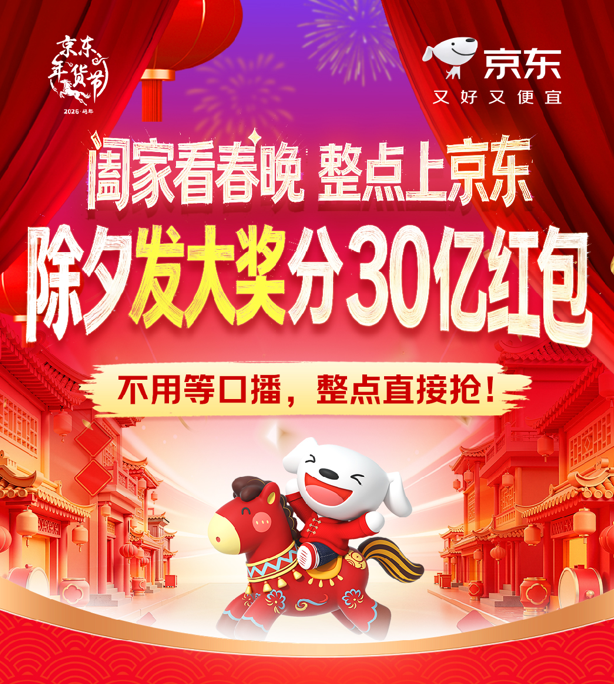
京东30亿元加入春节红包大战!除夕当天抢iPhone手机不止5折、大牌口红26元
2 1 Shi Ji Jing Ji Bao Dao· 2026-02-12 13:09
Group 1 - The core event is the launch of JD.com's "Moon Black Wind High" Super Festival on February 16, which will distribute 3 billion yuan in red envelopes and physical prizes to consumers [1][3] - The event includes interactive activities on the JD app, allowing users to participate in the distribution of red envelopes and win physical prizes during specific time slots on New Year's Eve [3][6] - Notable products featured during the event include iPhones at over 50% off, premium wines like Feitian Moutai, and various AI robots, enhancing the festive shopping experience [3][6] Group 2 - JD.com is increasing its New Year benefits with special offers, such as a 3 kg Chilean king crab for only 26 yuan and luxury brand lipsticks at the same price during the midnight countdown [6] - The event encourages early reservations starting February 15, allowing consumers to secure desired products at exceptional prices [6] - This initiative aims to boost consumer enthusiasm for spending during the Spring Festival, providing a more cost-effective and festive shopping experience [6]


48亿红包大战,谁赢谁输?
3 6 Ke· 2026-02-05 13:04
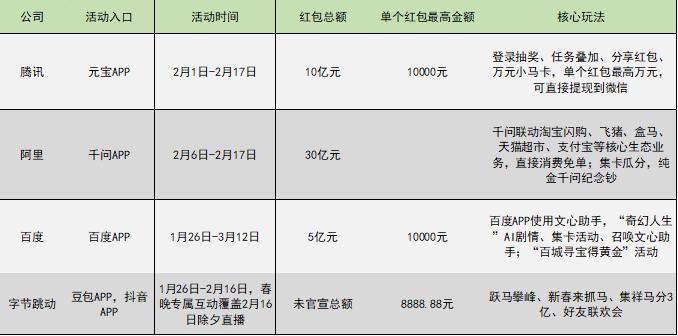
Core Insights - The 2026 Spring Festival "Red Packet War" marks a significant moment in the history of the internet, evolving from a traditional celebration into a fierce commercial competition among major tech giants [1] - The total amount of red packets distributed by the "BATZ" companies reached nearly 5 billion yuan, indicating a strategic battle for user engagement and AI application dominance [1][2] Group 1: Company Strategies - Tencent's strategy involved a "social裂变式" approach, leveraging WeChat for viral sharing, which led to a rapid rise in app downloads but faced backlash from users [3][4] - Alibaba adopted a "场景闭环式" strategy, integrating its various platforms to drive real-world usage of its services, with a significant investment of 3 billion yuan in red packets [4] - ByteDance focused on "内容互动式" strategies, using entertainment and social engagement to promote its AI applications, capitalizing on its strong content creation capabilities [4] - Baidu's approach was more traditional, embedding red packets within AI features, but faced challenges in user retention due to complex processes [4] Group 2: AI Product Development - All major companies are still in the exploratory phase of AI product development, with no clear market leader yet, but differentiation is beginning to emerge [8] - Tencent's AI product, Yuanbao, is positioned as a social tool but lacks strong retention outside social contexts [9] - Alibaba's Qianwen offers a comprehensive service but faces challenges due to its complex user journey [10] - ByteDance's Doubao is recognized for its innovative content and interaction, appealing to younger users [10] - Baidu's Wenxin Assistant has a solid foundation in search but struggles with user perception as merely a search tool [10] Group 3: Financial Investments and Performance - ByteDance leads in profitability and aggressive investment plans, with projected capital expenditures reaching 160 billion yuan in 2026 [12][13] - Alibaba plans to invest between 380 billion to 480 billion yuan in AI and cloud infrastructure over the next three years, but faces cash flow challenges [13] - Tencent reported a profit of over 30 billion USD in the first three quarters of 2025, supported by strong revenue from gaming and finance [13] - Baidu's financial structure is more reliant on search advertising, necessitating proof of commercial viability in AI investments [13] Group 4: AI Capabilities and Technology - Tencent's AI capabilities are currently lagging behind competitors, with a focus on restructuring and enhancing its data infrastructure [14][15] - Alibaba has a robust self-developed chip and a strong open-source ecosystem, enhancing its AI capabilities [15][16] - Baidu's Wenxin model is positioned as a leader in search and AI integration, with significant long-term investments [15][17] - ByteDance's Doubao model is recognized for its advanced multi-modal capabilities and high processing capacity [15][17] Group 5: Leadership and Strategic Focus - Founders' involvement is crucial during this transformative period, with Tencent's Ma Huateng acknowledging the need for faster action in AI [18][19] - Alibaba's leadership is heavily invested in AI, with Ma Yun personally overseeing strategic initiatives [19][20] - ByteDance's Zhang Yiming emphasizes the importance of AI as a core strategic focus, reflecting a unified vision within the company [19][20] - Baidu's Li Yanhong stresses the significance of AI for the company's future, positioning it as a critical area for growth [19][20] Group 6: Internal Collaboration and Challenges - Effective internal collaboration is essential for success in the AI super entrance competition, with varying degrees of synergy among companies [21][22] - Tencent faces challenges in cross-departmental cooperation, which has led to data issues in its AI initiatives [22][23] - Alibaba's organizational strength is high, but the complexity of integrating various business units poses risks to user experience [23] - ByteDance's internal competition and resource allocation issues could hinder its overall strategy [23] Group 7: User Engagement and Retention - Companies are exploring ways to convert existing high-activity users into AI product users, with varying success rates [24][25] - ByteDance's Doubao achieved over 100 million daily active users by the end of 2025, establishing a significant user base [25][26] - Tencent's Yuanbao saw rapid growth in active users but needs to validate long-term retention [26] - Alibaba's Qianwen quickly reached over 30 million monthly active users, but its sustainability outside promotional activities remains uncertain [26] - Baidu's Wenxin Assistant has a solid user base but requires improvements in engagement and retention [26]



千问春节红包大战前夕,马云现身杭州阿里总部千问办公楼
Xin Lang Cai Jing· 2026-02-04 15:07
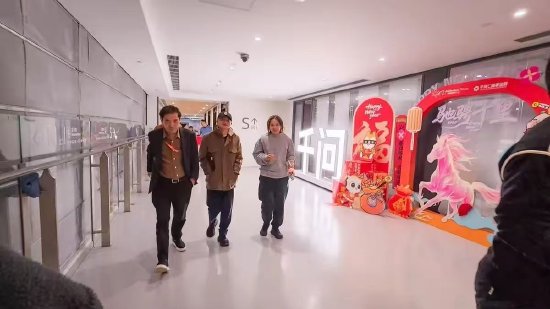
Group 1 - Jack Ma was spotted at Alibaba's headquarters in Hangzhou, visiting the Qianwen Spring Festival project team, likely to show support for the initiative [2][4] - Employees expressed surprise and excitement at Ma's appearance, noting he looked relaxed and was preparing for a festive celebration [2][4] - The Qianwen App announced a significant investment of 3 billion yuan to launch a "Spring Festival Treat Plan," offering free meals and entertainment to the public during the holiday period, with the event set to officially launch on February 6 [2][4]
BAT集体加入春节红包大战,为啥又开始拼红包了?
Bei Jing Ri Bao Ke Hu Duan· 2026-02-04 09:53
Group 1 - The core point of the article is that major internet companies (BAT) are re-entering the Spring Festival red envelope battle in 2026, indicating a renewed competition for user engagement and AI application promotion [3][6][9] - Tencent launched its "Shangyuanbao, share 1 billion" activity on February 1, 2026, which quickly gained popularity, making it the top free app on the Apple App Store [3] - Baidu announced a cash red envelope activity with a total of 500 million yuan available from January 26 to March 12, 2026, and will collaborate with Beijing TV for the Spring Festival Gala [3][4] Group 2 - The red envelope battle is seen as a marketing opportunity for internet giants to showcase their AI applications, as they compete for the C-end AI application super entrance [9][10] - The success of past red envelope campaigns, particularly Tencent's 2015 initiative, demonstrates that the effectiveness of such campaigns relies on meeting user needs and maintaining low barriers to participation [10][12] - The industry has shifted from a "traffic-first" approach to a focus on user retention, emphasizing the importance of creating a closed loop of "red envelope-experience-habit-ecosystem" to ensure long-term user engagement [12]

腾讯元宝砸 10 亿 vs 阿里千问出 30 亿,最后谁会赢?
程序员的那些事· 2026-02-02 03:55
Group 1 - Tencent launched a "10 billion cash red envelope" Spring Festival event on February 1, leading to a surge in user participation and resulting in the app topping the App Store free chart [1] - On February 2, users experienced login issues and service disruptions due to a sudden spike in traffic, with features like AI dialogue and content generation temporarily unavailable [2][3] - Tencent responded to the media, stating that the instability was due to the traffic surge and that services had been restored after emergency server expansion. They assured users that unwithdrawn red envelopes would remain available until the event's conclusion [7] Group 2 - Following Tencent's cash giveaway, Alibaba announced a plan to spend 3 billion on a similar initiative, indicating competitive dynamics in the market [8] - The ongoing "red envelope war" between Tencent and Alibaba raises questions about which company will ultimately prevail in this promotional battle [11]
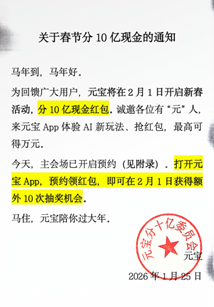
元宝狂撒10亿!马化腾打响春节红包大战第一枪,但AI全民化很难?
Sou Hu Cai Jing· 2026-02-01 11:21
Group 1 - The core activity of Tencent's AI application, Yuanbao, is launching a "1 billion cash red envelope" event starting from February 1, 2026, where users can download the app and complete tasks to have a chance to win cash [2][6] - Tencent's CEO, Ma Huateng, expressed hopes that the Yuanbao event could replicate the success of WeChat's red envelope phenomenon during the Spring Festival [6][21] - Baidu's Wenxin Assistant announced a competing red envelope event with a total cash amount of 500 million, running from January 26 to March 12, 2026, indicating a competitive landscape among major AI players [6][10] Group 2 - The Spring Festival is viewed as a critical opportunity for AI companies to penetrate the market, as it serves as a significant time for user engagement and adoption [21][25] - The article suggests that the Spring Festival is not just about distributing red envelopes but is a test for new internet concepts, including AI, to see if they can gain widespread acceptance [25][26] - The success of AI applications during this period will depend on whether users continue to engage with these technologies after the promotional events, highlighting the challenge of sustaining user interest beyond initial interactions [28][31] Group 3 - The article emphasizes that the current AI landscape is becoming increasingly competitive, with major players like Tencent, Baidu, Alibaba, and ByteDance all vying for user attention during the Spring Festival [19][21] - The effectiveness of the red envelope strategy in promoting AI applications will be measured not just by initial downloads but by ongoing user engagement in practical scenarios [31][36] - The Spring Festival red envelope campaigns are seen as a potential milestone for AI's integration into everyday life, aiming to transform AI from a novelty into a common tool for users [27][34]
腾讯大撒10亿红包,元宝内测AI社交
2 1 Shi Ji Jing Ji Bao Dao· 2026-01-26 08:20
Core Viewpoint - Tencent is launching a significant cash distribution campaign through its AI assistant app, Yuanbao, by offering 1 billion cash red envelopes ahead of the Spring Festival, marking a strategic move to enhance user engagement and drive traffic across its platforms [1][3][4]. Group 1: Cash Distribution Strategy - The Yuanbao app will officially start its red envelope activity on February 1, featuring a "reservation" mechanism where users must pre-register to secure benefits [3]. - Various forms of red envelopes will be available, including cash red envelopes and a limited number of special 10,000 yuan cash cards, with daily logins and tasks providing opportunities for users to win more [4]. - The red envelope strategy is designed to drive traffic across multiple Tencent products, including WeChat and QQ, with a focus on social sharing features [4]. Group 2: AI Social Features - Tencent has initiated the internal testing of a new social AI feature called "Yuanbao Club," allowing users to create or join groups for enhanced social interaction [6]. - In the Yuanbao Club, users can engage in various activities, such as summarizing chats, creating fitness or reading challenges, and generating memes from photos, with Yuanbao AI acting as a facilitator [6]. - Future public testing will introduce features like "watch together" and "listen together," leveraging Tencent's video conferencing capabilities to enhance group experiences [6]. Group 3: Competitive Landscape and Strategic Intent - Tencent's aggressive investment of 1 billion yuan in the AI sector reflects its determination to catch up in the competitive AI landscape, particularly in social applications [8]. - As of September 2025, Yuanbao ranks third in monthly active users among AI applications in China, indicating a significant gap compared to leading competitors [8]. - The shift towards social AI aims to address retention challenges associated with AI tools, moving beyond mere efficiency to embedding AI within frequent social interactions [9].

发力AI社交又大撒10亿红包,腾讯元宝组合拳“偷袭”C端
2 1 Shi Ji Jing Ji Bao Dao· 2026-01-26 06:12
Core Viewpoint - Tencent is launching a significant cash distribution campaign through its AI assistant app, Yuanbao, by distributing 1 billion cash red envelopes ahead of the Spring Festival, marking a strategic move to enhance user engagement and drive traffic across its platforms [1][2][6]. Group 1: Cash Distribution Strategy - The Yuanbao app will officially start its red envelope activity on February 1, with a mechanism requiring users to make a reservation to unlock benefits [2]. - Various forms of red envelopes will be available, including cash red envelopes and a limited number of special 10,000 yuan cash cards, incentivizing daily logins and task completions [3][6]. - The red envelope strategy is designed to drive traffic across multiple Tencent products, including WeChat and QQ, by allowing users to share red envelopes with friends [3][5]. Group 2: AI Social Features - Tencent has initiated the internal testing of a new social feature called "Yuanbao Club," allowing users to create or join social groups where they can interact and engage in activities [4][5]. - The Yuanbao Club will include features such as AI-assisted summaries of group chats and the ability to create engaging content like memes from photos, enhancing user interaction [5]. - Future public testing will introduce functionalities for synchronized viewing of movies and listening to music, leveraging Tencent's video conferencing capabilities [5]. Group 3: Competitive Landscape and Strategic Intent - Tencent's aggressive cash investment of 1 billion yuan reflects its determination to catch up in the AI sector, especially as it faces competition from leading AI applications [6][7]. - The company aims to transition AI from being merely an efficiency tool to a social engagement platform, addressing retention challenges in AI applications [6][7]. - By embedding AI into social interactions, Tencent seeks to validate the real value of AI in group settings, moving away from traditional AI usage patterns [7].