权益资产投资

Search documents
睿远基金,增资!
券商中国· 2026-02-11 01:48
Core Viewpoint - Ruiyuan Fund has completed a capital increase, raising its registered capital from 100 million yuan to 104.95 million yuan through a cash contribution of 4.95 million yuan from its employee stock ownership platform [1][4][5]. Group 1: Capital Increase Details - The capital increase was executed on February 10, with the actual controller Chen Guangming's shareholding adjusted to 47.5653% after the increase [1][5]. - The capital increase did not alter the existing shareholder structure, and the registration and company charter updates have been completed [1][4]. - The total contributions from existing shareholders include significant amounts from Chen Guangming (49.9198 million yuan, 47.5653%), Fu Pengbo (12 million yuan, 11.4340%), and Liu Guifang (7.2 million yuan, 6.8604%) among others [3][5]. Group 2: Fund Management and Outlook - As of the end of 2025, Ruiyuan Fund is projected to manage a public offering scale of 64.918 billion yuan, with six products, including five mixed funds totaling 45.709 billion yuan and one bond fund of 19.209 billion yuan [5]. - The Ruiyuan Growth Value Mixed Fund expresses optimism about the market, focusing on identifying new investment opportunities from companies with better-than-expected annual reports [6]. - The Ruiyuan Balanced Value Three-Year Holding Mixed Fund anticipates that equity assets will continue to offer more attractive returns compared to other asset classes, with potential static returns of around 5% and growth returns for leading companies possibly exceeding 10% [6].


史上最强开门红已经来了,市场低估了哪6个事情?
表舅是养基大户· 2026-01-28 13:34
Core Viewpoint - The article emphasizes the importance of understanding the current low interest rate environment and its impact on both equity and bond markets, suggesting that both asset classes are integral to a multi-asset investment strategy [1]. Group 1: Market Dynamics - The article notes that the market has experienced an unexpected strong start in January, with the Wind All A index rising over 7% despite significant ETF sell-offs exceeding 700 billion [4]. - The article identifies a significant appreciation of the RMB due to a weak USD, with record high monthly settlement figures indicating a substantial inflow of capital back into the domestic market [8][12]. - The USD index fell by 1.3% in a single day, reaching its lowest point since 2022, reflecting a weakening dollar and its implications for global financial dynamics [9][10]. Group 2: Investment Trends - There is a notable shift in investment strategies as high-interest deposits mature, leading to a strong reallocation demand towards equities, particularly in the context of the low interest rate environment [20]. - The article highlights a significant increase in the scale of fixed-income plus (固收+) funds, which surged from under 1.7 trillion to over 2.7 trillion in just one year, indicating a growing preference for these investment vehicles [26]. - The article discusses the transformation in wealth management products, with a shift towards multi-asset strategies as traditional fixed-income products face declining yields [32]. Group 3: Insurance and Fund Dynamics - The article points out a robust sales performance of dividend insurance products, driven by favorable market conditions and a higher allocation to equities compared to traditional insurance products [37]. - It notes that the insurance sector is increasingly investing in A-shares, with a requirement for 30% of new premiums to be allocated to the stock market, enhancing the capital flow into equities [38]. - The article also mentions the evolving landscape of public funds, which are increasingly concentrated in specific sectors, reflecting a trend towards "fund racecourse" dynamics [39][43]. Group 4: Market Sentiment and Future Outlook - The article concludes that the current market conditions present both opportunities and challenges, with a need for investors to adopt a more rational and disciplined approach to investment in the face of potential market overheating [50][51]. - It emphasizes that the era of quality equity investment continues, but the difficulty of achieving favorable returns is expected to increase, necessitating a more strategic investment mindset [50].

睿远基金旗下产品2025年四季报:傅鹏博减仓阿里巴巴-W(09988) 华润万象生活(01209)首进赵枫前十大重仓股
智通财经网· 2026-01-23 03:07
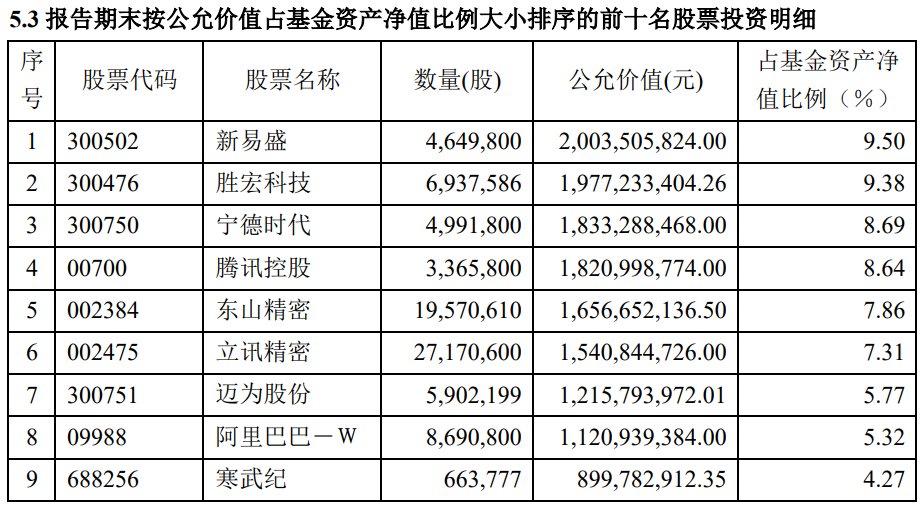
Core Viewpoint - Ruiyuan Fund disclosed its Q4 2025 report, indicating strategic adjustments in its portfolio, including increased positions in specific sectors while reducing exposure to others, reflecting a proactive approach to investment management [1][3]. Group 1: Portfolio Adjustments - The Ruiyuan Growth Value Mixed Fund increased its holdings in Cambricon (688256.SH) while reducing positions in Xinyisheng (300502.SZ), Alibaba-W (09988), and Dongshan Precision (002384.SZ) [1]. - The top ten holdings saw a shift away from telecommunications stocks, replaced by solar energy and high-end semiconductor equipment manufacturers, indicating a focus on sectors with strong performance in Q4 [1]. - The fund aims to minimize investment uncertainties in Q1 2026 while maintaining a focus on prominent sectors and stocks [1]. Group 2: Performance Metrics - As of the report's end, the net asset value per share of Ruiyuan Growth Value Mixed A Fund was 1.9685 yuan, with a growth rate of 0.57%, underperforming its benchmark by 1.37% [2]. - The net asset value per share of Ruiyuan Growth Value Mixed C Fund was 1.9159 yuan, with a growth rate of 0.47%, also underperforming its benchmark by 1.37% [2]. Group 3: Future Strategy - The fund managers, Fu Pengbo and Zhu Lin, prepared for 2026 by reducing holdings in companies with weak fundamentals and increasing investments in data center liquid cooling and computing power-related companies, based on industry trends and individual stock research [3]. - Ruiyuan's other fund, managed by Zhao Feng, has reached its highest stock position in three years, reintroducing holdings in Midea Group (000333.SZ) and other companies while reducing exposure to certain stocks [3]. Group 4: Market Outlook - Zhao Feng noted a favorable macroeconomic cycle for equity assets, with expectations of improved corporate earnings quality as China gradually moves out of deflationary expectations [4]. - The focus will remain on companies with solid fundamentals and strong competitive barriers, aiming for excess returns through structural allocation [4]. - Attention is directed towards domestic leading companies expanding overseas, which are expected to drive performance growth through enhanced product quality and brand recognition over the next five to ten years [4].
投资前景预期偏乐观 权益资产继续受青睐
Sou Hu Cai Jing· 2026-01-13 23:10
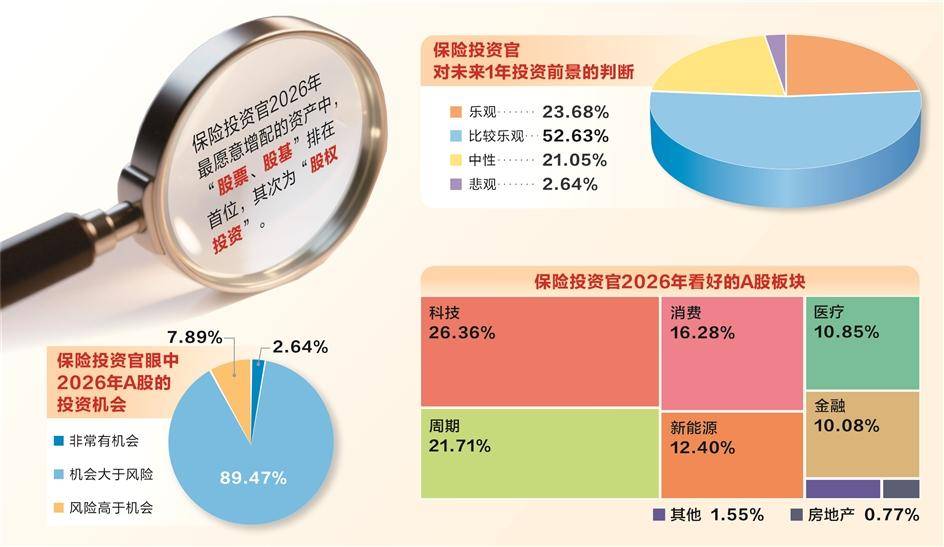
Core Viewpoint - The insurance investment officers are generally optimistic about the investment outlook for 2026, with over 70% expressing a positive sentiment, indicating a significant improvement compared to early 2025 [5][8]. Investment Sentiment - 38 insurance investment officers participated in the survey, managing over 26 trillion yuan in assets, which accounts for more than 70% of the total insurance funds [5]. - 34 out of 38 officers believe that the opportunities in the A-share market outweigh the risks, with 89.47% holding this view [11]. - The majority of investment officers expect to increase their allocation to equity assets, with 68.42% anticipating a slight increase and 2.63% expecting a significant increase [22]. Sector Preferences - The sectors that insurance investment officers are most optimistic about for 2026 include technology (26.36%), cyclical (21.71%), and consumer sectors (16.28%) [25]. - The investment officers also see potential in renewable energy (12.40%) and healthcare (10.85%) sectors [25]. Investment Environment - There is a divergence in opinions regarding the investment environment for 2026 compared to 2025, with 36.84% of officers believing it will weaken, while 23.68% expect it to improve [10]. - Concerns about geopolitical risks are prevalent, with nearly 40% of officers identifying it as the biggest uncertainty for 2026 [15]. Risk Factors - The primary concern for investment officers is stock market volatility, with over 50% indicating it as their top risk [17]. - Credit risk remains a significant concern, with 23.68% of officers highlighting it as a worry, particularly in the context of local debt and small financial institutions [17]. Future Earnings Targets - About 60% of investment officers plan to maintain stable investment return targets over the next 1-3 years, while 31.58% are considering adjustments [12][14]. Investment Opportunities in Hong Kong - A growing number of investment officers view Hong Kong stocks favorably, with 63.16% believing there are significant opportunities, particularly due to favorable valuations compared to A-shares [26].
11月超1200只私募证券投资基金完成备案 环比10月增长近30%
Sou Hu Cai Jing· 2025-12-07 01:53
Group 1 - Over 1200 private equity securities investment funds completed registration in November, representing a nearly 30% increase compared to October [1] - As of November 21, the stock private equity position index approached 83%, an increase of 1.84 percentage points from the previous week (November 14) [1] - Industry insiders express optimism regarding the medium to long-term performance of equity assets, driven by gradual recovery in corporate earnings and continuous inflow of incremental funds into the equity market [1] Group 2 - The current market adjustment provides a favorable opportunity for positioning in high-quality companies that are expected to enter a new upward cycle after short-term fluctuations [1]
37.46万亿险资投向哪里?
Jin Rong Shi Bao· 2025-11-18 09:09
Core Insights - The total balance of insurance funds reached 37.46 trillion yuan by the end of Q3 2025, marking a 12.6% increase from the beginning of the year and a 3.4% increase from mid-year [1] - The growth in insurance fund utilization is primarily driven by a sustained increase in premium income, with expectations of double-digit growth for the entire year [2] Asset Allocation - Bonds remain the cornerstone of insurance asset allocation, with a total investment of 18.18 trillion yuan in bonds by the end of Q3 2025, up 14.1% from 15.92 trillion yuan at the beginning of the year [3] - The proportion of bonds in the total asset allocation slightly decreased from 49.3% at the end of Q2 to 48.5% by the end of Q3 [3] - Investments in bank deposits also saw a slight decline, with balances of 2.49 trillion yuan for life insurance and 374.2 billion yuan for property insurance, representing 7.4% and 15.7% of their respective total assets [3] - Investments in stocks and securities increased significantly, reaching a total of 5.59 trillion yuan, a 36.2% increase from 4.11 trillion yuan at the beginning of the year, raising its share from 12.3% to 14.9% [3] Factors Driving Equity Investment - The substantial increase in equity investments is attributed to multiple factors, including ongoing policy guidance, the need for insurance companies to enhance returns through stable equity assets, and a gradually improving capital market [4] - In January 2025, a joint initiative by six departments aimed to encourage long-term funds, including insurance capital, to enter the market, emphasizing the need to increase A-share investment ratios [4] - Regulatory adjustments in April raised the upper limit for equity asset allocation, further expanding investment opportunities [4] - The Ministry of Finance's July notice aimed to strengthen long-term investment by state-owned insurance companies, adjusting performance evaluation metrics to include multi-year indicators [4] Future Outlook - There is a general consensus that with increased policy support and a favorable market environment, the proportion of insurance capital invested in stocks is expected to rise further [5]

2025年三季度保险业资金运用情况点评:权益配置持续增加,年底顺势调结构
Guoxin Securities· 2025-11-18 01:29
Investment Rating - The investment rating for the insurance industry is "Outperform the Market" (maintained) [1][9][24] Core Insights - As of the end of Q3 2025, the total balance of insurance funds reached 37.5 trillion yuan, reflecting a year-on-year growth of 16.5% [2][4] - The insurance industry has increased its allocation to equity investments, particularly in direct stock investments, while reducing bank deposit scales [3][24] - The overall asset conversion rate for the industry stands at 83%, indicating a certain degree of under-allocation [3][24] Summary by Sections Fund Utilization - The insurance fund utilization balance exceeded 37 trillion yuan, with a year-on-year growth rate of 16.5% [4][10] - The balance of stock investments reached 3.6 trillion yuan, a significant increase of 55.1% year-on-year [15][24] Fixed Income - Bank deposit scales have decreased, with personal insurance and property insurance companies reducing their bank deposits by 4.9% and 7.5% respectively [11] - Bond allocation has increased, with personal insurance companies holding 17.2 trillion yuan in bonds, up 20.9% year-on-year [11] Equity Investments - The insurance sector has significantly increased its direct equity investments, with personal insurance stock investments reaching 34,124 billion yuan, an increase of 11,445 billion yuan since the beginning of the year [15] - The total scale of securities investment funds for personal and property insurance reached 17,756 billion yuan and 1,964 billion yuan respectively, with quarter-on-quarter growth rates of 20.2% and 6.9% [15] Market Outlook - The report anticipates that in Q4, insurance funds will continue to seek high-dividend investment opportunities and maintain a focus on long-term bonds to match their asset allocation needs [24]
凸显看好态度 多路资金竞相加码权益资产
Shang Hai Zheng Quan Bao· 2025-11-09 15:26
Group 1 - Multiple funds are increasing their investments in Chinese equity assets, with several newly launched equity funds raising over 3 billion yuan, indicating strong market interest [1][2] - The recent surge in equity fund issuance has led to a notable increase in the number of funds exceeding 3 billion yuan in size, with several funds selling out on the first day of issuance [2][3] - The performance of the A-share market has improved, enhancing investor sentiment and leading to a shift in household investment preferences towards public funds [3] Group 2 - Existing funds are also attracting significant inflows, with over 100 billion yuan flowing into ETFs, prompting some high-performing funds to impose purchase limits [4][5] - The net subscription amount for equity ETFs reached approximately 118.4 billion yuan since October, reflecting investor optimism about the market [4][5] - Notable inflows into securities-themed ETFs indicate a positive outlook among investors, with specific ETFs attracting substantial net subscriptions [5][6]
险资掘金港股IPO
Shang Hai Zheng Quan Bao· 2025-10-10 12:42
Group 1 - The core viewpoint of the articles highlights the active participation of insurance capital in Hong Kong IPOs, with a total investment of approximately 30 billion HKD in 2023, significantly surpassing last year's figures [1][2][3] - Seven insurance institutions have acted as cornerstone investors in seven Hong Kong IPOs this year, with a total subscription amount of about 29.32 billion HKD, primarily in sectors such as materials, consumer discretionary, and information technology [2][3] - The increase in IPO activity is attributed to a combination of policy guidance, asset allocation needs, and market opportunities, as insurance capital seeks to enhance long-term returns in a low-interest-rate environment [3][5] Group 2 - Some insurance institutions have already realized floating profits from their IPO investments, with examples including Taikang Life's investment in Zijin Mining International and Dajia Life's investment in Chery Automobile [4] - Insurance capital is expected to continue increasing its equity investment efforts, both in the primary and secondary markets, as a response to the challenges posed by the low-interest-rate environment [5][6] - The recent regulatory changes have positioned insurance capital favorably in the IPO allocation process, allowing them to leverage their advantages as long-term investors [6][7]
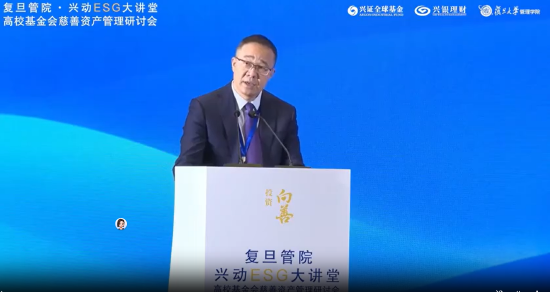
兴证全球基金陈锦泉:高校基金会与资管机构深入交流新形势下的发展路径
Xin Lang Ji Jin· 2025-09-22 06:28
Core Viewpoint - The conference "Investment for Good" emphasizes the importance of ESG (Environmental, Social, and Governance) principles in investment strategies, particularly in the context of managing charitable assets for university foundations [1][3]. Group 1: Company Strategy - The company, Xingzheng Global Fund, has maintained deep cooperation with multiple university foundations, focusing on risk control, long-term investment, and value investment principles [3]. - Xingzheng Global Fund has developed a multi-asset and multi-strategy investment system to provide stable and sustainable returns for university foundations [3]. - The company launched a series of social responsibility dedicated products in 2016, which include provisions for reinvesting part of the investment returns into university public welfare projects [3]. Group 2: Market Environment - The current investment environment is increasingly complex, prompting discussions on asset allocation and multi-asset strategies beyond equity assets [4]. - The company highlights the resilience of the Chinese economy amid challenges such as trade friction, with government measures aimed at stimulating consumption and promoting infrastructure projects [3]. - In a low-interest-rate environment, equity assets remain attractive, and focusing on companies with core competitiveness is seen as an effective way to achieve excess returns [3]. Group 3: Collaboration and Future Outlook - The conference aims to enhance understanding and cooperation between university foundations and asset management institutions, fostering a collaborative environment for value creation and long-term growth [4].