
能源供给

Search documents
基础化工行业研究:美以袭击伊朗,全球能源化工受到冲击
SINOLINK SECURITIES· 2026-03-01 05:45
Investment Rating - The industry is rated as "Buy" due to the expectation of a price increase exceeding 15% over the next 3-6 months [7] Core Insights - The conflict between Iran and Israel is expected to significantly impact energy supply and transportation, leading to a contraction in the supply of key chemical products from Iran, which will drive up global prices for products such as methanol, urea, ethylene glycol, and polyethylene [5] - The closure of the Strait of Hormuz would severely disrupt oil and gas transportation, affecting a substantial portion of global energy supply and potentially leading to increased prices for related products [4][5] - Iran's position as a major oil and gas producer, with a daily oil production of approximately 3.3-3.5 million barrels, represents about 3% of global supply, and its significant natural gas reserves position it as the third-largest producer globally [3] Summary by Sections Event Overview - On February 28, 2026, explosions occurred in Tehran, targeting around 30 locations, with implications for energy supply and chemical production in both Iran and Israel [2] Investment Logic - The conflict is likely to lead to direct attacks on refining facilities, impacting oil and chemical production and exports from both countries [2] - The strategic location of Iran near the Strait of Hormuz raises concerns about potential closure, which would disrupt global oil and gas transport, leading to price increases [2][3] Chemical Production Impact - Iran's chemical production capabilities, particularly in methanol, urea, ethylene glycol, and sulfur, are at risk due to the ongoing conflict, which could reduce export volumes significantly [3] - In 2024, China is projected to import 1.47 million tons of methanol and 0.67 million tons of sulfur from Iran, with expected reductions in 2025 due to regional issues [3] Transportation Risks - The Strait of Hormuz is a critical route for oil and gas, with an average daily flow of 20 million barrels in 2024, accounting for about 20% of global oil consumption [3] - If the Strait is closed, alternative routes would increase shipping times and costs, impacting the supply of fertilizers during the critical spring planting season [4] Investment Recommendations - The ongoing conflict is anticipated to create greater uncertainty in energy supply and transportation, leading to price increases for key chemical products and agricultural inputs [5]
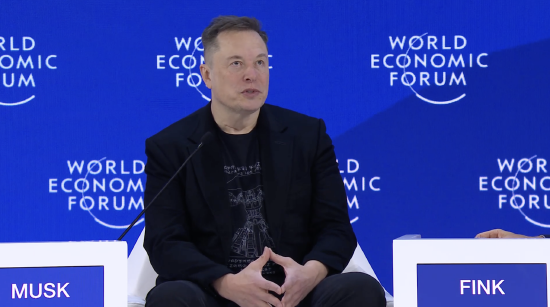
直击达沃斯|马斯克:将在年底或明年向公众销售人形机器人
Xin Lang Cai Jing· 2026-01-22 17:09
Group 1 - The core viewpoint of the article revolves around Elon Musk's insights shared during the World Economic Forum, particularly focusing on humanoid robots, AI computing power, energy supply, and space infrastructure [3][4][5] Group 2 - Tesla plans to sell its humanoid robot, Optimus, to the public by the end of 2026 or early 2027, indicating a market potential larger than that of cars [3] - Humanoid robots are expected to handle more complex tasks this year, moving beyond simple, repetitive jobs, and may assist in elder care and household support due to aging populations and labor shortages [3] Group 3 - Musk emphasized that the limitation for large-scale AI deployment is not chip production but rather the capacity of power supply, with global electricity growth at only 3-4% annually, while AI chip production is growing exponentially [4] - He proposed the idea of deploying AI data centers in space powered by solar energy, suggesting that space could become the most cost-effective location for AI deployment within 2-3 years due to favorable environmental conditions [4] Group 4 - The discussion on space computing and energy is heavily reliant on changes in space transportation costs, with Musk highlighting SpaceX's goal of achieving full reusability of the Starship, which could significantly lower the marginal cost of accessing space [5]


马斯克:中国会搞定芯片问题!中国将在发展人工智能所需的算力领域超越其他所有国家!
是说芯语· 2026-01-07 23:47
Core Viewpoint - Elon Musk predicts that China will surpass all other countries in the computing power necessary for artificial intelligence development, emphasizing that China's ability to scale up energy production will be a decisive factor in the AI race [1][3]. Group 1: Energy Supply and AI Development - Musk states that by 2026, China's power generation could reach approximately three times that of the United States, which is crucial for supporting high-energy AI data centers [3]. - The International Energy Agency reports that global data centers will consume 415 terawatt-hours of electricity by 2024, accounting for 1.5% of total global electricity consumption, with AI-driven data centers experiencing even faster growth in energy consumption [3]. - Goldman Sachs highlights that energy shortages may slow down the U.S. in the AI competition, while China is steadily increasing its energy production capacity [4]. Group 2: Chip Production and Technological Development - Musk expresses optimism regarding China's ability to overcome chip production challenges, suggesting that the impact of U.S. restrictions on advanced semiconductors may diminish over time [6]. - He believes that the diminishing marginal returns of cutting-edge chip performance provide an opportunity for latecomer countries like China to catch up in technology [6]. - The shift in global AI competition logic indicates that energy supply capabilities are becoming a hidden variable in reshaping the global AI computing power landscape, with China's investments in energy solidifying its AI industry foundation [6].

【环球财经】匈牙利与美国签署液化天然气采购协议
Xin Hua She· 2025-12-17 05:54
Group 1 - Hungary's Ministry of Foreign Affairs and Trade announced a liquefied natural gas procurement agreement with Chevron, totaling 2 billion cubic meters over 5 years [1] - Under the agreement, Chevron will supply Hungary's electricity company with 400 million cubic meters of liquefied natural gas annually, marking the first inclusion of U.S. LNG in Hungary's energy supply [1] - Hungary has signed contracts with Westinghouse for nuclear fuel supply for the Paks Nuclear Power Plant, with plans to start operations between 2028 and 2029 [1] Group 2 - The Paks Nuclear Power Plant, Hungary's only nuclear facility, was built by Russia and accounts for approximately half of the country's electricity generation [1] - U.S. President Trump has decided to exempt Hungary from sanctions related to energy purchases from Russia, following a commitment made by Hungarian Prime Minister Orban to purchase approximately $600 million worth of LNG from the U.S. [1] - Agreements have also been reached to utilize U.S. technology for constructing small modular reactors in Hungary [1]
