汽车产业升级

Search documents
2026汽车“国补”落地:摇号领补贴、资金按月花,各地补出新花样
经济观察报· 2026-03-07 04:01
Core Viewpoint - The 2026 national subsidy policy for automobiles in China has shifted from fixed "lump-sum subsidies" to "proportional subsidies" linked to vehicle prices, aiming to guide financial resources towards mid-to-high-end products and promote industry upgrades [2][9]. Subsidy Structure - The subsidy program is divided into two main categories: scrapping and replacement. Consumers can receive 12% of the new car price (up to 20,000 yuan) for scrapping eligible old vehicles and purchasing new energy vehicles, while scrapping old fuel vehicles yields a 10% subsidy (up to 15,000 yuan) [4]. - For replacement, purchasing new energy vehicles offers an 8% subsidy (up to 15,000 yuan), and fuel vehicles provide a 6% subsidy (up to 13,000 yuan) [4]. Regional Adaptations - Local governments are implementing dynamic adjustments and innovative measures like lottery systems for subsidy distribution to address previous issues of fund exhaustion and uneven distribution [5][6]. - For example, Hubei province has introduced a monthly funding plan to ensure stable policy benefits throughout the year [4]. Fairness and Market Dynamics - The new policy emphasizes fairness by prohibiting regional protectionism and ensuring that consumers are not forced to sell old vehicles to designated companies [6]. - The shift to proportional subsidies is expected to reduce the attractiveness of low-end vehicles, as subsidies for models priced below 100,000 yuan will significantly decrease [10]. Market Impact - The new policy is anticipated to reshape the competitive landscape, pressuring low-cost micro electric vehicle manufacturers while benefiting mid-to-high-end market players [12][13]. - Data from January indicates that the average price of new cars participating in the trade-in program exceeded 160,000 yuan, reflecting a shift towards value-driven competition [13]. Future Outlook - The automotive market is expected to stabilize and gradually differentiate throughout the year, with the new subsidy policy focusing on quality growth rather than mere sales volume [14].

福赛科技拟定增9.6亿加码产业布局 预盈超1.31亿IPO项目收益5015万
Chang Jiang Shang Bao· 2026-02-13 00:21
Core Viewpoint - FUSAI Technology plans to raise up to 960 million yuan through a private placement to expand its production bases and upgrade its industry, responding to the growing global automotive market and increasing demand from downstream customers [1][3]. Group 1: Fundraising and Project Details - The company intends to issue no more than 25.45 million shares to specific investors, with the net proceeds allocated to the construction of the Wuhu automotive interior manufacturing base, the Thailand production base, and digital upgrades of core production equipment [3]. - The Wuhu automotive interior manufacturing base project has a total investment of 362 million yuan, with 320 million yuan expected to be funded from the raised capital [3]. - The Thailand production base project has a total investment of 378 million yuan, with 370 million yuan planned to be funded from the raised capital [4]. Group 2: Financial Performance and Projections - FUSAI Technology's overseas business revenue is projected to grow at a compound annual growth rate of 123.37% from 2022 to 2024, increasing its overseas revenue share from 8.87% to 23.05% [1][7]. - The company expects to achieve a net profit attributable to shareholders of 131 million to 146 million yuan in 2025, representing a year-on-year growth of 33.65% to 49.01% [1][6]. - The net profit after deducting non-recurring gains and losses is projected to be between 122 million and 137 million yuan, with a year-on-year growth of 47.59% to 65.74% [1][6]. Group 3: Operational Efficiency and Market Strategy - The company has established six production bases in China to shorten the distance to major automotive manufacturers, enhancing its supply capabilities in key regions [4]. - FUSAI Technology's IPO project, which aims to produce 4 million sets of automotive functional parts annually, has already achieved an expected benefit of 50.15 million yuan, with a capacity utilization rate of 92.29% by the end of 2025 [2][6]. - The company has completed 44 new project initiations in the first half of 2025, indicating a strong pipeline for future production [7].
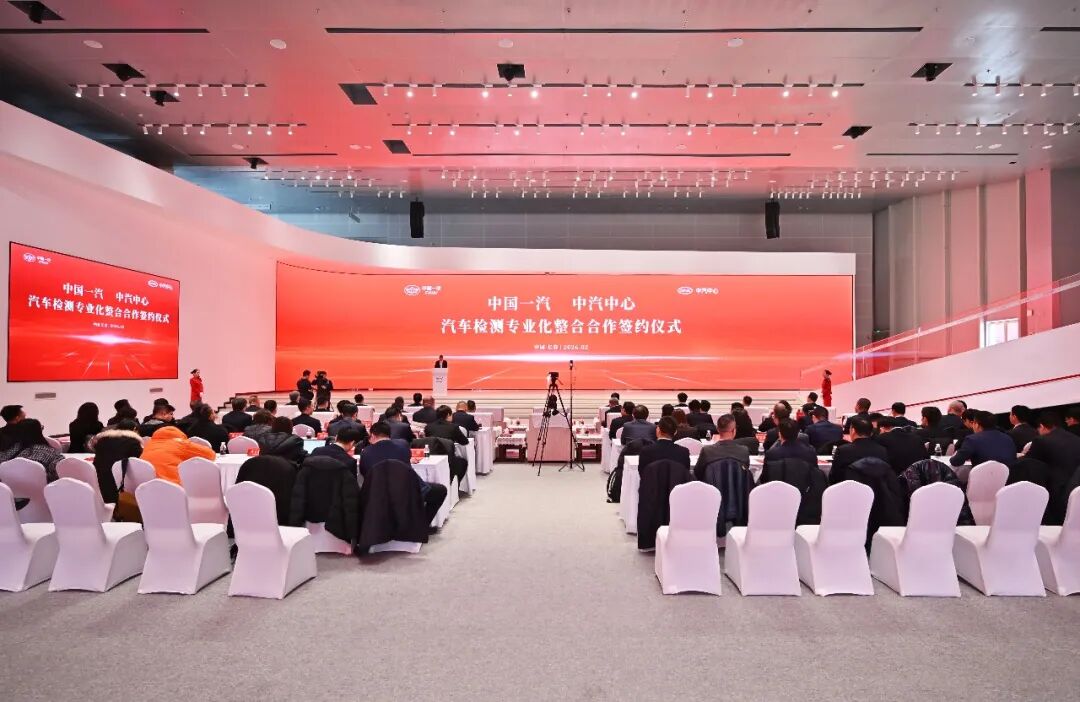
中汽中心与中国一汽长春签约 共筑汽车检测全链发展新格局
Zhong Guo Qi Che Bao Wang· 2026-02-09 11:58
Core Viewpoint - The collaboration between China Automotive Technology and Research Center (CATARC) and China FAW Group aims to enhance the quality development of the automotive industry through specialized integration of automotive testing services, thereby supporting China's integration into the global automotive standard system and industry development landscape [2][3]. Group 1: Collaboration Details - The agreement involves a share transfer for the professional integration of automotive testing services, which will enable CATARC to exceed 6,000 technical service capabilities and achieve 100% coverage for testing and certification of intelligent connected new energy vehicles [2]. - The partnership will establish a systematic "going global" support system, enhancing international service capabilities across six continents and providing comprehensive support for automotive enterprises in product, capital, and service exports [2][4]. Group 2: Strategic Goals - The collaboration is seen as a practical measure to implement national strategic deployments and optimize the layout of state-owned enterprises, focusing on new energy, intelligent connectivity, and overseas certification [3][5]. - Both parties aim to create a leading integrated testing and certification service platform domestically and internationally, leveraging their respective strengths in vehicle research and manufacturing, as well as standard-setting and cutting-edge technology development [3][5]. Group 3: Industry Impact - The partnership is expected to drive the automotive industry towards high-end, intelligent, and international development, marking a significant step in empowering industrial upgrades through central enterprise collaboration [5]. - CATARC's established full-value chain service capabilities and industry-leading position provide a solid foundation for deepening the collaboration, which includes the development of major testing evaluation systems and support for new energy and intelligent connected vehicles [4].

中汽中心与中国一汽长春签约,共筑汽车检测全链发展新格局
Zhong Guo Qi Che Bao Wang· 2026-02-05 10:11
Core Viewpoint - The collaboration between China Automotive Technology and Research Center (CATARC) and China FAW Group aims to enhance the quality development of the automotive industry through specialized integration of automotive testing services [5][7][8]. Group 1: Collaboration Details - The agreement involves a share transfer for the professional integration of automotive testing services, which will enable CATARC to exceed 6,000 technical service capabilities and achieve 100% coverage for testing and certification of intelligent connected new energy vehicles [5][11]. - The partnership will establish a systematic support system for international expansion, enhancing the global service capabilities across six continents and supporting Chinese automotive enterprises in product, capital, and service exports [5][11]. Group 2: Strategic Importance - The collaboration is seen as a response to national strategic deployments and a necessary step for long-term industry development, emphasizing the importance of central enterprises complementing each other's strengths [7][8]. - Both parties aim to create a closed-loop service model integrating research and testing, enhancing core testing capabilities to support the transformation and upgrading of the automotive industry [7][8]. Group 3: Future Outlook - The partnership is expected to drive innovation and strengthen the core capabilities of the automotive industry, focusing on new energy, intelligent connectivity, and international certification [8][11]. - The collaboration is positioned as a key step towards the high-end, intelligent, and international advancement of the automotive sector, with both companies committed to activating innovation and solidifying the industry's foundation [11].
智能汽车ETF(159889)回调超3%显布局机会,把握汽车产业升级机遇
Mei Ri Jing Ji Xin Wen· 2026-02-02 08:17
Core Viewpoint - The smart automotive ETF (159889) has experienced a pullback of over 3%, presenting an opportunity to capitalize on the automotive industry's upgrade driven by AI technology [1] Group 1: Industry Outlook - The automotive industry is expected to undergo significant upgrades due to the current wave of technological advancements represented by AI [1] - By 2026, advancements in high-level assisted driving and robotics are anticipated to open new valuation anchors for the automotive sector, leading to a potential valuation reconstruction [1] - The robotics sector is moving towards large-scale production, indicating a shift in investment opportunities from a dispersed to a concentrated approach [1] Group 2: Sector Analysis - The components sector is accelerating its global capacity layout and expanding its second growth curve [1] - The two-wheeler sector continues to trend towards international markets, with substantial growth potential overseas [1] Group 3: ETF and Index Information - The smart automotive ETF (159889) tracks the CS Smart Automotive Index (930721), which selects listed companies involved in smart automotive hardware and software, as well as vehicle manufacturers [1] - The index emphasizes the comprehensiveness and growth potential of the smart automotive industry chain, covering terminal perception and platform application sectors [1]
智能汽车ETF(159889)盘中涨超1.4%,市场聚焦产业升级与政策动向
Mei Ri Jing Ji Xin Wen· 2026-01-21 06:48
Core Viewpoint - The smart automotive ETF (159889) has seen a rise of over 1.4%, driven by industry upgrades and policy developments, with a focus on the opportunities presented by the AI-driven technological wave in the automotive sector [1] Industry Summary - The automotive industry is expected to undergo significant upgrades, particularly in high-level assisted driving and robotics by 2026, which may lead to a revaluation of the entire vehicle sector [1] - The robotics sector is moving towards large-scale production, indicating a shift from dispersed to concentrated investment opportunities [1] - The components sector is accelerating its global capacity layout and expanding its second growth curve [1] - The two-wheeler sector continues to trend towards international markets, with substantial growth potential overseas [1] Policy and Regulatory Summary - Three government departments held a meeting to resist disorderly "price wars" and promote a market order characterized by quality and fair competition, aiming for high-quality development [1] - The Ministry of Industry and Information Technology emphasized the need to accelerate breakthroughs in all-solid-state batteries and advanced assisted driving technologies by 2026 [1] ETF and Index Summary - The smart automotive ETF (159889) tracks the CS Smart Automotive Index (930721), which selects listed companies involved in terminal perception and platform applications related to smart vehicles from the Shanghai and Shenzhen markets [1] - The index primarily covers sectors such as electronics, computers, and automotive, reflecting the overall performance of listed companies in the smart automotive industry, with a focus on high growth and technological innovation [1]
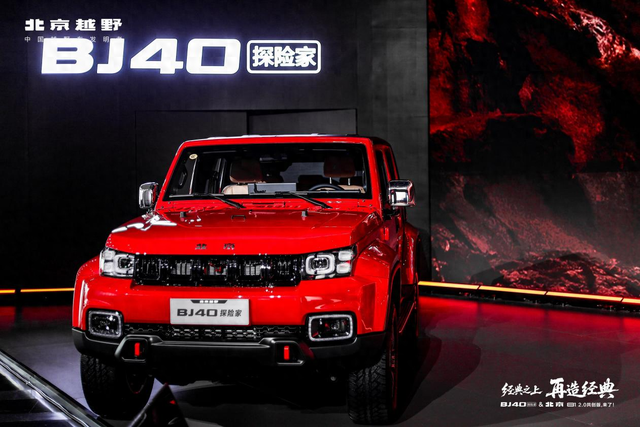
硬核三把锁+可拆硬顶!BJ40探险家重新定义“专业玩具”
Xin Lang Cai Jing· 2026-01-17 12:37
Core Insights - The latest data for the Chinese automotive industry in 2025 shows record production and sales, maintaining its position as the world's largest market for 17 consecutive years, with continuous structural upgrades towards better quality [1] - Chinese off-road vehicle brands are leveraging technological innovations to enhance their value, transitioning from merely selling vehicles to operating a lifestyle ecosystem, which is crucial for brand value enhancement and building competitive barriers [1] - Domestic brands have overtaken foreign brands in the off-road segment, with Beijing Off-road's BJ40 achieving significant sales milestones, including 66,942 units sold in total for the year, and consistently exceeding 10,000 monthly sales since April 2025 [1] Market Performance - The BJ40 series has surpassed cumulative sales of 300,000 units, indicating strong market performance amidst increasing competition in the off-road vehicle sector [4] - The BJ40 extended version has been recognized as the top in user satisfaction within the hard-core SUV segment according to the 2025 NEV-CACSI evaluation by the China Quality Association [2] Product Innovations - The BJ40 Explorer model features advanced capabilities such as electric control four-wheel drive, a classic three differential lock, and options for 2.0T gasoline and 2.0D diesel engines, enhancing its off-road performance [5] - The BJ40 Explorer is designed as a customizable platform, allowing for unique modifications and catering to diverse lifestyles, with a campaign launched for user-generated modification ideas [5] Future Outlook - The company plans to continue innovating with robust technology to meet user expectations and protect every journey, aiming to create more classic models in the future [6]
智能汽车ETF(159889)涨超0.5%,市场关注产业升级机遇
Mei Ri Jing Ji Xin Wen· 2026-01-16 06:49
Core Viewpoint - The automotive industry is expected to undergo significant upgrades driven by the current wave of technology represented by AI, with opportunities for investment emerging in various segments of the industry by 2026 [1] Group 1: Automotive Sector Insights - The complete vehicle segment is anticipated to see accelerated advancements in high-level assisted driving and robotics, potentially leading to a new valuation anchor and a valuation reconstruction [1] - The robotics sector is moving towards large-scale production, with investment opportunities in the industry shifting from a dispersed to a concentrated approach [1] - The components sector is accelerating its global capacity layout and expanding its second growth curve [1] - The two-wheeler segment continues to trend towards international markets, with significant growth potential overseas [1] Group 2: Policy and Market Dynamics - Nine departments have issued a notice to promote green consumption, which includes supporting consumers in purchasing new energy vehicles and strengthening the automotive supply chain, while exploring the potential of the "aftermarket" such as used cars and car rentals [1] - GAC Group has signed a comprehensive cooperation framework agreement with Huawei, aiming to deepen collaboration on HarmonyOS cockpit and other projects [1] Group 3: Investment Products - The Smart Car ETF (159889) tracks the CS Smart Car Index (930721), which selects listed companies in the smart automotive sector from the Shanghai and Shenzhen markets, reflecting the overall performance of these companies [1] - The index includes companies from various industries such as electronics, computers, and automotive, with a focus on information technology and discretionary consumer sectors, showcasing the comprehensive characteristics of the smart automotive supply chain [1]
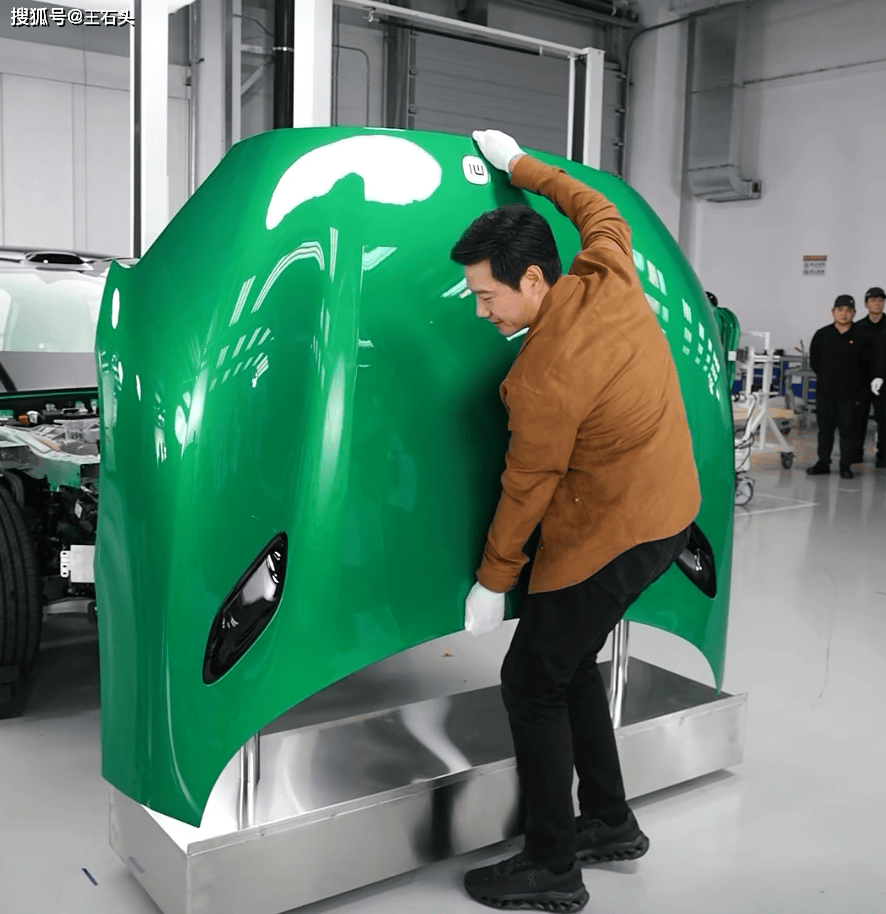
雷军直播拆车后,小米汽车的“王牌”也真正打出来了!
Sou Hu Cai Jing· 2026-01-03 14:35
Core Insights - Xiaomi is redefining industry standards through a transparent showcase of its automotive technology, particularly with the Xiaomi YU7 model, indicating a strategic shift in its approach to the automotive market [1][15] Group 1: Delivery and Sales Performance - By December 2025, Xiaomi's monthly delivery volume surpassed 50,000 units, with a total annual delivery exceeding 410,000 units, achieved with only two models and without significant financial incentives [3] - Despite competitors offering various financing options, Xiaomi maintained a strict product-focused strategy, relying solely on the strength of its vehicles to attract customers [3][5] Group 2: Financial Policy Changes - Xiaomi has recently introduced a "3-year 0% interest" financing policy for the Xiaomi YU7 and other models, signaling a shift from its previous high-commitment sales approach to a more accessible purchasing strategy [5][8] - This change aims to lower the decision-making barrier for potential customers who may have previously considered other brands due to financial constraints [5][9] Group 3: Product and Market Strategy - Xiaomi's strategy has involved a slow and steady approach, focusing on product refinement and brand reputation before easing purchasing conditions, which has helped it avoid pitfalls common among early-stage competitors [9][11] - The live demonstration of the Xiaomi YU7 not only showcased its technical capabilities but also aimed to clarify industry misconceptions regarding vehicle specifications and marketing tactics [9][11] Group 4: Future Implications - The unveiling of the YU7's structural and technical details sets a new standard for comparison in the automotive industry, shifting focus from superficial features to critical aspects like safety and durability [11][15] - As Xiaomi continues to build on its established technical credibility, future policy adjustments and service enhancements could significantly impact market dynamics and competitive positioning [11][15]

别再死磕黄金!这两大王牌今年偷偷暴涨110%,才是真赚钱
Sou Hu Cai Jing· 2025-12-27 01:14
Group 1 - The core viewpoint of the article highlights the significant rise in precious metal prices, particularly gold, platinum, and palladium, with platinum and palladium showing even higher percentage increases than gold [1][4][6] - Gold prices have surged to over 1000 yuan per gram for physical gold and over 1400 yuan per gram for jewelry gold, capturing public attention [1][4] - Platinum and palladium have experienced year-to-date increases of 163.9% and 92.6% respectively, indicating strong market performance [4][9] Group 2 - The current popularity of precious metal investments is driven by a slowing global economic recovery and increasing risk events, leading investors to seek stable assets for hedging against uncertainty [6][7] - The industrial demand for platinum and palladium is a key factor in their price increases, with platinum's industrial usage accounting for 65%-70%, significantly higher than gold and silver [9][11] - The supply of platinum is declining, with a reported 2% decrease in global platinum mine supply in Q3 2025, while demand has increased by 28%, creating a supply-demand gap of 21.6 tons [9][11][13] Group 3 - The rise of the hydrogen energy industry presents a new opportunity for platinum, as it is a critical catalyst in proton exchange membrane fuel cells, with each hydrogen fuel cell vehicle using 20-30 grams of platinum [11][13] - The automotive industry's transition towards hybrid and hydrogen vehicles is expected to further boost platinum demand, as these vehicles require more efficient catalysts [11][13] - Overall, platinum and palladium are positioned as potential long-term investment opportunities due to their industrial applications and the ongoing trends in energy transition and automotive upgrades [13]