消费贷款贴息

Search documents
【快讯】每日快讯(2026年3月9日)
乘联分会· 2026-03-09 08:41
Domestic News - The Ministry of Finance has upgraded the personal consumption loan interest subsidy policy, removing restrictions in the consumption sector and increasing the maximum subsidy per loan to 3,000 yuan for loans up to 300,000 yuan [7][8] - The Ministry of Transport plans to enhance high-power charging capabilities at highway service areas to address the challenges faced by new energy vehicle owners, with current charging facility coverage at 98.8% [9] - The Supreme People's Court clarified that drivers who activate assisted driving features while intoxicated will still bear criminal responsibility [10] - GAC Aion plans to increase its battery swap station network to over 5,000 stations within three years [11] - SAIC-GM announced plans to launch over ten new or refreshed models annually for the next three years, with several models set to debut in 2026 [13] - Tesla has surpassed 2,500 supercharging stations in mainland China, with over 12,000 supercharging piles [14][15] - Arcfox has partnered with CATL for a battery swap service to enhance user charging experiences [16] - Zeekr has completed its first user deliveries in Germany and is expanding sales into several European countries [17] International News - In February, new car sales in the UK increased by 7.2% year-on-year, reaching 90,100 units, marking the highest growth for the same period in 22 years [18] - Japan's new car sales fell by 3.5% year-on-year in February, totaling 394,965 units, attributed to economic slowdown and weak consumer confidence [19] - Tata Group plans to invest 110 billion rupees in advanced technology development in Jamshedpur [20] - Two US companies are set to invest $500 million in electric vehicle charging infrastructure in central Mexico, with plans to deploy 38 charging stations and 140 electric buses [21] Commercial Vehicles - The Foton Auman Z electric light truck was launched in Fujian, providing advanced solutions for regional cold chain logistics [22][23] - The Guangzhou Baiyun District government has released measures to promote modern logistics, including support for the large-scale application of new energy trucks [24] - A new player, Zero One Intelligent Transportation, has officially entered the new energy heavy truck market in Hefei [25] - Scania has delivered the first batch of NEXT ERA heavy trucks, designed for the long-distance transportation market in China [26]


多家银行公布消费贷“国补”升级方案 信用卡分期纳入贴息范围
Zhong Guo Zheng Quan Bao· 2026-01-21 23:41
Core Viewpoint - The Ministry of Finance has announced an optimization of the personal consumption loan interest subsidy policy, which includes expanding the scope of eligible loans and extending the policy period until the end of 2026, allowing each borrower to receive a maximum subsidy of 3000 yuan [1][2]. Group 1: Policy Changes - The new policy includes the inclusion of credit card installment payments in the subsidy support range and the removal of previous restrictions on certain consumption areas [1][2]. - The subsidy limit for individual borrowers has been increased to 3000 yuan per year, with the previous limits on single transaction amounts and total loan amounts being removed [2]. - The policy now allows for subsidies on all types of consumption loans, not just those in specific categories such as home appliances or education [2]. Group 2: Implementation and Participation - Major banks, including Agricultural Bank, Bank of China, and others, have begun to implement the new subsidy measures, with over 500 financial institutions now eligible to process these loans [1][2]. - The implementation period for the credit card installment subsidy is set for the entire year of 2026, and customers can apply for retroactive subsidies for transactions made between January 1, 2026, and the announcement date [3][4]. Group 3: Consumer Guidance - Banks have emphasized that there will be no fees charged for processing personal consumption loans and credit card installment subsidies, and they will not work with third-party intermediaries [5][6]. - Customers are advised to apply for loans through official channels and to be cautious of fraudulent activities related to loan applications [6].





事关养老、托育等,六部门联合发布!
Zheng Quan Shi Bao· 2026-01-20 14:54
Group 1: Tax and Fee Policies for Community Services - The announcement from six departments, including the Ministry of Finance and the State Taxation Administration, provides tax exemptions for community services such as elderly care, childcare, and housekeeping from January 1, 2026, to December 31, 2027 [1][2] - Income from community services will be exempt from value-added tax and will be calculated at 90% for taxable income [2] - Institutions providing these services will be exempt from property tax and urban land use tax for properties used in service delivery [2][3] Group 2: Financial Policies to Boost Consumption - The Ministry of Finance has introduced five financial policies aimed at boosting consumption and expanding private investment [4] - The implementation period for loan interest subsidies for service providers and personal consumer loans has been extended to December 31, 2026, maintaining a subsidy rate of 1% [4] - The personal consumer loan subsidy policy has been optimized in four ways, including expanding the support scope to include credit card installment payments and increasing the subsidy limits [5][6][7] Group 3: Specific Enhancements in Consumer Loan Subsidies - The subsidy for single consumer loans has been increased from a maximum of 500 yuan to 3000 yuan, significantly enhancing support for large consumer purchases [6][7] - The range of eligible consumption areas has been broadened to include new sectors such as digital, green, and retail, alongside existing categories like dining and healthcare [7] - The number of financial institutions eligible for the subsidy has expanded from over 20 to more than 500, facilitating wider access to the policy [7]
刚刚,利好来了!六部门,重磅发布!
券商中国· 2026-01-20 12:12
Core Viewpoint - The announcement from six departments aims to support the development of community family services such as elderly care, childcare, and domestic services by providing tax exemptions and financial incentives to relevant institutions [2][4][10]. Group 1: Tax and Fee Policies - Institutions providing community elderly care, childcare, and domestic services will enjoy tax exemptions on income from these services, specifically exempting them from value-added tax [4]. - Income from community elderly care, childcare, and domestic services will be calculated at 90% for taxable income purposes [5]. - Properties and land used for these services will be exempt from deed tax, property tax, and urban land use tax [6][7]. - Specific conditions for domestic service companies to qualify for tax exemptions include signing tripartite agreements with service workers and clients, paying wages, and managing service workers [8]. Group 2: Financial Policies to Boost Consumption - The Ministry of Finance has introduced five financial policies to stimulate domestic demand, focusing on enhancing consumption and expanding private investment [10]. - The implementation period for loan interest subsidies for service industry operators and personal consumption loans has been extended to December 31, 2026, maintaining a subsidy rate of 1% [10]. - Optimizations to personal consumption loan subsidies include expanding the support scope to include credit card installment payments, increasing subsidy limits, and broadening the range of eligible financial institutions [11][12].

美元两连跌 金属涨跌互现 碳酸锂涨停 纽金银沪金续刷新高!
Sou Hu Cai Jing· 2026-01-20 09:48
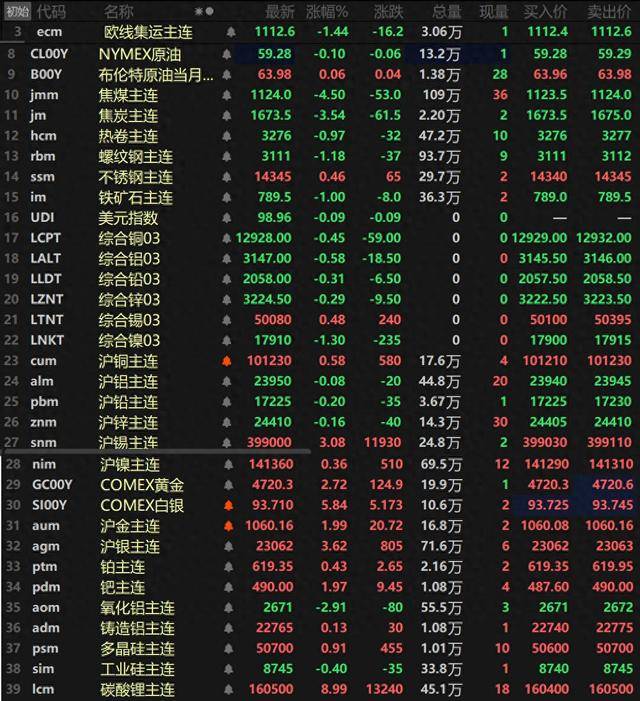
Metal Market - As of the afternoon close, domestic base metals showed mixed performance, with tin leading the gains at 3.08%, followed by copper at 0.58% and nickel at 0.36%. Lead led the declines with a drop of 0.2% [1] - Lithium carbonate futures surged to a limit-up increase of 8.99%, closing at 160,500 yuan/ton. Polysilicon rose by 0.91%, while industrial silicon fell by 0.4% [1] - In the external market, base metals generally declined, with only tin showing a slight increase of 0.48%. Nickel fell by 1.3%, and other metals saw declines within 1% [1] Precious Metals - COMEX gold rose by 2.72%, reaching a new historical high of $4,723.7 per ounce. COMEX silver increased by 5.84%, also hitting a historical high of $94.745 per ounce. Domestic gold rose by 1.99%, reaching a peak of 1,061.16 yuan/gram, marking a new historical high, while silver increased by 3.62% [1][2] Macro Environment - The National Development and Reform Commission emphasized the need to strengthen domestic demand and adapt to the upgrading trend of demand structure. A strategic plan for expanding domestic demand from 2026 to 2030 will be developed [5][6] - The Ministry of Finance announced the expansion of support for equipment renewal loans, including a 1.5% interest subsidy for fixed asset loans related to equipment updates, effective until December 31, 2026 [7] - The central bank conducted a net withdrawal of 346 billion yuan through reverse repos, maintaining the operation rate at 1.40% [8]
财政部:持续支持“两重”“两新” 2025年带动相关商品销售额超过约2.6万亿元
Bei Jing Shang Bao· 2026-01-20 08:00
Core Viewpoint - The Chinese government aims to boost consumption by issuing long-term special government bonds and implementing various policies to stimulate consumer spending and economic transformation [1] Group 1: Government Initiatives - The government plans to issue 1.3 trillion yuan in super long-term special government bonds to support consumption and economic transformation [1] - A budget of 300 billion yuan is allocated for subsidies to encourage the replacement of old consumer goods, which is expected to drive sales of related products by approximately 2.6 trillion yuan [1] - The initiatives focus on promoting green, low-carbon, and smart products to enhance the quality of life for citizens [1] Group 2: Consumption Potential - Policies will be introduced to stimulate consumption from both supply and demand sides, including interest subsidies for personal consumption loans and loans for service industry operators [1] - Support will be provided for pilot projects related to new consumption formats, models, and scenarios, as well as the construction of an international consumption environment [1] Group 3: Tax and Duty Adjustments - The government plans to adjust and optimize duty-free shop policies and tax refund policies for departing tourists [1] - There will be an increase in the number of duty-free shops to encourage and expand related consumer spending [1]
财政部,周末发声!
券商中国· 2025-12-13 08:38
Core Viewpoint - The article emphasizes the importance of the Central Economic Work Conference in guiding fiscal policy and economic strategy for 2026, highlighting the need for the finance department to align with the directives from the central government [1]. Group 1: Fiscal Policy and Economic Strategy - The finance department is tasked with implementing the spirit of the Central Economic Work Conference, focusing on enhancing responsibility and mission in economic and fiscal work [1]. - The conference outlines a commitment to high-quality development, emphasizing the need for a proactive fiscal policy to support domestic demand and optimize supply [2]. - There is a focus on maintaining a balance between development and security, with an emphasis on stabilizing employment, businesses, and market expectations [2]. Group 2: Policy Implementation and Governance - The article discusses the need for effective macroeconomic governance, including maintaining necessary fiscal deficits and managing total debt levels [3]. - It highlights the importance of utilizing government bond funds effectively and issuing long-term special bonds to support key projects [3]. - The finance department is encouraged to improve fiscal management, optimize expenditure structures, and ensure compliance with financial regulations [3]. Group 3: Social Welfare and Support - The article stresses the importance of supporting vulnerable populations and ensuring safety and emergency response measures as the year ends [4]. - There is a call for high standards in preparing the "15th Five-Year" fiscal and accounting plans to ensure comprehensive support for social welfare [4].

贴息落地“金九银十” 银行激活旺季消费动能
Zhong Guo Jing Ying Bao· 2025-09-12 18:54
Core Viewpoint - The implementation of the personal consumption loan interest subsidy policy is expected to stimulate consumer spending during the peak consumption season of "Golden September and Silver October" by reducing loan costs and encouraging borrowing [1][2][3] Group 1: Policy Implementation and Impact - The personal consumption loan interest subsidy policy officially started on September 1, 2025, and will last until August 31, 2026, offering a 1% annual interest subsidy for eligible loans [2][3] - Major banks have quickly responded to the policy, with some reporting a 10% increase in consumption loan issuance compared to the same period last year, covering key areas such as automotive, home renovation, and electronics [2][3] - The policy allows for a maximum subsidy of 3,000 yuan per loan, with some interest rates dropping below 3%, which is expected to attract a diverse customer base [1][2][3] Group 2: Consumer Behavior and Market Dynamics - The subsidy policy is anticipated to lower financing costs, significantly enhancing the willingness of consumers, particularly middle-income families and young professionals, to take out loans for consumption upgrades [3][4][5] - The policy is designed to attract customers with good credit but short-term liquidity issues, allowing them to optimize their debt structure and cash flow [4][5] Group 3: Risks and Challenges - While the policy aims to stimulate demand, there are concerns about potential risks such as fund misappropriation and excessive borrowing, which could lead to increased credit risk [6][7] - Banks are advised to strengthen risk control measures and ensure that funds are used for legitimate consumption purposes to mitigate these risks [7][8] Group 4: Competitive Landscape and Strategic Responses - The subsidy policy has intensified competition among banks, particularly for those not included in the program, prompting them to enhance their consumer finance offerings through innovative products and services [8][9] - Banks are encouraged to leverage technology and data analytics to improve customer experience and operational efficiency, thereby maintaining competitiveness in the evolving market [9][10]

防守一波,白酒行业底部机会来袭?食品饮料ETF天弘(159736)跟踪指数最新估值处近十年低位
Sou Hu Cai Jing· 2025-09-04 04:00
Group 1: Food and Beverage ETF Performance - The Tianhong Food and Beverage ETF (159736) has seen a significant increase, with its tracked index component, Huanlejia (300997), rising by 12.82% as of September 4, 2025 [1] - The latest share count for the Tianhong Food and Beverage ETF reached 7.208 billion, marking a one-year high [1] - The ETF experienced a net inflow of 7.4699 million yuan recently, with a total of 74.0188 million yuan net inflow over the past five trading days, averaging 14.8038 million yuan per day [1] - The price-to-earnings ratio (PE-TTM) of the index tracked by the ETF is currently at 22.4 times, which is in the 9.22% percentile historically, indicating a low valuation [1] Group 2: Personal Consumption Loan Subsidy Policy - The personal consumption loan subsidy policy was officially implemented on September 1, 2025, with an effective period until August 31, 2026, aimed at reducing consumer credit costs and stimulating consumption [2] - The Ministry of Finance indicated that an evaluation of the policy's effectiveness will be conducted after its expiration, with potential for extension or expansion of support [2] Group 3: Insights on the Liquor Industry - According to招商证券, the white liquor industry is undergoing a significant clearing process due to the "ban on alcohol," with second and third-tier companies facing thorough elimination while leading companies show resilience [2] - The report anticipates that the impact of policies on sales will diminish, but consumer power has not yet improved, leading to expected double-digit declines in sales during the upcoming festivals [2] - 中信证券 predicts that the second half of the year may see the steepest decline in performance for most liquor companies, given the industry's underperformance compared to core indices and its valuation being at a three-year low, indicating a potential for rebound [3]
半年报亮眼!多家大行消费贷猛增超10%,金融“国补”再添火力
Zhong Guo Jing Ying Bao· 2025-09-02 11:56
Core Insights - Personal consumption loans have shown remarkable performance in the first half of 2025, with major banks reporting growth rates exceeding 10% [3][4] - The implementation of the financial "national subsidy" policy on September 1 is expected to further stimulate personal consumption loans, making them a key area for boosting consumption [3][7] Group 1: Personal Consumption Loan Growth - As of June 30, 2025, major banks such as Bank of Communications, China Construction Bank, Industrial and Commercial Bank of China, and Bank of China reported significant increases in personal consumption loans, with growth rates of 16.82%, 16.35%, 10.2%, and 12.66% respectively [4] - Agricultural Bank of China and Postal Savings Bank of China also reported increases in personal consumption loans, with growth rates of 8.5% and 1.23% respectively [4] Group 2: Policy Impact - The financial "national subsidy" policy, which provides interest subsidies for personal consumption loans, is expected to enhance consumer confidence and spending [7][8] - The subsidy will cover various consumer categories, including daily expenses and major purchases like home appliances and vehicles, with a subsidy rate of 1% for loans under 50,000 yuan [7] Group 3: Economic Context - The overall retail sales of consumer goods in China grew by 5% year-on-year in the first half of 2025, supported by government policies and consumer confidence [5][6] - The average disposable income of residents increased by 5.3% year-on-year, contributing to a stable economic environment for consumption growth [6] Group 4: Future Outlook - Analysts predict that the combination of policy support and the release of service consumption potential will drive further growth in personal consumption loans in the second half of 2025 [8][9] - The ongoing optimization of consumption structure and the emergence of new consumption scenarios are expected to sustain long-term growth in China's consumer market [9]