渐进式延迟法定退休年龄

Search documents
“十五五”的细节(4):积极开发“老年人力资源”,打造人口质量红利
Orient Securities· 2026-04-01 03:16
Group 1: Policy and Strategy - The "15th Five-Year Plan" emphasizes the active development of elderly human resources and gradual implementation of a delayed retirement age policy[6] - The policy aims to optimize employment and social security age restrictions, creating diverse job opportunities for the elderly[6] - The shift in perspective recognizes the elderly as a source of high-quality development rather than merely a financial burden[6] Group 2: Labor Market Dynamics - The new generation of retirees is healthier, better educated, and possesses rich professional skills, making them valuable human resources[6] - Employment for the elderly is expected to complement rather than replace youth employment, with limited displacement effects[6] - The majority of elderly workers are concentrated in industries like agriculture (42.0% aged over 50) and public facilities management (38.7% aged over 50), which differ from youth-dominated sectors[6] Group 3: Social Security and Risks - Concerns exist regarding the rights and protections of elderly workers, particularly in high-risk industries like construction and logistics[6] - Some regions, such as Liaoning, have begun implementing specific insurance policies for workers over the legal retirement age[6] - Potential risks include accelerated population aging, limited local fiscal capacity for pension facilities, and lower-than-expected participation in personal pension schemes[6]
上海“十五五”规划建议:完善生育支持政策和激励措施,有效降低家庭生育养育教育成本
Xin Lang Cai Jing· 2026-01-18 23:37
Core Viewpoint - The Shanghai Municipal Committee has released recommendations for the 15th Five-Year Plan, focusing on addressing population aging and declining birth rates through comprehensive population service systems and supportive policies [1] Group 1: Population Services - The plan emphasizes the creation of a population service system that covers all demographics and life stages, aiming to build child-friendly cities, youth development cities, and elderly-friendly societies [1] - It advocates for a positive attitude towards marriage and childbirth, enhancing fertility support policies and incentives to effectively reduce family costs related to childbirth, upbringing, and education [1] Group 2: Family and Childcare Support - The implementation of maternity leave systems is encouraged, along with the establishment of "fertility-friendly positions" to support the career development of women who give birth [1] - The plan promotes inclusive childcare and integrated early childhood education services, exploring the development of infant care services and combining medical and educational support [1] Group 3: Elderly Care Services - The recommendations include optimizing elderly care service supply, creating a dense community-based elderly care network, and increasing the renovation of facilities to be more age-friendly [1] - There is a focus on updating existing elderly care facilities, optimizing the distribution of room types in care institutions, and improving the utilization rate of elderly care beds, particularly for nursing and cognitive impairment beds [1] Group 4: Quality and Innovation in Elderly Care - The plan aims to enhance the quality of elderly care services by promoting the development of elderly care technology and innovative integrated care models, including medical-nursing integration and rehabilitation care [1] - It also includes the improvement of long-term care insurance systems, the promotion of mutual aid elderly care services, and strengthening the workforce of elderly care providers [1] Group 5: Retirement Policy - The gradual implementation of a delayed retirement age is proposed, along with the active development of elderly human resources [1]
@老年朋友,这份“十五五”期间银发生活改善计划请查收
Xin Hua She· 2025-12-18 11:49
Group 1 - The article emphasizes the need to improve elderly care services and develop a comprehensive elderly care system, including optimizing basic pension services and enhancing urban-rural elderly care networks [2][5] - It highlights the importance of integrating medical and educational services, promoting long-term care insurance, and establishing a care system for the elderly with disabilities and dementia [2][3] - The article discusses the gradual implementation of a delayed retirement age policy and the optimization of employment and social security age restrictions to better utilize elderly human resources [5] Group 2 - There is a focus on developing the silver economy and enhancing the multi-tiered pension insurance system to meet diverse retirement needs [3][5] - The article mentions the need to improve the basic pension system nationwide and gradually increase the basic pension for urban and rural residents [3][5] - It calls for the expansion of healthcare services for the elderly, including rehabilitation and palliative care, and emphasizes the importance of health management for the elderly population [3]


进入“十五五”,人口老龄化、劳动力大龄化将更加明显——放宽就业社保年龄限制,意味着什么?
Ren Min Ri Bao Hai Wai Ban· 2025-12-17 00:39
Core Viewpoint - The implementation of a gradual increase in the statutory retirement age in China aims to optimize employment and social security policies, addressing the challenges posed by an aging population and declining labor force [1][4]. Group 1: Policy Implementation - The gradual increase in the statutory retirement age began on January 1, with male workers' retirement age rising from 60 to 63 over 15 years, and female workers' retirement age increasing from 50 and 55 to 55 and 58 respectively [2][3]. - The principle of "flexible implementation" allows for a range of retirement options, enabling workers to retire between 60 and 62 or to extend their working years up to 65 with mutual agreement [2][3]. Group 2: Employment and Social Security - The Ministry of Human Resources and Social Security has established guidelines to ensure that labor relations continue during the flexible retirement period, mandating timely social insurance contributions to protect workers' rights [3][7]. - The "14th Five-Year Plan" emphasizes the need to eliminate unreasonable age restrictions in employment and social security, facilitating the integration of older workers into the labor market [3][4]. Group 3: Labor Market Dynamics - As of the end of 2024, the average age of migrant workers in China is projected to reach 43.2 years, with over 90 million workers aged 50 and above, highlighting the need for companies to adapt their hiring practices [6][8]. - Some industries have previously imposed age limits on hiring, which has restricted opportunities for older workers, necessitating a shift in recruitment policies to align with the new retirement age regulations [6][8]. Group 4: Legal and Social Framework - The upcoming "Interim Regulations on Basic Rights Protection for Older Workers" will require employers to formalize agreements with older workers, ensuring clarity on work conditions, compensation, and social insurance [7][9]. - Strengthening legal protections and promoting a positive view of aging are essential for the successful implementation of the gradual retirement age increase, with calls for stricter penalties against age discrimination in hiring practices [9].
放宽就业社保年龄限制 意味着什么?
Ren Min Ri Bao Hai Wai Ban· 2025-12-17 00:06
Core Viewpoint - The article discusses the implications of relaxing age restrictions on employment and social security in China, particularly in the context of the gradual implementation of a delayed retirement age policy as outlined in the 15th Five-Year Plan [1][3]. Group 1: Policy Changes - The gradual delay of the statutory retirement age will see male workers' retirement age increase from 60 to 63 years and female workers' from 50 and 55 to 55 and 58 years respectively over a period of 15 years [2]. - The policy allows for flexible retirement options, enabling workers to retire between 60 and 62 years or even extend their working years up to 65 years with mutual agreement from their employers [2]. Group 2: Employment and Social Security - The Ministry of Human Resources and Social Security has issued guidelines to ensure that labor relations continue during the flexible retirement period, mandating timely social insurance contributions and protection of workers' rights [3][6]. - The optimization of age restrictions in employment and social security is aimed at breaking unreasonable barriers for older job seekers, allowing them to sign labor contracts and contribute to social insurance [3][5]. Group 3: Labor Market Dynamics - The average age of migrant workers in China is projected to reach 43.2 years by the end of 2024, with over 90 million workers aged 50 and above, highlighting the need for more inclusive hiring practices [5]. - Some industries have previously imposed age limits on hiring, which has restricted opportunities for older workers, emphasizing the need for companies to adapt to the new retirement policies [5][7]. Group 4: Legal and Social Framework - The upcoming regulations on the basic rights of older workers will require employers to establish written agreements detailing work conditions, social insurance, and labor protections for those beyond the statutory retirement age [6]. - There is a call for stronger legal frameworks to address age discrimination in hiring and to ensure compliance with social insurance obligations for older workers [8].
放宽就业社保年龄限制,意味着什么?(这些新提法,写入“十五五”规划建议⑩)
Ren Min Ri Bao Hai Wai Ban· 2025-12-16 22:50
Core Viewpoint - The implementation of a gradual delay in the statutory retirement age in China aims to optimize employment and social security policies, addressing the challenges posed by an aging population and a shrinking labor force [4][6]. Group 1: Policy Implementation - The gradual delay in the statutory retirement age began on January 1, with male workers' retirement age increasing from 60 to 63 over 15 years, and female workers' retirement age increasing from 50 and 55 to 55 and 58 respectively [4][5]. - The principle of "flexible implementation" allows workers to retire between 60 and 62 years old, or even up to 65 years old, based on mutual agreement with their employers [4][6]. Group 2: Labor Market Impact - The new policies aim to eliminate unreasonable age restrictions in employment and social security, particularly for older job seekers, thereby enhancing their ability to sign labor contracts and contribute to social insurance [5][6]. - As of the end of 2024, the elderly population (60 years and older) in China is projected to reach 31.03 million, accounting for 22.0% of the total population, highlighting the urgency of integrating older workers into the labor market [6][7]. Group 3: Employment Opportunities - Many experienced older workers face age discrimination in hiring practices, with some industries previously imposing age limits that excluded workers over 45 or 55 [7][8]. - The gradual retirement policy is expected to encourage companies to relax age restrictions in hiring, aligning with the new labor market realities [7][8]. Group 4: Legal and Social Framework - The "14th Five-Year Plan" emphasizes the need for legal frameworks to protect the rights of older workers, including the establishment of written agreements that outline work conditions and social insurance [8][10]. - There is a call for increased legal protections against age discrimination and for the promotion of a positive view of aging in society to support the integration of older workers [10].
“十五五”时期,中国人均预期寿命有望达到80岁
中国基金报· 2025-10-24 04:44
Core Viewpoint - The Chinese government aims to improve the average life expectancy of its population from 79 years to around 80 years within five years, addressing the public's expectations for a better and healthier life [1]. Group 1: Population Development Strategies - The government emphasizes the construction of a fertility-friendly society by advocating for positive marriage and childbirth views, and optimizing fertility support policies and incentives [2]. - There is a focus on ensuring elderly care by improving the coordination between pension services and industries, enhancing basic pension service supply, and developing integrated medical and elderly care services [2]. - The gradual implementation of a delayed retirement age policy is proposed, along with the optimization of employment and social security age restrictions, to actively develop the elderly workforce and promote the silver economy [2].

国考年龄放宽引发讨论,如何推动改变“35岁就业门槛”?
Nan Fang Du Shi Bao· 2025-10-15 05:44
Group 1 - The core point of the news is the adjustment of the age limit for the national civil service examination, raising it from "under 35 years old" to "under 38 years old" for the first time, which is seen as a significant change in recruitment policy [1][2][4] - The total number of positions available in the 2026 national civil service examination is planned to be 38,119, a decrease of 4.3% from the previous year's 39,100 positions [2] - The age limit for applicants has been adjusted to generally be between 18 and 38 years old, with a special provision allowing master's and doctoral graduates to apply up to 43 years old [2][3] Group 2 - The official explanation for the age limit adjustment is to align with the gradual increase in the statutory retirement age, which is being extended by three years [3] - The proportion of positions reserved for fresh graduates remains high, with 67.68% of the positions in this year's examination restricted to fresh graduates, an increase compared to previous years [3][4] - The adjustment is viewed as a symbolic step towards breaking the "35-year employment barrier," reflecting broader discussions about age discrimination in employment [4][6] Group 3 - Some regions have already begun to raise age limits in local civil service recruitment, indicating a trend that may influence future provincial examinations [4][5] - The recruitment practices vary by region, with some areas still maintaining the 35-year age limit, highlighting that the age adjustment is not yet a nationwide standard [6] - The ongoing discourse around the "35-year phenomenon" suggests that older job seekers face increasing challenges in the labor market, with concerns about job security and employment opportunities [6][7]
国考近八年来首次“缩招”,报考年龄门槛放宽至38周岁
Di Yi Cai Jing· 2025-10-14 08:15
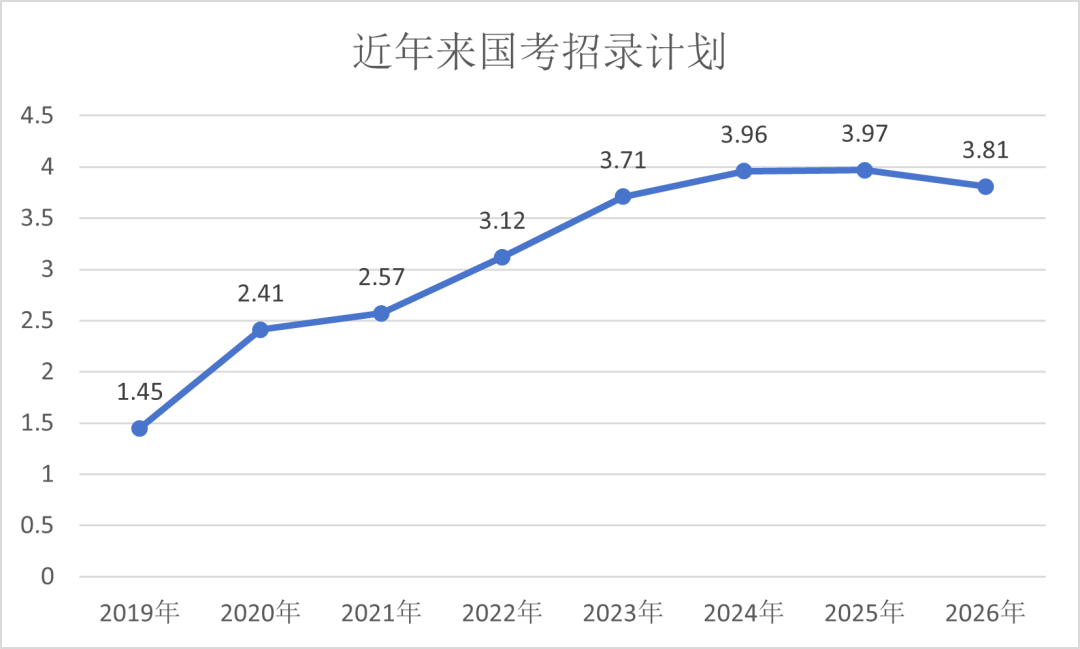
Group 1 - The core point of the news is the reduction in the recruitment scale for the national civil service examination, with a total of 38,100 positions available, which is a decrease of approximately 1,600 from the previous year, marking the first contraction in nearly eight years [1][2] - The age limit for applicants has been adjusted, allowing candidates up to 38 years old, and for recent master's and doctoral graduates, the limit is extended to 43 years old, reflecting a policy shift to gradually raise the statutory retirement age [1][2] - The recruitment plan continues to favor fresh graduates, with about 26,000 positions set aside for them, maintaining a high proportion of fresh graduates in the recruitment process, which has been stable between 58% and 67% over the past five years [2][3] Group 2 - The recruitment policy includes measures to lower entry barriers for positions in remote and difficult areas, allowing for adjustments in educational qualifications, professional backgrounds, and work experience, as well as setting separate passing scores for the written exam [3] - There are specific recruitment plans targeting local residents or those who have lived and worked in the area for a long time, indicating a focus on local talent for civil service positions [3]
43岁也能考公了 35岁上限被打破 背后信号很大
2 1 Shi Ji Jing Ji Bao Dao· 2025-10-14 07:24
Core Points - The 2026 National Civil Service Examination (国考) plans to recruit 38,100 candidates, a slight decrease from 39,700 in 2025, indicating a potential increase in competition [1][2][4] - The age limit for applicants has been relaxed, allowing candidates up to 43 years old for master's and doctoral graduates, which aims to attract more experienced individuals into the civil service [10][11] Recruitment Plan - The recruitment plan for 2026 shows a decrease of approximately 1,600 candidates compared to 2025, breaking a trend of increasing recruitment numbers in recent years [2][4] - Despite the overall reduction, the recruitment plan for fresh graduates remains stable, with about 26,000 positions dedicated to them, reflecting the government's focus on graduate employment [4][5] Age Limit Changes - The age limit for applicants has been adjusted to 18-38 years for most candidates, and up to 43 years for master's and doctoral graduates, compared to previous limits of 35 and 40 years respectively [10][11] - This change aligns with policies for gradually delaying the statutory retirement age, aiming to provide more opportunities for high-educated individuals [10][11] Competition Dynamics - The examination content for 2026 is becoming more specialized, with an increase in departments conducting professional subject tests and ability assessments during the selection process [12] - The competition is expected to intensify due to the reduced recruitment scale and increased preparation requirements for candidates, necessitating a more strategic approach to studying [12]