玻璃供需格局

Search documents
玻璃需求预期偏弱
Qi Huo Ri Bao Wang· 2026-02-24 01:53
从供需端来看,据卓创数据显示,供应端数据截至上月末,全国浮法玻璃生产线共计262条,在产210 条,日熔量共计150135吨,较上月减少920吨,同比减少4.13%,行业产能利用率81.94%。从数据我们 可以看出当下供应较之去年同期已出现有效缩减,其原因在于玻璃企业在市场订单收缩的背景下经历了 较长时间的亏损,市场信心普遍低迷且库存压力有所增加,在市场环境的影响下,部分到期生产线选择 主动冷修以期缓解市场的供应压力。但同时我们应注意到的是,地产方面作为玻璃的终端市场需求,自 2022年起各项地产数据几乎开始同步下滑至负增长状态且延续至今,26年整体的玻璃终端需求或仍将受 之影响出现阶段下滑。因此产业在供应端主动收缩的背景之下,行业整体供需格局的动态变化将成为引 导未来行情走向的关键因素。 近期玻璃现货市场相对平稳,节前中下游已备有一定量低价库存,节后厂家试探性调涨价格,落地性仍 需观察。从中期来看,因商品房销售暂未出现明显好转,玻璃需求预期或仍偏弱,而当下市场又进入无 法验证节后订单强弱的阶段之中,因此短时内市场波动或倾向于沿着当前现货价格水平上下震荡,等待 验证终端消费后的方向选择。 ...
玻璃供需格局好转,碱厂检修意愿增加
Mai Ke Qi Huo· 2026-01-06 13:54
1. Report Industry Investment Ratings - Glass: Treat with an oscillating and slightly bullish mindset, with the glass index reference range of 1010 - 1150 [6] - Soda Ash: Adopt a bearish approach when the price is high, with the soda ash index reference range of 1100 - 1250 [8] 2. Core Views of the Report - Glass: The supply - demand pattern has improved. The supply has weakened, and attention should be paid to whether it can drive mid - and downstream replenishment, which may support the glass price in the short term [6]. - Soda Ash: The willingness of soda ash plants to conduct maintenance has increased, leading to a short - term decline in supply. However, there is still a long - term production capacity investment pressure [8]. 3. Summary by Relevant Catalogs Glass Price - As of December 31, the market price of 5mm float glass in North China was 1020 yuan/ton, a decrease of 100 yuan/ton compared to the end of November; in Central China, it was 1000 yuan/ton, a decrease of 110 yuan/ton compared to the end of November. The mainstream market glass prices are running weakly [12]. Supply - Currently, the glass price is falling, the glass factory profit is weakening, and the inventory is high, leading to continuous cold repairs. The current daily melting volume of glass factories is 151,500 tons. The supply - demand pattern has improved due to the weakening supply, which may support the price [18]. Demand - In real estate, in November 2025, the completed area was 45.9293 million square meters, a year - on - year decrease of 15.6363 million square meters; the sales area was 67.1974 million square meters, a year - on - year decrease of 14.6805 million square meters. The year - end real estate completion has improved slightly, but the sales are poor, and the completion may be better than the previous period but worse than the same period last year [22]. - In the automotive industry, in November 2025, the automobile production was 3.5316 million vehicles, a month - on - month increase of 0.1729 million vehicles; the sales were 3.429 million vehicles, a month - on - month increase of 0.1069 million vehicles, which supports the glass demand [26]. - The year - end rush - to - work demand has weakened month - on - month, the sales pressure in the north is obvious, and the glass demand is difficult to have a large upward space due to the weak real estate. The downstream deep - processing order days are still weak year - on - year, and the glass apparent demand is at a low level in the same period over the years [30]. Inventory - In December, although the demand was poor, the inventory pressure of glass factories was relieved and the inventory decreased due to the decline in supply. The inventory of mid - stream traders is at a high level, and the subsequent replenishment strength may be limited [34]. Profit and Cost - The costs of glass produced with natural gas, coal, and petroleum coke have declined, and the glass spot price has weakened. The profits of the three production methods have fluctuated. The profit of glass produced with natural gas decreased from - 227.27 yuan/ton to - 186.4 yuan/ton; with coal, from 4.5 yuan/ton to - 21.88 yuan/ton; with petroleum coke, from - 31.48 yuan/ton to - 7.21 yuan/ton [38]. Basis - As of December 31, the glass 05 basis was - 87, a decrease of 16 compared to the end of November; the glass 5 - 9 contract spread was - 104, a decrease of 51 compared to the end of November. The spot price has weakened more, the basis has weakened, and the month - spread has weakened. The current basis is at a low level in the same period over the years, and the market has a pessimistic view on the near - term contracts [42]. Soda Ash Price - As of December 31, the market price of light soda ash in Qinghai was 890 yuan/ton, a decrease of 40 yuan/ton compared to the end of November; the market price of heavy soda ash was 1122 yuan/ton, a decrease of 30 yuan/ton compared to the end of November. The prices of light and heavy soda ash in the mainstream market are running weakly [48]. Supply - The spot price of soda ash has weakened, and the willingness of soda ash plants to conduct maintenance has increased. The soda ash production in December decreased. There will be new production capacity put into operation in the first quarter of this year, so there is a large long - term supply pressure. Currently, the price is low, and the plants are in a loss state, so the short - term production is under pressure. It is expected that the weekly production of soda ash in January will fluctuate around 700,000 tons [52]. Demand - In December, the production of photovoltaic glass was stable, while the production of float glass decreased month - on - month. Currently, the profit of glass factories is poor, and there is an expectation of cold repairs for float glass in January, which puts pressure on the soda ash demand. Overall, the demand for heavy soda ash is expected to weaken, while the demand for light soda ash is relatively stable [58]. Import and Export - In November 2025, the import volume of soda ash was 253 tons, a month - on - month decrease of 84 tons; the export volume was 189,400 tons, a month - on - month decrease of 25,100 tons. The domestic soda ash supply - demand is loose, and exports will help relieve the inventory pressure of domestic soda ash plants [62]. Inventory - In December, the inventory of soda ash plants decreased month - on - month. Although there is still an expectation of glass production reduction, considering the price decline, the soda ash production will continue to run weakly and stably. It is expected that the inventory of soda ash plants will decline slightly in January, and attention should be paid to the maintenance of soda ash plants [65]. Cost - In December, the cost of soda ash was running weakly. The supply concentration of soda ash plants is high, and they have strong bargaining power. The cost support of the light soda ash co - production method in East China is around 1200 yuan, and attention should be paid to the cost support [69]. Profit - The price of soda ash is weak, and the cost is running weakly. The profits of soda ash plants fluctuate. In North China, using the ammonia - soda process, the gross profit of light soda ash decreased from - 38.5 yuan/ton to - 57.4 yuan/ton, and that of heavy soda ash decreased from - 118.5 yuan/ton to - 137.4 yuan/ton. In East China, using the co - production method, the gross profit of light soda ash increased from - 140 yuan/ton to - 28.5 yuan/ton, and that of heavy soda ash increased from - 220 yuan/ton to - 88.5 yuan/ton [72]. Month - spread - As of December 31, the basis of the soda ash 05 contract was - 87, a decrease of 20 compared to the end of November; the 5 - 9 contract spread was - 65, an increase of 3 compared to the end of November. The spot price is running weakly, the basis has weakened, and the month - spread has strengthened. The current basis is at a low level in the same period over the years, and the market has a pessimistic view on the near - term contracts [76].
库存压力较大 玻璃上行空间受限
Qi Huo Ri Bao· 2025-12-11 00:18
Core Viewpoint - The glass market is experiencing stable spot prices, but the overall supply-demand balance remains loose, indicating a potential downward price trend in the long term [1][2]. Supply Summary - As of now, there are 284 float glass production lines in the country, with 216 lines in operation, and a daily melting capacity of 154,555 tons, which is a decrease of 1,600 tons from the previous period. The industry's capacity utilization rate stands at 79.41% [1]. - There is an expectation of cold repairs for production lines in December, which may reduce short-term supply pressure and lead to a rebound in futures prices. Additionally, unexpected cold repairs in Hubei have raised concerns about sustained supply contraction, prompting short sellers to exit, resulting in a rapid rebound in futures prices [1]. Demand Summary - According to institutional research, downstream processing plants report overall weak demand this year, with a decline in glass orders and limited engineering orders. However, home decoration and export orders are performing relatively well, despite an overall decrease in total orders. Many companies are facing operational difficulties, with only large enterprises maintaining slim profits while most are in a loss-making state [1]. - The poor performance of the real estate market, reflected in declining new construction, construction area, and completion area data, directly contributes to weak glass demand. Although there are expectations for policies like urban renewal and ensuring project delivery, the impact on glass demand is expected to take time, leading to a cautious outlook on future demand [1]. Inventory Summary - High inventory levels are a key factor hindering the stabilization and rebound of glass futures prices. Current inventory levels at float glass factories are significantly higher than the same period last year, with midstream inventories in major production areas also remaining elevated. Therefore, without a noticeable improvement in demand, the substantial inventory pressure will continue to suppress glass prices [2]. - In summary, while short-term supply contraction may positively influence glass prices, the overall supply-demand balance remains loose, limiting upward price potential. Key variables to monitor in the medium to long term include whether real estate completion data stabilizes and the speed of capacity clearance. If industry losses continue to expand, leading to more production line cold repairs, a fundamental shift in the supply-demand balance may occur. Until then, glass futures prices are likely to maintain a weak pattern of "range oscillation with a downward shift" [2].
玻璃弱现实强预期 后市观察旺季能否兑现
Sou Hu Cai Jing· 2025-09-30 13:15
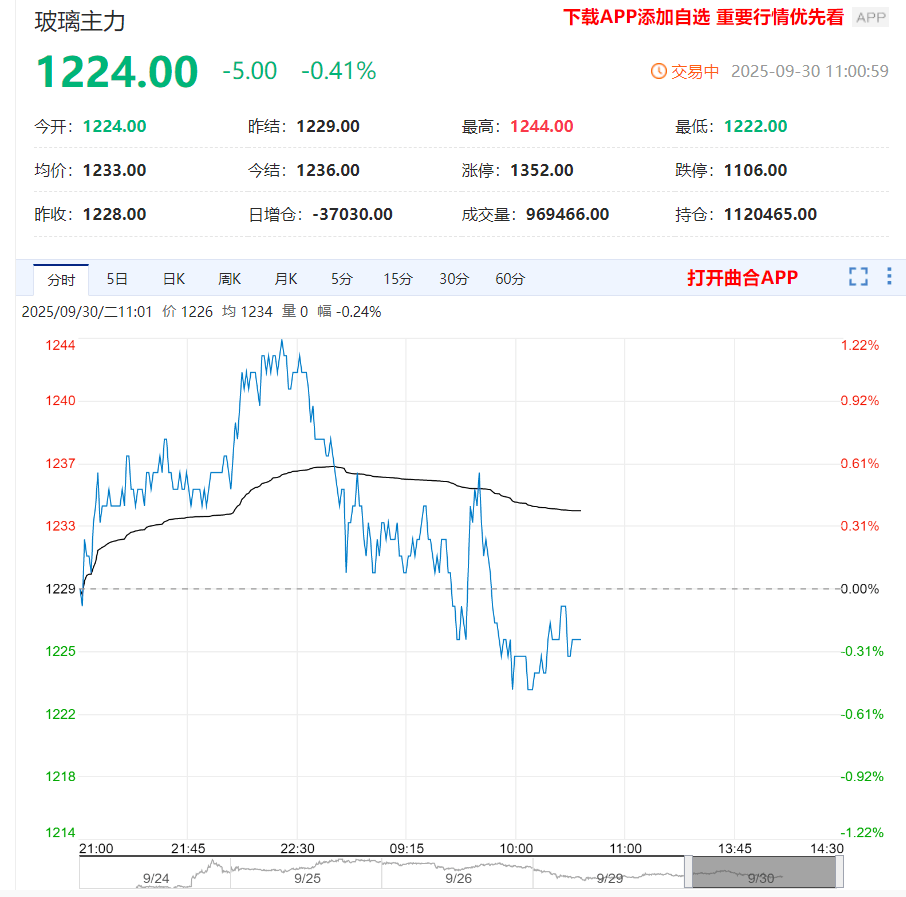
Group 1 - The glass futures contracts are maintaining a weak trend due to high inventory levels and weak demand, despite some positive factors such as seasonal demand and policy expectations [1][3] - The supply side is experiencing mixed signals, with disruptions expected from the coal-to-gas transition in the Shahe region and winter pollution control measures [3] - The market is currently in a state of weak balance to slight oversupply, and there is caution against being overly optimistic about price increases [1][3] Group 2 - According to Everbright Futures, the glass market is unlikely to see sustained price increases without significant improvements in the fundamentals [3] - The demand side may see some support from pre-holiday stocking and year-end construction, but the recovery in the real estate sector remains slow [3] - Chuangyuan Futures notes that both bullish and bearish factors are present, with high midstream inventory continuing to suppress prices despite potential cost increases from policy changes [3]

纯碱玻璃周报:供需偏弱,玻碱反弹承压-20250622
Hua Lian Qi Huo· 2025-06-22 13:35
1. Report Industry Investment Rating No relevant content provided. 2. Core Views of the Report - **Soda Ash**: Last week, the operating rate and production of soda ash enterprises continued to rise, and the market production - sales rate increased month - on - month. However, the inventory continued to accumulate. The current supply - demand pattern of soda ash is weak, with no improvement in downstream demand, continuous increases in supply and inventory, and a gradual decline in spot prices. The subsequent pattern of increasing supply and weak demand will continue to suppress market confidence. Although the short - term futures price rebounded at a low level due to macro - disturbances, the rebound momentum is insufficient under the weak reality. It is recommended to trade with a short - bias on rebounds or sell out - of - the - money call options [8]. - **Glass**: Last week, due to one production line being shut down for water discharge and one for hot repair, and one previously ignited production line starting to produce glass, the weekly melting volume increased slightly, and the manufacturer's inventory increased slightly month - on - month. Currently, glass supply fluctuates within a narrow range at a low level. Entering the off - season of demand, downstream enterprises are cautious in purchasing, and manufacturers' inventory remains high. Enterprises reduce prices to promote sales. Short - term demand is seasonally weak, and high inventory puts pressure on the market. The futures valuation is low and maintains a low - level shock. Attention should be paid to the cold repair of production lines after losses deepen. It is recommended to refer to the 950 - 1050 range for short - term shock trading, sell on rebounds, or sell out - of - the - money call options [9]. 3. Summary by Relevant Catalogs 3.1 Week - on - Week Views and Strategies Soda Ash - **Inventory**: As of June 19, 2025, the total inventory of domestic soda ash manufacturers was 1.7267 million tons, including 812,600 tons of light soda ash and 914,100 tons of heavy soda ash. Enterprises' shipment slowed down, new orders were average, and some enterprises' inventory increased [8]. - **Supply**: As of June 19, 2025, domestic soda ash production was 754,700 tons, a month - on - month increase of 14,600 tons or 1.97%. Among them, light soda ash production was 338,700 tons, a month - on - month increase of 3,000 tons, and heavy soda ash production was 416,000 tons, a month - on - month increase of 11,600 tons. There were few maintenance enterprises, and the load of individual enterprises fluctuated, resulting in increased supply [8]. - **Demand**: As of June 19, 2025, the weekly shipment volume of Chinese soda ash enterprises was 714,300 tons, a month - on - month increase of 4.92%; the overall shipment rate of soda ash was 94.65%, a month - on - month increase of 2.66 percentage points. Soda ash production increased slightly. Enterprises mainly shipped pre - orders, and new order reception was average. The production - sales rate only improved slightly [8]. - **View and Strategy**: The current supply - demand pattern is weak. It is recommended to trade with a short - bias on rebounds or sell out - of - the - money call options [8]. Glass - **Inventory**: As of June 19, 2025, the total inventory of national float glass sample enterprises was 69.887 million weight boxes, a month - on - month increase of 202,000 weight boxes or 0.29%, and a year - on - year increase of 16.82%. The inventory days were 30.8 days, the same as the previous period [9]. - **Supply**: From June 13 - 19, 2025, the average operating rate of the float glass industry was 75.4%, a month - on - month decrease of 0.17 percentage points; the average capacity utilization rate was 77.85%, a month - on - month increase of 0.26 percentage points. The national float glass production was 1.0935 million tons, a month - on - month increase of 0.21% and a year - on - year decrease of 7.88% [9]. - **Profit**: From June 13 - 19, 2025, according to the production cost calculation model of Longzhong Information, the weekly average profit of float glass using natural gas as fuel was - 195.11 yuan/ton, a month - on - month decrease of 12.28 yuan/ton; the weekly average profit of float glass using coal - made gas as fuel was 83.70 yuan/ton, a month - on - month increase of 2.98 yuan/ton; the weekly average profit of float glass using petroleum coke as fuel was - 108.47 yuan/ton, a month - on - month increase of 20.00 yuan/ton [9]. - **Demand**: As of June 16, 2025, the average order days of national deep - processing sample enterprises was 9.83 days, a month - on - month decrease of 5.0% and a year - on - year decrease of 5.48% [9]. - **View and Strategy**: Currently, supply is at a low level with narrow fluctuations, and demand is seasonally weak. It is recommended to refer to the 950 - 1050 range for short - term shock trading, sell on rebounds, or sell out - of - the - money call options [9]. 3.2 Industrial Chain Structure - **Soda Ash**: The upstream of the soda ash industry chain includes natural alkali mines, raw salt, synthetic ammonia, raw salt, limestone, and ammonium chloride. The product is soda ash (light soda ash/heavy soda ash), and the downstream includes agricultural fertilizers, glass, and daily detergents [11]. - **Flat Glass**: The upstream of the flat glass industry chain includes raw materials such as quartz sand, limestone, soda ash, and additives, as well as fuels like coal - made gas (24%), natural gas (40%), and petroleum coke (16%). The mid - stream products include float glass and other types. The downstream is mainly used in real estate (75%), automobiles (18%), and electronic appliances (7%) [12]. 3.3 Futures and Spot Markets - **Glass**: As of June 20, 2025, the closing price of the FG main contract was 1007, and the North China basis was 133 yuan/ton. The FG9 - 1 spread closed at - 58 yuan/ton [16][20]. - **Soda Ash**: As of June 20, 2025, the closing price of the SA main contract was 11573, and the North China basis was 227 yuan/ton. The SA9 - 1 spread closed at 11 yuan/ton [19][20]. 3.4 Inventory - **Glass**: As of June 19, 2025, the total inventory of national float glass sample enterprises was 69.887 million weight boxes, a month - on - month increase of 202,000 weight boxes or 0.29%, and a year - on - year increase of 16.82%. The inventory days were 30.8 days, the same as the previous period. There were different inventory changes in different regions [23]. - **Soda Ash**: As of June 19, 2025, the total inventory of domestic soda ash manufacturers was 1.7267 million tons, including 812,600 tons of light soda ash and 914,100 tons of heavy soda ash. Enterprises' shipment slowed down, new orders were average, and some enterprises' inventory increased [32]. 3.5 Supply Side - **Glass**: From June 13 - 19, 2025, the average operating rate of the float glass industry was 75.4%, a month - on - month decrease of 0.17 percentage points; the average capacity utilization rate was 77.85%, a month - on - month increase of 0.26 percentage points. The national float glass production was 1.0935 million tons, a month - on - month increase of 0.21% and a year - on - year decrease of 7.88% [36]. - **Soda Ash**: As of June 19, 2025, domestic soda ash production was 754,700 tons, a month - on - month increase of 14,600 tons or 1.97%. Among them, light soda ash production was 338,700 tons, a month - on - month increase of 3,000 tons, and heavy soda ash production was 416,000 tons, a month - on - month increase of 11,600 tons. There were few maintenance enterprises, and the load of individual enterprises fluctuated, resulting in increased supply [45]. 3.6 Demand Side - **Glass**: As of June 16, 2025, the average order days of national deep - processing sample enterprises was 9.83 days, a month - on - month decrease of 5.0% and a year - on - year decrease of 5.48%. Since June, deep - processing orders in many places have decreased [52]. - **Soda Ash**: As of June 19, 2025, the weekly shipment volume of Chinese soda ash enterprises was 714,300 tons, a month - on - month increase of 4.92%; the overall shipment rate of soda ash was 94.65%, a month - on - month increase of 2.66 percentage points. Soda ash production increased slightly. Enterprises mainly shipped pre - orders, and new order reception was average. The production - sales rate only improved slightly [62].
短期供需格局难有改善 玻璃期价低位震荡
Jin Tou Wang· 2025-06-20 08:42
Core Viewpoint - Glass futures have shown a slight upward trend, with the main contract reaching a peak of 1021.00 yuan and closing at 1007.00 yuan, reflecting a 1.31% increase [1] Group 1: Market Analysis - New Century Futures indicates that glass prices are experiencing low-level fluctuations, with no substantial positive factors in the fundamentals. The current weak trend in glass spot prices is expected to continue, with daily melting volume dropping below 156,000 tons in the short term due to both production line ignition and shutdown [2] - Hualian Futures notes that the glass market is in a demand off-season, with companies reducing prices to stimulate sales. Inventory levels are slightly fluctuating at high levels, and the short-term supply-demand balance is unlikely to improve, leading to continued downward pressure on glass prices [3] - Zhonghui Futures highlights a significant decline in real estate completions from January to May, with a 5% decrease in downstream processing orders in mid-June compared to historical levels. The overall glass demand is expected to remain weak, with continued inventory accumulation upstream and a lack of significant drivers for price recovery [3] Group 2: Production and Inventory - New Century Futures reports that the total inventory of float glass among sample enterprises remains high compared to the same period in the past two years, indicating significant inventory pressure [2] - Hualian Futures mentions that one production line has been shut down, leading to a slight decrease in operating rates, while inventory levels have increased slightly in most regions, except for slight reductions in Central and Eastern China [3] - Zhonghui Futures states that the current production and daily melting volume are experiencing low-level fluctuations, with costs decreasing and market prices below production costs, indicating a low valuation despite weak fundamentals [3]
西南期货早间评论-20250507
Xi Nan Qi Huo· 2025-05-07 06:20
1. Report Industry Investment Ratings No relevant content provided. 2. Core Views of the Report - The external environment is favorable for Treasury bond futures, but considering the current relatively low Treasury bond yields, China's economic recovery trend, and the possibility of tariff adjustments, it is recommended to remain cautious [6]. - Despite the impact of tariffs on the domestic economic recovery rhythm and the increase in global recession risks, the long - term performance of Chinese equity assets is still optimistic, and it is advisable to consider going long on stock index futures [9]. - The long - term bullish trend of precious metals continues, and it is recommended to go long on gold futures on dips [12]. - For steel products such as rebar and hot - rolled coils, investors can focus on short - selling opportunities on rebounds, and for iron ore, they can focus on buying opportunities at low levels [14][17]. - For coking coal and coke, investors can focus on short - selling opportunities on rebounds [19]. - For ferroalloys, consider opportunities in out - of - the - money call options for manganese silicon and short - covering opportunities for ferrosilicon [22]. - Consider going long on the main contracts of crude oil and fuel oil [25][27]. - Synthetic rubber and natural rubber are expected to be in a weak and volatile state, PVC is expected to be in a bottom - oscillating state, and urea requires attention to export changes [28][29][34]. - For PX, PTA, and other chemical products, consider range - bound operations [38][39]. - For ethylene glycol, short - term bottom - oscillating is expected, and cautious participation is recommended [41]. - For short - fiber and bottle - chip, they are expected to follow the cost side and oscillate, and cautious participation is recommended [42][43]. - For soda ash, short - term disk adjustments may occur, and short - sellers at low levels should adjust their positions [46]. - For glass, the post - holiday market sentiment is expected to be weak [47]. - For caustic soda, pay attention to enterprise inventory and delivery volume data changes [48]. - For pulp, the market is in a weak pattern [51]. - Lithium carbonate is expected to be in a weak operation [52]. - Consider going long on the main contract of Shanghai copper, and have a bearish and oscillating view on tin [56][57]. - Nickel is expected to remain in a supply - surplus pattern, and industrial silicon and polysilicon are expected to continue to decline in price [58][59]. - For soybean oil and soybean meal, adopt a wait - and - see attitude for soybean meal and consider out - of - the - money call options for soybean oil at the bottom [61]. - Consider the opportunity to widen the soybean oil - palm oil spread, and consider buying opportunities for rapeseed meal after a pullback [63][65]. - For cotton, sugar, apples, and other agricultural products, a wait - and - see attitude is recommended [67][71][74]. - For live pigs, consider waiting and seeing, and for eggs, consider reverse - spread opportunities [77][79]. - For corn and corn starch, a wait - and - see attitude is recommended [81]. - For logs, the market is in a weak state with no obvious driving force [84]. 3. Summary by Related Catalogs Treasury Bonds - On the previous trading day, most Treasury bond futures closed down. The central bank conducted 405 billion yuan of reverse repurchase operations on May 6, with a net withdrawal of 682 billion yuan. The Caixin China Services PMI in April was 50.7, and the comprehensive PMI output index declined, indicating a slowdown in the expansion of domestic enterprise production and operation activities [5]. - The external environment is favorable for Treasury bond futures, but considering various factors, it is recommended to remain cautious, and the volatility is expected to increase [6][7]. Stock Index Futures - On the previous trading day, stock index futures showed mixed performance. The market is worried about the decline in corporate profit growth due to tariffs, but domestic asset valuations are low, and policies have hedging space. The long - term performance of Chinese equity assets is still optimistic, and it is advisable to consider going long on stock index futures [8][9][10]. Precious Metals - On the previous trading day, gold and silver futures rose. The complex global trade and financial environment, the increase in the risk of global recession due to tariffs, and the possible passive easing of monetary policies are expected to drive up the price of gold. It is recommended to go long on gold futures on dips [11][12][13]. Rebar and Hot - Rolled Coils - On the previous trading day, rebar and hot - rolled coil futures showed weak oscillations. The downward trend of the real estate industry suppresses the price of rebar, but the peak - season demand may provide short - term support. The valuation of steel prices is low, and investors can focus on short - selling opportunities on rebounds [14]. Iron Ore - On the previous trading day, iron ore futures oscillated. The increase in iron ore demand and the decrease in supply and inventory support the price. The valuation of iron ore is relatively high, and investors can focus on buying opportunities at low levels [16][17]. Coking Coal and Coke - On the previous trading day, coking coal and coke futures fell sharply. The supply of coking coal is loose, and the trading atmosphere has weakened. The shipment of coke has improved, but the possibility of further price increases is low. The futures may continue to decline, and investors can focus on short - selling opportunities on rebounds [19]. Ferroalloys - On the previous trading day, manganese silicon and ferrosilicon futures fell. The supply of ferroalloys is still high, and the demand is weak. The supply of manganese ore may be disturbed. Consider opportunities in out - of - the - money call options for manganese silicon and short - covering opportunities for ferrosilicon [21][22]. Crude Oil - On the previous trading day, INE crude oil fell sharply due to OPEC's plan to increase production by 411,000 barrels per day in June. The increase in production may lead to price fluctuations, but factors such as Sino - US talks are favorable for crude oil. Consider going long on the main contract [23][24][25]. Fuel Oil - On the previous trading day, fuel oil followed crude oil and fell sharply. The reduction in Singapore's inventory may support the price, and the relaxation of US sanctions on Russia may be negative for high - sulfur fuel oil. Consider going long on the main contract [26][27]. Synthetic Rubber - On the previous trading day, synthetic rubber rose. The supply pressure continues, the demand improvement is limited, and the cost side rebounds. It is expected to oscillate weakly [28][29]. Natural Rubber - On the previous trading day, natural rubber futures rose. The global supply is expected to increase, and the demand is affected by tariffs. It is expected to oscillate weakly [29][30]. PVC - On the previous trading day, PVC futures fell. The supply pressure eases marginally, the demand recovers weakly, and the price is expected to oscillate at the bottom [31][34]. Urea - On the previous trading day, urea futures rose. The approach of the summer corn fertilizer preparation period and potential Indian tenders may affect the price. Pay attention to export policy changes [35][36]. PX - On the previous trading day, PX futures fell. PX devices are under centralized maintenance, and the downstream demand has improved. It is expected to follow the cost side and oscillate, and range - bound operations are recommended [37][38]. PTA - On the previous trading day, PTA futures fell. The supply is affected by device maintenance, the demand is affected by tariffs, and the cost side is under pressure. It is expected to oscillate, and range - bound operations are recommended [39]. Ethylene Glycol - On the previous trading day, ethylene glycol futures fell. The supply is expected to increase, the inventory is high, and the demand is weak. It is expected to oscillate at the bottom, and cautious participation is recommended [40][41]. Short - Fiber - On the previous trading day, short - fiber futures fell. The supply is at a relatively high level, the demand is weak, and it is expected to follow the cost side and oscillate. Cautious participation is recommended [42]. Bottle - Chip - On the previous trading day, bottle - chip futures fell. The cost support is insufficient, the supply is increasing, and the demand is gradually recovering. It is expected to follow the cost side and oscillate [43]. Soda Ash - On the previous trading day, soda ash futures fell. In May, device maintenance will be concentrated, which may lead to short - term disk adjustments. The supply is high, and the inventory is stable [44][46]. Glass - On the previous trading day, glass futures fell. The production line is at a low level, the demand is weak, and the post - holiday market sentiment is expected to be weak [47]. Caustic Soda - On the previous trading day, caustic soda futures rose. Some devices will enter the maintenance period in May, and the demand is limited. Pay attention to enterprise inventory and delivery volume data changes [48][49]. Pulp - On the previous trading day, pulp futures fell. The inventory is accumulating, the supply is increasing, and the market is in a weak pattern [50][51]. Lithium Carbonate - On the previous trading day, lithium carbonate futures fell. The supply is high, the demand is weak, and it is expected to be in a weak operation [52]. Copper - On the previous trading day, Shanghai copper oscillated upward. Although the ICSG expects a supply surplus of refined copper, Sino - US talks may boost demand. Consider going long on the main contract [53][55][56]. Tin - On the previous trading day, Shanghai tin rose. The supply shortage may ease with the resumption of mines, and the downstream demand is affected by Sino - US trade. A bearish and oscillating view is taken [57]. Nickel - On the previous trading day, Shanghai nickel fell. The cost support is strong, but the demand may weaken in the off - season. It is expected to remain in a supply - surplus pattern [58]. Industrial Silicon and Polysilicon - On the previous trading day, industrial silicon and polysilicon futures continued to decline. The demand in the industrial chain is weak, the supply decline is limited, and the price is expected to continue to be under pressure [59]. Soybean Oil and Soybean Meal - On the previous trading day, soybean oil and soybean meal futures fell. The supply of soybeans is expected to be loose, the demand for soybean oil and soybean meal is expected to increase slightly. Adopt a wait - and - see attitude for soybean meal and consider out - of - the money call options for soybean oil at the bottom [60][61]. Palm Oil - Malaysian palm oil prices fell. The market is concerned about the May production outlook, and the inventory may increase. Consider the opportunity to widen the soybean oil - palm oil spread [62][63]. Rapeseed Meal and Rapeseed Oil - Canadian rapeseed prices fell. The import of rapeseed in the EU has increased, and China has imposed tariffs on Canadian rapeseed products. Consider buying opportunities for rapeseed meal after a pullback [64][65]. Cotton - The domestic cotton market showed a volatile trend. The planting area in China has increased, and the demand is affected by tariffs. A wait - and - see attitude is recommended [66][67][68]. Sugar - The domestic sugar market showed a volatile trend. Brazil is entering the production acceleration period, and the sugar production in India is lower than expected. The domestic inventory is neutral, and a wait - and - see attitude is recommended [69][71][72]. Apples - The domestic apple futures showed a sharp rise and then a fall. The cold - storage inventory is low, and the new - year production increase is expected. A wait - and - see attitude is recommended [73][74][75]. Live Pigs - The price of live pigs showed a slight decline. The supply may increase after the holiday, and the demand will enter a short - term off - season. Consider waiting and seeing [76][77]. Eggs - The price of eggs fell. The supply is expected to increase in May, and the pre - holiday stocking may provide support. Consider reverse - spread opportunities [78][79]. Corn and Corn Starch - Corn futures closed flat, and corn starch futures rose. The supply of corn is expected to be in a surplus state, and the demand is weak. A wait - and - see attitude is recommended [80][81]. Logs - On the previous trading day, log futures rose. The supply is affected by holidays and weather, and the demand is weak. The market is in a weak state with no obvious driving force [82][83][84].
玻璃月报:供需双弱格局,锚定煤制成本-20250430
Zhong Hui Qi Huo· 2025-04-30 13:44
1. Report Industry Investment Rating No relevant content provided. 2. Core Viewpoints of the Report - In April, the float glass market faced dual pressures of "weak reality + weak expectation", with the price center continuing to decline. Macroscopically, there was no clear incremental policy information from the Politburo meeting in April, and the Sino - US trade war was at a stalemate. Although market risk appetite had somewhat recovered, tariff concerns remained, and the macro - sentiment was still cautious. Fundamentally, glass production and daily melting volume remained stable at a low level, with limited expectation of supply reduction. After the cost decreased, manufacturers' cold - repair plans slowed down, and the supply side could not effectively support the glass. Demand showed seasonal improvement, but the number of days of downstream deep - processing orders was significantly lower than the same period. The decline of the real estate industry narrowed but was still in the negative range, and the market demand expectation was weak. Upstream glass enterprises re - accumulated inventory, and under the pressure of medium - level inventory, the rebound of the futures market was suppressed to some extent. In the medium - to - long term, the annual supply of glass showed a downward trend, and demand had periodic increases. Prices would fluctuate significantly with changes in fundamentals. It was recommended that the industry seize the opportunity of high - level hedging. Attention should be paid to global market risk appetite, downstream production and sales, and domestic hedging policies [2]. 3. Summary by Related Catalogs 3.1 Market Review - **Futures Market**: As of April 29, the FG2509 contract closed at 1,234 yuan/ton, with a monthly change of - 9.4% [5]. - **Spot Market**: As of April 29, the monthly change range of spot prices was between - 2.3% and + 3.2% [5]. - **Basis**: In April, spot glass quotes showed regional differentiation, with the national average price increasing by 10 yuan/ton. The futures market was weak, driving the basis to strengthen. The basis of the main FG509 contract in Hubei was 68, and the basis rate was 5.6% [8]. - **Spread**: The spread of the FG05 - 09 contract was - 44 points, with the near - month contract weaker than the far - month contract. The spread of the FG09 - 01 contract was - 50 points, showing a pattern of near - month weakness and far - month strength. The glass showed a contango structure, with the near - month contract at par, and the reality was weak but the space was limited. The spread between soda ash and the glass 09 contract was 242 points, the same as on March 20 and 50 points wider than on April 20 [11][13]. 3.2 Supply Side - **Capacity Utilization**: In April, the capacity utilization rate decreased and was lower than the same period last year. The current start - up rate of the float glass industry was 75.42%, unchanged from the previous month and - 9.07% year - on - year. The capacity utilization rate was 78.41%, - 0.62% month - on - month and - 7.327% year - on - year [16]. - **Daily Melting Volume**: Currently, the daily melting volume of float glass was 157,200 tons, - 0.79% month - on - month and - 9.8% year - on - year. The monthly average daily output was 158,200 tons. It was estimated that the glass output in April was 4.74 million tons ( - 3.1% month - on - month and - 9.3% year - on - year) [19]. - **Cold - repair Loss**: In April, the daily average loss of float glass was 42,400 tons. It was estimated that the maintenance loss in April was 1.27 million tons ( - 3.6% month - on - month and + 46.8% year - on - year) [21]. 3.3 Demand Side - **Deep - processing Orders**: As of mid - April, the average number of days of orders for national deep - processing sample enterprises was 9.3 days, + 13.4% month - on - month and - 17.7% year - on - year. The performance of deep - processing orders varied. Some enterprises reported no obvious improvement compared with March and were lower than the same period last year. Currently, scattered orders maintained production, while some orders increased, especially in South China, Northeast China, Northwest China, and Southwest China, with little change in East China, North China, and Central China. As of April 25, 2025, the start - up rate of Chinese LOW - E glass sample enterprises was 46.7%, - 13.1 percentage points year - on - year [27]. - **Real Estate Demand**: From January to March 2025, the cumulative year - on - year changes in real estate sales area, new construction area, completion area, and development funds sources were - 3.0% ( + 2.1% month - on - month), - 24.4% ( + 5.2% month - on - month), - 14.3% ( + 1.3% month - on - month), and - 3.6% ( + 13.4% month - on - month) respectively. The decline in real estate sales, completion, and funds sources narrowed [30]. 3.4 Inventory - **Enterprise Inventory**: Currently, the total inventory of national float glass sample enterprises was 65.473 million heavy boxes, - 2.3% month - on - month and + 9.25% year - on - year. The inventory days were 29.4 days, 0.8 days less than in March and 4.8 days more than the same period last year [35]. - **Shahe Area Inventory**: Currently, the social inventory in the Shahe area was 3.6 million heavy boxes, - 21.7% month - on - month and the same as the same period last year. The replenishment of medium - level traders slowed down, and the inventory of upstream enterprises accumulated [39]. 3.5 Cost and Profit - **Cost**: Currently, the cost of petroleum coke - based production was 1,208 yuan/ton, + 4.5% month - on - month and - 1.47% year - on - year; the cost of coal - based production was 1,067 yuan/ton, - 2.11% month - on - month and - 18.55% year - on - year; the cost of natural gas - based production was 1,503 yuan/ton, - 2.02% month - on - month and - 12.11% year - on - year [44]. - **Profit**: Currently, the production profit of petroleum coke - based production was - 38.35 yuan/ton, - 18.11 yuan/ton month - on - month; the production profit of coal - based production was 145 yuan/ton, + 56.45 yuan/ton month - on - month; the production profit of natural gas - based production was - 153 yuan/ton, + 38.47 yuan/ton month - on - month [47]. 3.6 Strategies - **Unilateral Strategy**: The new main 09 contract reached around 1,080, falling near the dynamic coal - based cost. Dynamically track the suppression of the 20 - day moving average, and 1,150 became the watershed between bulls and bears [3]. - **Arbitrage Strategy**: The spread of the glass 9 - 1 contract was currently around - 50, and the market was in a back structure. Reverse arbitrage could still be participated in [3]. - **Hedging Strategy**: Currently, the glass industry chain showed the transmission characteristics of upstream inventory accumulation, medium - level sales stagnation, and downstream weakness. Currently, the inventory of upstream glass enterprises and medium - level traders was higher than the same period. The upstream and medium - level could consider selling hedging around 1,200 - 1,250 when the futures market was at a large premium based on their own spot inventory and sales situation [3].
短期玻璃供需格局仍偏宽松
Qi Huo Ri Bao· 2025-03-25 12:10
Group 1 - The short-term glass supply and demand structure remains relatively loose, with current market prices stabilizing and midstream distributors increasing inventory due to a quick recovery in production and sales [1][4] - Weak terminal demand continues to be a significant factor limiting the rise in glass prices, as downstream entities face difficulties in cash flow and slow order recovery, leading to cautious stocking behavior [1][4] - The production capacity of float glass in China is currently at a low level compared to the past five years, with 223 out of 285 production lines in operation, and a daily melting capacity of 158,155 tons, down 9.73% year-on-year [1] Group 2 - The recent "Consumption Promotion Special Action Plan" issued by the central government aims to boost domestic demand and stabilize the real estate market, which may positively impact glass demand if policies are effectively implemented [2] - The plan includes measures to support housing consumption, such as allowing special bonds for purchasing existing homes for affordable housing and potentially lowering housing provident fund loan rates [2] - Current inventory levels in key monitored provinces have decreased by 202 million weight boxes, a reduction of 3.23%, indicating a slight improvement in the market despite ongoing cautious purchasing behavior from downstream entities [3] Group 3 - The overall glass market is characterized by a low profit level, with many companies facing losses; if prices continue to decline, there is a possibility of a further reduction in supply, which could improve the supply-demand environment [4] - The market is expected to experience pressure on prices due to the loose supply-demand structure, while policy expectations and cost support may provide some stability [4] - Future market dynamics will depend on the release of midstream and downstream stocking demand and the effectiveness of real estate policies [4]