生产率革命

Search documents
国泰海通晨报-20260225
GUOTAI HAITONG SECURITIES· 2026-02-25 02:11
Macro Research - In 2026, approximately 77 trillion yuan of residents' fixed deposits will mature, with about 25 trillion yuan facing repricing due to high-interest deposits [1] - The maturity pressure for 2026 is expected to be less severe compared to 2025, with a year-on-year increase of 9.6-10.8 trillion yuan, corresponding to a growth rate of 14.4%-16.3% [2][3] Strategy Research - Kevin Warsh's potential leadership at the Federal Reserve may lead to a "moderate rate cut + limited balance sheet reduction" policy, which could increase asset volatility and reshape asset pricing paradigms [1][5] Basic Chemical Research - Sanmei Co., Ltd. is a leading player in the third-generation refrigerants market, with prices expected to continue rising due to increasing downstream demand [1][8] - The company has a significant share of the HFCs production quota in China, with HFC-134a, HFC-125, HFC-32, and HFC-143a accounting for 23.97%, 18.43%, 11.81%, and 15.48% of the national production quota, respectively [9][27] - The average market price of R32 has surged from 13,472 yuan/ton at the beginning of 2023 to 63,000 yuan/ton at the beginning of 2026, a staggering increase of 368% [11][28] - The company is actively enhancing its integrated layout across the fluorine industry chain, with several projects in various stages of development [12][28]

国泰海通 · 晨报260225|宏观、策略
国泰海通证券研究· 2026-02-24 14:27
Macro - The article discusses the significant amount of "excess savings" in the market, estimated at 16 trillion yuan, which will face lower interest rates of 1.2%-1.5% by 2026, potentially triggering a shift of deposits to other assets [2] - The total amount of maturing deposits in 2026 is projected to be around 76-77 trillion yuan, with a notable seasonal peak in the first quarter, where approximately 32-34 trillion yuan will mature [2][4] - The year-on-year increase in maturing deposits from 2025 to 2026 is expected to be 9.6-10.8 trillion yuan, with a growth rate of 14.4%-16.3%, which is lower than the 17.7% growth rate in 2025 [2] Pressure Analysis - Approximately 25 trillion yuan of high-interest deposits are set to mature, representing about 32% of the total maturing deposits, which is a key factor for renewal pressure [3] - The renewal rate for deposits maturing in 2025 is expected to remain resilient, with around 90% of deposits likely to be renewed despite lower interest rates [3] Core Contradiction - The focus for 2026 shifts from "whether to move" to "where to move," indicating a gradual and dispersed migration of deposits to other assets rather than a rapid shift [4] - Even with a hypothetical 10% outflow rate from the 77 trillion yuan in maturing deposits, this could significantly impact the pricing in equity and bond markets [4]


特朗普的“完美人选”颠覆美联储?解码凯文·沃什的“新政构想”:左手放水右手抽水,要靠AI驯服通胀,拒做美债“大买家”
Mei Ri Jing Ji Xin Wen· 2026-02-03 11:15
Core Viewpoint - The unexpected nomination of Kevin Warsh as the new Chairman of the Federal Reserve by President Trump has triggered significant reactions in global financial markets, leading to a sharp decline in gold prices and a rise in the US dollar index [2][10][3]. Policy Dimension - Warsh is recognized as a critic of excessive quantitative easing (QE) and has long advocated for the reduction of the Federal Reserve's large balance sheet [5][12]. - His policy stance includes a combination of interest rate cuts and balance sheet reduction, which is seen as contradictory but is justified by his belief in the need to shrink the Fed's balance sheet while managing liquidity [11][12]. - Historically, Warsh has held a hawkish stance focused on combating inflation, but he has shown flexibility in his approach since Trump's presidency, aligning more with the administration's desire for lower interest rates [7][12]. Market Reaction - Following the announcement of Warsh's nomination, COMEX gold futures experienced an 8.35% drop, marking the largest single-day decline in nearly 40 years, while the US dollar index rose by 1.5% [10][2]. - The market is recalibrating expectations regarding liquidity and interest rates, reflecting concerns about the potential impact of Warsh's policies on the financial environment [10][31]. Economic Implications - Warsh's belief in the role of artificial intelligence (AI) as a deflationary force suggests that he anticipates a long-term reduction in inflation, which could support his low-interest rate policies [12][13]. - The potential shift in the Federal Reserve's role as a major buyer of US Treasury bonds could lead to significant changes in global liquidity dynamics, particularly if Warsh implements his proposed balance sheet reduction [14][19]. Challenges Ahead - Warsh faces significant internal resistance within the Federal Reserve, as the Federal Open Market Committee (FOMC) may not align with his proposed policies, particularly regarding the balance sheet [20][24]. - The historical context indicates that simultaneous interest rate cuts and balance sheet reduction have rarely been achieved, posing a challenge for Warsh's policy framework [17][19]. Divergent Views - Analysts are divided on Warsh's potential stance as Fed Chair, with some predicting a dovish approach focused on interest rate cuts, while others maintain he will retain a hawkish perspective [25][26]. - The balance between maintaining Fed independence and responding to political pressures from the Trump administration will be crucial in shaping Warsh's tenure [27][34].
OpenAI在2030年前无法实现盈利,为维持增长将投入巨资
财富FORTUNE· 2025-12-01 13:12
Core Viewpoint - OpenAI, despite its phenomenal success with ChatGPT, has yet to achieve profitability and faces significant financial challenges, particularly in scaling its operations and infrastructure to meet growing demand for AI capabilities [2][4]. Financial Projections - HSBC predicts that OpenAI will not be profitable even by 2030, with a user base projected to reach 44% of the global adult population, up from 10% in 2025 [2][4]. - The company will require an additional $207 billion in computing power investments to support its growth plans, reflecting soaring infrastructure costs and intense competition in the AI market [2][4]. Infrastructure and Cost Analysis - HSBC's semiconductor analyst team updated their forecasts for OpenAI, factoring in recent long-term cloud computing commitments with Microsoft ($250 billion) and Amazon ($38 billion), which do not involve new capital injections [3]. - OpenAI aims to achieve 36 gigawatts of AI computing power by the end of the decade, with the electricity demand equivalent to that of a state slightly smaller than Texas [3]. Revenue and Cash Flow - OpenAI's cumulative free cash flow is expected to remain negative through 2030, resulting in a funding gap of $207 billion that must be filled through debt, equity financing, or aggressive revenue generation strategies [4]. - Revenue is projected to exceed $213 billion by 2030, but this will not be sufficient to cover the anticipated costs, which will total $792 billion for cloud and AI infrastructure from 2025 to 2030 [4]. Market Dynamics and Risks - OpenAI's survival is closely tied to its financial backers and the broader AI ecosystem, with major investors like Microsoft and Amazon facing risks associated with OpenAI's uncertain revenue model and potential market saturation [5]. - The company may need to raise more debt to meet its computing needs, but this could be challenging in the current market environment, as other tech giants have also raised significant debt for AI-related capital expenditures [5]. Productivity and Economic Impact - HSBC references concerns about low productivity growth in developed economies, questioning whether the AI revolution will yield meaningful returns, similar to skepticism surrounding the internet revolution [6][7]. - Economic estimates suggest that without data centers, GDP growth rates could be significantly lower, raising questions about the sustainability of growth driven by AI and productivity improvements [7].

弗格森定律
Hu Xiu· 2025-04-28 00:20
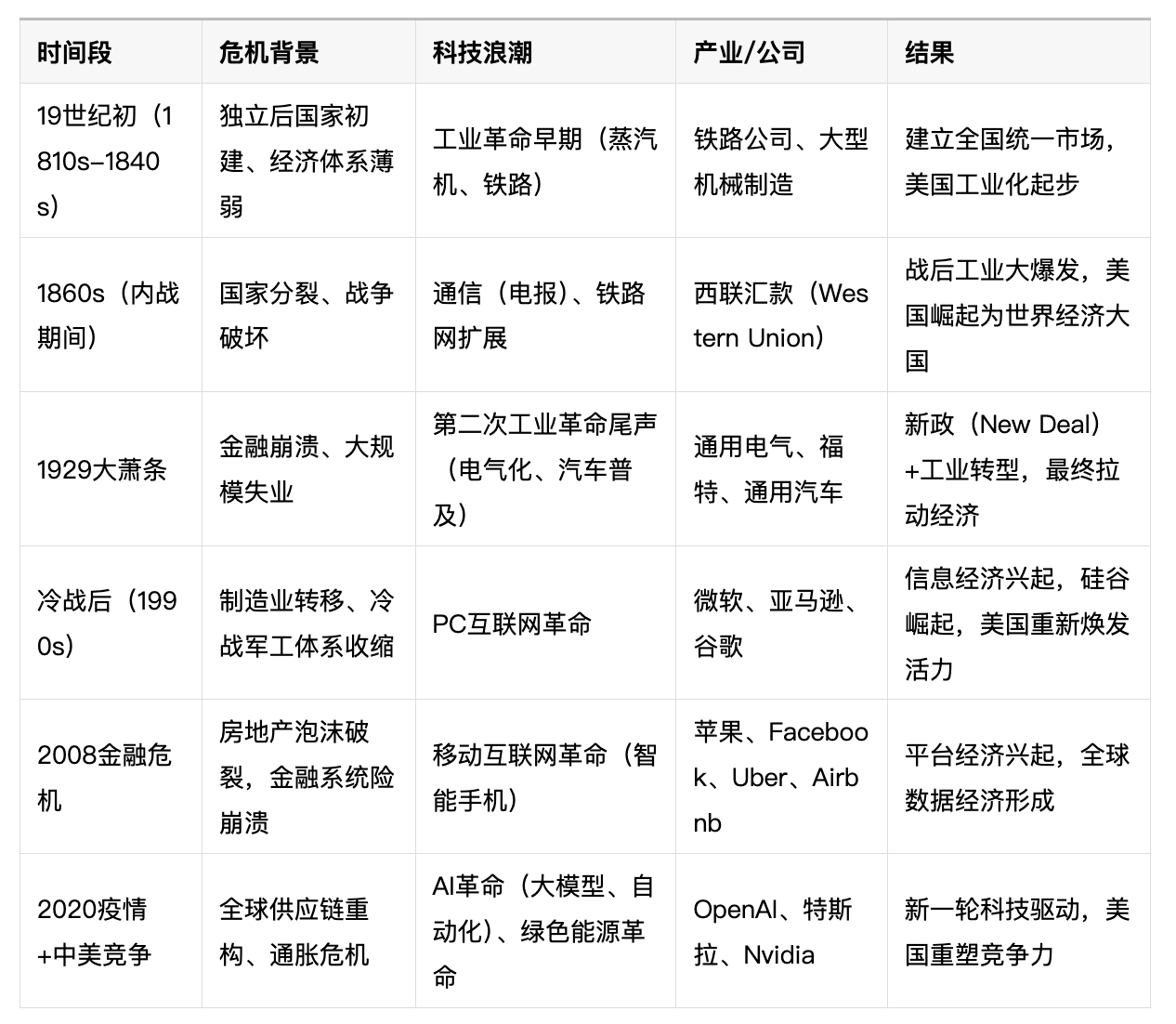
Group 1 - The core observation by historian Neil Ferguson suggests that when an empire's debt interest payments exceed its defense spending, it often marks the beginning of its decline and instability in the global geopolitical order [1][2] - Ferguson's theory can be applied to the current situation of the United States, where rising debt interest payments may threaten its ability to maintain global leadership [2][3] - The implications of Ferguson's law indicate that high debt burdens can lead to currency devaluation and hidden defaults, affecting individual purchasing power and increasing inflation [3][4] Group 2 - The article discusses the role of technology in resolving economic crises in the U.S., highlighting that past crises were mitigated by technological advancements such as the internet and mobile technology [6][8] - It emphasizes that while technology is crucial, it is not the sole factor in economic recovery; other elements like monetary policy, capital market flexibility, and globalization also play significant roles [9][10] - The historical context shows that each major crisis in the U.S. has been followed by a technological revolution that has spurred economic growth [12][13] Group 3 - The article outlines the current economic challenges facing the U.S., stating that AI cannot directly resolve these issues in the short term, as it does not address inflation, national debt, or social inequality [14][15][16] - However, AI has the potential to drive a productivity revolution in the medium term, which could indirectly alleviate economic difficulties by enhancing output across various sectors [18][21] - Long-term prospects for AI are mixed, with the potential for both revitalization and exacerbation of existing crises, depending on how it is managed and integrated into the economy [23][25] Group 4 - The article suggests that AI's impact on the economy will depend on various factors, including inflation pressures, high interest rates, fiscal deficits, and social divisions [25][26] - It highlights the importance of adapting to changes brought by AI, including the need for education and training systems to evolve alongside technological advancements [33][34] - The conclusion emphasizes that while AI may not automatically resolve economic crises, it could be a significant factor in restoring U.S. economic vitality if properly guided [27][36]