
生态创新

Search documents
2025年中国消费市场观察:多元升级与生态创新激活增长新引擎
Xin Hua She· 2025-12-31 06:46
Group 1 - The core viewpoint of the articles highlights the robust growth and transformation of China's consumer market since 2025, driven by consumption policies and technological innovations, emphasizing the shift towards high-quality, intelligent, and emotional consumption [1][2][6] - The retail sales of consumer goods in China increased by 4% year-on-year from January to November 2025, indicating a shift from scale expansion to value growth centered on quality upgrades [2] - Key technological breakthroughs, such as Xiaomi's launch of its 3nm flagship processor and the Xiaomi 17 Ultra smartphone, have significantly contributed to the high-end consumer electronics market, showcasing the role of innovation in stimulating consumption [2] Group 2 - The emotional economy is emerging as a new growth area in consumption, with the market size expected to reach 2.3 trillion yuan in 2024 and surpass 4.5 trillion yuan by 2029, reflecting a shift in consumer motivations from functional satisfaction to emotional resonance [4] - New consumption formats, including digital, green, and health consumption, are becoming increasingly active, with the new energy vehicle market showing significant growth, where new energy vehicles accounted for 53.2% of total new car sales by November 2025 [5] - The integration of ecosystems, such as Xiaomi's smart factories and automotive strategies, is reshaping consumer experiences, moving from single product purchases to integrated, scenario-based services [5][8]


2025出海标杆榜单揭晓:做好世界的合伙人
虎嗅APP· 2025-11-23 13:41
Core Insights - The article discusses the transformation of Chinese companies in their overseas expansion, marking the beginning of "Overseas 2.0" era, characterized by a shift from price competition to organizational strength, innovation, and localized operations [2][3]. Group 1: Strategic Upgrades - In the past year, there has been a significant upgrade in overseas strategies, with more companies establishing global operational systems, transitioning from product export to brand export [3]. - Many manufacturing and emerging consumer brands are setting up localized teams and data management units in specific regions, enhancing innovation, service, and marketing at community and user touchpoints [3][4]. Group 2: External Challenges - The external environment for overseas expansion is becoming increasingly complex, with geopolitical factors significantly impacting companies' strategies [4]. - Trade barriers in Europe and the U.S., data protection regulations in Southeast Asia, and market access issues in the Middle East require companies to possess higher strategic sensitivity and local adaptability [4][5]. Group 3: Local Adaptation and Risk Management - Compliance has become a critical threshold, necessitating that Chinese companies develop cross-border risk control and emergency response capabilities [5]. - Companies are moving from a "hit-and-run" approach to a more rooted strategy, focusing on local talent, data, ecosystems, and teams to withstand external risks and achieve resilient growth [5][6]. Group 4: Evolving Competitive Landscape - The competitive landscape and philosophies of Chinese companies are evolving, transitioning from product sales to creating value ecosystems [6]. - The most promising sectors for overseas expansion by 2025 include smart manufacturing, consumer electronics, renewable energy, and cross-border e-commerce brands [7][8]. Group 5: Benchmark Enterprises - The article emphasizes that true benchmark enterprises are not just defined by high revenue or size but by their continuous evolution of capabilities and ecological innovation [11][12]. - The evaluation criteria for benchmark enterprises include innovation capability, localization, organizational resilience, and sustainable growth [12]. Group 6: Award Winners - The article lists several companies recognized for their outstanding performance in overseas markets, including Haier, Lenovo, Midea, Didi, and Changan Automobile, highlighting their contributions to global brand building and market penetration [16][19][20][21][22][23][24][25][26][27][28]. - New emerging companies like United Imaging, Baseus, and Fantuan are also acknowledged for their rapid rise and innovative business models in overseas markets [30][31][32][33][34][35][36][37][38][39]. Group 7: Service Providers - The article identifies key service providers that support overseas enterprises, including logistics, marketing, and payment solutions, which help lower the barriers for Chinese brands to reach global users [41][42][43][44][45][46][47][48][49][50][51]. Group 8: Future Outlook - The future of Chinese companies' overseas expansion is expected to be defined by the integration of localization capabilities, data-driven strategies, and ecological collaboration [51]. - The evolution of Chinese brands in the global market is not a sprint but a long-term contest of organizational strength, innovation, and belief [51].







推动扩大服务消费 17项政策促住宿业高质量发展
Bei Jing Shang Bao· 2025-10-19 15:40
Core Viewpoint - The Ministry of Commerce and nine other departments jointly issued the "Guiding Opinions on Promoting High-Quality Development of the Accommodation Industry," which outlines 17 specific policies aimed at enhancing brand building, promoting innovative business models, and supporting green development in the accommodation sector [1][3]. Group 1: Brand Building - The guiding opinions emphasize strengthening brand construction by encouraging accommodation operators to improve service standards and management levels, enhance promotional efforts, and adopt methods such as chain operations and brand licensing to increase brand influence [1]. - There is a focus on cultivating mid-to-high-end hotel brands and unique homestay brands, as well as creating internationally recognized accommodation brands [1]. - Support is provided for brand enterprises to register trademarks abroad, apply for patents, and participate in authoritative certifications [1]. Group 2: Ecological Innovation - The opinions advocate for innovative business model development, encouraging the creation of culturally themed hotels, wellness hotels, and unique homestays, as well as the orderly development of esports hotels and container hotels [2]. - There is an emphasis on integrating accommodation with entertainment, tourism, health, and education sectors to create themed rooms and experiences [2]. - The guiding opinions promote digital transformation in the accommodation sector through the use of big data, IoT, and AI technologies to enhance operational management and customer engagement [2]. Group 3: Supportive Elements - The opinions call for enhanced land planning and financial support for the accommodation industry, encouraging local governments to allocate land for large hotel projects and utilize existing spaces for tourism-related accommodations [3]. - There is a push for local accommodation operators to connect with financial institutions to develop financing and insurance products tailored to the accommodation sector [3]. - The Ministry of Commerce aims to address existing challenges in the accommodation industry, such as insufficient brand development and high levels of homogenization, to better support consumption and employment [3].
期待新长安引领产业新突破
Jing Ji Ri Bao· 2025-08-01 21:36
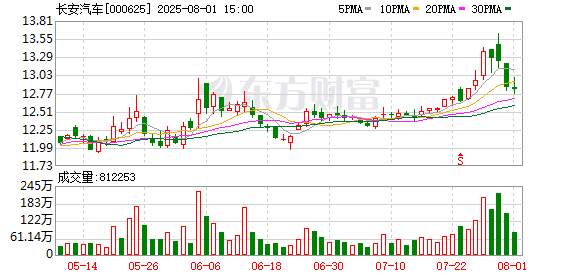
Core Viewpoint - The establishment of China Changan Automobile Group as an independent state-owned enterprise under the State-owned Assets Supervision and Administration Commission (SASAC) marks a significant step in the reform of state-owned enterprises and aims to enhance the competitiveness of China's automotive industry while promoting high-quality economic development [2] Group 1: Company Structure and Goals - Changan Automobile has transitioned from a subsidiary of China Ordnance Industry Group to a directly managed independent state-owned enterprise, creating a true trio of major automotive state-owned enterprises in China [2] - The strategic goal of the new Changan is to become a world-class automotive group with global competitiveness and core independent technologies, targeting a production and sales scale of 5 million vehicles by 2030, with over 60% being new energy vehicles and over 30% in overseas sales [3] Group 2: Challenges and Opportunities - The automotive industry is undergoing a critical transition period, with rapid technological innovation and a restructuring market landscape, where traditional advantages of state-owned enterprises are diminishing due to the shrinking market for fuel vehicles [3] - Changan's historical complexity and large scale, with a registered capital of 20 billion yuan and 117 subsidiaries, present significant challenges in achieving transformation and upgrading [3] Group 3: Innovation Focus - Technological innovation is crucial for Changan to develop competitive products, with a focus on breakthroughs in smart driving, smart cockpits, battery systems, and cutting-edge technologies like solid-state batteries and high-performance chips [4] - Mechanism innovation is necessary to address the challenges faced by state-owned enterprises in adapting to market dynamics, achieving technological returns, and stimulating organizational vitality [4] Group 4: Ecosystem Development - The automotive industry now operates within a vast ecosystem that includes user traffic, big data, and new business models, necessitating a shift from traditional after-sales service to a comprehensive service model that encompasses the entire lifecycle of vehicle usage [5]
济南|济南“三把钥匙”破解外贸逆境
Da Zhong Ri Bao· 2025-07-24 00:45
Core Viewpoint - Jinan has achieved significant growth in foreign trade, with a total import and export value of 1240.9 billion yuan in the first half of 2025, marking a year-on-year increase of 25.9%, outperforming national and provincial averages by 23 and 19.1 percentage points respectively [2] Group 1: Technological Innovation - The export of Y-shaped transition forgings by Yilite Energy Equipment Co., Ltd. to the Middle East signifies international recognition of its technology [2] - Yilite's exports have surged, with major products including wind power flanges and large ring forgings, reaching over 30 countries [2] - The company is set to enhance its production capacity with a new project aimed at producing oversized key forging components by 2026 [3] Group 2: Industry Transformation - Jinan's manufacturing sector is shifting from cost competition to technology leadership, with high-tech product exports reaching 131.6 billion yuan, an increase of 11.1% [4] - Self-branded products accounted for 392.4 billion yuan in exports, growing by 11.3% and making up nearly half of the city's total exports [4] - The export value of new energy vehicles has increased significantly, exceeding 300 million yuan, a growth of 3.5 times [4] Group 3: Ecological Innovation - Shandong Energy Group International Trade Development Co., Ltd. achieved 44.5 billion yuan in foreign trade in the first half of the year, with total revenue exceeding 77 billion yuan [5] - The company has successfully recruited foreign trade talent and expanded its market presence [5] Group 4: Policy Innovation - The issuance of a certificate of origin for Shandong Shengquan New Materials Co., Ltd. has enabled tariff reductions, with exports exceeding 1.2 billion yuan in the first five months [8] - The customs authority has streamlined the certificate issuance process, enhancing trade flexibility and competitiveness [8] - In the first half of the year, the customs issued 27,144 certificates of origin, amounting to 135.24 billion yuan, resulting in an estimated tax reduction of 21.1 million yuan for enterprises [9]