
生成式 AI

Search documents
大摩闭门会-投资者能否对网络安全领域感到安心
2026-03-30 05:15
Summary of Key Points from Conference Call Industry Overview - The cybersecurity sector has seen its valuation premium largely absorbed, with AI-driven attack costs dropping to near zero, compelling companies to address technical debt. There is a resurgence in endpoint security demand, and the sector is expected to accelerate collectively in the second half of 2026 [1][2][6]. Core Companies and Their Performance - **Navon**: Achieved a nearly 10% revenue beat, returning to profitability. Revenue guidance exceeds consensus by 3.5%, with a projected growth of 30% by 2027. Current valuation at 1.5x EBITDA sales is considered attractive [1][4]. - **Intuit**: Valuation at a PEG of approximately 1x, with expected earnings growth of 15%-20%. The company is positioned well with its AI-enabled platform and human involvement model, filling a gap in the mid-market with its enterprise suite [1][5]. - **Snowflake**: Focuses on using generative AI to optimize data import and query efficiency, driving core business growth rather than merely expanding into new AI ventures [1][5]. - **CrowdStrike**: Recognized as a top choice in the industry, with its Flex solution widely adopted. The company is well-positioned to meet AI security demands, with a rapid product iteration pace [3][8]. Market Dynamics and Trends - The cybersecurity budget remains robust despite geopolitical risks, with a healthy outlook for investment in the sector. The current macroeconomic pressures are more significant than geopolitical factors, although Q1 may see some decision delays among large enterprises [2][6]. - The demand for AI security products is emerging, with 80% of Fortune 500 companies deploying intelligent agents, although supply-side solutions are not yet mature, with widespread adoption expected by late 2026 to 2027 [3][6]. Competitive Landscape - The integration trend in the cybersecurity sector is clear, with customers preferring to seek AI capabilities from existing suppliers rather than new point solution vendors. Microsoft plays a pivotal role in this integration, leveraging its technological and financial advantages [7][8]. - In the SIM (Security Information and Event Management) space, the need for real-time processing and reduced analysis costs is highlighted, with next-gen SIM products improving detection and resolution times significantly [8]. Investment Outlook - The current environment is favorable for investing in the cybersecurity sector, driven by AI as a key growth factor. The sector exhibits defensive characteristics, with several companies expected to see a resurgence in growth by 2026, particularly in the latter half of the year [9].
中原证券晨会聚焦-20260327
Zhongyuan Securities· 2026-03-27 00:27
Key Insights - The report highlights the significant increase in domestic air travel fuel surcharges, with multiple airlines raising international surcharges by over 50% [5][8] - The transportation sector showed a robust performance in early 2026, with port cargo throughput reaching 2.87 billion tons, a year-on-year increase of 7.2% [5][8] - The mechanical industry maintained growth in early 2026, with general equipment manufacturing increasing by 8.9% and specialized equipment manufacturing by 8.8% [5][8] Market Analysis - The A-share market is experiencing a period of consolidation, with the Shanghai Composite Index and the ChiNext Index showing average P/E ratios above their three-year median, indicating a suitable environment for medium to long-term investments [9][10] - The core pressure on the market is attributed to overseas factors, particularly the potential escalation of conflicts in the Middle East, which could lead to rising oil prices and increased global inflationary pressures [9][10] - Domestic macroeconomic policies are becoming clearer, providing a solid support base for the market, with the central bank indicating a commitment to maintaining liquidity [9][10] Industry Insights - The virtual power plant industry is poised for rapid growth, supported by national policies aimed at optimizing power dispatch and integrating decentralized energy resources [16][17] - The smart home appliance market is projected to reach approximately $180 billion by 2026, with a compound annual growth rate of 22% from 2016 to 2026, driven by advancements in technology and consumer demand [18][19] - The automotive industry is facing challenges with a decline in production and sales in early 2026, influenced by seasonal factors and policy changes regarding new energy vehicles [21][22] Investment Recommendations - The report suggests focusing on sectors such as electric power, photovoltaic equipment, and communication devices for short-term investment opportunities, given their current market performance [9][10] - In the smart home appliance sector, companies like Haier, Midea, and Gree are recommended for their strong dividend yields and low valuations, alongside emerging players in high-growth segments like robotic vacuum cleaners [20] - The automotive sector is advised to be monitored closely, particularly companies with strong global capabilities and those involved in innovative technologies like smart driving and robotics [23]
画质革命还是AI整容?DLSS 5引爆全网争议,老黄亲自下场论战
机器之心· 2026-03-21 05:04
Core Viewpoint - Nvidia's latest AI image reconstruction and super-resolution technology, DLSS 5, has sparked significant controversy despite being touted as a major breakthrough in computer graphics since the introduction of real-time ray tracing in 2018 [2][3]. Group 1: Technology Overview - DLSS 5 is described as capable of injecting photo-realistic lighting and materials into pixels, enhancing overall visual performance [4][5]. - The technology aims to bring Hollywood-level visual effects into real-time gaming, supporting resolutions up to 4K while maintaining smooth interactivity [24]. - Unlike previous versions, DLSS 5 shifts from hardware-dependent methods to a fully generative AI approach, utilizing a large AI model trained to understand complex scene semantics [25][28]. Group 2: Industry Response and Concerns - Many players have expressed disappointment, claiming that DLSS 5 alters character models into generic AI-generated faces, undermining the artistic efforts of creators [12][20]. - The technology has received mixed reviews, with some praising the improved graphics while others liken it to a beauty filter that detracts from the original artistic vision [21][22]. - Concerns have been raised about the potential for AI to homogenize artistic styles, as AI-generated faces often exhibit similar features, leading to a loss of individuality in character design [29][30]. Group 3: Developer Control and Future Implications - Nvidia asserts that the integration of generative AI with real game data is controllable by developers, allowing them to fine-tune the AI to align with their artistic styles [32]. - The company emphasizes that the technology is not merely a post-processing filter but involves generative modeling at the geometric level, ensuring that developers retain control over the artistic direction [32].



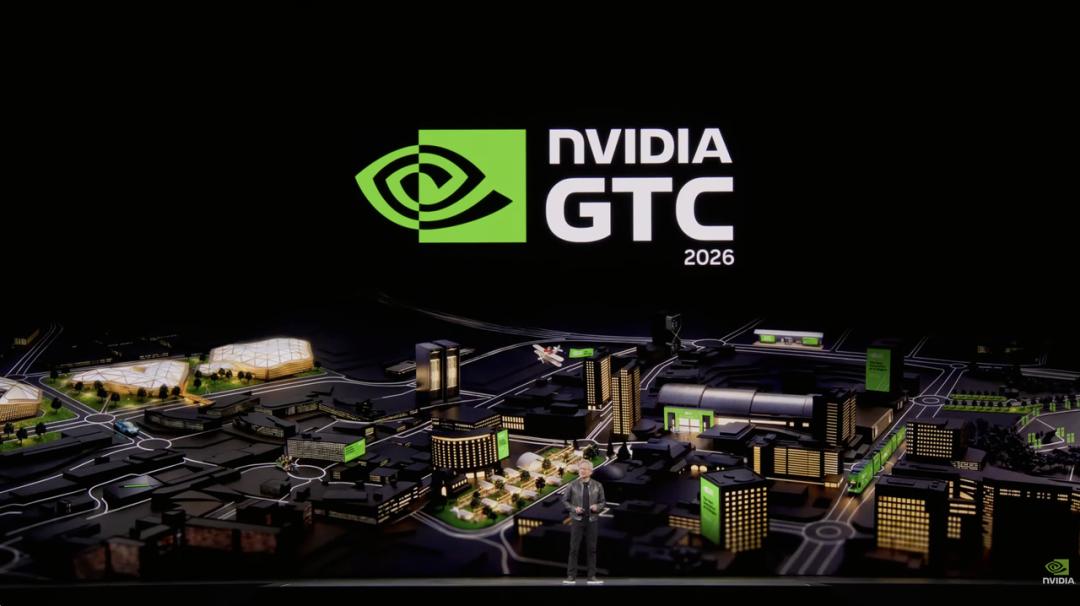
GTC-2026现场解读-AI基础设施新范式
2026-03-19 02:39
Summary of NVIDIA's 2026 GTC Conference Insights Industry and Company Overview - The conference focused on NVIDIA's strategic shift from being a chip seller to becoming a builder of AI factory platforms, emphasizing low-latency generative AI inference scenarios for 2026 [2][1]. Core Insights and Arguments - **Strategic Shift**: NVIDIA's strategy has evolved to prioritize the construction of AI factory platforms, moving away from solely chip sales. The focus is now on low-latency generative AI inference [2][1]. - **AI Infrastructure Model**: The conference introduced a "five-layer cake" model, starting from energy input to the final output of tokens, aligning with the AI factory's input-output model [2][1]. - **Chip Product Matrix**: NVIDIA showcased a comprehensive AI supercomputer product matrix, integrating technology from Groq to enhance low-latency inference capabilities. This includes a cabinet product supporting 256 Groq LPUs [3][1]. - **Revenue Guidance**: NVIDIA projected a revenue increase of approximately $500 billion for 2027, indicating stable quarter-over-quarter growth but not significant year-over-year growth compared to the previous cycle [5][6]. Additional Important Content - **Partnerships in Physical AI**: New OEM partners include Geely, BYD, and Hyundai, offering differentiated autonomous driving solutions ranging from L2+ to L4 levels. However, NVIDIA is restricted from selling autonomous driving software in mainland China, limiting its offerings to hardware [6][1]. - **Technological Evolution**: NVIDIA plans to maintain a coexistence of optical and copper connections in the short to medium term, with future products like Fairwood Ultra incorporating some CPO technology [4][1]. - **Agentic AI Trend**: The integration of Groq LPU aligns with the rise of Agentic AI applications, marking 2026 as a pivotal year for the deployment of such technologies [4][1].
刚刚,英伟达龙虾登场,黄仁勋暴论频出,「人车家天地芯」冲击万亿收入
3 6 Ke· 2026-03-17 00:50
Core Insights - The central theme of NVIDIA's GTC 2023 is the emergence of Agentic AI, with a focus on the new Vera Rubin architecture designed to enhance AI capabilities [1][4][10] Group 1: Agentic AI and Vera Rubin Architecture - The Vera Rubin architecture is specifically designed for Agentic AI, enabling machines to perform tasks rather than just process information [4][11] - NVIDIA introduced the Vera CPU, which is twice as efficient as traditional CPUs and offers a 50% speed increase, marking a significant advancement in processing capabilities [9][11] - The architecture includes seven chips and five rack systems, with a focus on high memory capacity and bandwidth, achieving 260 TB/s [10][13] Group 2: Performance Enhancements - The combination of Vera Rubin and Groq LPU allows for a 35-fold increase in performance at the high-end inference level, significantly improving throughput and efficiency [20][17] - NVIDIA's new software, Dynamo, integrates prefill and attention mechanisms to optimize AI inference, addressing the challenges of latency and throughput [17][15] Group 3: OpenClaw and Ecosystem Development - OpenClaw is introduced as a potential game-changer in the AI landscape, likened to Linux for its impact, enabling companies to develop Agent-as-a-Service models [21][22] - NVIDIA is building a comprehensive ecosystem around Agentic AI, with a focus on security and collaboration with top experts to ensure safe deployment [23][26] Group 4: Data Processing Innovations - NVIDIA is redefining data processing with cuDF and cuVS, which enhance the speed of handling structured and unstructured data, respectively [43][44] - The company emphasizes the importance of algorithms and libraries in its strategy, positioning itself as a key player in the AI infrastructure market [46][48] Group 5: Future Projections and Market Impact - NVIDIA anticipates that its Blackwell and Rubin chips will generate at least $1 trillion in revenue by the end of 2027, driven by increasing AI inference demands [50][52] - The company is also exploring opportunities in space with the development of radiation-hardened chips for satellite applications, indicating a broad vision for future AI capabilities [58][60] Group 6: Autonomous Driving and Physical AI - NVIDIA's partnerships with major automotive manufacturers for RoboTaxi Ready platforms signify a strong push into the autonomous driving sector [61][63] - The integration of AI in industrial robotics and heavy machinery showcases the company's commitment to advancing physical AI applications [63][64]
计算机行业“一周解码”:特斯拉机器人产能规划达100万台
Bank of China Securities· 2026-03-15 05:10
Investment Rating - The industry investment rating is "Outperform" [31] Core Insights - Tesla's third-generation humanoid robot is set to officially launch and begin mass production, marking the start of large-scale commercial deployment in the humanoid robot industry. The long-term production capacity is planned to reach 1 million units [3][14][15] - Meta Platforms plans to deploy four self-developed AI chips (MTIA 300 to 500) within the next two years to meet the growing demand for computing power driven by generative AI [3][16][17] Summary by Relevant Sections Tesla's Humanoid Robot - Tesla showcased its third-generation humanoid robot at AWE 2026, which utilizes advanced autonomous perception and operation capabilities. The robot is designed to relieve humans from complex and dangerous tasks, with a production plan of up to 1 million units by the end of 2026 [14][15] - The robot incorporates Tesla's existing smart driving and visual neural network technologies, significantly enhancing joint flexibility and operational capabilities compared to previous versions [14][15] Figure's Helix 02 System - Figure's Helix 02 system has achieved a breakthrough, enabling robots to autonomously organize a living room. This system integrates a unified visual-motor neural network, allowing robots to perform complex tasks with minimal additional data input [10][11][13] - The recent C-round financing raised over $1 billion, boosting Figure's valuation to $39 billion, the highest in the field of embodied intelligence [12][13] Meta's AI Chip Development - Meta's initiative to develop four AI chips aims to diversify hardware sources and reduce reliance on external manufacturers, addressing the increasing computational demands of AI applications. The MTIA 300 chip is already in production, while the others will be rolled out by 2027 [16][17][18] - This dual-track strategy allows Meta to maintain stability in its computing infrastructure while paving the way for a self-sufficient chip ecosystem tailored to its specific needs [17][18]


腾讯控股(00700):周报-20260304
First Shanghai Securities· 2026-03-04 11:31
Investment Rating - The report does not explicitly state an investment rating for the company [2]. Core Insights - Tencent Cloud is expanding its infrastructure by adding a new cloud availability zone in Frankfurt, Germany, which will increase its total to three zones in the region. This move aims to enhance its overseas market presence by leveraging a dual-driven model of "computing power infrastructure + AI PaaS tools" [2]. - WeChat has introduced a file storage optimization feature that addresses user concerns about excessive memory usage, indicating a focus on improving user experience while maintaining core social functionalities [3]. - The upcoming game "Honor of Kings World" is set to launch in April, leveraging the strong user base of its predecessor "Honor of Kings." The new game is expected to convert 3%-5% of active users from the original game, potentially generating significant revenue in its initial months [4]. - The AI assistant "Yuanbao" has gained substantial user traffic but faced challenges with inappropriate outputs during multi-turn conversations. This highlights ongoing issues with AI safety alignment and the need for further model refinement [5]. Summary by Sections Tencent Cloud - Tencent Cloud is set to launch a new cloud availability zone in Frankfurt, Germany, enhancing its infrastructure and aiming for a stronger foothold in the European market [2]. WeChat - The latest WeChat update includes a storage optimization feature that allows users to manage their storage more effectively, addressing long-standing user complaints about memory usage [3]. Gaming - "Honor of Kings World" is scheduled for release in April, with expectations of converting a portion of its predecessor's user base, potentially leading to significant revenue growth [4]. AI Developments - The AI assistant "Yuanbao" has achieved a daily active user count exceeding 50 million but has encountered issues with inappropriate content generation, indicating a need for ongoing improvements in AI model safety and performance [5].

2025年AI医疗器械品牌推荐:重构医疗生态的AI驱动型领跑者
Tou Bao Yan Jiu Yuan· 2026-03-02 12:42
Investment Rating - The report does not explicitly state an investment rating for the AI medical device industry Core Insights - The AI medical device industry is experiencing significant growth, with a market size increase from 125 million RMB in 2019 to 4.37 billion RMB in 2023, reflecting a compound annual growth rate (CAGR) of 143.33% [8] - The market is expected to continue expanding, projected to reach 52.49 billion RMB by 2028, with a CAGR of 68.58% [8] - The industry is characterized by a diverse range of applications and a growing number of approved products, indicating a broad market potential [5][9] Market Background - AI medical devices utilize artificial intelligence technology based on medical device data for medical purposes, with a wide range of applications and increasing regulatory support [5][6] - The industry has evolved through three major stages, from early expert systems to the current commercial application phase, marked by the approval of AI medical devices for clinical use [7] Market Status - The market size has shown substantial growth, with 81 AI medical devices approved by the end of 2023, up from 8 in 2020 [8] - The demand for AI medical devices is driven by the need to alleviate resource shortages in healthcare, with significant patient volumes and hospital bed utilization rates indicating ongoing challenges in the healthcare system [11][12] Market Competition - The competitive landscape features a tiered structure, with leading companies such as Shukun Technology and United Imaging in the first tier, followed by others like Pushang Medical and Aibot Medical [16] - Regulatory clarity has accelerated the approval process for AI medical devices, fostering a more competitive environment [16] Recommended Brands - Shukun Technology is recognized as a leader in AI and medical AI models, with a comprehensive product offering across the healthcare spectrum [19] - Deepwise Intelligent is noted for its strong R&D capabilities and a diverse AI product matrix [20] - Pushang Medical has innovated with AI surgical robots, enhancing precision in surgical procedures [21] - United Imaging is a major player in medical imaging equipment, with a robust AI product lineup [22] - Other notable companies include Bodo Medical, Neusoft Medical, and Eagle Eye Technology, each contributing unique innovations to the market [22][25][26] Development Trends - The industry is moving towards multi-modal technology integration and generative AI applications, enhancing diagnostic accuracy and clinical decision-making [30] - Regulatory frameworks are evolving to support product compliance and accelerate market entry for innovative solutions [32] - The market is expanding into grassroots healthcare and consumer-level applications, indicating new growth opportunities [33] - Collaboration between enterprises, academia, and research institutions is fostering innovation and international expansion in the AI medical device sector [34]

谷歌高管放话:这两类AI初创公司,别轻易涉足了
Xin Lang Cai Jing· 2026-02-22 10:43
Core Insights - The article discusses the challenges faced by AI startups, particularly those relying on LLM wrappers and AI aggregators, indicating a shift in market dynamics and investor sentiment [1][6]. Group 1: LLM Wrappers - LLM wrappers are defined as startups that build products or user experiences on top of existing large language models (LLMs) like Claude, GPT, or Gemini, aiming to solve specific problems [3]. - There is a growing impatience in the industry for startups that merely white-label existing models without offering substantial differentiation [4]. - Successful startups must develop a deep and wide competitive moat, rather than relying on superficial enhancements to existing models [4]. Group 2: AI Aggregators - AI aggregators are a subset of LLM wrappers that integrate multiple LLMs into a single interface or API, allowing users to access various models [6]. - Mowry advises against entering the aggregator business due to limited growth and progress in this area, as users prefer products with built-in intellectual property [6]. - The current landscape for AI aggregators mirrors the early stages of cloud computing, where many startups were eventually marginalized as major providers expanded their offerings [7]. Group 3: Future Opportunities - Mowry expresses optimism for "vibe coding" and developer platforms, predicting significant breakthroughs in these areas by 2025, with startups like Replit, Lovable, and Cursor gaining substantial investment and customer interest [7]. - There is an anticipated strong growth in consumer-facing technologies that empower users with powerful AI tools, such as Google's AI video generator Veo [7]. - Beyond AI, biotechnology and climate technology are seen as sectors ripe for investment, with the potential to create real value through unprecedented access to vast data [8].


大摩闭门会-软件行业的未来何在
2026-02-13 02:17
Summary of Key Points from the Conference Call Industry Overview - The software industry is experiencing a valuation multiple decline of 33%, reaching its lowest level since 2016, primarily due to uncertainties stemming from accelerated AI innovations that have increased discount rates [2][4][5]. - Despite the valuation drop, the fundamental trends in the software industry have not significantly deteriorated, with no major acceleration or deceleration in growth observed [4][5]. Company-Specific Insights Palantir - Palantir reported a strong fourth quarter with a growth rate of 70% and an operating margin of 57%, projecting over 60% growth for the next year [2][5]. - The company's success is attributed to its ontology data technology, which is crucial for understanding data relationships and requires deep domain knowledge and customized services [2][5][6]. - Palantir's Foundry platform is increasingly adopted by clients in industrial and oil & gas sectors, positioning it as a key supplier for companies looking to implement AI projects [5]. Atlassian - Atlassian's free cash flow multiple is approximately 14 times, indicating a low valuation compared to other high-growth companies [8]. - Despite good financial performance, the stock price has not improved, reflecting low market risk appetite and varying investor expectations regarding growth and profitability [8][9]. Snowflake - Snowflake's enterprise value/sales multiple has returned to levels seen in 2014-2016, with signs of growth emerging [3][14]. - The company has shown consistent product revenue growth of 28% over two consecutive quarters, with one quarter reaching 30% [14][15]. - Snowflake's core business remains stable, and its AI business is performing strongly, with product revenue growth expected to approach 30% [18]. Microsoft - Microsoft has demonstrated steady growth in its Azure platform, with a rolling 12-month fixed currency growth rate showing improvement [15]. - The Microsoft 365 business cloud segment is also improving, with a fixed currency growth rate of 15% in the last quarter [15]. Intuit - Intuit is expanding into the high-end market through global business solutions and is focusing on auxiliary services during tax season, which could open a $35 billion market opportunity [19]. ServiceNow - ServiceNow is advancing its new product cycle, with its Now Assist product currently generating an annual recurring revenue (ARR) of $600 million [20]. - The adoption rate of its Prosci product is expected to increase significantly in the coming years, contributing to stronger growth [20]. Market Sentiment and Future Outlook - The current market sentiment is cautious, with software stocks averaging a 20% decline this year, and prices at 55% of their 52-week highs [4][5]. - Investors are looking for signs of improvement in the participation of established software companies in large-scale innovation cycles to drive growth [14]. - The "AI is software" perspective suggests that AI represents an evolutionary change in software, with large language models being significant breakthroughs that enhance automation in workflows [10][11]. Valuation Considerations - The current enterprise value/sales multiple for the software industry is approximately 4.4 times expected sales, close to historical averages but not at the lowest point [13]. - GAAP earnings issues are affecting investor decisions, with some companies like Microsoft and ServiceNow showing positive GAAP earnings growth, yet not attracting significant market interest [13]. This summary encapsulates the key insights and trends discussed in the conference call, highlighting the current state of the software industry and specific company performances.


