生成式AI大模型

Search documents
87版红楼梦“细节重生” 焕新重播,优酷首次实现AI大模型批量修复老片
Bei Jing Shang Bao· 2026-02-12 03:46
Core Insights - Youku has launched a dedicated page for "Human Treasure AI High-Definition Restoration of Classics," utilizing its self-developed generative AI model to restore over ten classic Chinese TV dramas, including "Dream of the Red Chamber," "Romance of the Three Kingdoms," "Water Margin," and "Journey to the West" [1] Group 1: Technology Application - This marks the first systematic application of generative AI model technology in the restoration of classic films in China, achieving significant breakthroughs in image clarity, detail restoration, and temporal stability [3] - The AI restoration technology not only enhances image quality but also serves as a contemporary means of preserving classic cultural heritage [3] Group 2: Technical Details - The Youku technical team has developed a proprietary generative AI restoration system based on a 14 billion parameter model, leveraging hundreds of millions of high-quality film training data and vast computational resources [3] - To address the "restoration not resembling" issue, Youku trained a dedicated facial restoration model for key characters, ensuring accurate retention of actors' facial features during the restoration process [3] Group 3: Efficiency and Cost - The self-developed generative AI model demonstrates significant efficiency advantages; for instance, traditional manual restoration of the classic film "Shaolin Temple" takes 8 months, while Youku's AI system can complete the restoration in just 2 days, achieving over a hundredfold increase in efficiency [4] - This efficiency not only drastically reduces restoration costs but also enables the possibility of large-scale restoration of classic film libraries [4]



繁荣数据标注产业 激活数字经济发展新引擎
Xin Lang Cai Jing· 2026-01-29 17:44
Core Insights - The rise of generative AI models presents unprecedented opportunities for the data annotation industry, particularly in Guizhou, which is positioned as a national big data comprehensive experimental zone and digital economy innovation area [1] Group 1: Industry Development - Guizhou is accelerating its development in the data annotation sector, aiming for high-quality growth to support national data strategies and foster new productive forces [1] - The province is focusing on enhancing policy, technology, talent, and ecological collaboration to transform the data annotation industry towards high-tech and high-value directions [1] Group 2: Ecosystem and Collaboration - A proposed "one core leading, all-region collaboration" ecosystem aims to support the development of the Gui'an Smart Industry Park and leverage technological resources from leading platform enterprises [2] - The establishment of a national-level data annotation base is encouraged, along with the development of a data security and compliance system to align with national integrated data market construction [2] Group 3: Talent Development - There is a need to establish a talent cultivation system, including the introduction of data annotation-related programs in vocational colleges and the creation of industry-education integration training platforms [3] - A certification system for data annotators and a shared talent pool are suggested to facilitate orderly talent flow [3] Group 4: Industry Integration - The integration of data annotation services with sectors like smart healthcare, intelligent manufacturing, and smart transportation is emphasized to create industry-specific datasets [3] - Local government and state-owned enterprises are encouraged to prioritize procurement from local service providers to expand market opportunities [3]
回到台前的雷军 回应一切的小米
Bei Jing Shang Bao· 2026-01-04 15:57
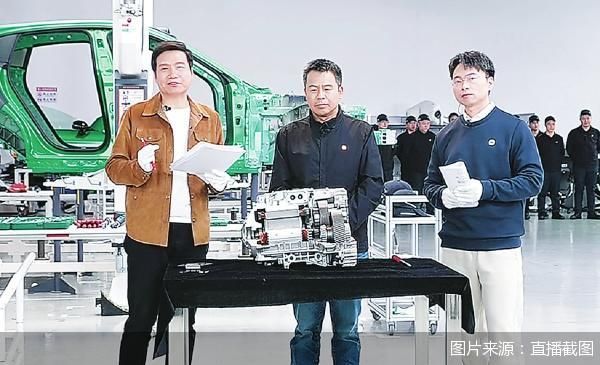
Core Viewpoint - Xiaomi is actively addressing product-related controversies and shifting its communication strategy to regain control over its narrative, as demonstrated by a recent live-streamed event where CEO Lei Jun and other executives responded to public concerns and showcased the YU7 vehicle [1][3][4]. Group 1: Live Stream Event - The live stream, initially scheduled for New Year's Eve, featured a detailed disassembly of the YU7 vehicle, allowing Xiaomi's engineers to explain design concepts and technical details [1][3]. - Lei Jun acknowledged the company's previous reluctance to respond to product criticisms, emphasizing a new approach to engage with consumers and address their concerns directly [3][4]. - The event lasted over four hours and included a segment dedicated to addressing various criticisms that had circulated online, marking a strategic shift for the company [1][4]. Group 2: Communication Strategy - Xiaomi's new communication strategy aims to proactively address public concerns and clarify misconceptions, with Lei Jun stating that this is just the beginning of a series of planned responses [4][5]. - The company is encouraging open discussions and evaluations from industry peers, with executives like Xu Jieyun advocating for transparency in product assessments [5][6]. - Lei Jun and Xu Jieyun highlighted the importance of combating misinformation and malicious attacks, revealing that legal actions have been taken against individuals spreading false information about the company [6][7]. Group 3: Future Strategy and Investment - Xiaomi has committed to investing over 200 billion yuan in research and development over the next five years, focusing on generative AI and enhancing its product ecosystem [8][9]. - The company reported a 30% increase in sales for the new 17 series compared to the previous 15 series, indicating strong market performance and consumer interest [9].

回到台前的雷军,回应一切的小米
Sou Hu Cai Jing· 2026-01-04 11:33
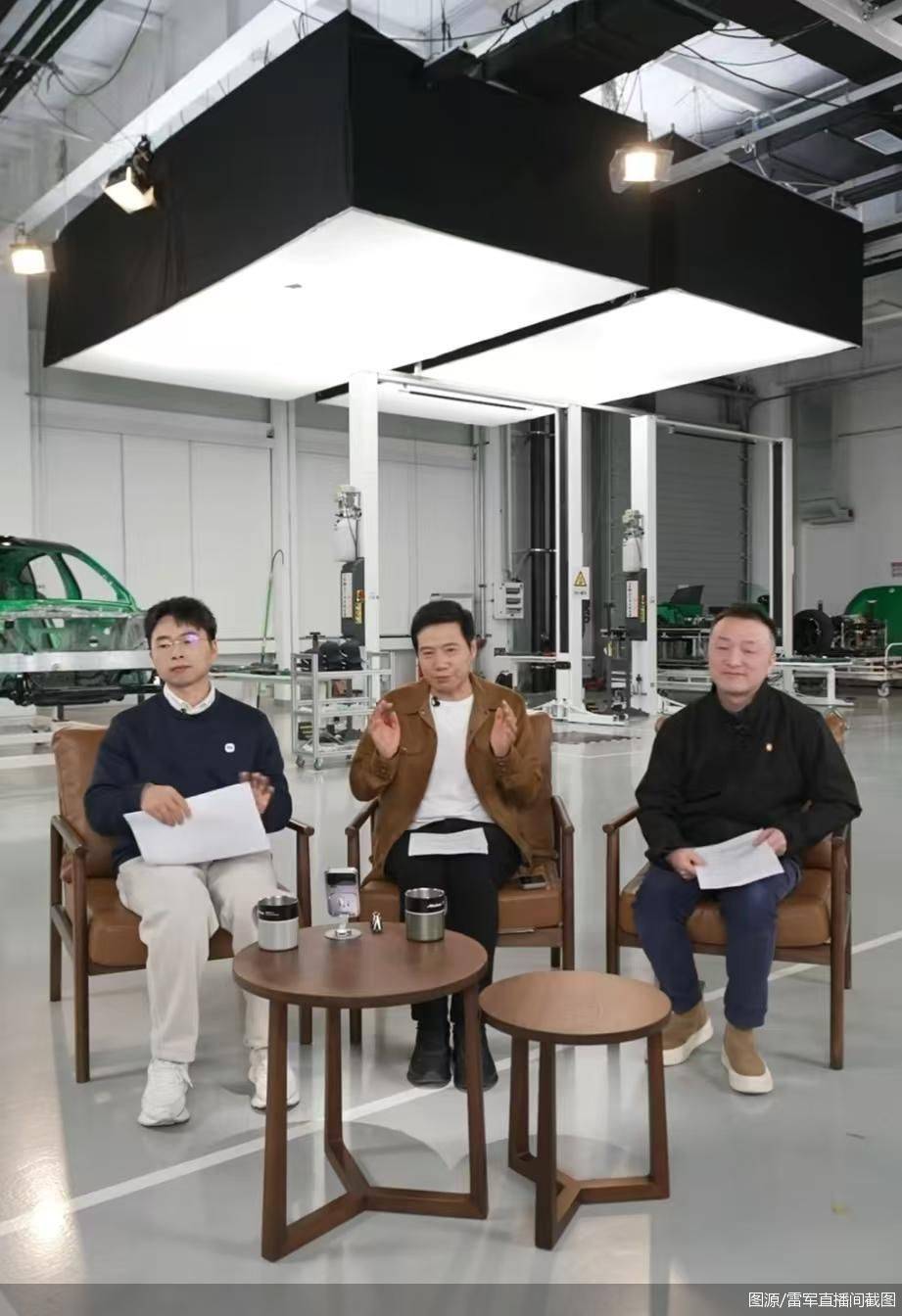
Core Viewpoint - Xiaomi is actively addressing product-related controversies and shifting its communication strategy to enhance transparency and regain consumer trust, as demonstrated by a recent live-streamed event where company leaders directly responded to criticisms and showcased product details [2][5][10]. Group 1: Live Stream Event - The live stream, initially delayed due to the illness of CEO Lei Jun, featured key executives including Vice President of Xiaomi Auto, Li Xiaoshuai, and General Manager of Industrial Design, Li Tianyuan, who participated in a detailed disassembly of the YU7 vehicle [1][2]. - The event lasted over four hours and focused on dismantling the YU7 while addressing various criticisms surrounding Xiaomi's products, marking a strategic shift from the company's previous stance of minimal public engagement [2][4][5]. Group 2: Response to Criticism - Lei Jun acknowledged that Xiaomi had previously refrained from addressing product-related criticisms, believing that "good products speak for themselves," but decided to take a more proactive approach in response to ongoing negative sentiments [4][5]. - The company plans to systematically address various issues raised by consumers, with the YU7 disassembly being the first step in a broader communication strategy [5][10]. Group 3: Future Strategy - Xiaomi has committed to investing over 200 billion yuan in research and development over the next five years, focusing on generative AI and enhancing its product ecosystem [12]. - The company reported a 30% increase in sales for the new Xiaomi 17 series compared to the previous generation, indicating strong market performance and consumer acceptance [12].
雷军:小米汽车2026年交付目标55万辆,较上年实际交付量增36%
Sou Hu Cai Jing· 2026-01-03 15:43
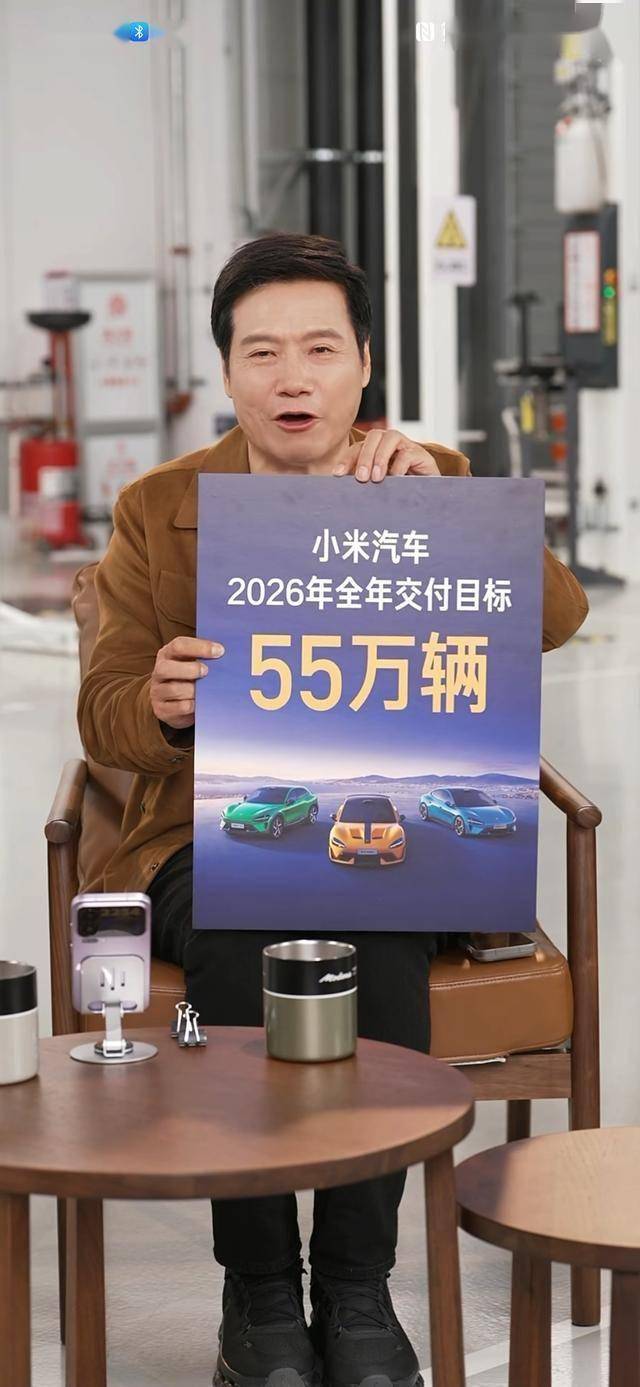
Core Viewpoint - Xiaomi aims to deliver 550,000 vehicles in 2026, representing a 36% increase from the previous year's actual delivery of over 410,000 vehicles [5]. Group 1: Strategic Focus - The company will focus on three main areas: 1. Commitment to technology-driven development with an investment of 200 billion yuan in R&D over the next five years [4]. 2. Increased investment in generative AI models to enhance all existing operations through AI [4]. 3. Creating a comprehensive user experience that integrates vehicles and the entire ecosystem [4]. Group 2: Delivery Goals - The initial delivery target for 2025 was set at 300,000 vehicles, which was later raised to 350,000 due to positive progress, ultimately exceeding 410,000 vehicles delivered [4]. - The 2026 target of 550,000 vehicles aims to surpass the previous year's performance [5].
沐曦暴涨687%,葛卫东爆赚30倍约239亿
阿尔法工场研究院· 2025-12-17 04:09
Core Viewpoint - The article highlights the significant milestone of domestic GPU company Muxi's IPO, reflecting the ambition and challenges of China's semiconductor industry in overcoming the "bottleneck" of computing power [6][9][36]. Company Overview - Muxi, founded in 2020 by three former AMD scientists, has rapidly evolved from a small office in Shanghai to a company with nearly 900 employees, successfully developing high-performance GPU chips [8][11]. - The company has launched several products, including the Xisi N100 and the Xiyun C500, which have become key revenue drivers, with the latter generating 7.22 billion yuan in 2024, accounting for 97.28% of its main business revenue [15][16]. Financial Performance - Muxi has not yet achieved profitability, with cumulative losses exceeding 3.2 billion yuan since its inception. The company anticipates reaching breakeven by 2026 [16][25]. - The revenue figures from 2022 to 2025 show a significant increase, with projected revenues of 42.64 million yuan in 2022, 530.21 million yuan in 2023, and 7.4 billion yuan in 2024 [16]. Market Context - The domestic GPU market is experiencing explosive growth, with the market size expected to increase from approximately 14.29 billion yuan in 2020 to around 99.67 billion yuan in 2024 [36]. - The shift in procurement logic among industry clients has transformed domestic GPUs from optional to essential solutions, emphasizing the importance of usability and ecosystem maturity [36]. Investment Landscape - Muxi has attracted over 120 investors through multiple funding rounds, including prominent venture capital firms and state-owned funds, reflecting strong market confidence in its potential [20][22]. - The company completed its final pre-IPO funding round, raising over 7.2 billion yuan, leading to a post-investment valuation of 21.07 billion yuan [23][24]. Competitive Landscape - The article outlines three critical challenges for domestic GPU companies: architecture, cluster deployment, and time to market, emphasizing that success requires not just producing chips but also creating a robust ecosystem [29][30][31]. - The competition in the AI era is shifting from chip specifications to the effectiveness of large-scale deployments and operational stability [31][36]. Future Outlook - Muxi's IPO is seen as a starting point for a longer journey, with high expectations for continued technological leadership and market share growth [25][33]. - The company currently holds orders worth 1.43 billion yuan and is actively pursuing key clients in the internet and telecommunications sectors [25].

省地矿六队获批省自然资源厅2025年度科技创新平台开放课题
Qi Lu Wan Bao Wang· 2025-10-14 05:45
Core Insights - Shandong Province's Natural Resources Department announced the approval of 18 research projects for the 2025 Science and Technology Innovation Platform, with a focus on geological studies and mining technology [1] Group 1: Project Overview - The project titled "Key Technologies for Constructing a Spatiotemporal Event Knowledge Graph of the Jiaodong Gold Mining System: A Case Study of the Shanshan Island Mining Belt" was successfully funded [1] - This project is supported by the Ministry of Natural Resources' Deep Gold Mine Exploration and Mining Technology Innovation Center [1] Group 2: Objectives and Methodology - The project aims to deeply analyze geological data from the Jiaodong North Mining Area, integrating multi-source geological information to create a knowledge graph that accurately depicts the spatiotemporal processes and related events of mineral migration and accumulation [1] - A high-quality knowledge base for Jiaodong gold mines will be established to provide structured and comprehensible professional knowledge for next-generation generative AI models [1] Group 3: Future Directions - The project will enhance collaboration with universities and research institutions to systematically integrate vast and diverse geological, geophysical, geochemical, and exploration data [1] - The goal is to break down information barriers and transition geological exploration from an experience-driven approach to a data and intelligence-driven paradigm, supporting a new round of strategic breakthroughs in mineral exploration [1]
财经深一度|年内基金发行规模超3000亿元 主动权益类基金发行回暖
Sou Hu Cai Jing· 2025-04-28 13:23
Group 1 - The issuance scale of new funds has exceeded 300 billion yuan this year, with nearly half of the funds being equity funds [1][3] - A total of 375 new funds have been established this year, with 275 being equity funds that raised nearly 150 billion yuan, and over 40 equity funds raised more than 1 billion yuan each [3] - The issuance of actively managed equity funds has seen a rebound, with over 50 such funds established in the first quarter, raising approximately 17.84 billion yuan, marking a significant increase compared to the previous quarter [3][4] Group 2 - The technology sector has attracted significant attention this year, leading to a focus on the STAR Market stocks within actively managed equity funds, which had a configuration ratio of 15.17% in the first quarter, up 2.11 percentage points from the previous quarter [3] - The proportion of STAR Market stocks in actively managed equity funds has continued to rise, increasing from 5.91% to 7.50% [3] - The bond fund issuance market is expected to maintain a steady upward trend, with 69 bond funds issued this year, totaling over 140 billion units, including nearly 10 bond funds launched by foreign public funds [5][6] Group 3 - The issuance of FOF (Fund of Funds) has significantly increased, with 16 new FOF products established in the first quarter, raising over 14 billion yuan, a substantial increase compared to the previous quarter [6] - FOF products are increasingly focusing on heavy allocations to ETFs, which are characterized by low costs, high transparency, and strong liquidity, enhancing asset diversification and risk control [6][7] - Despite the recovery in actively managed equity fund issuance, the overall volume and scale remain low, with investors still favoring diversified, low-cost index tools for market participation [7]