曦云C500

Search documents
2026年度策略:锚定AI未来,共启科技新篇
GOLDEN SUN SECURITIES· 2026-01-30 00:50
Group 1: Financial Technology - In 2026, global liquidity is expected to remain reasonably ample, with the domestic monetary policy maintaining a moderately loose tone[14] - The digital RMB 2.0 will officially implement on January 1, 2026, transitioning from M0 to M1 currency attributes[18] - The CIPS network expansion will be a key focus starting February 1, 2026, as new rules for the RMB cross-border payment system come into effect[20] Group 2: AI Applications - The AI application landscape is shifting towards commercial monetization, with a focus on achieving breakeven after initial explosive growth[24] - C-end applications are dominated by major tech giants, making it difficult for smaller firms to survive in the market[40] - B-end applications are seeing some achieving unit economics (UE) breakeven, particularly in sectors with high product-market fit (PMF) like robotaxi[45] Group 3: AI Computing Power - Global demand for AI computing power is on the rise, with domestic internet companies being the largest consumers of intelligent computing servers[3] - Domestic chip manufacturers are making significant breakthroughs, with companies like Huawei and Cambricon showing strong growth potential[3] - The shift towards scale-up supernode architectures is expected to accelerate, enhancing overall system performance[3] Group 4: AI Energy - The AIDC power supply paradigm is evolving towards 800V HVDC systems, driven by the need for higher power density and efficiency[4] - Nuclear fusion is being explored as a long-term energy solution, with significant advancements expected within the next five years[7]






5 亿大单、沐曦是赢家
Xin Lang Cai Jing· 2026-01-26 11:09
Group 1 - The project aims to build an AI computing platform with a scale of 1536 PFlops@FP16 to provide external AI computing services [1][2] - The procurement includes high-performance intelligent computing servers, networking, storage devices, and security equipment, as well as software platforms for infrastructure management, cloud resource management, operation management, computing scheduling, AI, and big data [1][2] - The project encompasses the procurement, integration, debugging, acceptance, quality assurance, maintenance, and operation services of AI computing center hardware and software, ensuring all functional requirements are met [1][2] Group 2 - The bid result was announced on January 23, 2026, with Jiangsu Cloud Factory Information Technology Co., Ltd. winning the bid for 519,709,680 yuan and receiving a score of 96.32 [2] - The procurement includes various types of servers such as training servers and mixed flash storage servers, with specific brands and models detailed in the attachments [4] - The quantities and unit prices for the servers include 350 units at 1,173,982 yuan, 4 units at 1,780,000 yuan, and 4 units at 1,380,000 yuan, as specified in the attachments [4]


中国不需要那么多“英伟达”
凤凰网财经· 2026-01-10 13:50
Core Viewpoint - The article discusses the current state and future prospects of the domestic GPU industry in China, highlighting the rapid growth driven by AI demand and the challenges posed by market saturation and competition among numerous companies [2][3]. Group 1: Market Dynamics - By the end of 2025, domestic GPU manufacturers are expected to experience a capital frenzy, with market valuations exceeding 440 billion yuan, driven by AI and domestic substitution trends [2]. - The influx of capital into the chip design sector has led to a significant increase in the number of companies, with nearly 600 new chip design firms established in 2021 alone, totaling around 4,000 companies currently [2]. - The domestic RF front-end chip sector has over 300 companies, yet holds less than 20% of the global market share, indicating a severe competitive landscape [3]. Group 2: Competitive Landscape - The RF chip market is characterized by intense price wars, with many companies facing losses due to product homogeneity and lack of differentiation [3][4]. - A notable example is the leading domestic RF chip company, which reported a loss of 147 million yuan in the first half of the year, reflecting the pressure from increased competition [4]. - The article emphasizes that many companies are producing similar products, leading to a race to the bottom in pricing, which is detrimental to profitability [4][5]. Group 3: High-End GPU Market - The high-end GPU market presents a larger growth opportunity compared to the saturated low-end market, but it also faces significant challenges [6]. - Domestic GPUs are currently in a "catch-up" phase, with performance still lagging behind Nvidia's latest offerings, indicating a systemic gap of one to two generations [6][7]. - Despite the challenges, the demand for AI computing power is increasing, particularly in inference scenarios, which domestic GPUs are targeting [7][8]. Group 4: Revenue Trends - Nvidia's revenue from mainland China has decreased by approximately 900 million dollars year-on-year, while domestic GPU companies are experiencing exponential revenue growth [8][9]. - Companies like Cambricon have reported a 24-fold increase in revenue, indicating a strong market response to AI chip demand [10]. - New entrants like Moore Threads and Muxi are also showing rapid revenue growth, with Muxi's revenue increasing fourfold year-on-year [10][11]. Group 5: Industry Consolidation - The GPU market is expected to consolidate to 2-3 leading companies, intensifying competition and reducing the survival space for smaller firms [13][14]. - The article notes that the GPU market is highly concentrated, with Nvidia and AMD dominating nearly 100% of the market share, which poses a challenge for new entrants [13]. - Domestic GPU companies face fragmented customer demands and limited R&D budgets compared to their global counterparts, which could hinder their long-term viability [14][15]. Group 6: Future Outlook - The ability to achieve mass production is critical for the survival of GPU companies, and finding a differentiated path is essential for success [15][17]. - Companies that can balance performance, delivery, ecosystem, and commercialization are more likely to thrive in the competitive landscape [17]. - The article concludes that the true winners in the domestic GPU market will be those who can effectively navigate the challenges of differentiation and market demands [17].


国产GPU“四小龙”扎堆IPO,它们能平替英伟达吗?
Sou Hu Cai Jing· 2025-12-25 11:25
Core Viewpoint - The domestic GPU industry is experiencing a capital frenzy as several companies prepare for IPOs, with significant market valuations and investor enthusiasm, despite the underlying financial challenges and losses faced by these companies [2][3][10]. Group 1: IPO and Market Performance - Moer Technology became the first domestic GPU stock on the Sci-Tech Innovation Board, opening at 650 CNY per share, a 468.78% increase from its issue price of 114.28 CNY, with a market cap exceeding 300 billion CNY [2]. - Muxi Co. also listed on the Sci-Tech Innovation Board, seeing an opening surge of over 568%, with its market cap quickly surpassing 300 billion CNY [2]. - On the same day as Muxi's listing, Birun Technology passed the Hong Kong Stock Exchange hearing, positioning itself to become the first GPU stock in Hong Kong [2]. Group 2: Financial Performance and Challenges - Moer Technology, Muxi Co., and Birun Technology are currently operating at a loss, with Moer reporting a loss of 724 million CNY in the first three quarters of 2025, Muxi at 346 million CNY, and Birun at 1.601 billion CNY in the first half of the year [3]. - In comparison, Nvidia's revenue for a single quarter in 2025 exceeded 30 billion USD, while domestic GPU companies' revenues are only in the range of several hundred million to a few billion CNY [3]. Group 3: Market Drivers and Trends - The IPO wave of domestic GPU companies is driven by a growing demand for computing power, a need for domestic alternatives, and a shift in capital investment logic [3][6]. - The demand for computing power has surged since the global AI model boom initiated by ChatGPT in 2023, with predictions indicating that China's total computing power will reach 3442.89 EFLOPs by 2029, growing at a compound annual growth rate of 40% [5]. Group 4: Competitive Landscape and Differentiation - The four leading domestic GPU companies, referred to as the "Four Little Dragons," are pursuing differentiated paths in technology, product positioning, and application scenarios [7]. - Moer Technology focuses on a full-featured GPU similar to Nvidia, while Muxi Co. specializes in AI computing GPUs, and Birun Technology emphasizes extreme computing power with its BR100 chip [8][9]. Group 5: Future Outlook - The domestic GPU industry is expected to face challenges in competing with Nvidia's established ecosystem, but there are structural opportunities for growth supported by national policies and a rich landscape of AI application scenarios in China [10][11]. - The future of domestic GPUs will depend on their ability to develop core technologies, production capabilities, and clear commercialization paths, with a focus on ecosystem service and scenario adaptation [12][13].
国产GPU双雄上市受捧背后“耐心资本”缘何坚定下注?
Shang Hai Zheng Quan Bao· 2025-12-17 19:16
Core Insights - The domestic GPU sector is experiencing significant investor enthusiasm, highlighted by the successful IPOs of two major players, Moore Threads and Muxi Co., which have both shown remarkable market performance despite ongoing financial losses [1][2] Group 1: Company Performance - Muxi Co. achieved a market valuation exceeding 330 billion yuan on its first trading day, with stock prices soaring close to 900 yuan per share, while Moore Threads reached a peak of 941.08 yuan per share shortly after its IPO [1][2] - Both companies are currently facing substantial financial challenges, with Muxi Co.'s revenue projected to rise from 426,400 yuan in 2022 to 743 million yuan in 2024, yet net losses are expected to increase from 776 million yuan to 1.403 billion yuan during the same period [1] - Moore Threads anticipates a cumulative net loss exceeding 5.2 billion yuan from 2022 to 2024, with R&D expenses amounting to 3.809 billion yuan, which is 6.25 times its projected revenue [1] Group 2: Market Expectations - The high valuations of both companies stem from a consensus on the vast potential of the domestic GPU market, with IDC predicting that China's accelerated server market will exceed 100 billion USD by 2029 [2] - Research from Jiangyin International suggests that the domestic computing chip industry will flourish, benefiting from advancements across the entire supply chain, including wafer foundry, memory, and semiconductor equipment [2] Group 3: Investment Landscape - Both companies have attracted a diverse range of "patient capital," with Muxi Co. having over 120 shareholders, including top-tier venture capital firms and state-owned funds, while Moore Threads has a similarly impressive shareholder base [3][4] - Notable investors include major insurance funds, which are well-suited to the long-term nature of technology investments, and various financial institutions that participated in the strategic placements of shares [4][5] Group 4: Technological Development and Commercialization - The transition from research and development to commercial application in the GPU sector typically requires extensive investment over many years, underscoring the importance of "patient capital" in supporting this process [6] - Moore Threads has launched several GPU architectures since its first chip in 2021, while Muxi Co. has begun mass production of its main product, the Xiyun C500, which is expected to contribute significantly to its revenue [6] - Both companies are positioned to accelerate the localization of computing chips in China, supported by strong policy guidance, although they face challenges in meeting the rigorous technical validation required for entry into key industry sectors [6]
上市首日大涨近7倍,中一签可赚36.26万元 沐曦股份成史上“最赚钱新股”
Shen Zhen Shang Bao· 2025-12-17 17:11
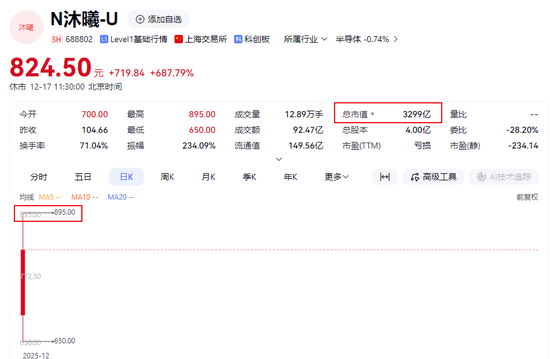
Core Points - The company Muxi Co., Ltd. has successfully listed on the STAR Market with a stock code of "688802", marking its entry as the "second domestic GPU stock" [1] - On its debut, Muxi's stock price surged nearly 7 times, reaching over 800 CNY per share, making it the third highest-priced stock in the A-share market [1] - The closing price on the first day was 829.90 CNY per share, with a total market capitalization of approximately 3320.43 billion CNY [1] Company Performance - Muxi's stock opened at 700.00 CNY per share, with an intraday high of 895 CNY, reflecting a maximum increase of 755.15% [1] - The total trading volume on the first day was 112.59 billion CNY, with a turnover rate of 84.72% [1] - Investors could earn a maximum profit of 39.52 million CNY per share based on the highest intraday price increase [1] IPO Details - The IPO raised approximately 41.97 billion CNY, primarily for the development and industrialization of new high-performance general-purpose GPUs and AI inference GPUs [2] - The online subscription rate for Muxi's shares was 0.033489%, which is lower than that of another company, Moer Thread [2] - Over 200 public and private equity institutions participated in the offline subscription, collectively acquiring 1375.98 million shares [2] Revenue Growth - Muxi is projected to achieve a compound annual growth rate (CAGR) of 4074.52% in revenue from 2022 to 2024 [3] - The revenue growth is attributed to the mass application of the Xiyun C500 product, which began production in February of the previous year [3] - The products are being utilized in various AI public computing platforms and commercial intelligent computing centers across multiple countries [3]
沐曦股份登陆科创板,打造GPU国产替代“最优解”
梧桐树下V· 2025-12-17 12:23
Core Viewpoint - The article highlights the successful IPO of domestic GPU company Muxi Co., Ltd. on the STAR Market, reflecting the urgent demand for GPU localization in China, with a total fundraising of approximately 4.197 billion yuan [1]. Group 1: Market Demand and Growth - The AI and digitalization wave has elevated the strategic importance of GPUs, with the Chinese AI intelligent computing GPU market expected to grow from 14.286 billion yuan in 2020 to 99.672 billion yuan in 2024, representing a compound annual growth rate (CAGR) of 62.5% [3]. - By 2029, the market is projected to exceed 1.03 trillion yuan, with GPU servers dominating 70% of the accelerated server market in China by 2024 [3]. - The global GPU market is currently dominated by international leaders, with NVIDIA holding a 66% market share in the Chinese AI accelerator market in 2024, indicating significant room for domestic manufacturers to grow [3]. Group 2: Muxi's Strategic Positioning - Muxi Co., Ltd. has targeted the high-value segment of the industry chain by focusing on general-purpose GPUs for data centers, aligning closely with the core business directions of leading international companies [4]. - The company has developed a complete self-controlled system from hardware design to software stack optimization, with its main product, the Xiyun C500, matching the performance of NVIDIA's A100 [4]. - Muxi's proprietary MetaXLink high-speed interconnect technology has achieved bandwidth performance comparable to NVIDIA's flagship H200 product, showcasing its competitive edge [4]. Group 3: R&D Investment and Team Expertise - Muxi has committed to substantial R&D investments, with expenditures of 648 million yuan, 699 million yuan, and 900 million yuan from 2022 to 2024, representing R&D revenue ratios of 151,857.63%, 1,317.63%, and 121.24% respectively [6]. - The founding team, with extensive experience from AMD, has a deep understanding of GPU architecture design and software ecosystem development, ensuring effective collaboration and strategic execution [7]. - As of March 2025, 74.94% of Muxi's workforce is dedicated to R&D, with a strong patent portfolio of 255 authorized patents, including 245 invention patents, establishing a solid technological barrier [7]. Group 4: Competitive Strategy and Market Position - Muxi has adopted a "asymmetric breakthrough" strategy, focusing on specific technology routes and vertical scenarios to build competitive advantages without direct confrontation with international giants [8]. - The company has developed a software stack, MXMACA®, that is compatible with over 6,000 CUDA open-source applications, facilitating rapid ecosystem development [8]. - Muxi's product matrix includes the Xiyun C series for training and inference, the Xisi N series for AI inference, and the Xicai G series for graphics rendering, strategically targeting the booming AI model training and intelligent computing center construction in China [9]. Group 5: Commercialization and Ecosystem Development - Muxi's core product, the Xiyun C500 series, began mass production in February 2024, with cumulative sales exceeding 25,000 units by March 2025, and revenue skyrocketing from 426,400 yuan in 2022 to 743 million yuan in 2024, reflecting a CAGR of 4,074.52% [10]. - The company has established compatibility with major operating systems and AI frameworks, enhancing its competitive advantage and accelerating its market share growth [10]. - Muxi's rapid commercialization and ecosystem adaptation position it favorably against competitors, contributing to its sustained market share increase [10]. Group 6: Future Outlook - Muxi's "asymmetric breakthrough" approach is seen as a key driver for the overall advancement of China's GPU industry, aligning with national strategies for technological self-reliance [11]. - The successful IPO is expected to inject continuous R&D funding into the company, fostering collaborative development within the domestic GPU industry chain [12].

高开568%,“国产英伟达”的叙事要被沐曦讲通了?
虎嗅APP· 2025-12-17 06:26
Core Viewpoint - The article emphasizes the rising importance of domestic GPU manufacturers in China, particularly focusing on Muxi Co., Ltd. and its strategies to compete with NVIDIA's CUDA ecosystem [5][6][10]. Group 1: Market Performance and Valuation - Muxi Co., Ltd. debuted on the A-share market with a remarkable opening increase of 568.83%, reaching a price of 700 yuan, allowing investors to earn approximately 297,700 yuan per share [6]. - As of December 17, Muxi's market capitalization was 329.9 billion yuan, closely trailing behind other domestic competitors like Cambricon and Moer Thread [6]. - The market is currently valuing Muxi based on its potential to become a "Chinese NVIDIA," with its valuation being influenced by the scarcity and domestic replacement narrative [35][40]. Group 2: Competitive Landscape - The article discusses the necessity for domestic chip manufacturers to achieve compatibility with NVIDIA's CUDA ecosystem, which is seen as a critical survival issue [10][11]. - Muxi's strategy involves creating a highly compatible software stack, MXMACA, which allows for low migration costs for developers transitioning from CUDA [25][26]. - The competitive landscape is fragmented, with various companies like Cambricon and Moer Thread developing their own ecosystems, which may hinder collective progress against NVIDIA [21][22]. Group 3: Business Strategy and Growth - Muxi aims to achieve rapid commercialization by leveraging its CUDA compatibility, which is viewed as a "lightning war" strategy to attract developers [28]. - The company has shown impressive revenue growth, with sales increasing from 430,000 yuan in 2022 to 1.236 billion yuan in the first three quarters of 2025, although it has not yet turned a profit [31]. - Muxi's ability to achieve profitability is projected for 2026, contingent on the successful launch of its next-generation product, the Xiyun C600 series [34][39]. Group 4: Future Outlook - The article suggests that if Muxi can prove its product's market viability and achieve profitability ahead of its competitors, it could significantly increase its market valuation [39]. - The potential for Muxi to surpass Moer Thread and Cambricon in market capitalization exists if it successfully capitalizes on the domestic GPU market void left by NVIDIA [40].
沐曦上市首日暴涨568%,国产GPU“财报竞争”时代开启
Sou Hu Cai Jing· 2025-12-17 05:54
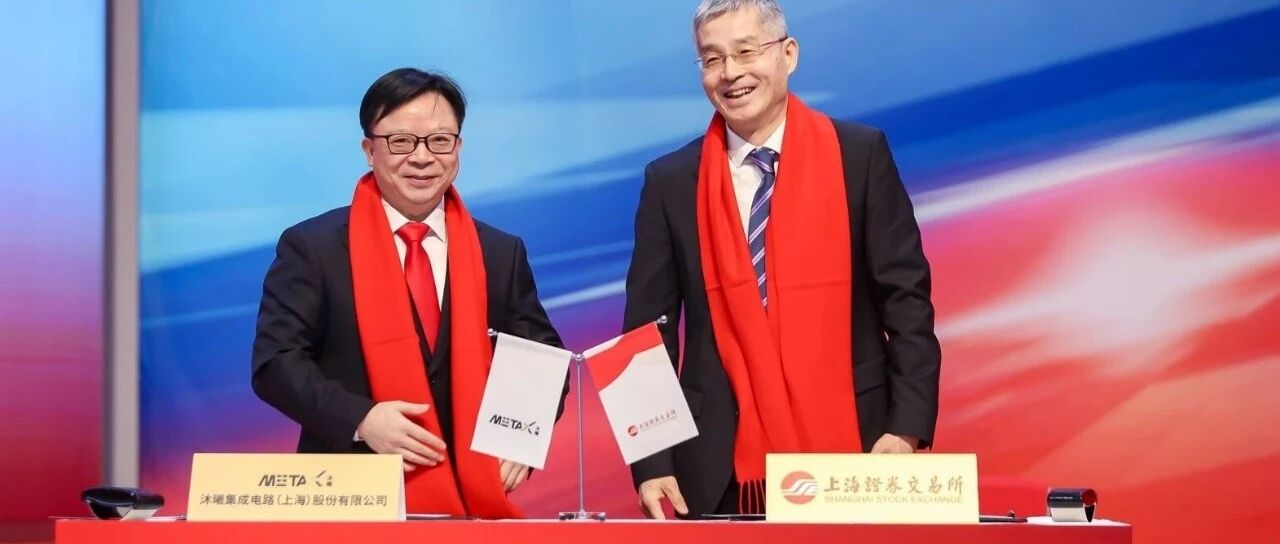
Core Viewpoint - Muxi Integrated Circuit (Shanghai) Co., Ltd. successfully listed on the STAR Market, with a remarkable opening performance, achieving a 568.8% increase in stock price, reaching 700 yuan, and a market capitalization exceeding 280 billion yuan, making it a popular new stock [1][2]. Company Overview - Muxi was established in September 2020 in Shanghai, with R&D centers in seven locations including Beijing, Nanjing, and Chengdu. The core team has an average of nearly 20 years of experience in GPU production, positioning the company as a leader in the domestic high-performance general-purpose GPU sector [3]. Product Development - Muxi follows a "one generation in production, one in research, one in planning" strategy. The company has successfully mass-produced the Xisi N100 (for inference) and Xiyun C500 (for training and inference), while the Xiyun C600 is in research and development, aiming to compete with NVIDIA's H100 [4]. Competitive Landscape - Muxi and Moore Threads represent two of the most watched domestic GPU companies, each adopting different technical routes and business models. Muxi focuses on general computing and AI, while Moore Threads pursues a full-feature GPU approach. Muxi's Xiyun C500 utilizes advanced packaging technology, claiming superior bandwidth compared to GDDR6 solutions, and has developed the MXMACA software stack for compatibility with mainstream CUDA applications [5]. Financial Performance - In the first half of 2025, Muxi reported revenue of 915 million yuan, surpassing its total revenue for 2024. The company has maintained a high R&D expense ratio of over 70%, emphasizing a high yield rate for its products. In comparison, Moore Threads reported approximately 700 million yuan in revenue during the same period [6]. Industry Trends - The successful listing of Muxi signifies a shift in the domestic GPU competition from "laboratory research" to "financial statement validation." Companies that can quickly achieve scale revenue and expand ecosystem compatibility are likely to attract capital market interest. The long-term success of these companies will depend on their ability to build a self-sustaining application ecosystem that breaks through CUDA barriers and secure stable high-end process capacity [7]. Market Dynamics - The capital landscape for domestic GPU companies is evolving, with Muxi's listing accelerating the capitalization processes of other leading firms. The market is increasingly driven by policies that emphasize domestic production, with orders concentrating on mature technologies and reliable products from leading enterprises [9].
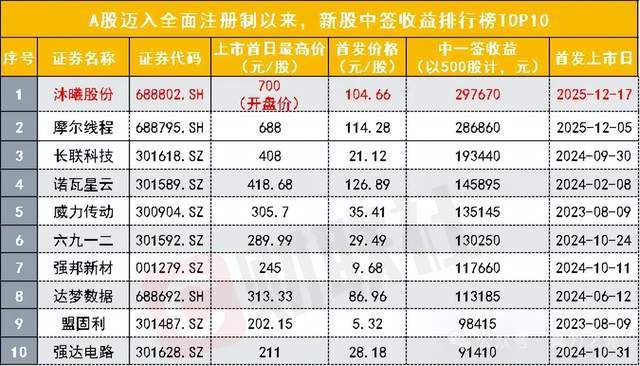
沐曦股份上市暴涨近700%,12亿营收撑起3000亿市值?
Xin Lang Cai Jing· 2025-12-17 05:37
Core Viewpoint - The successful debut of domestic GPU company Muxi Co., Ltd. on the STAR Market has exceeded expectations, with its stock price soaring significantly on the first day of trading, leading to a market capitalization that surpasses its competitor, Moer Technology [1][25]. Group 1: Stock Performance - Muxi Co., Ltd. opened at a price of 700 CNY, up 568.83% from its issue price of 104.66 CNY, and reached a peak of 895 CNY, resulting in a market capitalization that briefly hit 358 billion CNY [1][25]. - By midday trading, the stock price was 824.50 CNY, with a market capitalization of approximately 329.8 billion CNY [2][26]. Group 2: Investor Gains - The stock's performance allowed investors to potentially earn nearly 400,000 CNY for a single subscription of 500 shares [2][26]. - Notable investors, including private equity mogul Ge Weidong, reportedly made significant profits, with Ge's total earnings from Muxi estimated at over 20 billion CNY [4][10][41]. Group 3: Share Distribution - Muxi's initial public offering involved 40.1 million shares, with 18.9% allocated to strategic placements and 70% of the remaining shares offered to institutional investors, leaving only 10% for public investors [3][27]. - A total of 124 shareholders were identified, with significant stakes held by prominent investment firms and individuals, including Ge Weidong and Sequoia Capital [30][34]. Group 4: Company Background and Technology - Muxi Co., Ltd. was founded by Chen Weiliang, who has a background in AMD, and the company focuses on general-purpose GPUs, emphasizing AI and high-performance computing capabilities [17][43]. - The company has launched two high-performance GPU products within three years, achieving significant sales and application in various AI computing platforms [44]. Group 5: Financial Performance - Muxi's revenue has shown explosive growth, with figures of 426,400 CNY in 2022, 53.02 million CNY in 2023, and a projected 743.07 million CNY in 2024, although the company has yet to achieve profitability [18][45]. - Despite increasing revenue, Muxi's net losses have also widened, with losses of 777 million CNY in 2022 and projected losses of 1.4 billion CNY in 2024 [20][47]. Group 6: Market Position and Concerns - Muxi, along with other domestic AI chip companies, has a combined market capitalization of 1.2 trillion CNY, but their total revenue remains low, raising concerns about the sustainability of such valuations [21][48]. - Muxi holds approximately 1% of the market share in the AI accelerator market, dominated by Nvidia and AMD, which raises questions about its ability to support a high market valuation [51].