
欧盟碳边境调节机制(CBAM)

Search documents
有色市场:结构分化 波动加剧
Shang Hai Zheng Quan Bao· 2026-02-04 18:32
Core Insights - In 2025, the profits of China's large-scale non-ferrous metal industry reached a record high of 528.45 billion yuan, marking a 25.6% increase from the previous year, driven primarily by aluminum, gold, and copper [2][3] - The non-ferrous metal market is expected to experience structural differentiation and increased volatility in 2026, with potential for further price increases [2][3] - The global supply constraints, particularly in copper and nickel, alongside strong demand from sectors like electric vehicles, are anticipated to support non-ferrous metal prices in 2026 [3][5] Profit Performance - The profit contributions from major metal varieties in 2025 included aluminum (38 billion yuan), gold (21.2 billion yuan), and copper (17.7 billion yuan), with lead-zinc, tungsten, molybdenum, and rare earths also contributing significantly [2] - The overall profit growth contribution rates for these six major varieties were 35%, 20%, 16%, 7%, 5%, and 5% respectively [2] Market Outlook - The macroeconomic environment is expected to remain supportive, with a continued global interest rate reduction cycle and robust domestic policies, which will provide a solid foundation for non-ferrous metal prices [2][3] - The anticipated structural growth in demand, particularly in the renewable energy and electric vehicle sectors, is expected to bolster nickel demand by approximately 5% annually [5] Supply Constraints - Supply-side constraints are projected to persist, with limited global copper mine output and reduced nickel production from Indonesia, while domestic electrolytic aluminum capacity approaches its ceiling [3][5] - The aluminum market is expected to maintain a tight balance, with high-cost alumina production potentially exiting the market due to regulatory measures [3] Regulatory Challenges - The implementation of the EU Carbon Border Adjustment Mechanism (CBAM) starting January 1, 2026, is expected to increase operational costs for non-ferrous metal companies, with an estimated CBAM cost of 2.44 million euros for aluminum products exported to the EU [6][7] - The CBAM will impose higher compliance thresholds, potentially excluding high-carbon products from the EU supply chain, which could lead to increased logistical and channel pressures for companies [6][7]

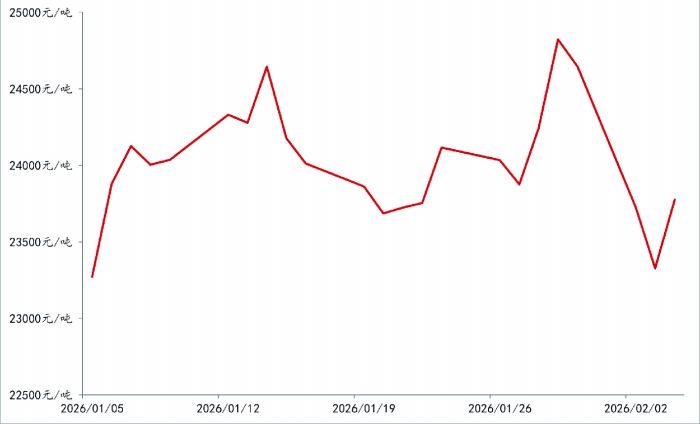
欧盟碳边境调节机制正式落地 对我国影响几何
Xin Lang Cai Jing· 2026-01-19 02:05
Core Viewpoint - The implementation of the EU Carbon Border Adjustment Mechanism (CBAM) starting January 1 will significantly impact China's high-carbon industries, particularly steel and aluminum exports to the EU, which account for approximately 3.5% of China's total exports to the EU [1][10]. Group 1: Short-term Impact - The short-term pressure on Chinese exporters due to CBAM is manageable, as the initial carbon cost is set at a low base of 2.5% [3][12]. - Companies that have not undertaken energy-saving and carbon reduction measures will face the most significant challenges under CBAM [1][11]. - The default emission values set by the EU for Chinese products are generally higher than the global average, creating an unfair disadvantage for Chinese exporters [3][12]. Group 2: Compliance and Adaptation - Exporting companies need to shift from relying on default values for carbon reporting to establishing their own carbon monitoring and reporting systems [4][13]. - The implementation of CBAM will require strict compliance with carbon data reporting across the supply chain, affecting not only manufacturers but also upstream suppliers [14]. - Engaging with third-party certification bodies to obtain independent verification reports can enhance the credibility and compliance of carbon data [14]. Group 3: Long-term Strategy - Companies must focus on long-term low-carbon transformation strategies to remain competitive in international markets [16]. - The expansion of CBAM to include 180 downstream products by 2028 will broaden the scope of carbon cost calculations, necessitating a comprehensive approach to carbon footprint management [16]. - Collaboration with partners who have established low-carbon transition plans and transparent carbon data will be crucial for maintaining competitiveness [16]. Group 4: Policy and Market Dynamics - The Chinese government is advocating for fair trade practices and is prepared to take necessary measures against any unfair trade restrictions imposed by the EU [17]. - The establishment of a domestic carbon market and potential introduction of auction mechanisms could help alleviate carbon cost pressures on companies [16]. - Financial institutions may introduce green finance policies to support companies in their transition to low-carbon operations [16].
欧盟碳边境调节机制年度评估报告出炉
Zhong Guo Hua Gong Bao· 2026-01-06 05:42
Core Viewpoint - The European Union's Carbon Border Adjustment Mechanism (CBAM) will officially implement on January 1, 2026, initially covering six high-energy-consuming products: steel, aluminum, cement, fertilizers, electricity, and hydrogen. A recent report from the European Commission outlines the current status of the CBAM transition period, international cooperation progress, and optimization directions to enhance the mechanism's effectiveness, with a focus on the planned expansion to include approximately 120 chemical products [1][2]. Group 1 - The report indicates that the assessment for potential expansion of CBAM will utilize a multi-stage screening method, focusing on carbon leakage risk, industry representation, and emission scale to define the preliminary scope. A deeper analysis will follow based on production structure, economic significance, and trade data [1]. - The EU plans to adopt a "key substance-centric" value chain assessment method for the complex chemical industry, emphasizing high-output, high-emission, or already established carbon market benchmark products to ensure precise coverage of major emission sources [1][2]. Group 2 - Approximately 120 chemical products and polymers have been initially selected for assessment, including olefins, aromatics, methanol, plastic polymers, naphtha, pyrolysis gasoline, and reformate. The selection criteria strictly adhere to the report's requirements, focusing on high-output, high-emission, or products with established EU carbon trading system benchmarks [2]. - The timeline for CBAM's core decision-making is set for 2027, with the transition period ending in 2026, marking the start of formal implementation and the accumulation of the first complete year of import emission data. In 2027, the European Commission will submit a new assessment report based on 2026's operational data, proposing legislative recommendations regarding the inclusion of the new industries into CBAM [2]. Group 3 - Market participants suggest that if CBAM introduces these 120 chemical products as planned, it will trigger a silent yet profound strategic reshaping in the global chemical and petrochemical sectors. CBAM is not merely an environmental tax; it represents the EU's systematic transfer of its high internal carbon costs to the global supply chain, reshaping trade rules as a geopolitical economic tool [2].
商务部回应CBAM:坚决采取一切必要措施回应任何不公平贸易限制
Zhong Guo Hua Gong Bao· 2026-01-06 04:14
Core Viewpoint - The European Union's Carbon Border Adjustment Mechanism (CBAM) will officially be implemented on January 1, 2026, and China expresses willingness to cooperate with the EU on climate change while firmly opposing any unfair trade restrictions that threaten its development interests and the stability of global supply chains [1][2] Group 1 - The EU has recently released legislative proposals and implementation details regarding CBAM, including setting default values for carbon emission intensity and plans to expand the range of covered products [1] - China criticizes the EU for setting significantly high default values for carbon emission intensity that do not reflect China's actual levels and future development trends, which is seen as unfair and discriminatory treatment [1] - The EU's actions are viewed as a violation of World Trade Organization principles such as "most-favored-nation treatment" and "national treatment," as well as contrary to the "common but differentiated responsibilities" principle established by the United Nations Framework Convention on Climate Change [1] Group 2 - The EU is accused of ignoring historical emissions responsibilities, national development stages, and technological levels, using the pretext of preventing "carbon leakage" to impose new trade protectionism on developing countries [2] - This approach is believed to increase the costs of climate action for developing nations and undermine international trust, contradicting efforts to cooperate on climate change and promote sustainable development [2] - China urges the EU to adhere to international rules related to climate and trade, reject unilateralism and protectionism, and maintain an open market based on fairness, science, and non-discrimination to facilitate trade and investment in the green sector [2]
欧盟CBAM年度评估报告出炉
Zhong Guo Hua Gong Bao· 2026-01-06 04:13
Core Viewpoint - The European Union's Carbon Border Adjustment Mechanism (CBAM) will officially implement on January 1, 2026, initially covering six high-energy-consuming products: steel, aluminum, cement, fertilizers, electricity, and hydrogen. A recent report from the European Commission outlines the current status of the CBAM transition period, international cooperation progress, and optimization directions to enhance the mechanism's effectiveness, with a focus on the planned expansion to include approximately 120 chemical products [1][2]. Group 1 - The report indicates that the assessment for potential expansion of CBAM will utilize a multi-stage screening method, focusing on carbon leakage risk, industry representation, and emission scale to define the preliminary scope [1]. - The EU plans to adopt a "key substance-centric" value chain assessment method for the complex chemical industry, ensuring precise coverage of major emission links by examining high-output, high-emission, or already established carbon market benchmark products [1][2]. - Approximately 120 chemical products and polymers have been initially selected for evaluation, including olefins, aromatics, methanol, plastic polymers, naphtha, pyrolysis gasoline, and reformate oil, adhering to strict selection criteria [2]. Group 2 - The timeline for CBAM's core decision-making is set for 2027, with the transition period ending in 2026, marking the start of the formal implementation phase and the accumulation of the first complete year of import emission data [2]. - In 2027, the European Commission will submit a new assessment report based on the actual operational data from 2026, which will include legislative recommendations on whether to formally incorporate the new industries into CBAM [2]. - Market participants suggest that if CBAM introduces these 120 chemical products as planned, it will trigger a significant and silent strategic reshaping in the global chemical and petrochemical sectors, fundamentally altering trade rules as a geopolitical economic tool [2].
商务部回应欧盟碳边境调节机制有关问题
Shang Wu Bu Wang Zhan· 2026-01-05 07:07
Core Viewpoint - The European Union's Carbon Border Adjustment Mechanism (CBAM) is set to be implemented on January 1, 2026, with significant implications for trade and climate policy, particularly affecting Chinese products and industries [2][3] Group 1: CBAM Implementation and Impact - The EU has recently released legislative proposals and implementation details regarding CBAM, including setting default carbon emission intensity values and plans to expand the product coverage [2] - The default carbon emission intensity values set by the EU are significantly higher than China's current levels and future development trends, which is viewed as unfair and discriminatory treatment towards Chinese products [2] - The EU plans to expand the CBAM scope to include approximately 180 steel and aluminum-intensive downstream products, such as machinery, automobiles, and household appliances, starting in 2028 [2] Group 2: Concerns Over Trade Practices - The EU's actions are seen as a violation of World Trade Organization principles, including "most-favored-nation" and "national treatment," and contradict the "common but differentiated responsibilities" principle established by the United Nations Framework Convention on Climate Change [2] - The EU's dual approach of promoting green policies externally while relaxing regulations internally is characterized as a double standard, undermining international cooperation on climate change [3] - The imposition of EU carbon standards on developing countries is expected to increase the costs of climate action for these nations, damaging international trust and cooperation efforts [3] Group 3: Call for Fair Trade Practices - The Chinese side urges the EU to adhere to international climate and trade rules, reject unilateralism and protectionism, and promote the liberalization and facilitation of trade and investment in the green sector [3] - There is a commitment from the Chinese side to respond to any unfair trade restrictions and to protect its development interests and the legitimate rights of Chinese enterprises [3]
山金期货黑色板块日报-20260105
Shan Jin Qi Huo· 2026-01-05 02:00
1. Report Industry Investment Rating No information provided regarding the report industry investment rating. 2. Core Viewpoints - For the rebar and hot-rolled coil sector, in the off - season of consumption, with both supply and demand being weak and winter storage yet to come, and enhanced macro - confidence, the futures prices are expected to maintain a volatile upward trend. The 05 contract briefly fell below the oscillation range and then rebounded rapidly, but has not yet broken out of the recent oscillation range. It is recommended to hold long positions and conduct mid - term trading [2]. - For the iron ore sector, although the current market is in the off - season of consumption, iron ore's 05 contract has broken through the high point in September and may start a mid - term upward trend. It is also recommended to hold long positions and conduct mid - term trading [4]. 3. Summary by Relevant Catalogs Rebar and Hot - Rolled Coil - **Supply and demand**: Last week, the production of rebar and hot - rolled coil increased, and the total production of the five major varieties rose month - on - month. The overall inventory continued to decline. The apparent demand for rebar decreased, while that for hot - rolled coil continued to rise. Due to the significant decline in steel mills' gross profit and the off - season of consumption, steel mills' production may continue to decline. The recent sharp rebound of coking coal and coke futures prices has increased the cost support for the market [2]. - **Technical analysis**: The 05 contract briefly fell below the oscillation range and then rebounded rapidly on the daily K - line chart but has not yet broken out of the recent oscillation range [2]. - **Data details**: The closing price of the rebar and hot - rolled coil futures contracts, spot prices, basis, spreads, prices of medium - thick plates, wire rods, and cold - rolled coils, steel billet and scrap steel prices, steel mill furnace production and profit conditions, production, inventory, spot market transactions, apparent demand, and futures warehouse receipts all have corresponding data changes [2]. Iron Ore - **Demand**: Last week, the overall production of the five major steel products increased, and the apparent demand rose month - on - month. The market is in the off - season, and iron - making water production is likely to decline seasonally. Steel mills' production cuts suppress raw material prices. The pre - holiday restocking demand will come later this year due to the late Spring Festival [4]. - **Supply**: Global shipments are still at a high level, and the continuous increase in port inventory suppresses futures prices [4]. - **Technical analysis**: The 05 contract has broken through the high point in September and may start a mid - term upward trend [4]. - **Data details**: Include spot and futures prices, basis and futures monthly spreads, variety spreads, overseas shipments, shipping costs and exchange rates, iron ore arrival and port - clearance volumes, inventory, domestic mine production, and futures warehouse receipts [5]. Industry News - Starting from January 1, 2026, the EU's Carbon Border Adjustment Mechanism (CBAM) has officially entered the charging period, initially covering six product categories such as steel, cement, aluminum, fertilizers, electricity, and hydrogen, and planning to expand to about 180 steel and aluminum - intensive downstream products by 2028 [7]. - The steel industry PMI in December 2025 was 46.3%, a month - on - month decrease of 1.7 percentage points, indicating a continued tightening of the industry's operation [8]. - Dalian Commodity Exchange announced that coking coal options will be listed for trading starting from January 16, 2026 [8]. - The fourth round of coke price cuts has been implemented [8]. - There are also various inventory data and production data of steel and other products from different statistical sources [8][9][10].
两部门发文:2030年新型电网平台初步建成
2 1 Shi Ji Jing Ji Bao Dao· 2026-01-04 12:22
Carbon Neutral Policy - The National Development and Reform Commission and the National Energy Administration issued guidelines for the development of a new type of power grid, aiming for its preliminary establishment by 2030, with a focus on enhancing resource optimization and supporting renewable energy generation to account for approximately 30% of total power generation [2][3] - The guidelines emphasize the role of the new power grid as a hub platform for a new power system, promoting multi-level collaborative planning and operation among main grids, distribution grids, and smart microgrids [3] - The first batch of 52 national-level zero-carbon parks will have a green electricity direct supply ratio of no less than 50%, with a focus on developing renewable energy industries and advanced manufacturing [4][6] Local Dynamics - Shandong Province approved its first "green electricity direct connection" project, which integrates power generation, networking, energy consumption, and storage within a single park, providing a traceable green certification for products [10][11] Corporate Practices - The world's first 10,000-ton offshore new energy bulk carrier, "Weiqiao Green Movement 1," has set a milestone in China's offshore new energy ship development, featuring a dual-engine mode of "lithium battery + fuel" for zero-carbon operation [12][13] - The vessel is designed for efficient transportation and incorporates advanced technologies such as autonomous driving systems and 5G communication for enhanced operational safety [13]
电解铝期货品种周报-20260104
Chang Cheng Qi Huo· 2026-01-04 11:32
1. Report Industry Investment Rating No information provided. 2. Core View of the Report - The overall pattern of the electrolytic aluminum market remains bullish in the medium - term, with a high - level oscillation expected in January. The macro - sentiment is the dominant factor. Supply constraints are formed by technological transformation in Xinjiang and power rationing during the dry season in Yunnan, while overseas LME inventory is at a low level year - on - year and is difficult to rebound significantly in the short term. Although the demand in downstream new - energy vehicle and photovoltaic fields is growing rapidly, it is difficult to fully offset the pressure of the off - season, and the market is mainly for replenishing essential supplies. [5] - In the short term, it is advisable to exit the market and wait and see for short - term long positions, while continue to hold medium - term long positions. Spot enterprises are advised to hold sufficient spot inventories for hedging. [8] 3. Summary of Each Section 3.1 Overall View - **Bauxite Market**: The Guinea general election is basically settled. The future mining rectification in Guinea is expected to focus on "cleaning up the stock and optimizing the structure", and large - scale mines in production face a low risk of policy - related shutdown. The cost of transporting Guinean bauxite to Guinean ports is mainly between $20 - 45 per ton. The expected CIF average price range of Guinean bauxite in 2026 by mainstream institutions is $58 - 68 per ton. [9] - **Alumina Market**: As of the end of December, the domestic alumina production capacity was about 112.55 million tons, the operating capacity was about 94.4 million tons, and the capacity utilization rate was about 85.14%. The new alumina production capacity in 2026 is about 14.4 million tons per year, mainly concentrated in the first half of the year, and the overseas new capacity scale may be limited. In 2026, the domestic market may start production cuts at the beginning of the year, driving up prices, but the subsequent复产 will lead to a "shortage - then - surplus" cycle in the second half of the year. [9] - **Electrolytic Aluminum Production**: In November, the domestic electrolytic aluminum production capacity was about 45.9165 million tons, and the operating capacity was about 44.6393 million tons, both slightly higher than the previous month. The global aluminum supply elasticity is expected to almost disappear in 2026. [9] - **Electrolytic Aluminum Import and Export**: The theoretical loss of electrolytic aluminum imports is about 2,300 yuan per ton. In November 2025, China's exports of unwrought aluminum and aluminum products were 570,000 tons, a year - on - year decrease of 14.8%. The implementation of the EU's Carbon Border Adjustment Mechanism (CBAM) on January 1, 2026, may increase the short - term export cost. [9] - **Electrolytic Aluminum Inventory**: The social inventory of electrolytic aluminum ingots is 638,000 tons, an increase of about 4% from last week and about 35% higher than the same period last year. The inventory in factories and the social inventory are still at a relatively low level since 2022. The aluminum rod inventory is 139,600 tons, an increase of about 11% from last week and about 20% higher than last year. The LME aluminum inventory has slightly declined, remaining at a low level in recent years. [9] - **Profit**: The average full cost of the domestic alumina industry in the recent month is about 2,780 yuan per ton, with a theoretical spot loss of about 90 yuan per ton and a theoretical profit of about 0 yuan per ton for the futures main contract. The average production cost of domestic electrolytic aluminum is about 16,800 yuan per ton, with a theoretical profit of about 5,500 yuan per ton. [10] - **Market Expectation**: The positive macro - sentiment still dominates. In the first quarter, the supply will increase slightly while the demand is disturbed by factors such as the Spring Festival, so the supply - demand contradiction of electrolytic aluminum may be prominent, and the price may reach a relative low point around the Spring Festival, but it is advisable to consider laying out long positions. In the second quarter, with the implementation of fiscal stimulus policies at home and abroad, the price has a driving force to rise again. [10] 3.2 Important Industrial Link Price Changes - The prices of imported and domestic bauxite are generally stable, with few market transactions. The domestic coal price has dropped significantly recently, and the advantage of imported coal is significantly compressed. The terminal power plant has sufficient inventory and purchases cautiously, and the coal price is likely to continue to oscillate in the short term. The alumina spot market is stable this week, and low prices attract some buyers. The market has great differences in the recent trend of alumina, but the pessimistic sentiment still dominates. [11] 3.3 Important Industrial Link Inventory Changes - The bauxite inventory at domestic ports has been slightly declining since the end of November. With the resumption of production of some mines in Guinea, the arrival pressure next year is still high, and the domestic bauxite supply is abundant. Alumina has been in the process of inventory accumulation since the end of May and is currently at a high level in recent years. The inventory of electrolytic aluminum ingots in domestic mainstream consumption areas has increased, and although the overall inventory level is relatively low since 2022, the high price and the off - season have restricted the warehouse shipment volume. The LME aluminum inventory is at a low level in recent years. [13][15][16] 3.4 Supply and Demand Situation - **Downstream Profit**: The domestic alumina industry has a theoretical spot loss, and the electrolytic aluminum has a relatively high theoretical profit, but the theoretical import loss of electrolytic aluminum exists. [18] - **Downstream Start - up Situation**: The operating rate of domestic aluminum - processing leading enterprises has decreased by 1 percentage point to 59.9% this week, and it is expected to continue to decline steadily in January. The operating rates of some sub - sectors such as aluminum strips, cables, and profiles have decreased. [24][25] 3.5 Futures - Spot Structure The current Shanghai aluminum futures show a contango market structure, and the electrolytic aluminum output can be smoothly transferred to the middle and lower reaches. [29] 3.6 Spread Structure The spread between aluminum ingots and ADC12 is about - 1,520 yuan per ton, and the current spread between primary aluminum and alloy is at a relatively high level in recent years, which has a negative impact on electrolytic aluminum. [35][36] 3.7 Market Capital Situation - **LME Aluminum**: The latest net long position of funds has continued to increase slightly. Since November 2025, the long camp has remained stable while the short camp has significantly reduced positions. Overall, overseas funds are still dominated by long positions, but the long - position floating - profit positions are heavy, and high - level repeated market conditions are likely to occur. [38] - **SHFE Electrolytic Aluminum**: The net short position of the main force has converged this week. Before the New Year's Day holiday, the long camp increased slightly while the short camp slightly reduced positions. The net short position of funds mainly for financial speculation continued to increase slightly, and the net long position of funds from middle and lower - stream enterprises is in a wait - and - see state. Overall, the main funds are still relatively cautious about the recent rise. [41]
商务部回应欧盟碳边境调节机制:对中方构成不公平待遇
Zhong Guo Xin Wen Wang· 2026-01-01 10:54
Core Viewpoint - The European Union's Carbon Border Adjustment Mechanism (CBAM) will be implemented starting January 1, 2026, which China views as unfair and discriminatory towards its products due to high default carbon emission intensity values set by the EU [1][2] Group 1: CBAM Implementation and Concerns - The EU has released legislative proposals and implementation details for CBAM, including setting high default carbon emission intensity values and plans to expand product coverage [1] - China argues that the EU's approach violates World Trade Organization principles and the United Nations Framework Convention on Climate Change, as it imposes unfair treatment on Chinese products [1][2] Group 2: Expansion of CBAM and Trade Protectionism - The EU plans to expand CBAM to include approximately 180 steel and aluminum-intensive downstream products, such as machinery, automobiles, and household appliances starting in 2028 [1] - This expansion is seen as a move beyond climate change response, reflecting unilateralism and trade protectionism, which China strongly opposes [1] Group 3: Double Standards and International Cooperation - The EU has relaxed its green regulations for internal markets while promoting protectionist measures externally, showcasing a double standard in its climate policies [2] - China emphasizes the need for the EU to adhere to international climate and trade rules, advocating for open markets and fair principles in green trade and investment [2]