科研实力

Search documents
GDP第十城,没有易主!
3 6 Ke· 2026-02-06 02:49
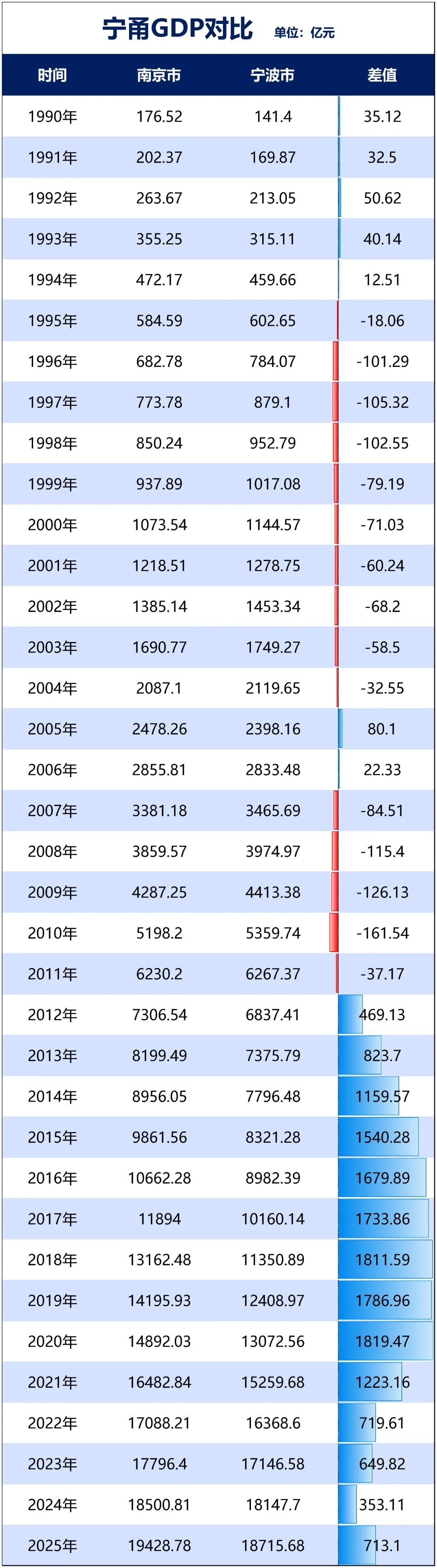
Core Viewpoint - Nanjing has successfully maintained its position in the top ten cities by GDP, showing a significant performance compared to Ningbo, with a GDP of 19,428.78 billion yuan in 2025, growing by 5.2% year-on-year, while Ningbo's GDP was 18,716 billion yuan, growing by 4.9% [1][6]. Economic Performance - Nanjing's GDP growth of 5.2% exceeds the national average by 0.2 percentage points, while Ningbo's growth lags behind the national average by 0.1 percentage points [1]. - The GDP increment for Nanjing was 927.97 billion yuan, compared to Ningbo's 567.98 billion yuan, widening the gap between the two cities [1]. Historical Comparison - Historical data shows that Nanjing and Ningbo have alternated in leading positions since 1990, with Nanjing regaining the lead in 2011 after a period of decline due to the global financial crisis [6][7]. - By 2020, the gap between Nanjing and Ningbo had reached 1,819.47 billion yuan, but by 2024, it narrowed to 353.11 billion yuan, the smallest since 2012 [6][7]. Industrial and Trade Analysis - Ningbo's industrial growth has slowed, with a secondary industry value added of 7,866 billion yuan in 2025, growing by only 4.0%, while Nanjing's industrial output grew by 5.8% [7]. - Ningbo's foreign trade has also been affected, with a total import and export scale of 14,561.5 billion yuan in 2025, growing by just 2.6%, resulting in a drop in its ranking to sixth place in terms of trade volume [7][8]. Future Outlook - Despite Nanjing's current advantage, there are indications that Ningbo may eventually surpass Nanjing in GDP due to its strong industrial base [16][17]. - Nanjing's strengths lie in its comprehensive capabilities in education, science, and technology, while Ningbo excels in manufacturing, which could influence future GDP rankings [19][20]. Industrial Strengths - Nanjing has six industries with revenues exceeding 100 billion yuan, with the leading sector being computer and electronic equipment manufacturing [23]. - Ningbo, on the other hand, has seven such industries, with a notable presence in the automotive sector, and has a significant number of national-level manufacturing champions [24][26]. Trade Dependencies - Ningbo's reliance on foreign trade, particularly with the U.S., poses a risk, as a significant portion of its exports is directed towards the American market [14][15][28].

全球科研城市十强大洗牌!中国占6席,北京上海稳坐冠亚军,天津去哪了
Sou Hu Cai Jing· 2025-11-23 20:10
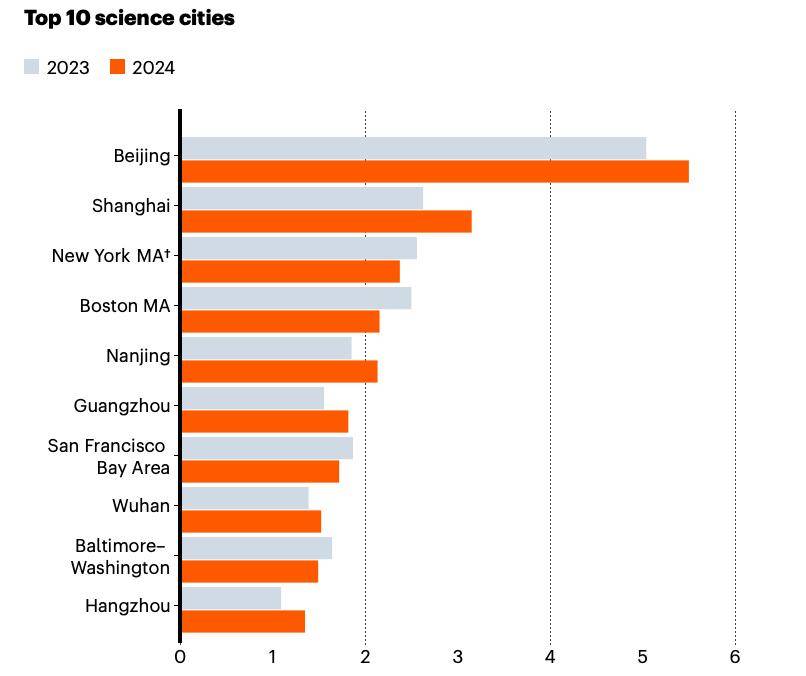
Core Insights - The 2025 Nature Index rankings highlight that Chinese cities dominate the top ten, with Beijing ranked first for nine consecutive years and Shanghai second, while other cities like Nanjing, Guangzhou, Wuhan, and Hangzhou have also improved their standings [1][3][5] - In contrast, American cities have seen a decline in their rankings, with New York, Boston, and the San Francisco Bay Area experiencing negative growth in their contributions [5][7] - The rankings reveal a disparity in research strengths, with Chinese cities excelling in basic sciences while Western cities maintain dominance in life and health sciences [7][9] Chinese Cities' Performance - Chinese cities occupy six of the top ten spots in the Nature Index, with Beijing leading at a contribution share of 5501.45, followed by Shanghai at 3151.61, which has seen a nearly 20% year-on-year increase [3][5] - Nanjing, Guangzhou, and Wuhan each surpassed a contribution share of 1500, while Hangzhou entered the top ten for the first time with a share of 1351.70 [3][5] Decline of American Cities - American cities in the top ten have experienced a comprehensive decline in their contribution shares, with notable cities like New York and Boston still in the rankings but showing negative growth [5][7] - Simon Baker, editor of the Nature Index, noted that Chinese cities are solidifying their leading positions across various disciplines, particularly in chemistry, physical sciences, and earth and environmental sciences [5][7] Research Strength Disparity - The advantage of Chinese cities is concentrated in basic sciences, while life sciences and health sciences remain dominated by Western cities, with New York and Boston holding the top two spots in biological sciences [7][9] - Despite this, cities like Guangzhou and Shanghai are rapidly improving in health sciences, indicating a potential shift in research capabilities [7][9] Tianjin's Challenges - Tianjin is notably absent from the top rankings, with its research strength declining compared to other cities, and it ranked 18th globally in 2023 [9][11] - The city's R&D investment as a percentage of GDP is lower than that of Beijing and Shanghai, and its number of effective invention patents is only about 10% of those cities [9][11] Structural Issues - Tianjin faces significant structural challenges, with only 25.3% of its industrial output coming from strategic emerging industries, which is 18.6 percentage points lower than Shanghai [11][13] - The city has a high reliance on traditional industries, leading to slow transitions in resource consumption and insufficient support for emerging fields [11][13] Innovation and Collaboration Barriers - The city struggles with insufficient technological innovation support, lack of effective collaboration with Beijing, and low levels of enterprise participation in R&D [11][17] - The gap in technology contract transactions between Tianjin and neighboring provinces like Liaoning and Jiangsu highlights the challenges in leveraging its geographical advantages [13][17] Efforts to Revitalize - Tianjin is attempting to revitalize its innovation ecosystem through initiatives like the Tianjin-Kai High-Tech Innovation Park, focusing on AI and new energy, which has attracted 300 tech companies [18] - The number of national high-tech enterprises in Tianjin surpassed 11,000 in 2024, with a 14% year-on-year increase in technology contract transactions [18]

全球前十!北京、上海、南京、广州、武汉、杭州,太强了
Sou Hu Cai Jing· 2025-11-21 06:28
Core Points - The recent "Nature Index - Research Cities" report published by Springer Nature ranks the top ten research cities globally, with Beijing, Shanghai, and New York metropolitan area leading the list [1][4] - China now holds more than half of the positions in the top ten research cities, with six cities including Beijing, Shanghai, Nanjing, Guangzhou, Wuhan, and Hangzhou [4][10] Group 1: Ranking and Methodology - The ranking is based on the contribution share of cities in publishing papers across five scientific disciplines: physical sciences, life sciences, chemistry, earth and environmental sciences, and health sciences [8][10] - The methodology uses a scoring system where each author of a paper shares the contribution score, allowing for a more nuanced measurement than simple paper counts [8][10] - Shenzhen is notably absent from the list, as it is categorized as a technology innovation hub rather than a research city, which focuses on academic contributions [8][46] Group 2: Performance by Discipline - In physical sciences, the top cities include Beijing, Shanghai, Nanjing, and Wuhan, with China dominating the list [11][14] - For chemistry, China occupies all top ten positions, showcasing its strength in this discipline [14] - In life sciences, the leading cities are predominantly in the U.S., with New York and Boston at the forefront, while Beijing and Shanghai also feature [17] - Earth and environmental sciences see Beijing, Nanjing, and Guangzhou leading, with strong representation from Chinese cities [20] - Health sciences are led by Boston and New York, with Beijing and Shanghai also making the list [23] Group 3: Insights on Emerging Cities - Guangzhou and Hangzhou have shown significant improvement, with Hangzhou making its debut in the top ten, indicating a rapid rise in research capabilities [26][27] - The presence of strong universities, such as Zhejiang University in Hangzhou, is crucial for the city's research output, contributing significantly to its ranking [39][40] - Guangzhou's research strength is supported by institutions like Sun Yat-sen University, which plays a vital role in the city's scientific contributions [43][44] Group 4: Comparison with Shenzhen - Shenzhen is recognized as a leader in technology innovation, with a high number of PCT international patent applications, but it lacks the academic research output that characterizes the cities on the list [46][47] - The city has a robust export structure, particularly in high-tech products, indicating its strength in applied technology rather than pure research [48][50] - Shenzhen's innovation ecosystem is driven by major tech companies, contrasting with the academic focus of the ranked cities [52][54]

广州把科研干到全球第六,你还在说它只有早茶和收租?
Sou Hu Cai Jing· 2025-11-18 18:39
Core Insights - Guangzhou has achieved the rank of the sixth global research city, surpassing cities like Hong Kong, Shenzhen, and Hangzhou, and notably outpacing the San Francisco Bay Area [1][2][7] - The ranking is based on the "Nature Index" published by Springer Nature, which tracks contributions to high-quality scientific journals [8][9] Ranking Overview - The top ten global research cities are Beijing, Shanghai, New York metropolitan area, Boston metropolitan area, Nanjing, Guangzhou, San Francisco Bay Area, Wuhan, Baltimore-Washington, and Hangzhou [2][6] - Guangzhou's ranking improved from eighth to sixth, with a significant increase in its contribution score from 1558.1 to 1820.05 [2][7] Research Output - Guangzhou's research output includes 3,966 papers, ranking fourth in China and sixth globally [7] - The city has shown consistent improvement over the past decade, moving from 42nd place in 2015 to 6th in 2024, overtaking 36 cities [11] Academic Performance - In the five major scientific disciplines tracked by the Nature Index, Guangzhou ranks as follows: sixth in physical sciences, ninth in life sciences, fourth in chemistry, third in earth and environmental sciences, and tenth in health sciences [11] Calculation Methodology - The Nature Index uses a "share" metric to assess contributions, which allocates a paper's contribution based on the proportion of authors affiliated with a specific institution or region [12][13] Institutional Support - Guangzhou is recognized for its strong academic infrastructure, with 84 universities and over 160,000 students, contributing significantly to its research output [16] - The city has established a robust "2+2+N" technology innovation platform, housing national laboratories and major scientific facilities [17][18] Corporate Contributions - In 2023, Guangzhou's R&D expenditure exceeded 100 billion yuan, with corporate R&D accounting for 65.8% of the total [19] - The number of high-tech enterprises in Guangzhou has grown to 13,500, contributing nearly 50% of industrial output [20] Unicorn Companies - By 2025, Guangzhou is projected to have 24 unicorn companies, ranking fourth among Chinese cities and eleventh globally [21]
研究称中国顶尖科学家数量 2024 年首次超越美国
Xin Lang Cai Jing· 2025-11-05 15:23
Core Insights - China has transitioned from being a follower to a leader in international scientific research, showcasing improved quality and influence in research collaborations [1][3][46] - The proportion of Chinese scientists in leadership roles within Sino-American research collaborations has significantly increased, from approximately 30% in 2010 to about 45% in 2023 [3][5] - China is expected to achieve parity with the U.S. in leadership roles in scientific collaborations by around 2026-2029, particularly in fields like artificial intelligence and advanced communication [7][10] Research Collaboration Dynamics - The leadership role of Chinese scientists in bilateral collaborations has risen sharply, indicating a shift in the dynamics of international research teams [3][5] - By 2027, the leadership roles in Sino-American collaborations are projected to reach a balance, with similar trends expected in collaborations with the EU and the UK [3][5][7] - Despite the increase in leadership roles, the relative probability of Chinese researchers taking on leadership positions compared to their U.S. counterparts may not equalize until the end of the century [5] Advances in Key Technologies - China is rapidly closing the gap in critical technology sectors such as artificial intelligence, semiconductors, and communications, with expectations to match or exceed U.S. leadership in several areas by 2030 [8][10] - In artificial intelligence, while the U.S. currently leads in the number of notable models, China's performance in key tests has significantly improved, narrowing the gap [8][9] - China's advancements in quantum technology, including the demonstration of quantum supremacy, highlight its growing capabilities in this cutting-edge field [10][12][14] Educational and Talent Development Initiatives - Through the Belt and Road Initiative, China has invested significantly in educating and training scientific talent from developing countries, with over 32 billion RMB (approximately 4.5 billion USD) allocated for foreign students from 2012 to 2024 [17][18] - The demographic of foreign students in China has shifted, with a growing number from South Asia and Africa, indicating a strategic focus on developing partnerships with these regions [20][21] - The increase in research output related to the Belt and Road Initiative among foreign students reflects a deepening integration of these scholars into China's scientific ecosystem [24][25] Quality of Research Output - Chinese researchers have surpassed the U.S. in the production of high-impact papers, with significant contributions to top journals like Nature and Science [32][39] - The number of highly cited papers from China has also exceeded that of the U.S., marking a notable shift in the quality of research output [39][40] - The growth in the number of top-tier scientists in China, now surpassing the U.S., indicates a strengthening of the country's research capabilities [40][42] Global Scientific Landscape - The rise of Chinese scientific research is reshaping the global scientific landscape, moving from a focus on quantity to quality and leadership in various fields [46] - The collaborative nature of scientific research between China and the U.S. suggests that advancements in one region do not necessarily diminish the other, but rather contribute to a collective scientific progress [46]
深圳数百人入选全球前2%顶尖科学家榜单;中国海油一项目累计生产原油突破70万吨丨大湾区财经早参
Mei Ri Jing Ji Xin Wen· 2025-09-22 00:33
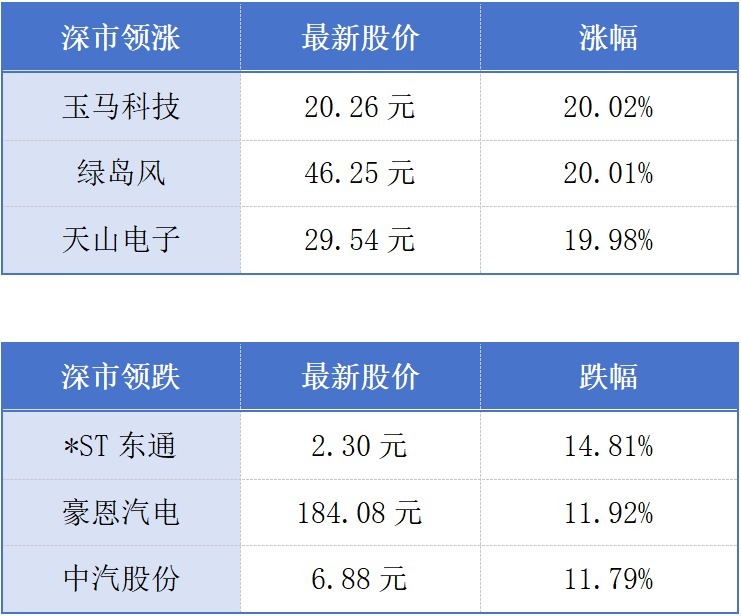
Group 1 - Shenzhen has hundreds of scientists and scholars listed in the "2025 Global Top 2% Scientists List," indicating the city's growing academic strength and international influence [1] - China National Offshore Oil Corporation (CNOOC) has successfully produced over 700,000 tons of crude oil from the Liuhua 11-1/4-1 oil field, marking a significant achievement in deep-water oil field development [2] - Guangzhou plans to launch low-altitude sightseeing routes along the Pearl River within three years, enhancing tourism and boosting related industries [3] Group 2 - The Hong Kong government has initiated the first meeting of the Northern Metropolis Development and Operation Group, which aims to drive industrial restructuring and multi-engine development in the region [4] - On September 19, the Shenzhen Component Index closed at 13,070.86 points, down 0.04% [5] - The top gainers in the Shenzhen market included Yuma Technology, Green Island Wind, and Tianshan Electronics, with increases of 20.02%, 20.01%, and 19.98% respectively, while the biggest losers were *ST Dongtong, Haon Automotive Electric, and Zhongqi Automotive, with declines of 14.81%, 11.92%, and 11.79% respectively [6]

全球媒体聚焦|中国的大学是世界最好的吗?《经济学人》给出肯定答案!
Sou Hu Cai Jing· 2025-06-19 08:42
Core Viewpoint - The article from The Economist asserts that Chinese universities are now among the best in the world, highlighting a significant shift in global research capabilities over the past decade [1][4]. Group 1: Research Performance - The "Nature Index" has shown a reversal in rankings, with Tsinghua University entering the top ten in 2020 and two Chinese universities replacing Oxford and Cambridge by 2022 [1][4]. - By 2024, only three Western institutions remain in the top ten: Harvard University, the French National Centre for Scientific Research, and the Max Planck Society, with eight institutions from China [1][4]. Group 2: Research Investment - China's annual R&D spending has increased by approximately 9% over the past decade, surpassing the combined spending of the U.S. and the EU in government and higher education R&D by 2023, adjusted for purchasing power parity [4][6]. - Chinese institutions are now producing more high-impact papers than those from the U.S. or Europe, particularly excelling in fields such as chemistry, engineering, and materials science [4][6]. Group 3: Notable Institutions - Zhejiang University ranks fourth in the 2025 index and is noted as the alma mater of the founder of the AI company DeepSeek, indicating its strong position in cutting-edge research [4][6]. - The article emphasizes the exceptional performance of institutions like Zhejiang University, Peking University, Tsinghua University, and the Chinese Academy of Sciences, which have established themselves among the world's top research entities [6].