空调铝代铜

Search documents
产业亮点之六:如何看空调铝代铜降本空间及普及节奏?
Changjiang Securities· 2026-03-11 14:45
Investment Rating - The industry investment rating is "Positive" and maintained [9] Core Insights - The report highlights the increasing attention on aluminum replacing copper in air conditioning systems due to the widening price gap between copper and aluminum, as well as policy and industry guidance [4][7] - The theoretical cost savings from using aluminum heat exchangers in air conditioning units can be significant, with potential savings of approximately 105.4 yuan per unit for heat exchangers alone, and up to 511.8 yuan if aluminum replaces all copper components [5][27] - The report emphasizes the need for further optimization of aluminum's physical properties and the importance of consumer acceptance and installation services for the widespread adoption of aluminum-based air conditioners in the competitive domestic market [6][41] Summary by Sections Why Focus on Aluminum Replacing Copper? - Since 2025, multiple factors such as Federal Reserve interest rate cuts and tariff adjustments have led to a rising trend in copper prices, with the copper-to-aluminum price ratio reaching 4.1, indicating aluminum's cost advantage [4][16] - The Chinese government has issued policies promoting aluminum consumption, specifically targeting the air conditioning sector [19] Theoretical Cost Reduction Potential of Aluminum Replacing Copper - In air conditioning units, copper and aluminum account for 17% and 13% of the total weight, respectively, making them sensitive to price changes [22] - The report estimates that if aluminum replaces 50%, 75%, or 100% of copper components, the theoretical cost savings could reach 255.9, 383.8, and 511.8 yuan per unit, respectively [27] Feasibility of Aluminum Replacing Copper in the Domestic Market - Globally, markets like Japan and South Korea have seen significant adoption of aluminum heat exchangers, with domestic brands like Midea and Haier also making strides in this area [28][32] - However, the adoption of aluminum in China is slow due to material property limitations and consumer trust in traditional copper units [40] Investment Recommendations - The report suggests focusing on leading white goods manufacturers that have cost advantages and integrated supply chains, specifically recommending Midea Group, Haier Smart Home, and Gree Electric Appliances [41]



董明珠硬刚空调“铝代铜”!海尔、美的、小米将联合推动空调核心散热部件的铜管换成铝管
Sou Hu Cai Jing· 2025-12-22 04:05
Core Viewpoint - The ongoing "copper vs aluminum" debate in the air conditioning industry has intensified, with major brands like Haier, Midea, and Xiaomi advocating for the use of aluminum pipes instead of copper, while Gree insists on sticking with copper due to concerns over quality and durability [1][7][15]. Cost and Pricing - The primary reason for the shift to aluminum is cost reduction, with aluminum prices around 22,000 yuan per ton compared to copper prices of 60,000-80,000 yuan per ton, resulting in a cost saving of approximately 380 yuan per unit when switching from copper to aluminum for a 1.5 HP air conditioner [3][20]. - The retail price of aluminum pipe air conditioners has dropped to between 1,599-1,699 yuan, which is about 400 yuan cheaper than similar copper models, contributing to a decrease in average prices for mid-range air conditioners from 2,500-3,000 yuan to below 2,000 yuan [3][20]. Consumer Concerns - Consumers are worried about the durability of aluminum pipes compared to copper, as copper has a thermal conductivity approximately 1.7 times greater than aluminum and a lifespan of 15-20 years, while aluminum pipes typically last less than 8 years, although optimized products can reach over 10 years [4][19]. - The lack of clear labeling on product materials has led to consumer confusion, with many unable to distinguish between aluminum and copper models, raising concerns about their right to know [6][19]. Industry Standards and Trends - The air conditioning industry has split into two camps: 19 companies, including Midea and Haier, have formed a group to promote aluminum heat exchangers and adhere to a self-regulatory agreement, while Gree and Philips have opted not to participate [6][10]. - The industry is moving towards establishing clearer standards, with a new group standard for aluminum heat exchangers being developed, and a national standard revision expected to enhance material labeling and durability indicators by 2026 [9][12]. Technological Development - The shift to aluminum is supported by advancements in microchannel technology, which can potentially improve heat exchange efficiency by 20-30% compared to traditional copper pipes, although concerns remain about corrosion and maintenance challenges in harsh environments [19][20]. - The government is promoting the use of aluminum as a strategic resource, with policies encouraging its application in various sectors, including home appliances, indicating a long-term trend towards aluminum substitution [12][20].


家电行业2026年度投资策略:出海+红利,优选龙头
2025-12-16 03:26
Summary of Key Points from the Conference Call on the Home Appliance Industry Industry Overview - The home appliance industry is currently valued below the median level, with leading white goods companies like Gree, Midea, and Haier having valuations that have not exceeded 15 times earnings, indicating a high safety margin [1][3] - The dividend yield of the home appliance sector ranks fourth among 32 industries, with Gree at approximately 7%, Midea over 5%, and Haier exceeding 4% [1][4] Core Investment Themes for 2026 - The main investment themes for 2026 are expected to revolve around "going overseas" and "dividends," with dividends being a strategy that spans the next 2 to 5 years [1][5] - The cash dividend ratio in the home appliance industry is relatively high, placing it in the top third among 32 industries, despite its lower valuation [5] Cost Pressures and Market Dynamics - Rising copper prices have significantly impacted air conditioning costs, as copper accounts for 30% to 40% of air conditioning costs. However, the feasibility of replacing copper with aluminum is being studied to mitigate cost impacts [6] - The real estate market's influence on home appliance sales is diminishing, with the contribution of real estate to sales of washing and refrigeration products dropping to around 10% [7][8] Government Policies and Domestic Demand - The continuation of national subsidy policies is expected to support domestic demand in 2026, limiting the potential decline in demand [9] - Air conditioning is anticipated to benefit the most from these subsidy policies, while refrigerators have not shown significant benefits [9] Export Market Outlook - A turning point for exports is expected in the second quarter of 2026, driven by a recovery in overseas demand and inventory replenishment due to low stock levels [10] - The transfer of some export capacity to Southeast Asia and improvements in overseas factory profitability are contributing to this positive outlook [10] Segment Performance - The white goods segment is experiencing a slowdown in price competition, with a favorable outlook for air conditioning exports due to increased demand from emerging markets and climate changes in Europe and the U.S. [12] - The black goods segment is projected to be one of the best-performing sub-sectors by 2026, benefiting from the World Cup effect and stable panel prices [13] Recommendations for Investment - Recommended companies include Midea and Haier for white goods, as they possess dividend attributes and overseas expansion advantages [16] - For black goods, companies are heavily reliant on the U.S. market, with over 30% of their export revenue coming from there, and they are in a high dividend state [16] - In the robotic vacuum segment, companies like Ecovacs and Roborock are recommended, with a long-term growth outlook despite current pressures [17] - Attention is also drawn to leading companies in the tool chain sector, which are expected to benefit directly from the recovery in the U.S. real estate market [17]
有色钢铁行业周观点(2025年第50周):看好产业逻辑支撑的金铜铝持续上行-20251215
Orient Securities· 2025-12-15 05:41
Investment Rating - The report maintains a "Positive" investment rating for the non-ferrous and steel industries [9]. Core Viewpoints - The report emphasizes the sustained upward trend of copper, gold, and aluminum driven by industrial logic, despite uncertainties regarding future interest rate cuts by the Federal Reserve [9][14]. - It suggests that the primary driver for non-ferrous metal pricing will shift from interest rate expectations to industrial demand growth, presenting ongoing investment opportunities [9][14]. - The report highlights the potential for gold prices to rise due to increased liquidity from the Federal Reserve's asset purchase program, which may weaken the dollar's credit [9][14]. - It notes that tight supply conditions are expected to support copper prices in the medium term, with significant inventory shortages in non-American regions [9][15]. - The aluminum sector is poised to benefit from the accelerated industrialization of aluminum as a substitute for copper in air conditioning systems, driven by rising copper prices [9][15]. Summary by Sections Non-Ferrous Metals - The report anticipates a super cycle for industrial metals, particularly copper, gold, and aluminum, supported by strong industrial demand [9][14]. - It recommends focusing on investment opportunities in the gold sector, particularly companies with improving production metrics [9][14]. - For copper, it highlights companies with significant resource reserves and ongoing production expansion as attractive investment targets [9][15]. Steel Industry - The steel sector is experiencing weak supply-demand fundamentals during the off-season, leading to pressure on steel profitability [16][20]. - Weekly rebar consumption has decreased significantly, with a 6.40% decline compared to the previous week and a 14.55% drop year-on-year [20]. - Steel prices have shown a slight overall decline, with the average price index for common steel dropping by 1.14% [32][33]. New Energy Metals - Lithium carbonate production in October 2025 saw a substantial year-on-year increase of 67.28%, indicating strong supply growth [37]. - The demand for new energy vehicles remains robust, with significant year-on-year growth in production and sales [41]. - Prices for lithium and cobalt have risen, reflecting increased demand and supply constraints in the market [46][48].




格力缺席空调铝代铜自律公约,称铜材优势明显暂无计划
Bei Ke Cai Jing· 2025-12-15 02:20
Core Viewpoint - The air conditioning industry is moving towards the adoption of aluminum instead of copper in their products, with several companies expressing commitment to a self-regulatory agreement, while Gree Electric Appliances has opted out, citing concerns over the reliability of aluminum technology [1] Group 1: Industry Response - Companies such as Haier, Midea, and Xiaomi have publicly committed to adhering to the self-regulatory agreement aimed at promoting the use of aluminum in air conditioning systems, indicating a collective effort to enhance the industry's image and competitiveness [1] - The self-regulatory agreement reflects the industry's strong anticipation for the technological shift towards aluminum, which is seen as a potential breakthrough for high-quality development in air conditioning [1] Group 2: Gree Electric's Position - Gree Electric has stated that it currently has no plans to adopt aluminum in its air conditioning units, emphasizing the advantages of copper in terms of thermal conductivity, corrosion resistance, and long-term reliability [1] - A technical leader from a major air conditioning brand noted that the industry had the capability to fully transition to aluminum technology two years ago, but the overall public acceptance and prevailing opinions have slowed down the adoption process [1] - Gree's absence from the self-regulatory agreement signals that the transition to aluminum still faces various technical challenges and uncertainties [1]
小米美的等抱团「铝代铜」,格力「缺席」:没把握,不跟!
Xin Lang Cai Jing· 2025-12-14 09:43
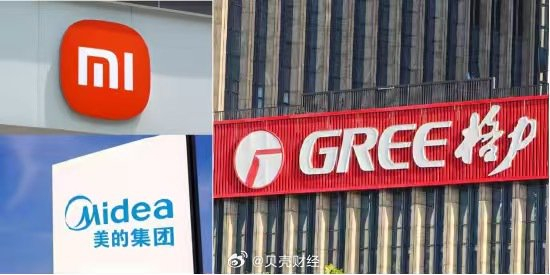
Core Viewpoint - Major companies in the air conditioning industry, including Haier, Midea, Xiaomi, and TCL, have committed to adhering to the "Self-Discipline Convention for Aluminum Reinforcement Application Research Working Group" to promote the "aluminum instead of copper" technology and enhance industry competitiveness. However, Gree Electric Appliances has notably not joined this initiative, expressing skepticism about the reliability of aluminum as a substitute for copper [1][3][5]. Group 1: Industry Developments - The air conditioning sector is focusing on the innovation and standardization of "aluminum instead of copper" technology, with new group standards being published for aluminum tube heat exchangers [3]. - Gree Electric Appliances has participated in the revision of national standards related to "aluminum instead of copper" but has not engaged in the self-discipline convention, highlighting its cautious stance on the technology [3][5]. - The ongoing debate over "aluminum instead of copper" has persisted for over a decade, often reignited by fluctuations in copper prices, which can account for 20% of the cost of an air conditioner [6]. Group 2: Technical and Economic Considerations - The cost of aluminum is significantly lower than that of copper, with aluminum costing about one-tenth of copper, which could lead to substantial price reductions for air conditioners if the transition is successful [6]. - Despite the potential cost benefits, copper's superior thermal conductivity, corrosion resistance, and long-term reliability present challenges for manufacturers considering the switch to aluminum [6]. - Experts suggest that the technology for a complete transition to aluminum has existed for two years, but progress has been slow due to public perception and varying technical capabilities among manufacturers [6][7]. Group 3: Strategic Implications - The push for "aluminum instead of copper" aligns with national strategies to reduce reliance on imported copper, as over 95% of copper used in China is imported, raising concerns about supply chain stability [7]. - The Ministry of Industry and Information Technology has proposed expanding aluminum consumption in various applications, including air conditioning, as part of a broader initiative for high-quality development in the aluminum industry [7]. Group 4: Gree's Position - Gree Electric Appliances maintains a conservative approach towards adopting "aluminum instead of copper," emphasizing the importance of product quality and consumer trust [9]. - The company has stated that it will not pursue aluminum until it can guarantee the quality and reliability of its products, reflecting a commitment to maintaining its brand reputation [9][10]. - With rising international copper prices exceeding $10,000 per ton, Gree's reluctance to adopt aluminum may lead to challenges in maintaining competitive pricing and managing supply chain risks [10].
美的、海尔、小米等联手推动→
第一财经· 2025-12-11 08:24
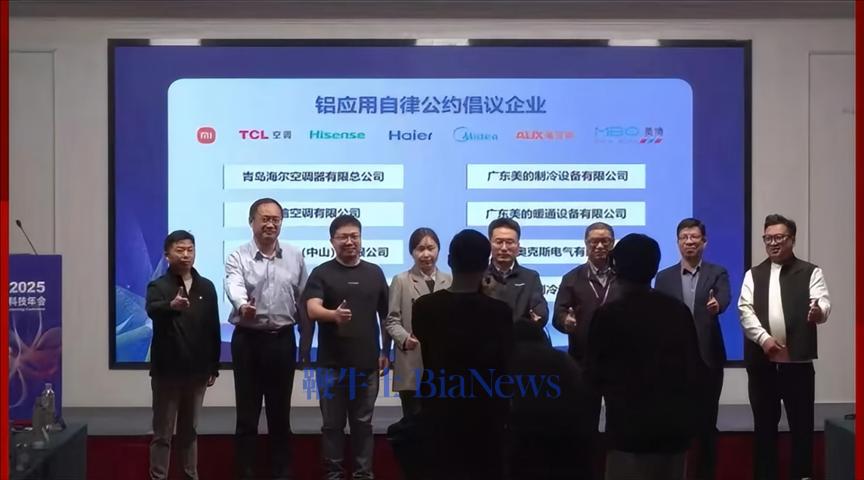
Core Viewpoint - The article discusses China's initiative to promote the use of aluminum instead of copper in air conditioning systems, driven by rising copper prices and the need for a secure supply chain in the multi-billion dollar industry [3][4]. Group 1: Industry Standards and Developments - China has released the group standard for "Aluminum Tube Fin Heat Exchanger Production Line for Room Air Conditioners" and is in the process of drafting additional standards related to aluminum heat exchangers [3][4]. - Major companies such as Gree, Midea, Haier, Xiaomi, and others are participating in the revision of national standards for air conditioning heat exchangers, with discussions scheduled for January 2026 [3][4]. - The China Household Electrical Appliances Research Institute has expanded its research group on aluminum applications in air conditioning to 19 members, including leading air conditioning manufacturers and related material companies [3][4]. Group 2: Technical Challenges and Solutions - The transition to aluminum heat exchangers faces three main challenges: high corrosion resistance technology, lack of standardized testing methods, and consumer biases against aluminum [4][5]. - The Ministry of Industry and Information Technology has outlined a plan to support the development of aluminum heat exchangers for air conditioning and refrigeration, emphasizing the need for high corrosion resistance technology [5]. - Companies are focusing on three technical directions for aluminum replacement: corrosion-resistant material design, surface treatment, and coating design, which require enhanced manufacturing and welding capabilities [5]. Group 3: Market and Consumer Perception - The demand for copper in household air conditioning is significant, with 10.7% of China's copper consumption (approximately 1.723 million tons) attributed to this sector, heavily reliant on imports [4]. - There is a need for government guidance and market cultivation to overcome consumer skepticism regarding aluminum's effectiveness compared to copper [4][5]. - A self-regulation agreement has been established among major air conditioning companies to promote the benefits of aluminum heat exchangers and enhance consumer trust in the technology [5].