第一性原则

Search documents
市场企稳,一些值得关注的数据
Sou Hu Cai Jing· 2025-11-27 05:40
Market Overview - The recent market adjustment is viewed as a monthly correction within an ongoing upward trend, rather than an end to the current market rally [5][9] - Bitcoin has stabilized, rebounding 10% from its lowest point, serving as an indicator of market sentiment and risk appetite [6][7] Currency Analysis - The RMB/USD exchange rate has reached 7.08, marking a new high in over a year, with the RMB appreciating nearly 3% against the USD this year [10] - The decline of the USD index by 7.51% this year, with a maximum drawdown of 12.67%, is a factor in the RMB's appreciation, which is managed to support exports [11][12] - There is a divergence in the market regarding when exporters, who have been holding onto USD, will begin to convert their earnings back to RMB, although there are currently no signs of a rush to convert [14] Year-End Market Dynamics - As the year-end approaches, market behavior may become more complex due to various motivations, such as year-end ranking and profit-taking strategies [15] - The focus should remain on fundamental principles, including actual performance, growth, and valuation, rather than mere fluctuations in market prices [15]


马斯克模仿秀,何小鹏“活到决赛圈”了吗?
3 6 Ke· 2025-11-18 04:00
Core Viewpoint - Xiaopeng Motors has not yet achieved profitability, but its losses have narrowed significantly, indicating a potential turning point for the company [1][4]. Financial Performance - In Q3 2025, Xiaopeng Motors reported a loss of 380 million yuan, a year-on-year reduction of nearly 80% and a quarter-on-quarter reduction of 20.3% [1]. - Total deliveries for Q3 reached 116,007 units, a year-on-year increase of 149.3%, with revenue of 20.38 billion yuan, up 101.8% year-on-year [1]. - The gross margin for Q3 reached 20.1%, marking the first time it has surpassed 20%, while vehicle gross margin improved to 13.1%, up 4.5 percentage points from the same period last year [3]. Market Expectations - Despite the narrowing losses and increased deliveries, market expectations for Xiaopeng remain high, with the Q3 revenue slightly below market expectations [4]. - The forecast for Q4 deliveries is between 125,000 and 132,000 units, lower than the market estimate of 136,000 units, with expected revenue of 21.5 billion to 23 billion yuan, representing a year-on-year growth of 33.5% to 42.8% [4]. Investor Sentiment - Following the Q3 results, Xiaopeng's stock fell by 6% to $23.50, reflecting investor concerns over the revenue miss and lower delivery forecasts [4]. - Notably, JPMorgan reduced its holdings in Xiaopeng by 99.7%, indicating a significant shift in institutional investor sentiment [4]. Strategic Initiatives - Xiaopeng plans to launch seven new "dual-energy" models by 2026, including three super electric range-extended products in Q1 and four new models throughout the year [5]. - The company aims to achieve mass production of its humanoid robot, IRON, by the end of 2026, with a long-term sales target of over 1 million units annually by 2030 [6]. Competitive Landscape - Elon Musk has publicly acknowledged Xiaopeng as a competitor, indicating a shift in the relationship between the two companies [7][8]. - Both companies are pursuing humanoid robotics, with Xiaopeng's IRON and Tesla's Optimus, highlighting the growing intersection of automotive and robotics industries [17][18]. Management Philosophy - Xiaopeng's management approach emphasizes a flat organizational structure, similar to Musk's, but with a more pragmatic and moderate execution style [22][23]. - The company has undergone significant internal restructuring to enhance decision-making efficiency and align its strategic direction [22][24].

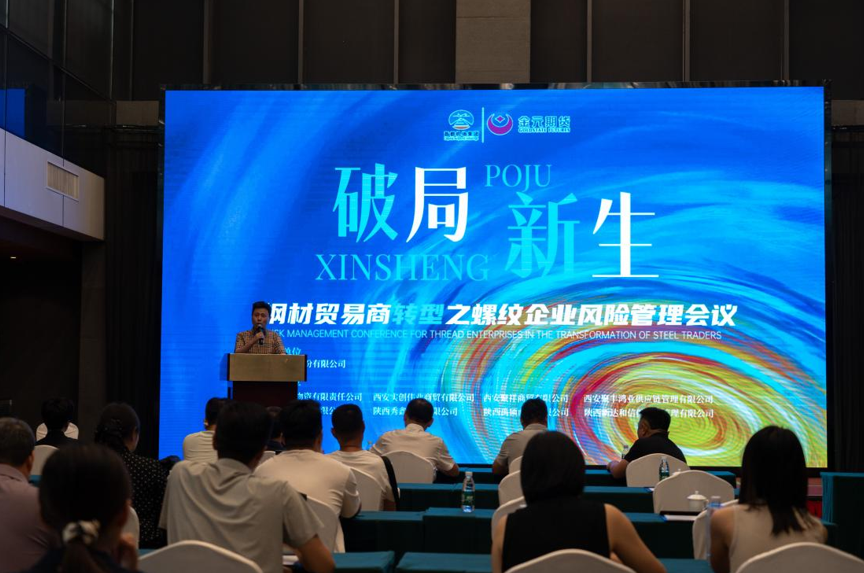
钢材贸易商转型赋能 金元期货西安举办螺纹企业风险管理会议
Qi Huo Ri Bao Wang· 2025-05-22 13:15
Core Viewpoint - The conference focused on the transformation of steel traders and risk management strategies in the rebar industry, highlighting the need for adaptation to market changes and the use of financial tools for risk management [1][3][18] Group 1: Industry Transformation - The steel trading industry is undergoing significant changes, shifting from traditional operations to refined and digital management, and expanding from a single trading model to comprehensive service across the industry chain [3][18] - Rebar, as a core category of construction steel, presents challenges in price volatility and supply-demand dynamics, necessitating enhanced risk management capabilities for companies [3][18] Group 2: Expert Insights - Expert Lei Long discussed the macroeconomic situation in China, emphasizing the historical reliance on exports for GDP growth and the current challenges posed by U.S. economic issues, including debt and liquidity risks [6][18] - Yang Huabin shared insights on how traditional steel traders can seize opportunities for transformation, emphasizing the importance of understanding market dynamics and maintaining a clear analytical approach [9][10] - Liu Bo presented his unique trading philosophy and risk management strategies, stressing the need for a solid understanding of market realities and the establishment of sound trading principles [14][18] Group 3: Interactive Discussions - A roundtable discussion featured industry leaders addressing pain points faced by steel traders during their transformation, fostering an interactive environment for sharing experiences and strategies [15][18] - Participants raised questions regarding the real demand for rebar in construction projects, with insights provided on the current state of construction and steel demand in Shaanxi province [16][18] Group 4: Conference Outcomes - The conference covered topics such as macroeconomic analysis, options derivatives, and practical case studies of steel trader transformations, aiming to enhance companies' risk management systems [18] - Attendees reported valuable takeaways from the conference, indicating a commitment to optimizing their risk management frameworks in response to industry changes [18]
Z Potentials|侯晓迪,前图森未来CEO再出发,“接管率已死,CPM当立” —— 用“每英里成本”撕开自动驾驶遮羞布
Z Potentials· 2025-04-09 03:08
Core Viewpoint - The article discusses the transformation of the autonomous driving industry, emphasizing the importance of "Cost per Mile" as a critical metric for evaluating the viability of autonomous trucking solutions, rather than traditional metrics like takeover rates or demo mileage [1][10]. Group 1: Company Philosophy and Approach - Bot Auto, led by founder Hou Xiaodi, focuses on a rigorous algorithmic approach to redefine value in the autonomous trucking sector, moving away from sensor-heavy solutions to a more cost-effective model using generative AI [2][3]. - The company aims to operate as a transportation service provider, directly managing its fleet to validate real cost curves in the freight market [2][32]. - The philosophy of "value creation" drives the company's decisions, with a commitment to long-term, sustainable business practices rather than short-term gains [7][41]. Group 2: Market Context and Challenges - The U.S. trucking industry faces a significant challenge with an aging workforce, as the average age of truck drivers exceeds 50, while demand for freight transport continues to rise [35][36]. - The market for autonomous trucking is estimated to be between $800 billion and $1 trillion, with a substantial portion of costs attributed to drivers, indicating a significant opportunity for cost reduction through automation [36][39]. - The industry is characterized by a supply-demand imbalance, with a persistent shortage of drivers, creating a favorable environment for autonomous solutions [37][38]. Group 3: Technological Evolution and Breakthroughs - The evolution of deep learning technology has been pivotal in advancing autonomous driving capabilities, transitioning from traditional methods to more sophisticated detection and recognition systems [25][26]. - The introduction of foundation models allows for multi-tasking and multi-modality, significantly reducing data labeling costs to just 2% of traditional methods [30][31]. - The focus has shifted from merely achieving technical milestones to ensuring that autonomous systems can operate reliably under real-world conditions without human intervention [29]. Group 4: Future Vision and Goals - Bot Auto's long-term vision is to create a socially responsible company that expands market participation rather than engaging in zero-sum competition [41]. - The company aims to achieve a sustainable cost structure that allows it to offer competitive pricing in the freight market, with a target of reducing operational costs below those of human drivers [40][32]. - The expectation is that the autonomous trucking landscape will improve significantly in the coming years, with a commitment to innovation and operational excellence as key drivers of success [24][25].