算力出海

Search documents
紧抓能源安全-算电协同-HALO交易三重共振下的电力公用投资机遇
2026-03-30 05:15
Summary of Key Points from Conference Call Records Industry Overview - The focus is on the electricity sector, particularly green electricity operators, in the context of the "算电协同" (Electricity Calculation Collaboration) strategy, which has been elevated to a national strategic level and included in the "14th Five-Year Plan" [1][2]. Core Insights and Arguments - The transition of green electricity from a defensive high-dividend asset to a growth asset driven by computing power infrastructure is highlighted [1]. - A new valuation system for green electricity operators is emerging, where projects involved in "算电协同" will align their valuations closer to AIDC (Artificial Intelligence Data Center) levels, benefiting from early high premiums [1][5]. - The Shandong pilot policy allows green electricity directly connected to the grid to be treated as "self-generated," exempting it from transmission and distribution fees, significantly enhancing project profitability and certainty [1][7]. - Central state-owned enterprises are addressing long-term capital issues through "算电协同," with companies like State Power Investment Corporation and Datang positioning it as a second growth curve [1][4]. - The trend of "算力出海" (computing power going overseas) is shifting the focus from selling green electricity to selling tokens, transferring demand from green electricity operators to power grid and software companies [1][9]. Market Dynamics - Recent performance in the electricity operator sector is characterized as driven by asset trading logic and bolstered by the strategic introduction of "算电协同" during the Two Sessions, highlighting the resilience of electricity as a secondary energy source amid geopolitical tensions [2]. - The current market sentiment is that the electricity sector is not merely a defensive strategy but a thematic investment opportunity, with potential for further waves of investment [2][10]. - The green electricity sector is leading the market, while hydro and thermal power sectors are following suit [2]. Valuation Changes - The valuation of green electricity assets is expected to show a "new-old distinction," where traditional projects maintain their valuation systems, while new projects participating in "green electricity direct connection" will see fundamental changes in their valuation models [5]. - The requirement for over 80% green electricity in computing power infrastructure is anticipated to improve project yield boundaries for participating assets [5]. Policy Support - Recent policy developments, particularly in Shandong, are seen as positive for the economic viability of "green electricity direct connection" projects, potentially serving as a model for other regions [6][7]. Investment Opportunities - Companies with first-mover advantages in the private sector, such as Tongli Tianqi and JinkoSolar, are highlighted as key players in the "算电协同" projects [8]. - State-owned enterprises actively engaging in "算电协同" and "green electricity direct connection" are also noted, with companies like State Power Investment Corporation and Datang taking significant steps [8]. - Regional companies near major computing power hubs, such as Gansu Energy and Zhejiang Xineng, are identified as having potential due to their resource positioning [8]. Emerging Trends - The "算力出海" trend is recognized as a significant development, with implications for the electricity sector beyond just green electricity operators, potentially benefiting grid companies and software-related firms [9]. - The market's perception of the electricity sector as a defensive strategy is nuanced by the emergence of "算电协同," which blends characteristics of defensive high-dividend sectors with growth potential [10].
媒体前沿︱算电协同,从“卖绿电”转向“卖Token” 推动算力出海?
国家能源局· 2026-03-26 06:13
Core Viewpoint - The article discusses China's shift from selling green electricity to selling tokens, transforming fluctuating renewable energy into stable computational power units, thereby establishing a unique advantage in the AI era [2][4]. Group 1: Transition from Energy to Computational Power - The transition from traditional electricity sales to token sales represents a significant value transformation, akin to refining crude oil into high-purity aviation fuel [14]. - In regions rich in renewable energy like Guizhou and Yunnan, the cost of electricity from wind and solar is around 0.3 RMB per kilowatt-hour, while the international market prices tokens at approximately 60-168 USD per million tokens, leading to a substantial increase in export value [15]. - The digital value generated from one kilowatt-hour of electricity in the "electricity to computational power" model can be several times greater than that of traditional high-energy-consuming industries like electrolytic aluminum [16]. Group 2: Infrastructure and Stability - China's interconnected power grid and the "East Data West Computing" strategy provide a solid foundation for computational power, significantly reducing energy loss and alleviating overload in the eastern grid [19][21]. - The "load following source" model allows for the efficient use of renewable energy during peak production times, converting unstable renewable energy into globally transferable digital currency [22]. - In contrast, North America's fragmented power infrastructure faces challenges in meeting the rising demand for computational power, leading to potential conflicts over electricity supply [23][24]. Group 3: Future Implications - The transformation from "selling electricity" to "selling tokens" signifies a shift from a utility-based model to a value-creating digital ecosystem, aligning with the digitalization needs of countries in the Global South [26]. - China's computational power services are aiding local enterprises in Southeast Asia, the Middle East, and Latin America in their digital transformation efforts, presenting a new approach to global digital civilization development [26]. - The article emphasizes that the ability to provide a stable energy foundation for global computational power will determine leadership in the future digital civilization [26].

HALO资产和TOKEN出海
GUOTAI HAITONG SECURITIES· 2026-03-12 05:35
Investment Rating - The industry investment rating is "Overweight" [1] Core Insights - AI is transforming efficiency through both light asset depreciation alongside innovation and heavy asset support for demand expansion. The report highlights that heavy assets have low obsolescence risk, making them attractive for investment. The concept of "TOKEN" is introduced, which involves converting electricity into computing power to provide intelligent services globally, allowing for domestic electricity demand to meet overseas computing needs. The report suggests that the current high valuation of light assets contrasts with the more favorable valuation of heavy asset industries, particularly in regions with low electricity prices, such as Southwest China's hydropower areas [3][7]. Summary by Sections Section: TOKEN - By 2025, China's intelligent computing capacity is expected to exceed 1590 EFLOPS, with the country ranking second globally in both total and intelligent computing capacity. In February 2023, China's AI model call volume reached 41.2 trillion tokens, surpassing the US for the first time [7]. - The report predicts that global data center electricity consumption will reach 945 TWh by 2030, with significant contributions from the US and China, which together account for 80% of the growth [12][11]. - The report emphasizes the cost advantages of China's electricity system, particularly in the western regions where electricity prices range from 0.2 to 0.3 CNY per kWh, compared to higher prices in the US and Europe [17]. Section: Project Deployment - The report indicates that 88.6% of current projects are either under construction or planned, with a peak in production expected between 2026 and 2027. The East China region has the highest number of operational projects, reflecting demand adaptability [24][26]. - The "East Data West Computing" initiative has established eight national computing hubs and ten data center clusters across 14 provinces, with over 60% of new computing capacity concentrated in these hubs [27]. Section: Power Supply and Cost - The report outlines various power supply projects and their characteristics, highlighting the integration of renewable energy sources such as wind and solar power in data center operations. This integration is crucial for maintaining low operational costs and achieving sustainability goals [28][29].
首都在线20260226
2026-03-01 17:23
Summary of Conference Call Company and Industry Overview - The conference call involved **Shoudu Online**, a company transitioning towards AI-driven computing (AIDC) and GPU-based services, amidst a growing demand in the IDC (Internet Data Center) market. The discussion highlighted the company's strategic adjustments and market dynamics in the AI and computing sectors. Key Points and Arguments Financial Performance and Strategic Adjustments - In 2025, the company anticipates a decline in overall revenue, aligning with its strategic adjustments, while expecting a significant reduction in losses, which is in line with projections [2][3] - The GPU segment has shown an impressive growth rate of over **60%**, surpassing initial expectations of **40-60%** growth [2] - New client acquisitions, such as Minimax, have contributed to revenue generation in the latter part of the year, with deployments of **500 NVIDIA cards** in Gansu and **126 cards** in the U.S. [2][3] Market Dynamics and Demand - The demand for computing power is surging, driven by the success of model companies like Zhiyu and Minimax, which have gained recognition both domestically and internationally [3][4] - The company has observed a notable increase in demand from mid-tier companies seeking to leverage AI capabilities, particularly after the IPOs of key players in the market [7][8] Pricing Trends in the IDC Market - The IDC market is experiencing upward pricing pressure due to increased demand and rising costs. The company expects price increases of **15-20%** for new contracts upon renewal [7][8] - The pricing dynamics are influenced by both demand surges and cost increases, with current price hikes potentially leading to further increases in the future [26][28] Infrastructure and Capacity Expansion - The company is transitioning from a light asset model to a more asset-heavy approach, with significant investments in data centers, including a **20 MW** supercomputing center in Hainan and another **20 MW** facility in Dallas [10][11] - Future expansions include a **50 MW** data center in Hebei and a **100 MW** facility in Anhui, with plans for additional capacity in Gansu [11][12] Strategic Partnerships and Collaborations - The company is actively collaborating with model manufacturers to enhance its service offerings and meet the growing demand for computing power [16][17] - There is a focus on establishing strategic centers to provide timely support to domestic model manufacturers, with ongoing efforts to improve the supply of high-end computing cards [17][24] Future Outlook - The company anticipates that the demand for computing power will continue to grow, necessitating effective management of card supply and pricing strategies [19][20] - The potential for further price increases in the IDC market is expected, with the company positioned to capitalize on these trends through its established infrastructure and partnerships [28][33] Additional Important Insights - The company has been proactive in managing its card inventory, transitioning to newer models to meet demand [19][20] - The strategic focus on international expansion and the establishment of a global network for computing services is seen as a significant opportunity for growth [4][33] - The ongoing transformation towards AIDC is viewed positively, with expectations of substantial growth in the coming years [31][33]

首都在线20260227
2026-03-01 17:22
Summary of Conference Call for Capital Online Company Overview - The company is expanding its data center operations in the Beijing and Shanghai regions, with new nodes in Huailai and Wuhu set to begin operations in June and October 2025, respectively. The planned capacities are 50 megawatts (MW) for Huailai and 100 MW for Wuhu, with deliveries expected to start in mid-2026 and completion by the end of 2026 [2][3]. Key Points and Arguments - **Capacity Expansion Plans**: The company aims to add 150 MW of capacity in Gansu Qinyang by the end of 2026, targeting a total capacity of 200 MW by that time [2][3]. - **Increased Capital Expenditure**: The capital expenditure for purchasing cards in 2026 has been significantly increased from an initial target of 300-500 million yuan to approximately 1 billion yuan, reflecting optimistic expectations for computing power demand [2][4]. - **Funding Strategies**: To support heavy asset investments in data center construction and card purchases, the company plans to utilize multiple funding sources, including refinancing through the public company platform, innovative financial tools, low-interest funding support, and partnerships with local governments to establish or introduce industrial funds [2][5]. - **Commercial Aerospace and Overseas Computing Power**: The company is positioning itself in the commercial aerospace sector and overseas computing power services, with a supercomputing center in Wenchang, Hainan, expected to serve international markets. This center is strategically located to leverage multiple submarine cables post-Hainan's customs closure, with plans to initiate operations in 2026 [2][5]. - **Local Government Collaboration**: The Wenchang supercomputing center is aligned with local government strategies to process data close to aerospace launches, enhancing the operational efficiency of the commercial aerospace industry [2][6]. Additional Important Information - **Strategic Shift**: Since 2022-2023, the company has shifted its strategic focus from light asset operations to heavy asset investments, emphasizing the construction and expansion of data center nodes [3]. - **Future Developments**: In addition to Hainan, the company is also developing computing resources in Gansu Qinyang and plans to expand operations around the Jiuquan launch base, creating a multi-location collaborative development strategy [3][6].
首都在线20260129
2026-01-30 03:11
Summary of Conference Call for Capital Online Company Overview - **Company**: Capital Online - **Industry**: Cloud Computing and Data Center Services Key Points Financial Performance and Projections - **2025 Performance Forecast**: Expected net profit loss of **CNY 160 million to 175 million** with revenue between **CNY 1.2 billion to 1.3 billion** [2][3] - **Strategic Shift**: Reduction of low-margin IPC business, with revenue share dropping from **55%** to focus on computing cloud and intelligent computing cloud, which are expected to account for **28%** and **20-24%** of revenue respectively [2][3] - **Intelligent Computing Cloud Growth**: Anticipated growth rate of **40%-60%** for intelligent computing cloud business [2][3] Pricing Strategy - **Cloud Service Price Increase**: Planned price increase of **15%-20%** for cloud services due to rising hardware costs (storage and memory prices up **50%-70%**, other hardware up **15%-20%**) and increased market demand [2][3][9] - **Future Price Trends**: Expected continuation of price increases in **Q2 2026** driven by rising base equipment costs and sustained demand, particularly from advancements in large model technologies [3][6][12] Market Demand and Supply Chain - **Strong Demand for Intelligent Computing**: Increased demand driven by the launch of technologies like Zhiyu Huazhang and MiniMax, with government support for application scenarios [2][7] - **IDC Business Recovery Potential**: IDC prices are stabilizing despite previous competition and price wars, with rising costs for new data centers due to commodity price increases [8][23] Strategic Developments - **Expansion Plans**: Active development of intelligent computing centers in locations such as Dallas, Hebei, Anhui, and Hainan, with plans for global service nodes and exploration of commercial aerospace computing [4][16] - **Collaboration with Major Clients**: Ongoing discussions with large enterprises for tailored services, contrasting with standardized offerings from larger competitors [20] Future Outlook - **Growth Expectations**: Optimistic internal growth target of **50%-60%** for 2026, despite supply chain challenges [4][14] - **Investment in Infrastructure**: Significant capital investment planned for building computing centers, with potential funding through new financial instruments and industry funds [21] - **Focus on Domestic and International Markets**: Plans to expand services internationally, particularly in the US and Europe, while enhancing competitiveness through localized service offerings [16] Additional Insights - **Client Order Management**: 90% of orders are on short-term contracts, allowing for quicker adjustments to pricing strategies [11][10] - **Sustainability of Price Increases**: Price increases are expected to be sustainable due to ongoing demand and rising costs, with potential for additional increases in the future [6][25] - **Adaptation to Market Changes**: The company is adapting its strategies to meet evolving client needs and market conditions, particularly in the context of AI advancements and the fourth industrial revolution [25]
润建股份:目前公司已拥有240多名海外员工,承接东盟地区超100个AI应用和数字化项目
Zheng Quan Ri Bao Zhi Sheng· 2025-10-28 10:12
Core Insights - Runjian Co., Ltd. has been actively expanding its overseas market presence since 2019, particularly in ASEAN countries, leveraging national overseas strategy opportunities [1] - The company focuses on key business areas including AI applications, computing power, digital solutions, and renewable energy [1] - Runjian currently employs over 240 overseas staff and has undertaken more than 100 AI application and digital projects in the ASEAN region [1] - The company is involved in the construction and operation of 24 computing power centers, contributing to various sectors such as urban governance, energy management, smart education, and smart agriculture [1] - Notable projects include "ASEAN AI Grading," "Vietnamese Legal Consultation AI Assistant," and "AI Photovoltaic Management Platform" [1] - Runjian is optimistic about the potential of AI and computing power businesses overseas and plans to continue increasing its business expansion efforts [1]
GPU贸易警示录:从暴利到薄利,智算赛道门槛浮出水面
雷峰网· 2025-10-14 10:13
Core Insights - The GPU trading market has shifted from a high-demand, quick-sale environment to a more challenging landscape where the order fulfillment cycle has lengthened significantly, leading to a brutal industry shakeout [2][3][12] - The barriers to entry in the GPU trading sector are becoming clearer, with successful players relying heavily on strong relationships and substantial financial backing to secure resources and customers [4][9][11] Group 1: Market Dynamics - The initial boom in the GPU market saw significant profits, with individual machines yielding profits of tens of thousands to over a million [2] - As the market matured, the influx of participants has made it increasingly difficult to secure orders, with many new entrants struggling to survive [3][25] - The trend of large companies issuing framework agreements has led to a competitive environment where smaller firms often find themselves "running alongside" larger players without guaranteed contracts [12][13] Group 2: Entry Barriers - Successful entrants typically possess either a robust network of relationships or significant financial resources, which are critical for accessing core supply channels [5][9] - Companies with established connections to major suppliers, such as NVIDIA, have a competitive edge in securing inventory and fulfilling large orders [6][11] - The ability to navigate complex customer relationships is essential, as many large contracts are finalized through informal channels rather than formal sales processes [7][8] Group 3: Operational Challenges - New entrants often face steep learning curves regarding equipment specifications and operational requirements, which can lead to costly mistakes [15][19] - The complexity of customer needs, including the integration of various technological components, poses additional challenges for companies lacking deep industry knowledge [24] - The necessity for strong operational and maintenance capabilities has become apparent, as clients increasingly prioritize service quality over price [26][27] Group 4: Competitive Landscape - The competitive environment has intensified, with many companies experiencing pressure on profit margins due to aggressive pricing strategies from larger firms [22][25] - The trend of "free testing" by smaller companies complicates the market, as it can undermine pricing structures and profitability for established players [23] - Companies are exploring international markets, particularly in regions like Southeast Asia and the Middle East, where infrastructure development is still in its early stages, presenting new opportunities [29][30] Group 5: Future Outlook - The industry is witnessing a shift towards high-end server markets, with a focus on maintaining asset value amid fluctuating prices [32] - Continuous learning and adaptation to technological advancements are crucial for companies aiming to remain competitive in the evolving landscape [33]

英伟达B200在国内热度大减;浪潮、华勤有意布局二手服务器市场;揭露算力项目烂尾两个信号;GPU维保市场巨大丨算力情报局
雷峰网· 2025-08-26 11:01
Group 1 - The core viewpoint of the articles highlights the challenges and changes in the computing power market, particularly focusing on the impact of local government changes and budget controls from major internet companies on the industry [2][5][9] - A significant reduction in the heat of Nvidia's B200 equipment is noted due to project delays caused by changes in local leadership, with only 5-10 out of nearly 200 planned projects expected to be completed [2] - The maintenance market for Nvidia GPUs is identified as a substantial opportunity, with repair costs for H100 GPUs reaching 20,000 to 30,000 yuan, indicating a growing demand for after-sales services [3] Group 2 - The second-hand server market is projected to grow significantly, with an expected market size of 42.47 billion USD by 2025, driven by a 17.4% compound annual growth rate from 2023 to 2025 [4] - Major companies like Inspur and Huqin Technology are exploring the server recycling and maintenance market, which could disrupt existing small-scale operators [4] - The trend of major internet companies controlling IDC budgets is affecting the entire computing power supply chain, with a shift towards leasing rather than purchasing [5][10] Group 3 - The article discusses the emerging "floor price" competition in the computing power market, particularly in the northwest region, where costs can be reduced by 50-90% through partnerships with renewable energy companies [12] - The profitability of data centers in the Middle East is highlighted, with profit margins reaching nearly 20%, making it an attractive location for major companies [13] - The trend of "computing power going overseas" is gaining traction, with companies like Bitmain and Jiukun Quantitative purchasing equipment for deployment in overseas data centers [15]

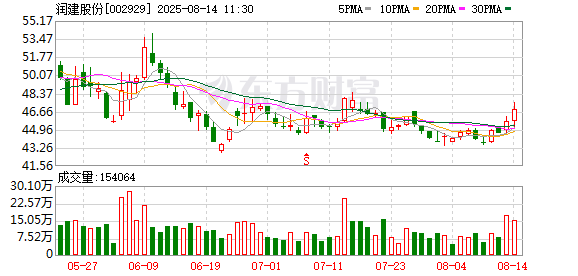
润建股份:目前公司已在马来西亚、印尼等东盟国家参与24个算力中心的建设运维工作
Mei Ri Jing Ji Xin Wen· 2025-08-14 04:23
Group 1 - The company has been actively expanding its overseas market presence, particularly in ASEAN countries, since 2019, leveraging the national strategy for going global [1] - The company is involved in the construction and operation of 24 computing power centers in ASEAN countries such as Malaysia and Indonesia [1] - The company has developed intelligent solutions for various industries, including urban governance, energy operation, smart education, and smart agriculture, with successful applications in ASEAN countries [1] Group 2 - Notable projects include "ASEAN AI Grading," "Vietnamese Legal Consultation AI Assistant," and "AI Photovoltaic Management Platform" [1] - The company is optimistic about the prospects of AI and computing power going global and plans to continue increasing its business expansion efforts [1]