美元理财

Search documents
洋派王爷爷的外币理财新体验:让资产“出海”更轻松!
Zhong Guo Zheng Quan Bao· 2025-12-31 01:17
Core Viewpoint - The article discusses the benefits of investing in USD-denominated financial products, highlighting their potential for higher returns and risk diversification for investors with overseas needs [2][3]. Group 1: Benefits of USD Financial Products - Benefit 1: Enhanced Yield Growth Potential USD financial products encompass a range of investments such as USD deposits, bonds, and cross-border structured tools, providing investors with opportunities for higher returns compared to single-currency investments [2]. - Benefit 2: Diversification of Market Risk Global allocation helps avoid concentration risk, as USD financial products are typically linked to overseas markets, offering options for risk diversification and hedging for investors holding USD assets [3]. Group 2: Accessibility and Risk Levels - Accessibility: Low Investment Threshold Most USD financial products have a minimum investment amount of just 1 USD, making them accessible for ordinary investors with needs related to overseas study or consumption [4]. - Risk Levels: Predominantly Low-Risk Products The current market features mainly fixed-income USD financial products, with risk ratings typically classified as R1 (low risk) or R2 (medium-low risk) [6][12]. Group 3: Product Features - Product Structure: Closed-End Operation The "Jinxin" series of closed-end USD financial products focuses on USD fixed-term deposits and aims to effectively diversify risks associated with single currency and asset types, enhancing portfolio resilience [11][12]. - Purchase and Redemption: USD Transactions Investors can purchase and redeem these products in USD, ensuring that both principal and returns remain in USD, which facilitates continued investment or use for other foreign currency needs [5]. Group 4: Risk Awareness - Currency Risk: Exchange Rate Fluctuations Investors should be aware of currency risks, as fluctuations in exchange rates can impact actual returns, particularly if the RMB appreciates against the USD [9].


当“3%”美元理财遇上人民币破7关口,警惕高息理财可持续性
Sou Hu Cai Jing· 2025-12-27 00:15
Core Viewpoint - The Federal Reserve has implemented its third interest rate cut of 2025, lowering the federal funds rate target range by 25 basis points to 3.50%-3.75%, totaling a 75 basis point reduction for the year, aligning with market expectations [1][3]. Interest Rate Cuts - The Federal Reserve's interest rate cut timeline for 2025 includes three reductions: September 18 (25 basis points to 4.00%-4.25%), October 30 (25 basis points to 3.75%-4.00%), and December 11 (25 basis points to 3.50%-3.75%) [4]. - The voting results for the latest rate decision showed a notable division, with 9 votes in favor and 3 against, marking the first occurrence of dissenting votes since 2019 [4]. Economic Analysis - Experts indicate that the Fed's cumulative rate cuts aim to stabilize employment and prevent recession while keeping inflation manageable [4]. - The policy path for 2026 will heavily depend on economic data, suggesting increased policy flexibility and a need to monitor core inflation and employment indicators closely [5]. Investment Opportunities - Despite a downward trend in domestic dollar deposit rates, some banks are promoting dollar financial products with annualized yields above 3%, attracting investor interest [6]. - Specific examples include Beijing Bank's dollar products with yields of 2.7% for 6-month and 3% for 1-year terms, and Nanjing Bank's tiered rates based on deposit amounts [7][8]. Market Dynamics - Foreign banks are also accelerating the promotion of dollar deposit products post-rate cuts, with Standard Chartered offering rates of 3.8% for various terms [9]. - Analysts highlight three supporting factors for the high-yield dollar financial products: the delayed transmission of Fed rate cuts to existing asset yields, controlled issuance to manage risks, and the competitive yield of dollar assets in a low global interest rate environment [9]. Currency Impact - The continuous appreciation of the RMB against the USD is a critical factor affecting the returns on dollar-denominated investments, with the RMB appreciating over 3.4% this year [10][11]. - For investors holding dollar assets, the RMB's appreciation could lead to exchange losses, potentially offsetting the nominal yields of dollar financial products [11]. Risk Management - Experts recommend that ordinary investors balance yield and exchange rate risks, suggesting a dollar asset allocation of 10%-15% and prioritizing short-duration, high-liquidity products [11]. - Strategies for mitigating risks include using forward foreign exchange contracts and diversifying currency exposure to reduce reliance on a single currency [11].

3%高息难抵汇损,降息通道下的美元存款不再是“香饽饽”
Sou Hu Cai Jing· 2025-12-19 09:35
Core Viewpoint - The article discusses the impact of the Federal Reserve's interest rate cuts on the USD deposit rates in China, highlighting the increasing risk of currency fluctuations as the RMB appreciates against the USD, which could erode the returns on USD deposits [1][5]. Group 1: Federal Reserve's Monetary Policy - The Federal Reserve continued its accommodative monetary policy in 2025, implementing three interest rate cuts, with the final rate set between 3.50% and 3.75% [2][5]. - The voting results for the rate cuts showed significant division, with a 9-3 vote, marking the first dissenting votes since 2019 [2]. Group 2: Domestic USD Deposit Rates - Most domestic banks have seen USD deposit rates fall below 3%, with some banks offering rates in the low 2% range, while a few still provide rates above 3% [1][2]. - High-yield products are becoming scarce, and the current high rates may be temporary, reflecting a lag in pricing adjustments relative to the Fed's rate cuts [3][5]. Group 3: Currency Exchange Rate Impact - The appreciation of the RMB against the USD has exceeded 3.4% since 2025, with the onshore RMB reaching a peak of 7.0455, which could significantly impact the returns on USD assets [5][6]. - The article emphasizes that as the Fed continues to lower rates, the influence of exchange rate fluctuations on investment returns will increase [5][6]. Group 4: Investment Strategies - Investors are advised to shift their focus from chasing interest rate differentials to managing currency exchange risks, especially for those without genuine USD needs [6][7]. - Different strategies are recommended for various types of investors, with a focus on maintaining a balanced asset allocation and considering short-term products to mitigate risks [6][7].
当“3%”美元理财遇上“破7”人民币,警惕高息理财可持续性
2 1 Shi Ji Jing Ji Bao Dao· 2025-12-17 11:17
Core Viewpoint - The Federal Reserve has implemented its third interest rate cut of 2025, lowering the federal funds rate target range by 25 basis points to 3.50%-3.75%, totaling a 75 basis point reduction for the year, aligning with market expectations [1][3]. Group 1: Federal Reserve's Rate Cuts - The Federal Reserve has maintained a loose monetary policy with three rate cuts in 2025, with the first cut on September 18, the second on October 30, and the third on December 11 [3][4]. - The voting results for the rate cut showed a notable division, with 9 votes in favor and 3 against, marking the first occurrence of dissenting votes since 2019 [5]. - Analysts suggest that the cumulative rate cuts aim to stabilize employment and prevent recession while keeping inflation under control [5][6]. Group 2: Investment Opportunities in Dollar Products - Despite the attractive high-yield opportunities in dollar-denominated financial products, investors face the challenge of balancing potential returns against future currency and yield fluctuations [3][7]. - Domestic dollar deposit rates are on a downward trend, with many banks reducing rates from 4% to the 3% range [7]. - Some banks are promoting dollar financial products with annualized rates above 3%, such as Beijing Bank's dollar products offering 2.7% for 6-month and 3% for 1-year terms [8][9]. Group 3: Currency Exchange Rate Impact - The continuous appreciation of the RMB against the USD has significant implications for the returns on dollar-denominated investments, with the RMB appreciating over 3.4% this year [11][12]. - For investors holding dollar assets, the appreciation of the RMB could lead to exchange rate losses, potentially offsetting the nominal returns from high-yield products [11][12]. - Analysts recommend that investors consider both yield and currency risks, suggesting a controlled allocation of dollar assets between 10%-15% of their portfolio [12].
美联储再度降息,部分银行美元存款利率仍超3%
第一财经· 2025-12-11 14:10
Core Viewpoint - The Federal Reserve has lowered the federal funds rate by 25 basis points to a range of 3.50% to 3.75%, aligning with market expectations. This has prompted banks and financial institutions to promote dollar deposits and investment products, with some offerings showing annualized yields in the "3s" and approaching 4% [3][4]. Group 1: Dollar Deposit Rates - Despite the overall downward trend in dollar deposit rates following the Fed's rate cuts, many institutions are still offering relatively high-yield dollar products. For instance, Bohai Bank offers a 1-year dollar fixed deposit at an annualized rate of 3.10%, while Hengfeng Bank maintains a rate of 3.30% for the same term [5]. - Some city commercial banks have introduced even more attractive rates, with 1-year rates reaching up to 3.9% and minimum deposit amounts as low as $1,000. For example, Xian Bank offers a 1-year rate of 3.98% [6]. - Foreign banks are also promoting competitive short-term rates, with Standard Chartered Bank offering rates up to 3.6% for 1-month and 3-month deposits, and Hang Seng Bank maintaining a 1-month rate of 4% [6]. Group 2: Investment Products - Several wealth management subsidiaries are actively promoting dollar-denominated fixed-income products. ICBC Wealth Management's "Global Add Benefits" product has achieved an annualized yield of 4.97% since its inception, standing out among similar offerings [6]. - Analysts suggest that while the appeal of dollar fixed-income assets remains strong in the short term, future yields may fluctuate with market interest rate adjustments [6]. Group 3: Risks and Market Outlook - Since September, the Fed has cut rates three times, totaling 75 basis points, leading to increased scrutiny on the future trajectory of dollar deposit rates and asset yields. The recent appreciation of the RMB against the dollar is also impacting the actual returns on dollar investments [8]. - Analysts predict a potential "wait-and-see" period for the Fed after the recent rate cut, with expectations of a pause in further actions until early 2026 to assess the economic impact of previous cuts [8]. - The RMB has appreciated by 3.24% against the dollar this year, with a 1.88% increase over the past six months and 0.83% in the last month. This trend is expected to continue into 2026, potentially leading to foreign exchange losses for investors holding dollar assets [8][13].
抢抓“窗口期”!美元存款营销升温
Zhong Guo Jing Ying Bao· 2025-12-04 04:56
Group 1 - The core viewpoint is that expectations for a Federal Reserve interest rate cut in December have increased, leading to a potential decline in future dollar deposit rates, prompting financial institutions to intensify marketing of dollar deposit products [1][4] - Financial institutions are actively promoting dollar deposit products, with recent offerings showing rates around 3%. For example, Jiangsu Bank's Shanghai branch announced rates of 2.50%, 2.70%, and 3.00% for 3-month, 6-month, and 1-year dollar deposits, respectively [2] - Several foreign banks have also increased marketing efforts for dollar deposit products, with rates for various terms being competitive, indicating a trend towards lower dollar deposit rates overall [2][3] Group 2 - The dollar wealth management market is gaining traction, with analysts suggesting that the current period is an optimal time to invest in dollar-denominated assets due to anticipated interest rate cuts by the Federal Reserve [3] - The primary factor influencing domestic commercial banks' dollar deposit rates is the Federal Reserve's monetary policy, with a high probability of a 25 basis point cut in December, which is expected to further decrease dollar deposit rates [4] - Predictions indicate that the Federal Reserve may continue to lower rates into 2026, with terminal rates potentially reaching between 3.00% and 3.25%, impacting the dollar deposit landscape [4]
美元理财,不香了?
Sou Hu Cai Jing· 2025-11-06 08:18
Core Viewpoint - The Federal Reserve's recent interest rate cut has led to a decline in dollar deposit rates across various banks, indicating a broader trend of decreasing returns on dollar-denominated investments [1][3][7]. Group 1: Interest Rate Adjustments - The Federal Reserve announced a 25 basis point rate cut, bringing the federal funds rate target range to 3.75% to 4.00% [1]. - Xi'an Bank adjusted its dollar deposit rates, with 1-month, 3-month, 6-month, 1-year, and 2-year rates now at 3.2%, 3.6%, 3.98%, 3.98%, and 3.6% respectively, all entering the "3" range [1]. - Nanjing Bank also lowered rates for certain dollar deposit products, with rates for 6-month and 1-year products dropping from 3.3% and 3.6% to 3.2% and 3.3% respectively [2]. Group 2: Market Trends and Predictions - The overall decline in dollar deposit rates is attributed to the Federal Reserve's easing monetary policy, which aims to reduce banks' funding costs [3]. - Analysts predict that the Fed may continue to lower rates, potentially leading to further decreases in dollar deposit rates in the coming years [3]. - The average annualized yield for dollar cash management products has decreased to 3.879%, reflecting the impact of the Fed's rate cuts [6]. Group 3: Investment Strategies - With the decline in dollar deposit attractiveness, experts recommend diversifying investments rather than relying solely on dollar deposits, suggesting a mix of dollar bond funds and other financial products [7]. - The report indicates that by early 2025, the dollar may still be the preferred currency for deposits, but other currencies like the euro and yen may surpass it in yield [8]. - Investors are advised to consider both interest income and exchange rate fluctuations to maximize returns from foreign currency deposits [8].
被美元理财“背刺”了!汇率风险是如何“吃掉”高收益的?
2 1 Shi Ji Jing Ji Bao Dao· 2025-10-28 02:17
Core Insights - The article discusses the impact of the depreciation of the US dollar against the Chinese yuan on investors who have engaged in dollar-denominated financial products, highlighting significant losses due to currency fluctuations [1][2]. Currency Exchange Impact - The exchange rate of USD to CNY has dropped from 7.3 at the beginning of the year to 7.1219 by October 24, resulting in a 2.44% loss purely from currency fluctuations [2]. - An example investor who exchanged 730,000 CNY for 100,000 USD in January and invested in a fixed-income product faced a loss of over 5,000 USD by October 22, considering the exchange rate at that time [2][5]. Investment Product Performance - As of the end of September, 22 dollar-denominated financial products had yields below 2.5%, indicating that many investors are struggling with losses or are on the verge of losing money [5]. - In contrast, another investor who purchased US Treasury bonds with a 3.5% coupon rate saw a total return exceeding 5.1%, benefiting from both interest income and capital appreciation [6][7]. Risk of Currency Fluctuations - The article emphasizes the importance of considering currency exchange risks when investing in foreign-denominated assets, as potential high returns can be eroded by unfavorable currency movements [9]. - For investors looking to mitigate currency risk, options such as QDII funds that are denominated in CNY are available, although they may offer lower yields due to hedging costs [9].
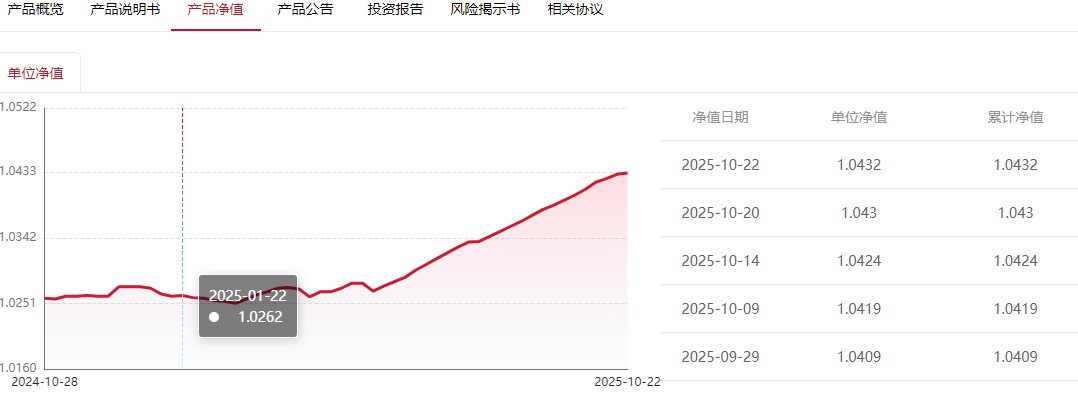
美联储降息叠加美元贬值 美元理财收益缩水
Sou Hu Cai Jing· 2025-09-25 16:46
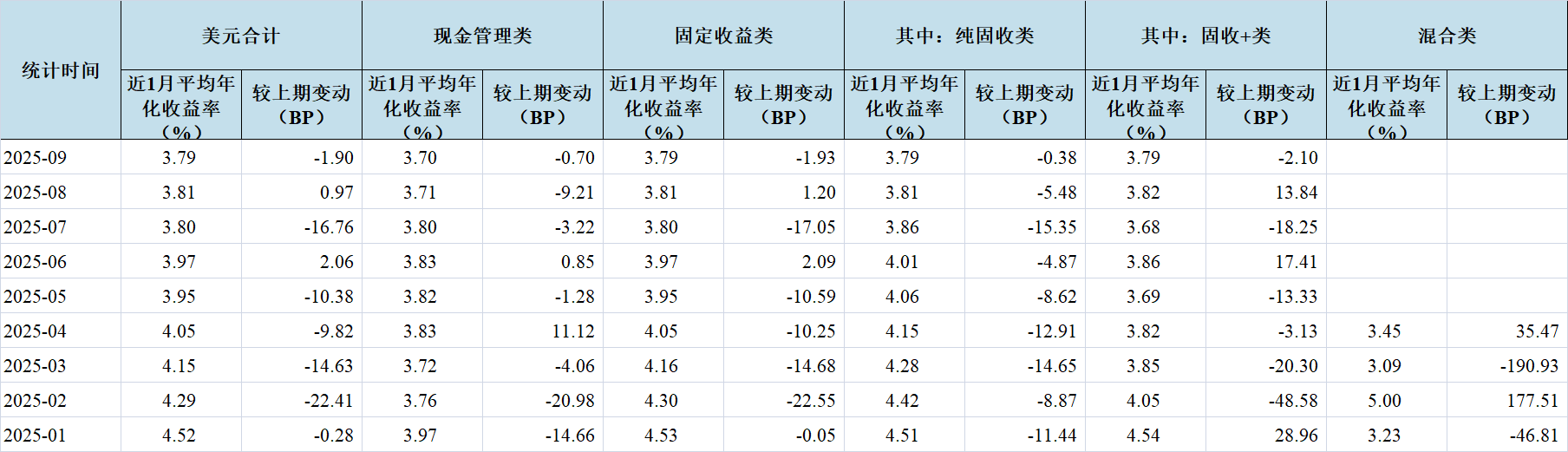
Core Viewpoint - The Federal Reserve has lowered the federal funds rate target range by 25 basis points to 4.00%-4.25%, marking the first rate cut since December 2024, which signals the end of the high-interest rate cycle for the dollar and a downward trend in dollar asset yields [1][4]. Group 1: Impact of Rate Cut - The recent rate cut is seen as a confirmation of the turning point for dollar asset yields, ending a nine-month period of stable policy [4]. - Foreign banks, such as HSBC and DBS, have quickly responded by lowering dollar deposit rates following the Fed's announcement [4]. - Domestic banks have not yet adjusted their rates, but there is an expectation of potential future declines [4][5]. Group 2: Investor Experiences - Many investors have shared experiences of losses from dollar-denominated financial products due to declining exchange rates, despite initially attractive interest rates [2][3]. - The average annualized yield for dollar financial products has dropped significantly from 4.52% in January to 3.79% in September [2][5]. - Investors are increasingly questioning whether investing in dollar financial products is more about earning interest or speculating on exchange rates [3]. Group 3: Risks and Considerations - The decline in dollar asset yields is attributed to both the Fed's rate cuts and the depreciation of the dollar, which has seen a nearly 10% drop in the dollar index this year [2][7]. - Analysts highlight three main risks associated with dollar financial products: exchange rate risk, interest rate risk, and liquidity risk [7]. - Future expectations regarding Fed policy and exchange rate movements remain uncertain, with differing opinions among analysts [7][8].
美联储降息叠加美元贬值,美元理财投资者亏麻了
Di Yi Cai Jing· 2025-09-25 12:41
Group 1 - The Federal Reserve has lowered the federal funds rate target range by 25 basis points to 4.00%-4.25%, marking the first rate cut since December 2024, indicating a shift in the high-interest rate environment for the dollar [1][5] - The dollar has depreciated significantly since the beginning of the year, leading to reduced interest income and principal losses for investors holding dollar-denominated financial products [1][2] - The average annualized yield of dollar financial products has declined from 4.52% in January to 3.79% in September, reflecting a downward trend in dollar asset returns [2][6] Group 2 - Investors are increasingly sharing experiences of losses from dollar financial products, highlighting the risks associated with currency fluctuations and the diminishing returns from these investments [2][4] - The dollar index has dropped nearly 10% year-to-date, with the exchange rate against the yuan falling from 7.35 to 7.12, a depreciation of over 3% [2][4] - The decline in yields is particularly pronounced in fixed-income products, with expectations that yields may fall below 3.5% in the coming months [6][7] Group 3 - The recent rate cut by the Federal Reserve is seen as a confirmation of a turning point for dollar asset yields, with foreign banks quickly adjusting their deposit rates in response [5][6] - Despite the decline in yields, some smaller banks still offer competitive rates, but the overall sentiment is that exchange rate fluctuations will significantly impact actual returns [6][7] - Analysts express differing views on future Federal Reserve policy, with expectations of further rate cuts and a stable dollar-to-yuan exchange rate within the 7.0-7.5 range [8]