
美国经济状况

Search documents
特朗普“不满意率”创新高
第一财经· 2026-03-30 00:01
Core Viewpoint - A recent poll by Fox News indicates that nearly two-thirds of American voters are dissatisfied with President Trump's administration, marking the highest dissatisfaction rate of his two terms [1][3]. Group 1: Poll Results - The dissatisfaction rate among respondents is 59%, an increase of 8 percentage points from a year ago, surpassing the record from his first term [1][3]. - The satisfaction rate has dropped from 49% a year ago to 41% [1][3]. - Among Republican supporters, satisfaction has decreased to 84%, down 8 percentage points from the previous year, the lowest since the start of his second term [5]. Group 2: Specific Issues - Trump's performance on various issues is rated poorly, with dissatisfaction rates in healthcare, immigration, foreign policy, taxation, and Iran significantly higher than satisfaction rates [5]. - The handling of inflation is viewed the worst, with only 28% approval, a decline of 7 percentage points since January and 12 percentage points from a year ago [5]. - Economic performance is a major source of public dissatisfaction, with support for Trump's economic handling at a record low of 34%, down 6 and 9 percentage points from January and a year ago, respectively [5]. Group 3: Economic Outlook - 75% of respondents believe the current economic situation in the U.S. is poor, with nearly half indicating their personal financial situation is worsening [5]. - 86% of respondents express concern over inflation and high prices, with 57% stating they are extremely worried [5]. - A majority, 53%, expect the U.S. economic situation to worsen in the next year, while only 25% hold an opposing view [5].


民调:美民众普遍对经济状况感到悲观 不满政府忽视经济议题
Zhong Guo Xin Wen Wang· 2026-01-20 03:10
Core Viewpoint - A recent poll indicates that the American public is generally pessimistic about the current economic situation, with nearly half of respondents believing the economy has worsened over the past year [1] Group 1: Economic Sentiment - The poll results show that voters who perceive the economy as weak outnumber those who see it as strong by 15 percentage points, highlighting a disconnect between positive economic indicators and public sentiment [1] - A majority of the public attributes economic difficulties to government policies, with 58% of voters believing the current administration bears the most responsibility for the economic situation, compared to 31% who blame former President Biden [1] Group 2: Government Focus - The dissatisfaction among the public stems from the perception that the current government is neglecting economic issues in favor of foreign affairs, such as Venezuela and Iran, as well as other matters [1] - Republican pollster Adam Geller notes that former President Trump is attempting to appeal to moderate voters with proposals aimed at improving affordability, such as capping credit card interest rates and limiting large investors from purchasing homes to reduce housing costs, although these efforts have not yet reflected in the polls [1]
美联储发布“褐皮书”:美国总体消费支出进一步下滑
Sou Hu Cai Jing· 2025-11-27 01:29
Core Insights - The Federal Reserve's Beige Book indicates that economic activity has not changed significantly since the last report, with most districts reporting stable conditions, while two districts noted slight declines and one district reported slight growth [1] - High-end retail spending remains resilient, but overall consumer spending in the U.S. has declined further [1] - Retailers have pointed out that the government shutdown has negatively impacted consumer purchasing power [1] - There is widespread upward pressure on costs in the manufacturing and retail sectors, attributed to tariff-induced cost increases [1] - Most businesses connected to the Federal Reserve districts expect cost pressures to persist in the future [1]
美媒:最新民调显示超七成美国民众认为美国经济状况“不佳”
Sou Hu Cai Jing· 2025-11-21 11:46
Core Insights - Over 76% of American respondents believe the economic situation is "poor," an increase from 67% in July [3] - Rising living costs are a significant concern, with 78% reporting increases in utility costs, 67% in healthcare costs, and 66% in housing costs [3] Group 1: Economic Sentiment - 76% of respondents view the U.S. economy negatively, marking a 9% increase since July [3] - A significant portion of the population attributes the worsening economic conditions to the policies of the Trump administration, with 46% expressing this view [3] Group 2: Rising Living Costs - Food prices in the U.S. have risen over 18% compared to January 2022 [5] - The average annual childcare cost for each child is projected to exceed $13,000 in 2024, reflecting a 30% increase since 2020 [5] - Healthcare premiums for middle and low-income families are expected to rise from an average of $888 in 2025 to $1,904 in 2026 due to political disagreements over healthcare spending [5] - Average monthly expenditures on utilities have increased by 12% compared to the previous year [5]

【环球财经】美国关键通胀数据因政府“停摆”推迟发布
Xin Hua She· 2025-10-16 06:18
Core Points - The U.S. government shutdown has delayed the release of key economic reports, including the Consumer Price Index (CPI) and employment data, which are crucial for economic assessment and policy-making [1][2] - Federal Reserve Chairman Jerome Powell indicated that the lack of government data could complicate the Fed's ability to make informed decisions, especially if the shutdown persists [1] Economic Data Impact - The Labor Department's September report showed a significant drop in non-farm employment, with only 22,000 jobs added in August, a sharp decline from the revised 79,000 in July, and below market expectations [2] - The CPI for August rose by 2.9% year-over-year, marking the largest increase since January and remaining above the Fed's long-term target of 2% [2] Federal Reserve Actions - The Federal Open Market Committee is scheduled to meet on October 28-29, with market expectations leaning towards another 25 basis points rate cut due to the ongoing weakness in the employment market [2]
美联储褐皮书:9月以来美经济活动基本持平 ,美国企业裁员报告增多
Sou Hu Cai Jing· 2025-10-16 00:39
Core Insights - The Federal Reserve's Beige Book indicates that U.S. economic activity has remained largely flat since September, with overall employment stability, but an increase in reported layoffs raises concerns about a potential softening in the labor market [1][1][1] Economic Activity - Economic activity in the U.S. has been stable since September, as reported in the Beige Book [1] - The report reflects information collected from commercial and community contacts by the 12 regional Federal Reserve Banks up to October 6 [1] Employment Trends - Overall employment has remained stable; however, there has been a noticeable increase in the number of companies reporting layoffs [1] - This rise in layoffs contributes to growing market concerns regarding the labor market's strength [1] Importance of the Report - The Beige Book is typically released two weeks before the Federal Reserve's interest rate decision meetings, serving as a timely reference for assessing the U.S. economic situation [1] - Due to the government shutdown, the release of key inflation data (CPI) has been delayed to October 24, making the Beige Book's insights particularly significant for Federal Reserve decision-makers [1]
Wall Street is starting to rethink the need for multiple rate cuts into 2026
MarketWatch· 2025-09-25 17:15
Core Viewpoint - The U.S. economy is demonstrating stronger performance than previously anticipated, leading traders to reassess the potential trajectory of interest rates for the upcoming year [1] Economic Outlook - The current economic strength is prompting a reconsideration of how low interest rates may need to be adjusted in the next year [1]
美媒提到民调中过半受访者认为美国经济状况恶化,特朗普回应:换个民调员
Huan Qiu Wang· 2025-09-19 01:22
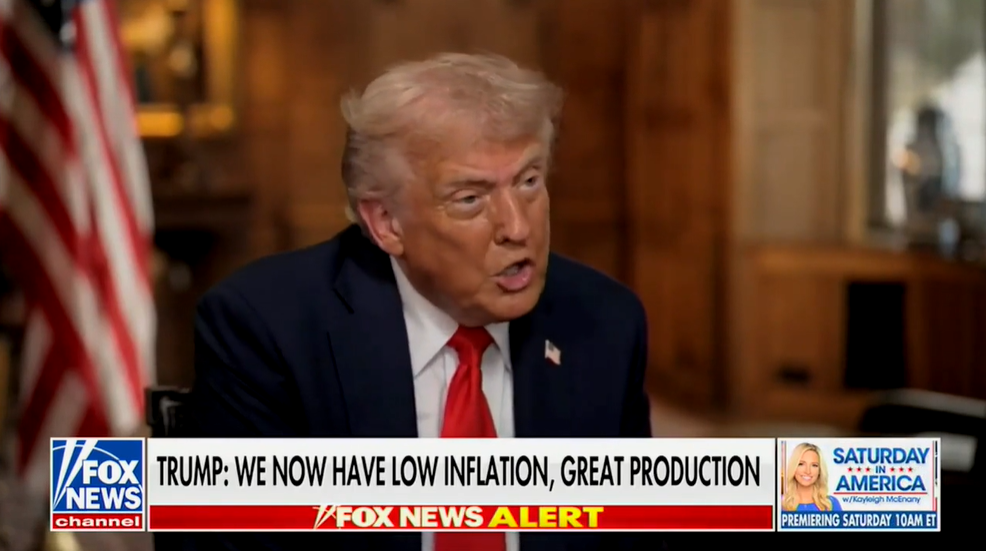
Core Points - The article discusses President Trump's response to recent polls indicating that over half of respondents believe the economy has worsened during his administration [1][3] - Trump criticized the polling methods of Fox News, suggesting they need to find a new pollster due to the negative results [3] - Other media outlets also report a negative perception of the economy, with CBS and NBC polls showing 56% and 61% dissatisfaction with the government's handling of economic issues, respectively [3] Group 1 - Recent polls indicate that 52% of respondents believe the Trump administration has worsened the economy, while only 30% think it has improved [3] - Trump claims that the economic impact of his administration's policies will be felt once new factories are operational [3] - The Trump administration's tariffs and immigration policies have negatively affected the agricultural sector, contributing to rising grocery prices [4] Group 2 - Trump's comments reflect a broader trend of dissatisfaction with economic conditions among the American public, as indicated by multiple polls [3][4] - The article highlights a disconnect between the administration's claims of economic improvement and public sentiment, which remains largely negative [4]
零售和非农:哪个更能反映美国经济状况?
Hua Er Jie Jian Wen· 2025-08-19 08:55
Core Insights - The conflicting results from U.S. retail sales and non-farm payroll reports have led to market uncertainty regarding the true state of the economy [1][2] - Federal Reserve Chairman Jerome Powell's upcoming speech is highly anticipated for insights on economic conditions [1] Retail Sales Data - July retail sales report indicates resilience in U.S. consumer spending, with a year-over-year growth rate of approximately 2% even after adjusting for inflation [2] - Despite previous weak sales in imported categories like furniture and electronics, July saw a rebound in furniture sales, while electronics continued to show negative growth [2] - Bank of America reported a nearly 2% increase in debit and credit card spending in July, marking the fastest growth since January [2] Employment Data - Non-farm payroll data for July showed an addition of only 73,000 jobs, significantly below expectations and marking a nine-month low, with prior months' data revised down by 258,000 [2] - The decline in employment growth contrasts sharply with stable consumer spending, raising questions about the underlying economic fundamentals [2] Analytical Frameworks for Data Discrepancy - Analysts propose four potential explanations for the divergence between consumption and employment data: 1. Job declines may reflect a reduction in labor supply rather than weak demand, which would not be evident in consumer spending [3] 2. Consumer spending may increasingly be driven by high-income groups, potentially underestimating economic weakness reflected in employment reports [3] 3. Strong household balance sheets allow families to maintain spending levels despite slowing economic and job growth, as indicated by declining delinquency rates in various loan categories [3] 4. Ultimately, consumption is expected to slow to align with employment trends, as weak labor markets and rising prices for tariff-affected goods may lead to stagnant real incomes [3]
投资者评估美国经济状况 美债收益率周三盘前走低
Xin Hua Cai Jing· 2025-05-14 14:59
Group 1 - Investors are assessing the US economic conditions under moderate inflation and recent trade agreements, leading to a slight increase in US Treasury prices and a decline in yields [1] - The 2-year Treasury yield decreased by 0.6 basis points to 4.011%, the 10-year yield fell by 2.4 basis points to 4.475%, and the 30-year yield dropped by 2.5 basis points to 4.918% [1] - Mortgage demand in the US has risen for the second consecutive week, indicating that potential buyers are attracted by the increased supply of homes for sale [3] Group 2 - The average contract rate for a 30-year fixed mortgage increased from 6.84% to 6.86%, which is 22 basis points higher than the same period last year [3] - The Consumer Price Index (CPI) for April rose by 2.3% year-on-year, which is below economists' expectations of 2.4% and reflects the lowest level since February 2021 [3] - Housing costs were the main driver of inflation in April, despite a decrease in gasoline prices [3] Group 3 - Economists are looking for early signs of tariffs affecting US households, as tariffs are expected to increase consumer prices [4] - Deutsche Bank analysts noted that the impact of tariffs on inflation data is still not fully reflected and may become apparent by June [4] - The UK central bank's chief economist expressed concerns that inflation in the UK may be stronger than expected, potentially requiring higher interest rates than investors anticipate [5] Group 4 - The US Treasury is set to issue a $60 billion 17-week short-term debt on May 14, with additional bonds totaling $160 billion to be issued on May 15 [7]
