
脑机结合

Search documents
大摩邢自强-2026经济展望-开门红之后市场如何走
2026-01-21 02:57
Summary of Key Points from Conference Call Industry Overview - The conference call discusses the **Chinese technology industry**, highlighting its significant competitiveness in areas such as brain-computer integration, biomanufacturing, and commercial aviation, which have attracted substantial investment and become market highlights [1][2]. Core Insights and Arguments - **Market Trends**: The Chinese market's upward trend in 2026 has exceeded expectations, driven by three main factors: technological advancements, ample liquidity, and an improved geopolitical risk appetite [2]. - **Investment in AI**: China is investing approximately **4 trillion to 5 trillion RMB** in AI computing centers, while the U.S. has invested between **$500 billion to $600 billion** in the same area. Despite some shortcomings in computing power, China has advantages in lightweight models and commercial applications [3]. - **Biopharmaceuticals**: By 2035, it is projected that nearly **20%** of new innovative drugs approved by the U.S. FDA will come from China, increasing to over **33%** by 2040 [4]. - **Response to International Perception**: China is leveraging its strong industrial chain advantages to counteract the conservative or pessimistic views of the international community, particularly in AI and traditional industries [5]. - **Impact of AI on Employment**: AI is expected to significantly impact productivity and the job market, with studies suggesting that **80%** of jobs may be affected, and **40%** could be replaced by AI. Caution is advised regarding the social implications of these changes [6]. - **Global Market Share**: Chinese enterprises currently hold **15%** of the global export market share, with expectations to increase to around **17%** in the next five years, driven by innovation and supply chain optimization [7]. Additional Important Insights - **Economic Transition Challenges**: Relying solely on technological advancements is insufficient for addressing domestic economic transformation issues. Attention must also be given to traditional industry adjustments and real estate market pressures [7]. - **Dollar Asset Perception**: There has been a shift in global sovereign asset investors' views on the dollar, although it is not expected to collapse. The trust in the dollar is declining, leading to increased importance of other strategic assets [8][9]. - **Renminbi Appreciation**: The recent appreciation of the Renminbi is attributed to the dollar's depreciation and seasonal factors. However, long-term appreciation may not be beneficial due to ongoing economic challenges [10]. - **Trends in Domestic Asset Allocation**: There has been a significant inflow of funds into the capital market, with equity and mixed funds increasing by approximately **2 trillion RMB** [11][12]. - **Real Estate Market Stabilization**: To stabilize the real estate market, policy reforms such as mortgage rate adjustments are suggested, drawing on successful experiences from regions like Hong Kong [13]. - **Social Security and Consumption**: The inadequacy of the social security system contributes to high savings rates. Improving social security benefits could enhance consumer spending potential [14]. - **Outlook for 2026**: The outlook for 2026 includes technological highlights, liquidity, and improved risk appetite, but there remains a gap between these factors and corporate profit improvements. Long-term sustainable development will depend on stabilizing the real estate market and reforming the social security system [15].
大摩闭门会:科技、金属、亚洲,开门普涨能持续么? _纪要
2026-01-20 01:50
Summary of Key Points from Conference Call Industry Overview - The conference call discusses the performance of the **technology and resource materials sectors** in China, particularly in early 2026, driven by innovations in **artificial intelligence, brain-computer interfaces, and new commercial aviation** [1][4][7]. Core Insights and Arguments 1. **Market Performance**: - In early 2026, Chinese technology and resource materials stocks performed strongly due to technological innovations and capital inflows from residents and institutional investors reallocating assets [1][3][4]. - The A-share market sentiment index exceeded 78% on January 6 and peaked at 93 on January 12, indicating overheating in the market [1][10]. 2. **Regulatory Measures**: - Regulatory authorities have implemented measures to cool down the overheated market, such as adjusting margin requirements for margin trading, aiming to maintain healthy market development rather than suppressing the overall bull market [1][6][10]. 3. **Currency Trends**: - The **RMB exchange rate** is relatively stable but under upward pressure, influenced by the depreciation of the USD and the fundamentals of the Chinese economy. It is expected to reach a range of 6.85 to 6.8 against the USD in the first half of the year [1][8]. 4. **Investment Flows**: - New funds entering the bull market primarily come from the bond market, deposits, insurance funds, and foreign capital, rather than from increased leverage in margin trading [12][13]. 5. **Global Economic Context**: - The geopolitical landscape has led to a decline in the attractiveness of USD assets, prompting investors to turn towards Asian markets, including China, which is seen as having increased investment certainty [7][17]. Additional Important Content 1. **Potential Risks**: - The A-share market may experience a "waiting effect" during the Spring Festival, with investors potentially reducing positions due to concerns over international situations [18]. - Geopolitical changes, such as strategic cooperation between China and Canada, could introduce volatility affecting investment decisions [18]. 2. **Monetary Policy**: - The central bank has lowered the rates on structural monetary policy tools to support small and medium-sized enterprises and green transformation, indicating potential for further rate cuts depending on market performance [2][19][20]. 3. **Sector-Specific Developments**: - The resource materials sector is expected to remain hot due to supply constraints in copper and aluminum, alongside strict regulations on solid waste emissions affecting lithium production [28][29]. 4. **Investment Recommendations**: - Four Chinese internet companies are recommended for investment in 2026: **Tencent, Alibaba, Pinduoduo, and Tencent Music**, based on their strong performance and potential for growth [30]. 5. **AI Developments**: - Chinese internet platforms have made significant advancements in AI, with Alibaba leading in the integration of AI agents across its applications, indicating a robust growth trajectory in the AI sector for 2026 [25][26]. This summary encapsulates the key points discussed in the conference call, highlighting the performance of the technology and resource materials sectors, regulatory measures, currency trends, investment flows, potential risks, monetary policy, sector-specific developments, and investment recommendations.
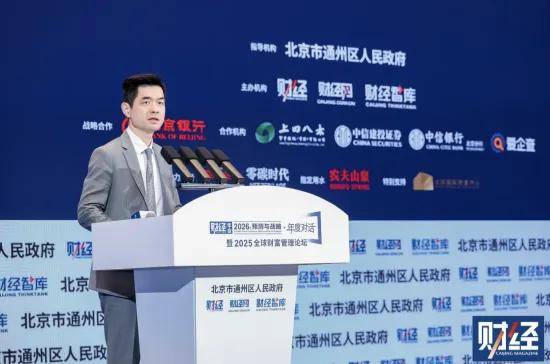
摩根士丹利中国首席经济学家邢自强:可优先选择一些大城市进行贴息,为购房人减负
Sou Hu Cai Jing· 2025-12-21 19:12
Group 1: Economic Outlook and Technological Advancements - The theme of the conference is "China's Determination in Changing Circumstances," focusing on predictions and strategies for the future [1] - Morgan Stanley's Chief Economist for China, Xing Zhiqiang, expresses confidence in China's technological self-reliance, particularly in sectors like electric vehicles and green transformation, highlighting China's first-mover advantage [1][3] - The Chinese automotive industry has become a global leader, showcasing the effectiveness of China's industrial cluster capabilities [3] Group 2: AI Development and Competitive Landscape - Xing Zhiqiang emphasizes confidence in China's AI sector, noting that despite some shortcomings in GPU computing power, China can leverage its data advantages and talent pool to improve algorithms [2][6] - China produces approximately half of the world's AI talent, with 5 million engineering graduates annually, surpassing the combined total of the US, Europe, and Japan [5] - The efficiency of China's AI models is comparable to those of the US, despite China investing only about 1/10 of the amount the US does in AI infrastructure [7][8] Group 3: Real Estate Market Strategies - To stabilize the real estate market, Xing Zhiqiang suggests implementing inventory reduction policies in first- and second-tier cities, particularly those with population inflows and stable rental yields [2][11] - Proposed measures include interest subsidies for homebuyers, potentially reducing the burden on consumers and aligning rental yields with mortgage rates [11] - The importance of real estate in breaking the low-price cycle is highlighted, drawing parallels to Japan's experience in the 1990s [10] Group 4: Consumer Spending and Social Security - Long-term consumer spending growth requires reforms in the social security system to alleviate concerns for residents, particularly for low- and middle-income groups [12] - Strengthening social security and ensuring equitable distribution are essential for releasing consumer potential [12] - The need for policies that support housing, education, and healthcare access is emphasized to enhance consumer confidence and spending [12]

“寒武纪卖早了”
投资界· 2025-12-16 07:52
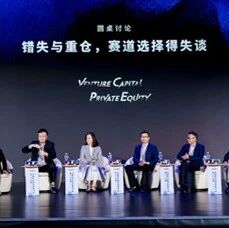
Core Insights - The article discusses the annual venture capital conference in Shenzhen, focusing on the theme of "missed opportunities and heavy investments" in the context of investment strategies and industry shifts in China [2][3]. Group 1: Investment Institutions Overview - Tang Capital, founded in 2019, focuses on hard technology, particularly in electronic information, advanced manufacturing, and new materials, managing over 3 billion [3]. - Huakong Fund, established in 2007, has over 10 billion under management, emphasizing hard technology sectors such as advanced manufacturing and AI [4]. - Huaying Capital, founded in 2008, has invested in over 280 companies, with over 50% of investments related to AI [4]. - Guozhong Capital, established in 2015, manages 16 billion across multiple funds, focusing on supporting small and medium-sized enterprises [5]. - Lenovo Star, since 2008, has invested in over 400 companies, primarily in technology and healthcare [6]. - Linghang New Frontier, founded in 2019, manages approximately 2.8 billion, focusing on smart technology and biomedical sectors [7]. - Tiantang Silicon Valley, established in 2000, has invested in over 230 projects, with over 50% achieving exits, focusing on technology and healthcare [8]. Group 2: Investment Strategies and Shifts - Investment strategies have evolved due to industry cycles, with institutions adjusting their focus based on market conditions and technological advancements [9][16]. - Huaying Capital's investment methodology adapts to different stages of technology development, focusing on disruptive technologies and market leadership [12]. - Institutions like Tang Capital and Huakong Fund emphasize AI and advanced technologies as key future investment areas, reflecting a shift towards more innovative sectors [29][30]. - Guozhong Capital aligns its investment strategy with national development plans, focusing on emerging industries as outlined in the "14th Five-Year Plan" [19]. Group 3: Missed Opportunities and Lessons Learned - Many institutions shared experiences of missed opportunities in sectors like quantum computing and commercial aerospace, highlighting the importance of timely decision-making [25][27]. - The article emphasizes the need for continuous learning and adaptation in investment strategies to avoid missing out on emerging trends [26][28]. - Institutions reflect on past mistakes, such as underestimating the potential of the solar energy sector, which has since become a leading industry [26]. Group 4: Future Focus Areas - Future investment focus areas include AI, embodied intelligence, and commercial aerospace, with expectations for significant growth in these sectors [29][30]. - Institutions are also looking at advanced materials and renewable energy as key investment opportunities over the next five years [32][33].
一百三十多款高科技产品涵盖十五运会多个领域 活力大湾区 满满科技范(全运大视野)
Ren Min Ri Bao· 2025-11-14 22:35
Core Insights - The 15th National Games is showcasing the integration of advanced technology and innovation in sports events, with over 130 high-tech products being utilized across various domains [1][6] Group 1: Smart Venues - The Bao'an Sports Center in Shenzhen features a "smart brain" for real-time monitoring and management of 9,873 devices, ensuring smooth event operations [2] - More than 90% of the 75 competition venues in Guangdong have been upgraded with AI, big data, and cloud computing technologies, enhancing efficiency and performance [2] - Guangdong Mobile is implementing 5G-A upgrades in key venues to support live broadcasts and audience engagement [2] Group 2: AI and Automation - AI-powered devices, such as the "AI volunteers" in Hong Kong, are providing real-time information and assistance to attendees, processing over a thousand queries since the event began [3] - AI cameras are being used for live tracking and data collection, transforming traditional venue management into a data-driven approach [3] - The introduction of AI technologies is optimizing the spectator experience and enhancing operational efficiency in sports venues [3] Group 3: Urban Safety and Transportation - The use of passive cooling coatings on city service stations is expected to significantly reduce energy consumption and carbon emissions during the games [4] - Didi's autonomous driving services are operational during the event, providing safe and efficient transportation for attendees [4] - Hong Kong's immigration authorities have implemented facial recognition technology to expedite border control processes, enhancing visitor experience [5] Group 4: Industry and Social Impact - The showcased humanoid robots are transitioning from event demonstrations to practical applications in factories and daily life, with significant orders from major automotive companies [6] - The integration of assistive technologies for people with disabilities is being prioritized in the development of smart city standards in the Greater Bay Area [7] - The event aims to create a complete cycle of demand-driven technology development, scene validation, and industrial transformation, benefiting urban development and public welfare [7]