
脱发治疗

Search documents
开拓药业(09939) - 自愿公告 - KX-826酊1.0%治疗中国成年男性雄激素脱髮关键性临床...
2026-03-18 12:53
香港交易及結算所有限公司及香港聯合交易所有限公司對本公告之內容概不負責,對其準確 性或完整性亦不發表任何聲明,並明確表示概不就因本公告全部或任何部份內容而產生或因 倚賴該等內容而引致的任何損失承擔任何責任。 開 拓 藥 業 有 限 公 司 * KINTOR PHARMACEUTICAL LIMITED ( 於 開 曼 群 島 註 冊 成 立 的 有 限 公 司 ) (股 份 代 號:9939) 自願公告 KX-826酊1.0%治療中國成年男性雄激素脫髮 關鍵性臨床試驗III期階段達到主要終點 本公告由開拓藥業有限公司*(「本公司」,連同其附屬公司統稱「本集團」)自願 刊發,以知會本公司股東及潛在投資者有關本集團的最新進展。 茲提述本公司日期為2025年7月31日的自願公告,內容有關KX-826酊1.0%治療 中國成年男性雄激素脫髮(「AGA」或「脫髮」)的關鍵性臨床試驗(「該項關鍵性 臨床試驗」)III期階段(「該III期階段」),其已於2025年7月底完成全部受試者入 組。 本公司董事(「董事」)會(「董事會」)欣然宣佈,其自主研發、潛在同類首創的 KX-826酊1.0%治療脫髮的關鍵性臨床試驗III期階段 ...
2025年医美平台消费榜单解码:玻尿酸成功守擂,超声炮“失速”
Mei Ri Jing Ji Xin Wen· 2026-02-24 12:14
Core Insights - The Chinese medical beauty market is experiencing a significant transformation in 2025, marked by a notable divergence in the performance of various brands within the regenerative filling materials sector, with "Zhenai Su Fei" leading with a 463% growth while "Yiyan Shi" saw a 56% decline [1][2] - The market is witnessing a "Matthew Effect," where leading brands are consolidating their positions, while smaller brands struggle to survive [1][10] Regenerative Filling Materials - Regenerative filling materials have become the "MVP" of the year, with a 93.40% increase in sales in 2025, continuing a three-year growth trend [2] - "Zhenai Su Fei" from Aimeike achieved the highest growth rate at 463%, while "Yiyan Shi" faced a significant decline of 56% [2][3] - The performance of "Yiyan Shi" is attributed to its early market entry, but its novelty has worn off, leading to decreased consumer interest [3] Market Dynamics - The market is increasingly competitive, with new brands and materials entering, but consumers tend to prefer established brands for their reliability [4] - The sales of the once-popular ultrasonic device have dropped significantly, with a 55.2% decline in 2025, as consumers are opting for newer products and are more budget-conscious [4][5] Equipment and Technology - The "Meila Meisu" ultrasonic knife has emerged as a leading anti-aging device, with a 147.22% increase in sales, appealing to users over 35 seeking non-invasive treatments [4][5] - The ultrasonic device is transitioning from a "market dividend period" to a "technical barrier period," indicating a shift in competitive dynamics [5][7] Hyaluronic Acid - Hyaluronic acid remains a top-selling product, with a 19.70% increase in sales in 2025, maintaining its status as a staple in the market [8] - Despite its growth, hyaluronic acid faces challenges such as market oversupply and price wars, which could weaken its position in the long term [8][9] Future Growth Areas - The market is shifting towards specialized treatments, with a focus on individual needs and the emergence of new segments like collagen reorganization and hair loss treatment, which are expected to see significant growth [10][11] - The collagen reorganization market is projected to grow at a compound annual growth rate of 41.4% from 2023 to 2027, indicating strong potential [10]
泰恩康:全资子公司获米诺地尔搽剂药品注册证书
Zhong Zheng Wang· 2026-02-06 13:20
Core Viewpoint - The announcement highlights that Tiancon (301263) has received a drug registration certificate for Minoxidil topical solution from the National Medical Products Administration, indicating a significant step in the company's product development and market entry in the hair loss treatment sector [1] Company Summary - Tiancon's wholly-owned subsidiary, Shandong Huabo Kaisheng Biotechnology Co., Ltd., has been granted the registration certificate for Minoxidil topical solution, with acceptance numbers CYHS2400976 and CYHS2400977 [1] - The registered product is classified as a Class 3 chemical drug, with specifications of 60ml:1.2g and 60ml:3.0g, and the approval numbers are 国药准字H20263325 and 国药准字H20263326 [1] - The approval conclusion states that the product meets the registration requirements, allowing for its market introduction [1] Industry Summary - Minoxidil is recognized as a topical treatment for hair loss, and the company anticipates growth in the domestic hair loss treatment market due to the rising prevalence of hair loss conditions [1]
泰恩康子公司获米诺地尔搽剂药品注册证书
Cai Jing Wang· 2026-02-06 10:22
Core Viewpoint - The company TianKang's wholly-owned subsidiary, Huabo Kaisheng, has received a drug registration certificate for Minoxidil topical solution from the National Medical Products Administration, indicating a significant step in the company's product development and market entry in the hair loss treatment sector [1] Company Summary - TianKang's subsidiary has been granted a registration certificate for Minoxidil topical solution, classified as a Class 3 chemical drug, with specifications of 60ml: 1.2g and 60ml: 3.0g [1] - The approval numbers for the drug are Guoyao Zhunzi H20263325 and Guoyao Zhunzi H20263326 [1] Industry Summary - Minoxidil is a commonly used topical treatment for hair loss, and the domestic market for hair loss treatments is expected to grow [1] - Currently, there are 31 companies that have received registration approvals for this drug in the domestic market, indicating a competitive landscape [1] - The future sales performance of the product will be influenced by industry policies and market conditions, which introduces a level of uncertainty [1]

韩国治脱发拟纳入医保,多少男人羡慕了
3 6 Ke· 2026-01-21 00:55
Group 1 - The proposal by South Korean President Lee Jae-myung to include hair loss treatment in national health insurance reflects the growing societal concern over hair loss, which is increasingly seen as a survival issue rather than merely a cosmetic one [1][3][29] - In 2024, approximately 240,000 individuals in South Korea are expected to seek medical treatment for hair loss, with 40% of these patients being in their 20s and 30s, indicating a trend of younger individuals facing hair loss [3][6][7] - The hair loss treatment market is expanding significantly, with the number of patients rising from 225,000 in 2018 to 248,000 in 2022, showing an annual growth rate of 2.5% [7][29] Group 2 - The hair loss treatment industry in South Korea is becoming increasingly robust, with medical expenses related to hair loss rising from approximately 24.7 billion KRW (about 18.3 million USD) in 2015 to 45.6 billion KRW (about 33.8 million USD) in 2024, marking an increase of 84.6% [29] - The global hair loss treatment market is also growing, with various treatment options available, including medications like finasteride and minoxidil, and more invasive procedures like hair transplants, which can cost between 8,000 to 20,000 CNY for 1,000 hair follicles [28][29] - The increasing prevalence of hair loss has led to a surge in demand for hair care services, with numerous hair health care shops opening in urban areas like Seoul [6][29]

治脱发药企蔓迪国际递表港交所 销售开支攀升而研发费用收缩
Mei Ri Jing Ji Xin Wen· 2025-12-08 13:41
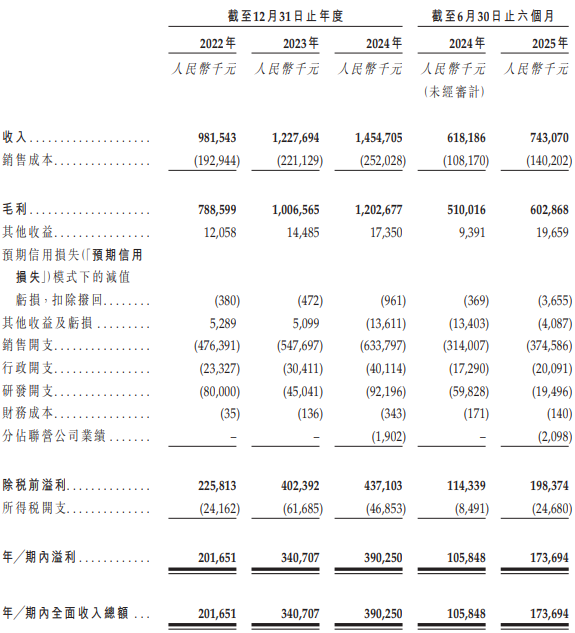
Core Viewpoint - The hair loss treatment market in China is rapidly growing, with over 339 million people affected, and a significant portion of this demographic being under 35 years old. The market is projected to reach a valuation of hundreds of billions [1]. Group 1: Company Overview - Mandi International, a subsidiary of 3SBio, has submitted an application for an IPO on the Hong Kong Stock Exchange, focusing on its minoxidil product line for hair loss treatment [1]. - The company was founded in 2001 and launched China's first 5% minoxidil solution, filling a gap in the market for effective hair loss treatments [2]. - Mandi's second-generation product, a 5% minoxidil foam, became a bestseller, selling over 2.5 million bottles in its first year and generating over 300 million yuan in revenue [2]. Group 2: Financial Performance - Mandi International's revenue grew from 982 million yuan in 2022 to 1.455 billion yuan in 2024, with a compound annual growth rate of 21.7%. Net profit increased from 202 million yuan to 390 million yuan during the same period [2]. - The gross profit margin remained above 80% over three years, reaching 82.7% in 2024, which is significantly higher than many pharmaceutical companies [2]. - Sales expenses rose from 476 million yuan in 2022 to 375 million yuan in the first half of 2025, exceeding 50% of revenue due to business expansion and marketing activities [3]. Group 3: Research and Development - R&D expenses increased significantly in 2024 to 92.2 million yuan but dropped to 19.5 million yuan in the first half of 2025, primarily due to the absence of certain costs incurred in the previous year [3]. Group 4: Leadership and Strategy - The company is led by Lou Jing, a second-generation pharmaceutical executive, who has a history of successful IPOs and acquisitions in the pharmaceutical sector [4][5]. - Mandi International is also expanding into the weight management market, with plans to submit a drug registration application for a semaglutide injection in 2026 [6]. - The company aims to use the funds from its IPO to enhance R&D capabilities, expand product offerings, and strengthen marketing and operational efficiency [7].

蔓迪国际港股IPO:2025年上半年研发投入仅1950万元 上市前突击分红7.7亿元 流动性明显恶化
Xin Lang Zheng Quan· 2025-11-27 04:10
Core Viewpoint - Mandi Inc., a leading company in China's hair loss treatment sector, has submitted its prospectus to the Hong Kong Stock Exchange for an IPO, attracting significant market attention. However, multiple hidden risks related to product structure, R&D capabilities, and financial health may hinder its sustainable growth post-listing and affect market valuation [1]. Group 1: Company Overview - Mandi Inc. is a leading consumer pharmaceutical company in China, focusing on skin health and weight management solutions, particularly in the hair health sector. The company's flagship product, the Mandi® series of minoxidil hair loss treatment products, has ranked first in retail sales for ten consecutive years, holding approximately 57% and 71% market shares in the hair loss and minoxidil markets, respectively, as of 2024 [2]. Group 2: Financial Performance - The company has shown revenue and net profit growth in recent years, with revenues of RMB 980 million, RMB 1.23 billion, and RMB 1.45 billion projected for 2022-2024, representing a compound annual growth rate (CAGR) of 21.7%. Net profits are expected to reach RMB 200 million, RMB 340 million, and RMB 390 million during the same period, with a CAGR of 39.1% [3][4]. - In the first half of 2025, revenue further increased to RMB 743 million, a year-on-year growth of 20.2%, while net profit reached RMB 170 million, up 64% year-on-year [3]. Group 3: Product Dependency and Risks - Mandi Inc.'s revenue structure is heavily reliant on minoxidil hair loss treatment products, with sales from the Mandi® series accounting for 91.7%, 92.3%, 92.1%, and 92.4% of total sales from 2022 to the first half of 2025, indicating a lack of diversification in its product matrix [4]. - The company's gross margin has declined from 82.7% in 2024 to 81.1% in the first half of 2025, while net margin decreased from 26.8% to 23.4%, reflecting increased market competition and cost pressures [5][10]. Group 4: R&D and Competitive Landscape - R&D investment has significantly decreased, with only RMB 19.5 million spent in the first half of 2025, a 67% drop from RMB 59.8 million in the same period of 2024. This reduction poses a risk to the development of new products in acne treatment and weight management, where competition is intensifying [7]. - The company faces competition from major players in the acne and weight management sectors, which may hinder the progress of its new product pipelines [7]. Group 5: Liquidity and Financial Health - Mandi Inc. declared a substantial dividend of RMB 770 million in the first half of 2025, exceeding the total dividends paid in the previous three years, leading to a significant decline in liquidity ratios. The current ratio fell from 4.3 at the end of 2024 to 1.0, indicating heightened short-term debt repayment risks [9]. - As of June 30, 2025, the company's net liquid assets were only RMB 400,000, a drastic reduction from RMB 595 million at the end of 2024, with RMB 670 million in dividends still payable against a cash balance of RMB 110 million [9]. Group 6: Inventory Management - The company's inventory has been on the rise, reaching RMB 70 million, RMB 110 million, RMB 120 million, and RMB 140 million from 2022 to the first half of 2025, while inventory turnover days have increased, indicating a slowdown in sales and potential inventory devaluation risks [10].
解密脱发药公司蔓迪IPO生意经:销售费用是研发的6倍
Hua Er Jie Jian Wen· 2025-11-25 17:45
Core Viewpoint - The investment made by the company in 2015 to acquire Mandi International has yielded nearly tenfold returns, with Mandi's valuation reaching HKD 58 billion in November 2025, compared to the original acquisition price of HKD 5.28 billion [1][24]. Group 1: Investment and Valuation - The acquisition of Mandi International in 2015 for HKD 5.28 billion has resulted in a valuation increase to HKD 58 billion by November 2025, representing a nearly tenfold increase [1][24]. - Mandi's revenue from its core product, Minoxidil solution, has surpassed HKD 1 billion, with projected revenues of HKD 14.55 billion and net profits of HKD 3.9 billion for 2024 [2]. Group 2: Market Position and Product Strategy - Mandi holds a 53.3% market share in the Minoxidil solution segment, which is a leading treatment for androgenetic alopecia [4]. - The company has emphasized marketing, with sales expenses projected to be six times that of R&D expenses in 2024 [2][8]. - Mandi's 5% Minoxidil solution is expected to generate approximately HKD 9.91 billion in revenue for 2024, accounting for nearly 70% of total revenue [5]. Group 3: Challenges and Future Prospects - Despite strong revenue, Mandi faces challenges as the growth of its main product, Minoxidil solution, has begun to decline, with projected revenue drops of 10% in 2024 and over 25% in the first half of 2025 [14]. - The company is actively seeking to diversify its product offerings, including new products for skin and weight management, with plans to submit applications for new drugs by 2027 [16][17]. - The introduction of a 5% Minoxidil foam product has shown promising growth, generating HKD 2.83 billion in the first half of 2025, indicating potential for continued revenue growth [19].
“防脱药水”生意单飞,蔓迪国际自立门户闯港股
Guan Cha Zhe Wang· 2025-11-25 08:57
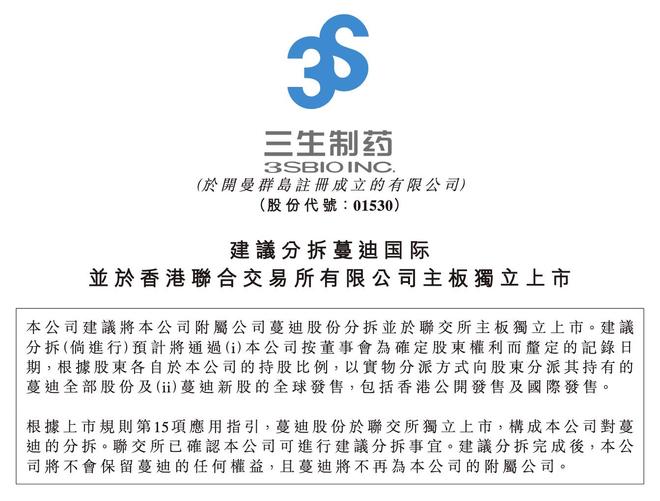
Core Viewpoint - The announcement of the spin-off of the consumer pharmaceutical business, Mandi International, from Sangfor Pharmaceutical marks a significant move towards independent listing on the Hong Kong Stock Exchange, highlighting the company's strategy to unlock value and navigate market challenges [1][3][9]. Company Overview - Mandi International, a subsidiary of Sangfor Pharmaceutical, has dominated the Chinese hair loss treatment market for over a decade with its Minoxidil products, holding approximately 57% market share in 2024 [4][6]. - The company was founded by Lou Dan in 1993, with Lou Jing taking over management in 1995, and has since expanded through acquisitions, including the full acquisition of Zhejiang Wansheng Pharmaceutical in 2015 [3]. Financial Performance - Mandi International's revenue is heavily reliant on its Minoxidil product line, contributing over 90% of total revenue from 2022 to 2024, with projected revenues of 982 million yuan in 2022, 1.228 billion yuan in 2023, and 1.455 billion yuan in 2024, reflecting a compound annual growth rate of approximately 21.7% [6][7]. - The company experienced a revenue growth of 25.05% in 2023, but this is expected to slow to 18.49% in 2024, with net profit growth also declining from 68.81% in 2023 to 14.37% in 2024 [6][8]. Market Challenges - The company faces significant challenges due to policy changes, with a reported 52% price drop for its core Minoxidil liquid products following collective procurement initiatives, impacting its high-margin business model [8]. - Increased competition from brands like Zhendong Pharmaceutical and new entrants in the hair loss treatment market adds pressure on Mandi International to diversify its product offerings and maintain growth [8][11]. Spin-off Implications - The spin-off is seen as a strategic asset restructuring for Sangfor Pharmaceutical, allowing it to focus on its core biopharmaceutical business while Mandi International seeks to establish its own market identity [9][10]. - Post-spin-off, Mandi International will not retain any equity in Sangfor, indicating a complete separation that may pose risks as it loses the backing of its parent company [10]. Future Growth Prospects - Mandi International is exploring new growth avenues beyond hair loss treatments, including dermatology and weight management, with potential new products expected to enter the market by 2026 [11]. - The company’s ability to navigate the challenges of high customer and supplier concentration, alongside rising sales expenses, will be critical for its success as an independent entity [10][11].
2亿90后脱发族,让它狂赚4亿:港股上市
3 6 Ke· 2025-11-24 23:30
Core Viewpoint - The hair loss treatment market in China is rapidly growing, with Mandi Inc. leading the sector and preparing for an IPO, highlighting the increasing demand for effective hair restoration products among younger consumers [2][3][20]. Company Overview - Mandi Inc., founded in 2001, is recognized as a hidden champion in the hair loss treatment industry, with its Minoxidil products dominating the market for ten consecutive years [5][6]. - The company reported over 1.4 billion CNY in revenue from its Minoxidil products in 2024, positioning itself to become the first publicly listed company in China's hair loss treatment sector [3][6]. Financial Performance - Mandi's revenue from 2022 to the first half of 2025 shows a consistent upward trend: 982 million CNY in 2022, 1.23 billion CNY in 2023, 1.46 billion CNY in 2024, and 743 million CNY in the first half of 2025 [8]. - The company's net profit for the same period was 202 million CNY, 341 million CNY, 390 million CNY, and 174 million CNY, with a stable gross margin exceeding 80% [8]. Market Dynamics - The hair health market in China is projected to grow from 19.8 billion CNY in 2018 to 52.7 billion CNY in 2024, with an average annual growth rate of over 11% [3][15]. - The global hair loss treatment market is expected to reach 4.78 billion USD by 2025, with a compound annual growth rate (CAGR) of 6.2% until 2032 [13]. Product Innovation - Mandi Inc. is expanding its product line beyond hair loss treatments to include skin health and weight management, with ongoing clinical trials for new products [10][11]. - The introduction of a new Minoxidil foam product has been well-received, generating over 300 million CNY in revenue within its first year [7]. Industry Opportunities - The hair loss treatment industry is experiencing significant growth driven by factors such as aging populations, increased stress levels among young professionals, and rising consumer spending on beauty products [15][16]. - Technological advancements, including stem cell therapy and personalized medicine, are expected to reshape the market landscape, creating new opportunities for companies like Mandi Inc. [16][20]. Competitive Landscape - The market is witnessing a shift from passive treatment to proactive prevention, with emerging players exploring high-end hair transplant services and hormone-free oral medications targeting the female market [20]. - Established companies are investing in innovative technologies to enhance product efficacy and market penetration [20].