
自主品牌高端化

Search documents
今年车市价格集体走高
新华网财经· 2026-03-05 15:05
Core Viewpoint - The article highlights the trend of high-end electric vehicles (EVs) emerging in the Chinese automotive market, with a shift in competition towards models priced above 150,000 yuan, indicating a significant change from the previous focus on models priced between 100,000 to 150,000 yuan [2][3]. Group 1: Market Trends - Since March, over 7 new EV models have been launched with guide prices or pre-sale prices above 150,000 yuan, indicating a shift in the competitive price range of the automotive market [2]. - The market share of vehicles priced above 150,000 yuan is expected to increase, with models priced between 200,000 to 300,000 yuan accounting for 18.6% of domestic retail sales, reflecting a clear trend towards high-end development in the EV sector [3]. Group 2: Company Strategies - BYD is focusing on high-end strategies by separating its B-end and C-end markets, targeting the ride-hailing and government vehicle markets with a new brand called Linghui, while also expanding its high-end brands, Tengshi and Yangwang [2]. - GAC Toyota's new model, the Platinum 7, is collaborating with Huawei to feature the Hongmeng cockpit, with a pre-sale price exceeding 150,000 yuan, while Dongfeng Nissan's upcoming NX8 is targeting the 200,000 yuan SUV market [2]. Group 3: Policy Impact - The increase in competition in higher price segments is partly driven by changes in the vehicle trade-in policy, which has made it easier for consumers to upgrade to new vehicles, with 74.1% of consumers opting for new cars priced above 200,000 yuan [4]. - The implementation of the vehicle trade-in policy in 2026 is expected to benefit the 150,000 to 200,000 yuan price segment, promoting growth in the mid-to-high-end market [4].

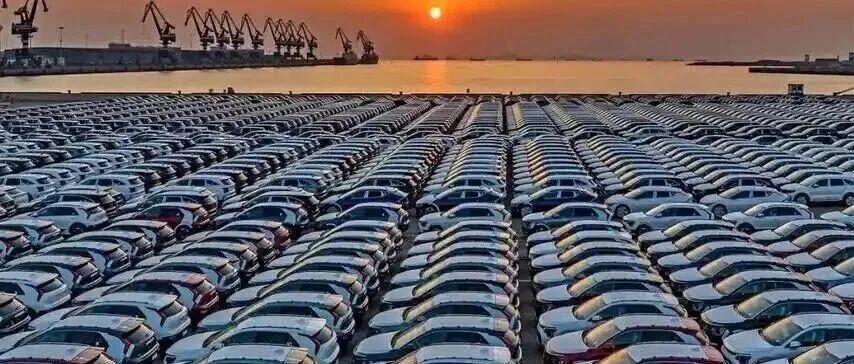
今年车市价格集体走高
第一财经· 2026-03-05 12:38
Core Viewpoint - The article highlights the shift in the competitive landscape of the Chinese automotive market, particularly in the high-end electric vehicle (EV) segment, with a notable increase in models priced above 150,000 yuan, indicating a trend towards premiumization among domestic brands [3][5]. Group 1: Market Trends - The competition in the automotive market is shifting from the 100,000 to 150,000 yuan price range to the 150,000 to 200,000 yuan range, with over seven new EV models launched since March priced above 150,000 yuan [3]. - The market share of vehicles priced above 150,000 yuan has increased, with 18.6% of domestic retail sales in the 200,000 to 300,000 yuan segment, reflecting a clear trend towards high-end offerings [5]. - The trend of premiumization is further supported by the introduction of new models from both domestic and joint venture brands, such as the Haobo A800 and the GAC Toyota Platinum 7, which are priced above 150,000 yuan [4][5]. Group 2: Company Strategies - BYD is focusing on high-end strategies by separating its B-end and C-end markets, launching a new brand for ride-hailing and government vehicles, and planning to release 12 new high-end models this year [3][5]. - Joint venture brands are also attempting to penetrate the high-end EV market, with GAC Toyota collaborating with Huawei for its Platinum 7 model, which is priced above 150,000 yuan [4]. - The high-end strategy is seen as a core focus for leading companies, including BYD, which aims to achieve higher marginal profits despite intense competition in the domestic market [5]. Group 3: Policy Impact - The increase in vehicle prices is partly driven by changes in the vehicle trade-in policy, which has made it easier for consumers to upgrade to higher-priced models [6]. - The trade-in market is dominated by domestic brands, with 59% of consumers trading in vehicles priced below 150,000 yuan, while 74.1% of new car buyers are opting for vehicles priced above 200,000 yuan [6]. - The implementation of the trade-in policy is expected to benefit the mid-to-high-end market, with specific subsidy thresholds set for both new energy and fuel vehicles [6].

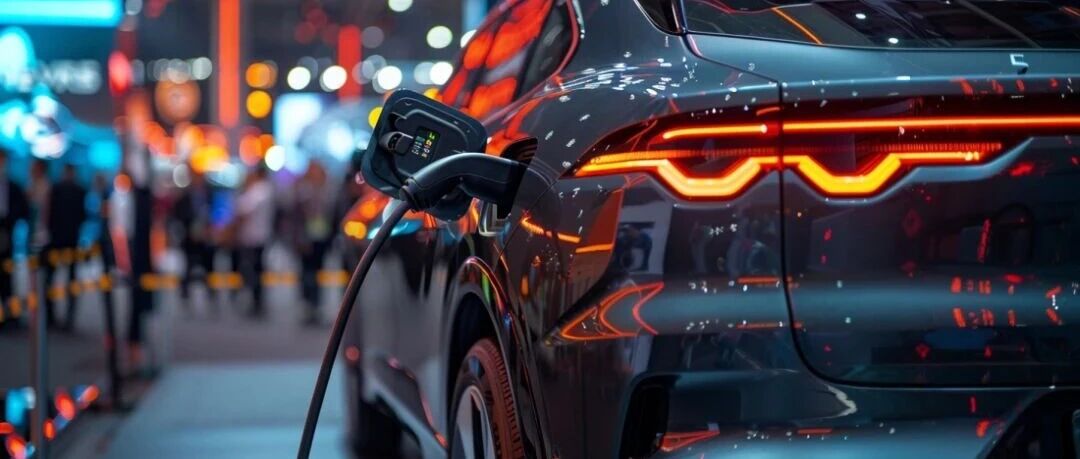
香港汽车ETF(520720)盘中涨超1.6%,连续5日资金净流入,2026年汽车行业存结构机会
Mei Ri Jing Ji Xin Wen· 2026-01-15 05:52
Group 1 - The core viewpoint is that the automotive industry will present opportunities by 2026, driven by the high-end upgrade of domestic brands, accelerated penetration of intelligence, and the production of embodied intelligence [1] - Key areas of focus include opportunities in domestic high-end brands, accelerated profitability in the heavy truck supply chain, increased production of core intelligent hardware, enhanced cockpit value, and the promotion of robotaxis [1] - The Hong Kong Automotive ETF (520720) tracks the Hong Kong Stock Connect Automotive Index (931239), which selects listed companies involved in vehicle manufacturing, components, and emerging fields of intelligent driving, reflecting the overall performance of related securities [1] Group 2 - The index has a high research and development investment and growth characteristics, with the vehicle manufacturing sector accounting for over 60% of its weight, demonstrating strong market elasticity and international features [1] - The Hong Kong Automotive ETF (520720) can be traded directly through A-share accounts without the need for a Hong Kong Stock Connect permission, addressing the pain point of ordinary investors lacking investment tools [1]
比亚迪再出手,中国车市又新增一个汽车品牌
第一财经· 2026-01-11 13:43
Group 1 - The core viewpoint of the article is the introduction of BYD's new automotive brand, Linghui, which aims to cater to the B-end market and differentiate its offerings from C-end products [5][6]. - Linghui brand includes four new models, three of which are pure electric sedans (Linghui e5, e7, e9) and one plug-in hybrid MPV (Linghui M9), all derived from existing BYD models [3][5]. - The establishment of the Linghui brand is part of BYD's strategy to enhance its high-end positioning in the market, as evidenced by its sales figures, with over 4.6 million units sold in 2025, a 7.73% year-on-year increase [5][6]. Group 2 - The competitive landscape in the domestic automotive market is intensifying, with over 100 brands present as of 2025, prompting companies to focus on resource integration and cost reduction while accelerating high-end product development [5][6]. - Other automotive manufacturers, such as GAC Group with its Aion brand, are also adopting strategies to separate B-end and C-end markets, indicating a broader trend in the industry [5][6]. - According to CITIC Securities, one of the main trends in the automotive market for 2026 is the acceleration of high-end positioning among domestic brands, which is expected to yield higher marginal profits for leading companies [6].

比亚迪再出手,中国车市又新增一个汽车品牌
Di Yi Cai Jing· 2026-01-11 09:04
Group 1 - The core point of the article is the launch of BYD's new automotive brand, Linghui, which aims to cater to the B-end market with a focus on high-volume procurement [1][2] - Linghui brand includes four new models, three of which are pure electric sedans (Linghui e5, e7, e9) and one plug-in hybrid MPV (Linghui M9), all derived from existing BYD models [1] - The establishment of the Linghui brand is part of BYD's strategy to differentiate between B-end and C-end market offerings, aiming to enhance its high-end positioning [2] Group 2 - BYD's total sales in 2025 exceeded 4.6 million units, marking a year-on-year increase of 7.73%, with mainstream models contributing approximately 3.45 million units [2] - The competitive landscape in the domestic automotive market is intensifying, with over 100 brands present, prompting companies to focus on resource integration and high-end market penetration [2] - According to CITIC Securities, one of the main trends in the automotive market for 2026 will be the acceleration of high-end positioning among domestic brands, which is expected to yield higher marginal profits for leading companies [3]
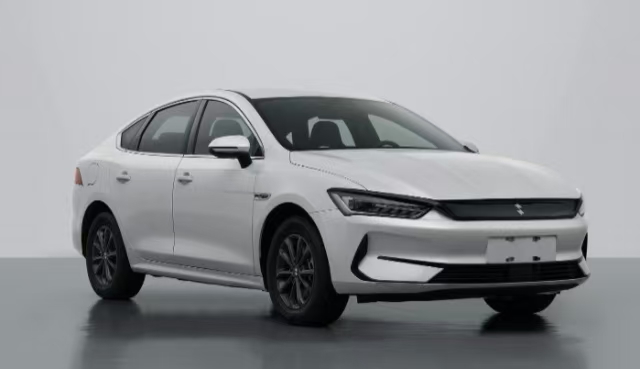
中国进口汽车市场:传统豪车上半年大跌32% 市场正在被瓜分
Xi Niu Cai Jing· 2025-08-20 05:20
Group 1 - The Chinese imported automobile market is experiencing a continuous decline, with total imports expected to be only 220,000 units in the first half of 2025, a year-on-year decrease of 32% [1] - Since reaching a peak of 1.43 million imports in 2014, the market has been on a downward trend, with a 12% year-on-year decline in 2024, bringing imports down to 700,000 units [1] - The decline is attributed to the rise of the domestic automotive industry and the wave of electrification [1] Group 2 - Traditional luxury car brands, particularly the German trio (BMW, Mercedes-Benz, Audi), are facing significant challenges, with BMW deliveries down 15.5% to 317,900 units, Mercedes-Benz down 19% to 293,200 units, and Audi down 10.2% to 287,600 units [3] - In contrast, domestic new energy luxury vehicles are rising sharply, with Li Auto delivering 204,000 units and NIO delivering 74,000 units in the same period [3] - In the 300,000-400,000 yuan market, new energy vehicles achieved a market share of 52.5% in July, surpassing traditional fuel vehicles for the first time [3] Group 3 - Despite the challenges, traditional luxury brands still maintain a loyal customer base, with a market share of 58.7% in July, down from 60.2% in March [4] - The slow pace of electrification among traditional luxury brands is evident, with imported new energy passenger vehicles accounting for only 2% of the market in the first half of 2025, an 80% year-on-year decline [4] - Policy changes, such as the adjustment of luxury car tax thresholds, have led to a significant drop in sales for some models, with declines exceeding 20% [4] Group 4 - The future of the Chinese imported automobile market will be characterized by both challenges and opportunities, with the competition between traditional luxury and domestic luxury brands unlikely to end soon [5] - Domestic brands are leading in electrification, making it difficult for traditional ultra-luxury brands to catch up [5] - The market feedback indicates that high-end positioning now relies on technological strength and ecosystem development rather than solely on brand prestige [5]



江淮汽车(600418):发力超豪华车蓝海市场,尊界上市取得开门红
Guoxin Securities· 2025-07-01 09:13
Investment Rating - The report gives an "Outperform" rating for Jianghuai Automobile (600418.SH) [6] Core Views - Jianghuai Automobile is focusing on the ultra-luxury vehicle market, with the launch of the "Zun Jie" series achieving strong initial sales [3][19] - The company has successfully captured overseas market trends, with overseas revenue surpassing domestic revenue in recent years [2][32] - The partnership with Huawei is expected to enhance the company's traditional business and drive future growth [2][68] Summary by Sections Company Overview - Jianghuai Automobile, established in 1964, is a significant asset of Anhui State-owned Assets, involved in the production of a full range of commercial vehicles, passenger cars, and core components [13][16] - The company has entered the passenger car market since 2008 and the new energy sector since 2015, collaborating with major players like Volkswagen and NIO [13][19] Financial Performance - The company reported a revenue of 421.16 billion yuan for 2024, with a first-quarter revenue of 98.01 billion yuan for 2025 [1][23] - The forecasted revenues for 2025-2027 are 490.57 billion, 691.72 billion, and 802.98 billion yuan, respectively, with net profits projected at 2.35 billion, 17.51 billion, and 36.22 billion yuan [3][5] Business Segments - The traditional business is divided into commercial vehicles, passenger vehicles, buses, and chassis, with commercial and passenger vehicles contributing the majority of revenue [32] - The commercial vehicle segment is recovering, with a focus on light trucks and expansion into overseas markets [2][41] - The passenger vehicle segment has seen a decline in revenue but an increase in per-unit revenue due to product structure optimization and international market expansion [55][62] Strategic Initiatives - The ultra-luxury vehicle market is identified as a blue ocean for domestic brands, with the "Zun Jie" series positioned to compete effectively [3][73] - The first model of the "Zun Jie" series, S800, is set to launch in May 2025, with strong pre-orders exceeding 6,500 units in the first month [3][73] Future Outlook - The company is expected to benefit from its strategic partnership with Huawei, enhancing its capabilities in smart vehicle solutions and digital transformation [68][72] - The report estimates a reasonable market valuation range for the company in 2026 to be between 106.1 billion and 121.3 billion yuan [3]
