行业规范化

Search documents
《椰子水团体标准》发布 “椰子知道”阐释品牌理念
Zhong Guo Zhi Liang Xin Wen Wang· 2025-12-24 06:12
Group 1 - The core viewpoint of the news is the establishment of a unified standard for coconut water to promote healthy and sustainable industry development, ensuring clarity and transparency for consumers and producers [1] - The newly released group standard defines "coconut water" as a product made solely from coconut fruit through physical processing or reconstituted from concentrated juice, distinguishing it from flavored drinks that contain added sugars, flavors, or colors [1] - The standard mandates that pre-packaged product labels must comply with existing regulations, and products claiming to meet the standard can assert "100%" coconut water, emphasizing the importance of truthful labeling as a legal obligation of producers [1] Group 2 - The brand "Coconut Knows" emphasizes integrity and transparency, committing to a clear ingredient list and the promise of "100% coconut water," reflecting a respect for consumer rights to know and choose [2] - Over 30% of coconut water consumers are identified as mothers, highlighting the product's association with family health and the need for industry-wide efforts to maintain this trust [2] - The founders of "Coconut Knows" express a desire for collaboration with regulatory bodies, industry associations, and peers to promote and implement the new standard, aiming to enhance market regulation and protect consumer rights [2]
黄金以旧换新经营服务迎新规
Zheng Quan Ri Bao· 2025-12-16 16:12
Core Points - The release of the "Golden Old for New Business Service Specification" marks the first specialized service standard for the gold jewelry industry in China, indicating a shift towards a regulated era for gold exchange services [1][4] - The standard aims to create a more transparent and fair trading environment for consumers, while enhancing compliance as a core competitive advantage for businesses, ultimately promoting healthy industry development [1][5] Industry Pain Points - The gold exchange business accounts for approximately 20% of the national gold jewelry consumption, with rising demand from both consumers and businesses due to increasing gold prices [2] - Issues such as unclear pricing, lack of transparency in gold testing, and inconsistent loss standards have harmed consumer rights and hindered sustainable industry growth [2][3] - Common deceptive practices include weight manipulation, underestimating purity, hidden fees, and misleading consumers into purchasing overpriced gold items, which damage consumer confidence and disrupt market order [2][3] Standard Implementation - The new standard establishes a comprehensive framework covering service principles, enterprise qualifications, operational management, service personnel requirements, and supervision mechanisms [3][4] - It mandates that businesses must have legal qualifications, pay taxes, and fulfill anti-money laundering obligations, while requiring trained personnel to conduct gold testing under monitored conditions [4] - The standard emphasizes the need for businesses to disclose key information regarding service processes and fees, thereby protecting consumer rights and ensuring transparency [4] Industry Order Restructuring - The standard is expected to reshape industry order in the short term by eliminating non-compliant small businesses and promoting standardized enterprises as benchmarks [5] - In the medium term, it aims to enhance industry professionalism, reduce consumer disputes, and foster trust, leading to healthy growth in the old-for-new business [5] - Long-term effects include promoting gold consumption and advancing the industry towards higher quality development [5]

中国黄金协会:《黄金以旧换新经营服务规范》团体标准正式发布
Ge Long Hui· 2025-12-15 07:52
Group 1 - The core viewpoint of the article is that the newly released group standard for "Gold Exchange for Old" business by the China Gold Association signifies a move towards a more standardized, professional, and transparent development phase for this sector [1] - The standard comprehensively regulates aspects such as enterprise qualifications, management practices, service personnel, and equipment requirements for the gold exchange business [1] - The China Gold Association plans to promote the implementation of the standard through training and awareness campaigns, aiming for compliance in business operations, consumer confidence, and healthy industry development [1]
《椰子水团体标准》正式发布 引领行业走向规范发展
Zheng Quan Ri Bao Wang· 2025-12-15 04:12
Group 1 - The core viewpoint of the article is the release of the "Coconut Water Group Standard," which aims to establish clear, scientific, and unified norms for the coconut water category, guiding companies in production and helping consumers make informed choices, thereby promoting healthy and sustainable industry development [1][2] - The standard defines "coconut water" as a product made solely from coconut fruit through physical methods or reconstituted from concentrated juice, distinguishing pure coconut water from flavored drinks that contain added sugars, flavors, or colors [1][2] - The standard emphasizes the importance of truthful labeling, requiring pre-packaged products to comply with existing food labeling regulations, and allows products that meet the standard to claim "100%" coconut water [2][3] Group 2 - Industry insiders view the release of the standard as not only a technical specification but also a responsibility and expectation for the future of the industry, urging producers to adopt and strictly implement the standard throughout the production process [2] - The brand "Coconut Knows" emphasizes integrity and transparency in its operations, committing to a clear ingredient list and the promise of "100% coconut water," while advocating for consumer rights to know and choose [3] - The article highlights the need for collaboration among regulatory bodies, industry associations, and companies to promote and enforce the new standard, aiming for a more regulated and safe coconut water market [3]
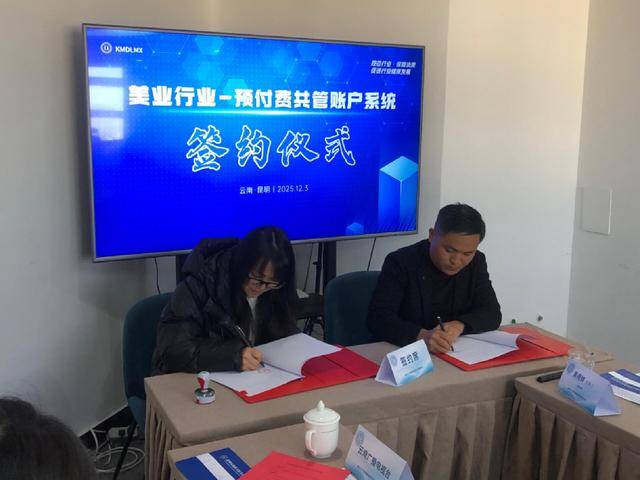
预付费共管账户系统将上线 破解昆明美业行业预付费乱象
Sou Hu Cai Jing· 2025-12-03 17:46
Core Viewpoint - The introduction of a "prepaid co-management account system" in Kunming's beauty industry aims to address long-standing issues related to prepaid consumption, ensuring consumer fund safety and promoting industry standardization [1][3][9] Group 1: Industry Challenges - The beauty industry has faced frequent issues with prepaid models, leading to consumer distrust and declining store credibility, with nearly 2000 consumer disputes coordinated by the Kunming Beauty and Hairdressing Association in the past two years [3][5] - 58% of these disputes were centered around prepaid services, including exaggerated promotions before charging and reduced services afterward, with some stores even closing down or changing ownership maliciously [3][5] Group 2: New System Implementation - The new prepaid co-management account system is designed with "dual protection, fairness, and justice" at its core, covering all scenarios from pre-recharge to consumption, transfer, and refunds [5][6] - Funds from consumer prepayments will be stored in a co-managed account rather than the store's account, preventing misuse and ensuring traceability [5][6] - The system will be launched in 20 days, with 50 stores initially signing up, selected based on compliance and good credit records [6][7] Group 3: Future Developments - The Kunming Beauty and Hairdressing Association plans to encourage more stores to join through incentive policies and a violation penalty system, aiming to establish a dynamic regulatory mechanism for "safe prepaid services" [7][9] - The co-management account system is expected to enhance the credibility of compliant stores, improve brand reputation, and help retain quality customers and skilled workers [9]

水贝冷暖 见证黄金行业规范化进阶
Zheng Quan Ri Bao· 2025-11-30 23:03
Core Viewpoint - The recent tax policy adjustment on gold in China has led to a significant cooling of the market, particularly in Shenzhen's Water Bay, impacting sales and pricing dynamics across the industry [1][3][10]. Market Impact - The implementation of the new tax policy on November 1 has reduced the tax deduction rate for non-investment gold from 13% to 6%, increasing the procurement costs for gold jewelry and leading to a decline in sales [1][2]. - The market atmosphere has shifted, with fewer transactions and a noticeable decrease in customer inquiries, particularly for large orders [2][3]. - The price disparity between retail and wholesale gold has diminished, with the retail price of gold jewelry in Water Bay reaching 1,095 CNY per gram, while the domestic gold price was around 942 CNY per gram on the same day [3][4]. Recovery Market Dynamics - The gold recovery market has also been affected, with the price gap between retail and recovery prices widening from 30 CNY to over 160 CNY, causing uncertainty among recovery businesses [4]. - Major recovery companies have paused operations, and smaller businesses are facing challenges in determining acceptable recovery prices [4]. Industry Adaptation - The industry is actively seeking survival strategies, with upstream suppliers halting shipments, midstream manufacturers shifting to a "settlement by material" model to reduce costs, and downstream retailers diversifying sales channels and product offerings [7][8]. - Retailers are responding differently, with larger brands quickly adjusting prices to pass on costs to consumers, while smaller merchants are exploring online sales and unique product designs to attract customers [8]. Long-term Outlook - Analysts suggest that the tax reform aims to regulate the market and reduce speculative trading, which may lead to a more stable industry environment in the medium to long term [5][10]. - The reform is expected to enhance the overall management of gold production and supply, pushing the industry towards a more value-driven approach rather than a purely price-driven one [9][10]. Regulatory and Support Mechanisms - There is a call for regulatory bodies to improve supporting mechanisms during the transition period, including establishing standards and providing guidance for compliance [11]. - The industry is anticipated to move towards a more standardized and innovative framework, fostering a healthier market environment [10][12].
水贝冷暖 见证黄金行业规范化进阶——“黄金税”落地满月调查
Zheng Quan Ri Bao· 2025-11-30 16:05
Core Viewpoint - The recent tax policy adjustment on gold has led to a significant decline in sales and market activity in Shenzhen's gold trading hub, known as "China's Gold First Street," as the cost of purchasing non-investment gold has increased due to a reduction in tax input deduction from 13% to 6% [1][2][3]. Market Impact - The gold market in Shenzhen has experienced a noticeable slowdown, with fewer transactions and inquiries, particularly for large orders, as many small merchants have resorted to selling their businesses [2][3]. - The new tax policy has increased the procurement costs for gold jewelry, leading to a direct impact on sales and a cooling market atmosphere [1][2][3]. Pricing Dynamics - The retail price of gold jewelry in Shenzhen has surged, with prices reported at 1,095 CNY per gram, while the domestic gold price was around 942 CNY per gram, diminishing the competitive pricing advantage previously held by Shenzhen's market [3]. - The price gap between retail and recovery prices has widened significantly, complicating the recovery market as businesses face challenges in pricing strategies [4]. Industry Adaptation - Various segments of the gold industry are actively seeking ways to adapt to the new tax environment, with upstream suppliers halting shipments, midstream manufacturers shifting to cost-effective settlement models, and downstream retailers exploring online sales and unique product offerings [6][7]. - Retailers are responding differently, with larger brands passing on costs to consumers while smaller merchants are diversifying their sales strategies, including online live streaming and special product launches [7]. Regulatory and Structural Changes - The tax reform aims to enhance the government's control over gold production and pricing, while also encouraging innovation in product offerings to meet diverse consumer demands [8][9]. - The industry is expected to transition from a focus on scale to one on value, promoting a healthier and more regulated market environment [9][10]. Future Outlook - Analysts predict that the impact of the tax reform will be short-term, with market stabilization expected within one to two months as the industry adjusts to the new pricing mechanisms [5]. - The transition period will require supportive measures from regulatory bodies and industry associations to facilitate compliance and collaboration among businesses [10].
信达证券:维持圣贝拉“买入”评级 目标价10.36港元
Zhi Tong Cai Jing· 2025-10-20 08:26
Group 1 - The industry is entering a reshuffling phase, with Shengbeila (02508) establishing a special regulatory account with banks to enhance service standards and operational thresholds, which is expected to accelerate supply clearance [1][2] - Shengbeila is likely to benefit from a light asset model relying on hotels and a strategy of initially managing before acquiring, with adjusted net profit forecasts for 2025-2027 at 1.21 billion, 1.98 billion, and 3.02 billion yuan respectively [1] - The current stock price corresponds to a PE valuation of 32x, 19x, and 13x for the respective years, maintaining a "buy" rating with a target price of 10.36 HKD based on a 30x target PE for 2026 [1] Group 2 - As an industry leader, the company is the first to implement independent bank custody and closed fund supervision for customer prepayments, setting a benchmark for safety in the industry and promoting standardized development [2] - The industry is experiencing a wave of closures and bankruptcies, with notable cases such as Aijia Maternity Center, which filed for bankruptcy in early 2025, indicating a backlash from previous low-quality expansion and price wars [2] - The company's efforts to raise service standards and operational thresholds may accelerate supply clearance, positioning it to fully benefit as a standardized provider of high-quality products and services [2]

信达证券:维持圣贝拉(02508)“买入”评级 目标价10.36港元
智通财经网· 2025-10-20 08:24
Group 1 - The industry is entering a reshuffling phase, with Shengbeila (02508) establishing a special regulatory account with banks to enhance service standards and operational thresholds, which is expected to accelerate supply clearance [1][2] - Shengbeila is anticipated to benefit from a light asset model reliant on hotels and a strategy of initially managing contracts before acquiring [1] - The adjusted net profit forecast for Shengbeila for 2025-2027 is projected at 1.21 billion, 1.98 billion, and 3.02 billion respectively, with a current PE valuation of 32x, 19x, and 13x, maintaining a "buy" rating and a target price of 10.36 HKD based on a 30x target PE for 2026 [1] Group 2 - As an industry leader, Shengbeila is the first to implement independent bank custody and closed-loop fund supervision for customer prepayments, setting a benchmark for industry safety and promoting standardized development [2] - The industry is experiencing a wave of closures and bankruptcies, with notable cases such as Aijia Maternity Center, which had 67 stores and went bankrupt in early 2025, indicating a backlash from previous low-quality expansion and price wars [2] - Shengbeila's efforts to raise service standards and operational thresholds are expected to accelerate supply clearance, positioning the company to fully benefit as a standardized provider of high-quality products and services [2]
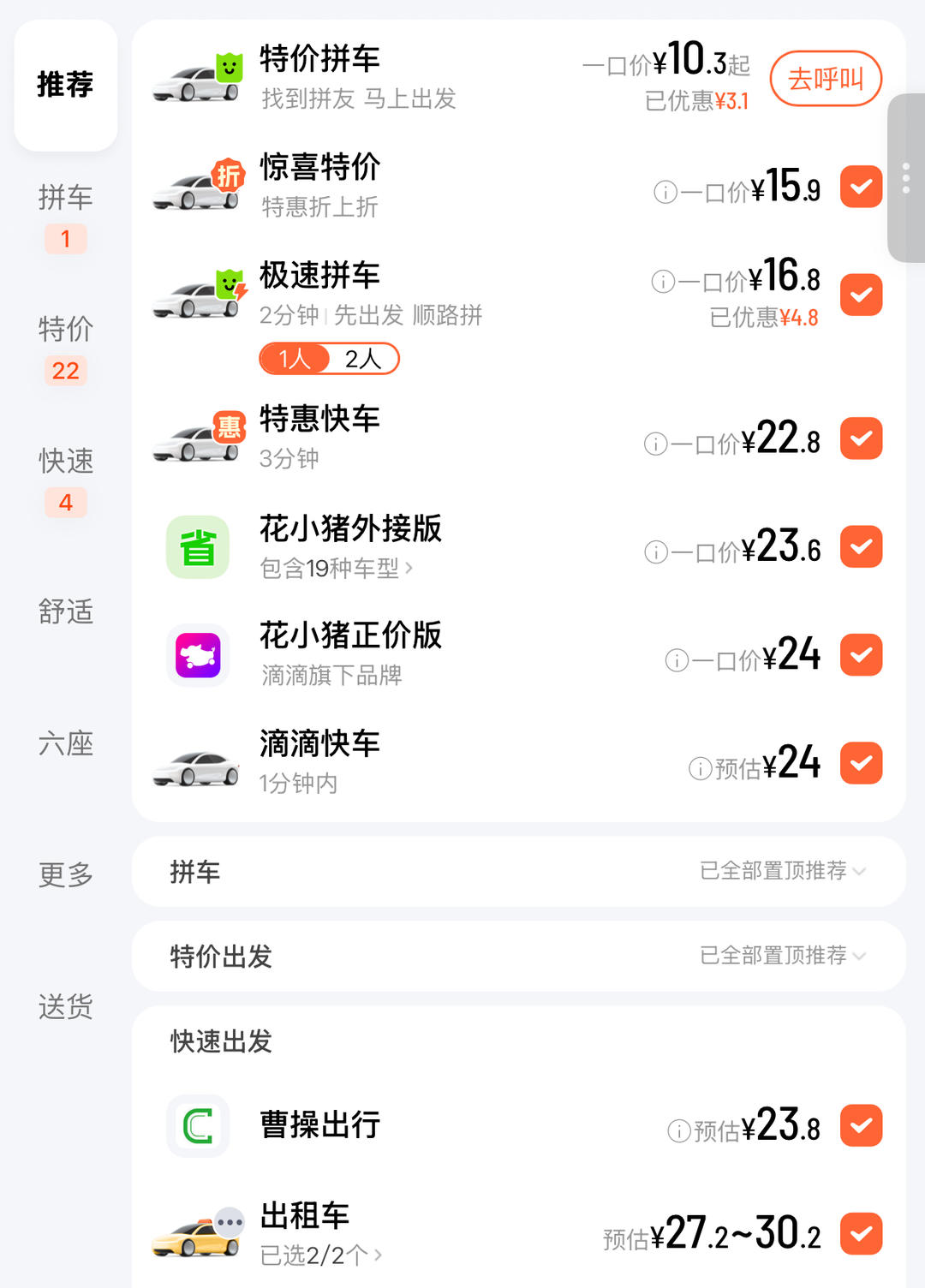
低价漩涡里的网约车:司机抱怨乘客受气,谁也没赢
Qi Lu Wan Bao Wang· 2025-08-29 11:11
Core Viewpoint - The ongoing price war in the ride-hailing industry is creating significant pressure on both drivers and traditional taxi services, leading to a complex situation where no party seems to benefit [1][8][9] Group 1: Industry Challenges - Ride-hailing platforms are engaged in a price war, resulting in low earnings for drivers, with some reporting monthly incomes as low as 4,000 yuan after expenses [2][7] - Drivers are facing high commission rates, with reports of platforms taking up to 60% of fares, severely impacting their take-home pay [2][3] - The introduction of regulations in cities like Xi'an to ban low-price promotions has sparked backlash from consumers who feel it will increase their costs [4][8] Group 2: Consumer Impact - Consumers are expressing dissatisfaction with the rising costs of traditional taxis compared to ride-hailing services, which are perceived as more affordable [4][5] - The price disparity between ride-hailing and taxi services is significant, with taxi fares being approximately 10 yuan more for a 10-kilometer trip [4][5] - Many consumers are frustrated with the service quality of ride-hailing, citing issues such as unclean vehicles and unhelpful drivers [8][9] Group 3: Future Outlook - Experts suggest that the ride-hailing industry is still in its early competitive phase, with many platforms relying on aggressive pricing strategies that may not be sustainable long-term [9] - The potential for market consolidation is high, as smaller platforms may struggle to survive against larger competitors, leading to a more regulated and service-oriented industry in the future [9]