诚信文化

Search documents
代表委员回来了丨使命在肩 躬身力行
He Nan Ri Bao· 2026-01-31 23:37
Group 1 - The core theme of the recent provincial two sessions emphasizes the importance of integrity in governance and community relations, highlighting it as a key to effective grassroots management [3][4]. - The provincial strategic emerging industries account for over 25% of the industrial added value, with seven major industrial clusters contributing over 70% to the industrial output, indicating the significant role of the new energy sector in the province's development [8]. - The integration of technological and industrial innovation is crucial for high-quality economic development, with companies like Henan Kolong New Energy Co., Ltd. focusing on transforming research outcomes into practical applications [8][9]. Group 2 - The focus on advanced manufacturing and technological support is underscored by representatives like Hong Kai Rong, who emphasize the need for innovation to meet the demands of national strategic projects [12][13]. - The development of new agricultural collective economies is highlighted, with initiatives aimed at increasing farmers' income through innovative projects like the cultivation of decorative gourds, which have significantly boosted local revenue [14][16]. - The establishment of a "Youth Entrepreneurship Fund" aims to attract young people back to rural areas, fostering local talent and enhancing agricultural productivity through expert guidance [16].


广发银行走进中国人寿开展推进诚信文化建设宣传活动
Xin Lang Cai Jing· 2026-01-22 10:08
Group 1 - The core theme of the event was "Integrity as the Foundation, Building Financial Civilization Together," focusing on the construction of a financial integrity system and the co-construction of industry culture between Guangfa Bank and China Life [1][3] - Guangfa Bank's presentation emphasized that integrity is the lifeline of the financial industry, highlighting its critical role in preventing financial risks, enhancing industry credibility, and protecting consumer rights [3][6] - The event featured practical case studies demonstrating the embodiment of integrity in retail finance, corporate credit, and wealth management, reinforcing the importance of compliance and truthful communication [3][6] Group 2 - Representatives from China Life shared valuable experiences in integrity construction, showcasing the insurance industry's commitment to clarity in policy terms, efficient claims service, and comprehensive consumer rights protection [3][6] - A discussion session allowed employees to exchange ideas on integrating integrity culture into daily work and addressing challenges posed by financial innovation, fostering a collaborative environment [4][7] - The event established a cultural communication bridge between Guangfa Bank and China Life, deepening mutual understanding of financial integrity culture and laying a solid foundation for future business cooperation and cultural co-construction [4][7]


漫谈中国历史上的金融文化(跟着历史学经济)
Ren Min Ri Bao· 2026-01-14 08:29
Core Viewpoint - The article discusses the evolution of financial practices in ancient China, emphasizing the importance of trust and compliance in the development of financial culture, particularly through the example of the earliest paper currency, the "jiaozi" [1][2]. Group 1: Historical Context of Financial Practices - Ancient Chinese civilization has a rich history of financial practices, with a cultural tradition that values honesty and trustworthiness in monetary transactions [1]. - The "jiaozi," recognized as the world's first paper currency, emerged in the Song Dynasty as a solution to the inconvenience of heavy iron coins, showcasing the role of credit culture in financial innovation [1]. Group 2: The Rise and Fall of Jiaozi - The fate of the "jiaozi" was tumultuous; the government’s excessive issuance of this currency to cover fiscal deficits led to a loss of public trust and a decline in its value, ultimately causing it to fade from use [2]. - The importance of maintaining government credibility and currency stability is highlighted as essential for protecting the financial interests of the public [2]. Group 3: Compliance Culture in Financial Institutions - Compliance culture is a crucial aspect of traditional financial culture, combining legal constraints with self-regulatory practices to ensure stability in financial operations [2]. - The Shanxi banking system, known for its strict adherence to rules and ethical standards, exemplifies how compliance culture contributes to the sound operation of financial institutions [3]. Group 4: Importance of Compliance for Financial Health - A robust compliance culture is essential for the healthy growth of financial institutions and the overall ecosystem of the financial market [3]. - Establishing a culture of "lawful compliance" is necessary to internalize compliance principles and solidify risk management practices within financial organizations [3].
“百家荟萃话文明”系列活动走进准格尔
Xin Lang Cai Jing· 2026-01-12 20:05
Group 1 - The event "Hundred Families Gather to Talk about Civilization" focuses on the theme of integrity and aims to promote the value of honesty and trustworthiness in society [1] - Various activities were conducted, including expert interviews, model speeches, sharing sessions, and policy promotion related to copyright protection and integrity [1] - Notable speakers included Professor Li Bo from Nanjing Normal University, who discussed the core position of integrity in traditional Chinese culture, and national moral models who shared personal stories of upholding integrity in their professions [1] Group 2 - The "Hundred Families Gather to Talk about Civilization" series integrates high-quality resources for public speaking and cultural activities, aiming to spread innovative party theories and promote mainstream values [2] - Local practice stations in the Zhungezhuqi area organized diverse activities such as family storytelling, non-material cultural heritage displays, and artistic performances to engage the community [2] - The initiative supports the development of spiritual civilization and contributes to the cultural strength of the region [2]
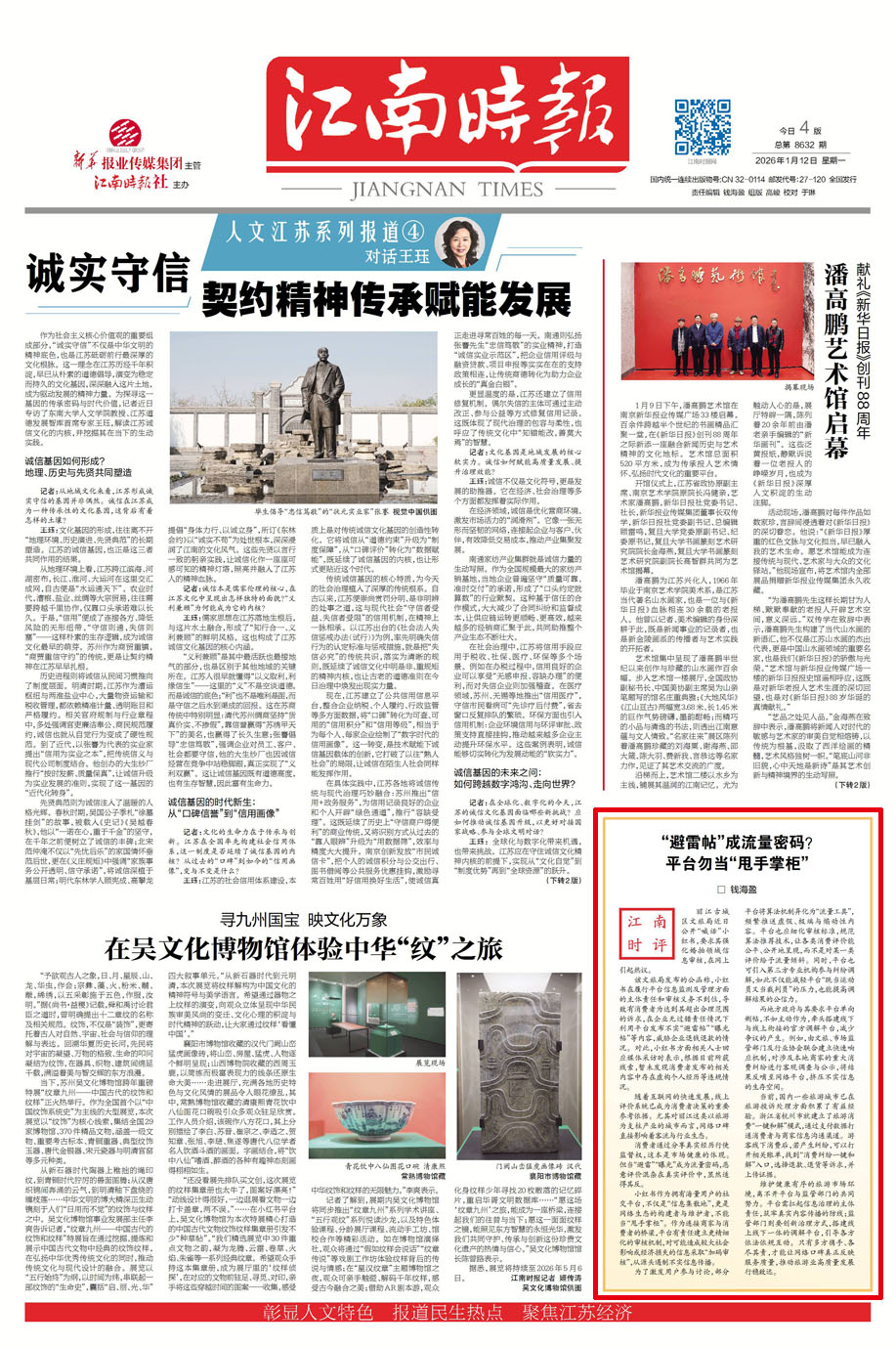
避雷帖”成流量密码?平台勿当“甩手掌柜
Jiang Nan Shi Bao· 2026-01-11 13:30
Core Viewpoint - The article discusses the evolution and significance of the concept of integrity in Jiangsu's culture, emphasizing its historical roots and contemporary relevance in promoting economic and social development. Group 1: Historical Context of Integrity in Jiangsu - Jiangsu's integrity culture is deeply rooted in its geographical and historical context, where trade and communication necessitated trust and reliability among merchants [1][2] - The region's historical figures, such as Zhang Rui, emphasized the importance of integrity in business practices, transforming it into a principle for industrial development [1][2] Group 2: Contemporary Applications of Integrity - Integrity is now seen as a cultural symbol that drives economic and social governance, acting as a catalyst for market vitality and reducing transaction costs [3] - Jiangsu has implemented a public credit information system that integrates various data sources, allowing for the creation of a "credit image" for individuals and businesses, thus modernizing the traditional integrity concept [3][11] Group 3: Challenges and Innovations - The rise of digital platforms has introduced challenges to maintaining integrity, as malicious reviews and misinformation can undermine trust [15][16] - Platforms like Xiaohongshu are urged to enhance their content moderation mechanisms to prevent the spread of false information, thereby protecting the integrity of the market [15][17] Group 4: Future Directions - The article suggests that Jiangsu should leverage its integrity culture to engage in global dialogue and adapt to the digital age, ensuring that traditional values are preserved while embracing modern governance [4][11]
诚实守信,契约精神传承赋能发展
Xin Lang Cai Jing· 2026-01-08 22:05
Core Viewpoint - The article emphasizes the importance of "integrity and trustworthiness" as a cultural gene in Jiangsu, which has evolved from a moral advocacy to a stable cultural foundation driving development [1][2]. Group 1: Formation of Integrity Gene - The integrity gene in Jiangsu is shaped by geographical environment, historical evolution, and exemplary figures [2]. - Jiangsu's geographical features, such as its rivers and trade routes, necessitated trust and cooperation, leading to the early emergence of a credit culture [2]. - Historical processes transitioned integrity from a folk custom to a formalized system, particularly during the Ming and Qing dynasties, where regulations emphasized accountability and transparency [3]. Group 2: Unique Aspects of Integrity in Jiangsu - Confucian ethics, particularly the concept of "balancing righteousness and profit," is central to Jiangsu's integrity culture, distinguishing it from other regions [4]. - The tradition of "integrity in business" is exemplified by historical figures like Zhang Jian, who integrated traditional values with modern business practices [5]. Group 3: Modern Transformation of Integrity - Jiangsu has pioneered the establishment of a social credit system, transforming traditional integrity into a modern institutional framework [5][6]. - The integration of technology into the credit system allows for the creation of "credit portraits," enhancing the reliability of trust in a digital age [6]. Group 4: Economic and Governance Impacts - Integrity acts as a catalyst for economic development, optimizing the business environment and reducing transaction costs [8]. - In social governance, credit mechanisms are applied across various sectors, including taxation and healthcare, demonstrating the practical benefits of integrity [9]. Group 5: Future Challenges and Opportunities - The integrity culture in Jiangsu faces challenges from digitalization and globalization, necessitating innovative approaches to maintain its core values [10]. - The evolution of trust in the context of AI highlights the need for a governance framework that balances efficiency with ethical considerations [11].
聚焦“十五五”规划建议丨弘扬诚信文化、廉洁文化
Xin Hua Wang· 2025-11-20 08:30
Core Viewpoint - The proposal emphasizes the importance of promoting integrity and clean governance as fundamental aspects of socialist core values, which are essential for cultural innovation and development in China [1]. Group 1: Integrity Culture - Integrity culture encompasses loyalty to the state, trust in social interactions, and personal honesty, affecting social trust and government credibility [2]. - The value of integrity is foundational for the construction of socialist culture in the new era, providing psychological security and stability to the public [1]. Group 2: Clean Governance Culture - Clean governance culture is a specific requirement for party members and officials, aimed at enhancing the overall moral standards of society [2]. - Promoting clean governance culture is seen as a comprehensive mobilization effort that can positively influence political, social, and familial ethics [1]. Group 3: Implementation Strategies - To effectively promote integrity and clean governance cultures, continuous efforts through education, training, and legal frameworks are necessary [2]. - Innovative cultural forms and communication methods should be employed to subtly integrate integrity and clean governance into societal norms [2].
聚焦“十五五”规划建议|弘扬诚信文化、廉洁文化
Xin Hua She· 2025-11-20 06:23
Core Viewpoint - The proposal emphasizes the importance of promoting integrity and clean governance as fundamental aspects of socialist core values, which are essential for cultural innovation and development in China [1][2]. Group 1: Integrity Culture - Integrity culture encompasses loyalty to the state, trust in social interactions, and personal honesty, affecting overall social trust and government credibility [2]. - The promotion of integrity culture is seen as foundational for building a safe and stable society, reflecting the civilization level of the nation and its cultural soft power [1]. Group 2: Clean Governance Culture - Clean governance culture is specifically aimed at party members and officials, serving as a requirement for their conduct and a means to elevate the overall moral standards of society [2]. - The integration of clean governance culture is viewed as a comprehensive mobilization effort that can positively influence political, social, and familial ethics [1]. Group 3: Implementation Strategies - To effectively promote integrity and clean governance cultures, continuous efforts through education, training, and legal frameworks are necessary [2]. - Innovative cultural forms and communication methods should be employed to subtly support the development of these cultures [2].
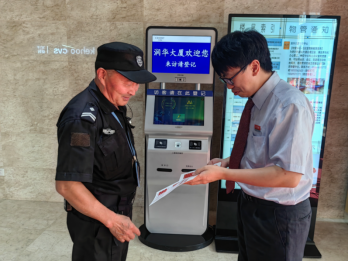
征信知识进企业夯实诚信发展根基 民生银行潍坊诸城支行开展征信宣传进企业活动
Qi Lu Wan Bao· 2025-09-22 09:38
Core Viewpoint - The article highlights the initiative by Minsheng Bank's Weifang Zhucheng branch to promote credit awareness among local enterprises, emphasizing the importance of building a robust credit system to enhance the business environment and support economic development [1][2]. Group 1: Event Overview - The series of promotional activities themed "Empowering Credit, Promoting Integrity" was organized to deliver credit knowledge directly to enterprise managers and employees [1]. - The initiative aims to advocate the concept of "valuing credit records and accumulating credit wealth," fostering a culture of integrity within enterprises [1]. Group 2: Educational Activities - During the event, bank staff employed various promotional methods, including one-on-one explanations and distributing informational materials, to educate employees about credit concepts and the significance of credit records [2]. - Real-life case studies were used to illustrate the severe consequences of overdue repayments and defaults, highlighting the long-term value of maintaining a good credit record [2]. Group 3: Focus on Financing - The bank staff specifically addressed concerns regarding financing and credit assessment, explaining how credit reports are evaluated during loan approvals [2]. - Guidance was provided on how enterprises can accumulate quality credit assets through proper financial management and timely repayments, which can lead to more efficient access to financial support and reduced financing costs [2]. Group 4: Engagement and Future Plans - The event saw active participation from employees, who raised questions about credit card usage, mortgage approvals, and credit repair, indicating a strong demand for credit knowledge [2]. - Minsheng Bank's Weifang Zhucheng branch plans to continue innovating service models and conducting diverse financial knowledge dissemination activities to further promote the "Empowering Credit, Promoting Integrity" concept [2].

广发银行烟台莱山支行积极开展金融教育宣传周活动
Qi Lu Wan Bao· 2025-09-20 11:27
Core Viewpoint - The rapid development of financial technology has improved the convenience of financial activities, but it has also led to an increase in telecom fraud and financial scams, posing serious threats to the financial security and legal rights of the public [1][3] Group 1: Anti-Fraud and Integrity Culture Promotion - The promotional campaign focuses on anti-fraud education and the establishment of an integrity culture, targeting specific groups such as the elderly and youth [3][4] - The campaign includes in-depth analysis of typical telecom fraud cases, highlighting their characteristics and dangers, and aims to enhance public awareness of personal information protection and illegal cross-border investment risks [3][4] Group 2: Multi-Channel Outreach - The promotional activities are divided into four parts: in-branch promotion, merchant outreach, campus education, and online awareness, ensuring comprehensive coverage across different demographics [4] - In-branch promotions involve setting up dedicated areas and case explanations to educate customers about anti-fraud measures and integrity culture [4] - Merchant outreach includes visits to small businesses to raise awareness about fraud prevention, particularly regarding illegal cross-border investments and false financial advertisements [4] Group 3: Impact and Future Directions - The campaign has successfully increased public awareness of financial security and risk prevention, leading to a greater recognition of integrity culture [6] - Public understanding of the dangers of telecom fraud and illegal activities has significantly improved, particularly regarding illegal cross-border investments and campus loans [6] - The company plans to continue enhancing consumer rights protection and deepening anti-fraud and integrity culture initiatives to contribute to a safer financial environment [6]