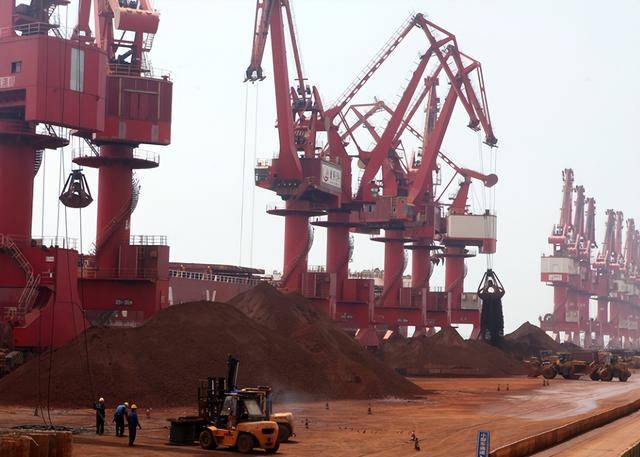
资源战争

Search documents
美伊战争:影响和展望
泽平宏观· 2026-03-01 16:06
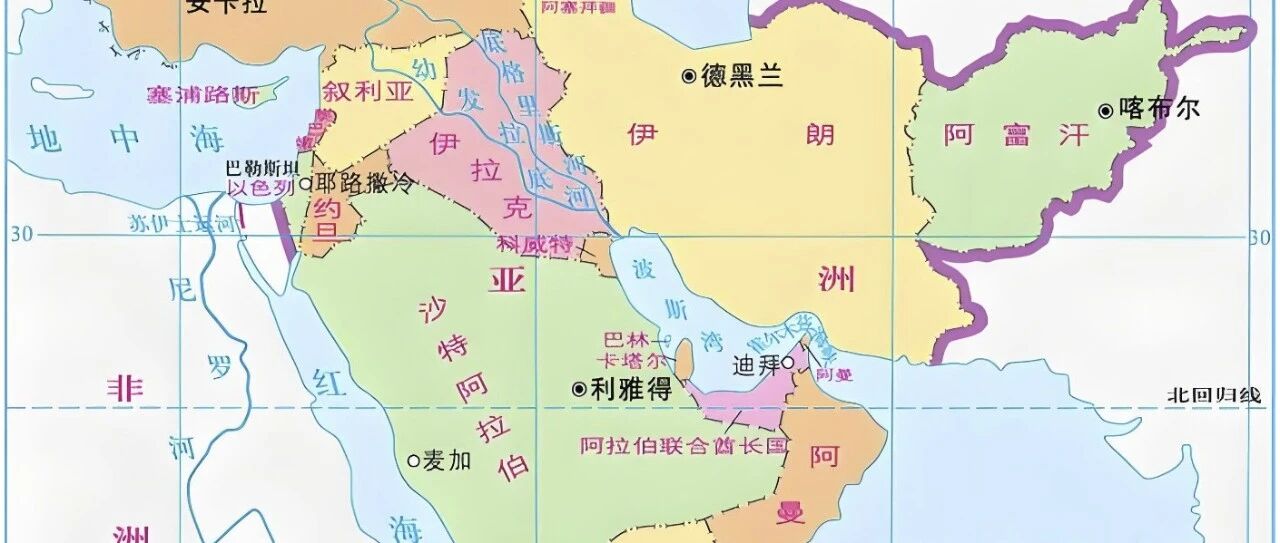
Core Viewpoint - The article discusses the recent U.S.-Israel military strike on Iran, marking a significant escalation in geopolitical tensions and resource wars, particularly focusing on Iran's nuclear capabilities and oil resources [1][5][9]. Group 1: Event Overview - On February 28, the U.S. and Israel conducted a joint military strike on Iran, targeting key strategic military infrastructure, resulting in the death of Iran's Supreme Leader Khamenei [5]. - The attack was a response to Iran's refusal to dismantle its nuclear facilities and surrender enriched uranium, following failed negotiations [8]. - Iran retaliated with missile and drone strikes against U.S. military bases in the region, leading to widespread disruptions in air travel and emergency UN meetings [5][11]. Group 2: Background and Historical Context - The U.S.-Iran relationship has evolved from alliance to adversarial over the past century, influenced by significant historical events such as the 1953 CIA-backed coup and the 1979 Islamic Revolution [6][7]. - The focus of U.S.-Israeli tensions with Iran centers on Iran's nuclear program, which has faced international sanctions and scrutiny since its secret reactivation in the 1980s [7][9]. Group 3: Geopolitical and Resource Implications - The U.S. aims to weaken Iran's nuclear capabilities and assert dominance in the Middle East, viewing Iran's military and energy resources as direct threats to its hegemony [9][10]. - Iran possesses the world's third-largest oil reserves and second-largest natural gas reserves, controlling critical shipping routes through the Strait of Hormuz, which is vital for global oil transport [9][10]. Group 4: Market Reactions and Future Scenarios - Following the attack, there was a notable market reaction with cryptocurrency values plummeting, oil prices surging, and gold strengthening due to increased risk aversion [2][11]. - Three potential scenarios for future developments are outlined: 1. A quick resolution leading to market normalization, with oil prices stabilizing and stock markets rebounding [12][15]. 2. A prolonged conflict causing significant increases in energy prices and market volatility [16][17]. 3. A full-scale regional war resulting in a global energy crisis reminiscent of the 1970s, with sustained high energy prices and economic stagnation [18][19].

艹,一刀砍了71%
Xin Lang Cai Jing· 2026-02-11 10:16
Core Viewpoint - Indonesia's drastic reduction of nickel mining quotas for the world's largest nickel mine, Weda Bay, from 42 million wet tons in 2025 to 12 million wet tons in 2026, signals a shift towards production control and price stabilization in the global nickel market [1][4][5]. Group 1: Quota Changes and Market Impact - The quota for Weda Bay was cut by 71.4%, marking one of the most aggressive adjustments in Indonesian nickel mining history [22]. - Indonesia's overall nickel mining quota for 2026 has been reduced from 379 million wet tons to 250-260 million wet tons, a decrease of 34% [4][22]. - The reduction in quotas has led to a rebound in LME nickel prices, which increased by 22% following the announcement [2][22]. Group 2: Indonesia's Strategic Intent - Indonesia aims to transition from aggressive mining to a model similar to OPEC, focusing on limiting production to enhance prices [5][24]. - The Indonesian government has clear motives: maximizing national revenue by selling less at higher prices, strengthening control over the entire nickel supply chain, and creating supply tightness to reduce global nickel inventories [8][9][25]. - Indonesia holds 42% of global nickel reserves and accounted for 67% of nickel production in 2025, giving it significant market power [7][24]. Group 3: Global Market Dynamics - The competition for nickel pricing is intensifying, with China seeking to establish pricing authority through internationalization of nickel futures, while the U.S. is forming alliances to reshape global mineral supply chains [26][27][29]. - The geopolitical landscape is evolving, with resource-rich countries like Indonesia aiming to maximize their resource profits, while consumer nations like China strive to stabilize prices and secure pricing power [30][31]. - The current environment reflects a shift from globalization to a more fragmented resource competition, with significant implications for future industrial structures [36][37].
美国砸下1.5亿美元炒矿产,要带着日本一起,跟中国好好掰掰手腕
Sou Hu Cai Jing· 2026-01-15 02:17
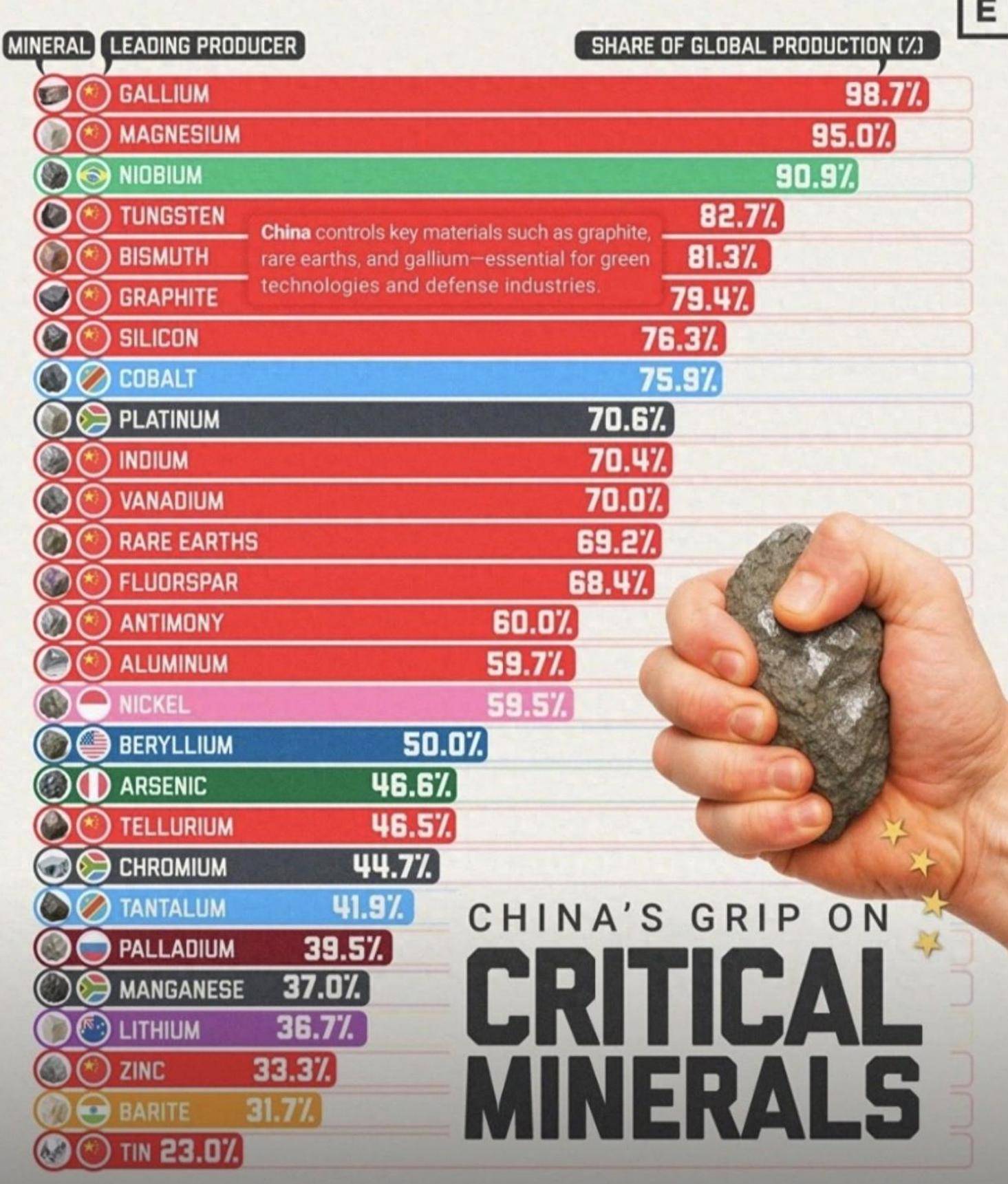
Group 1 - The U.S. government, through the Department of Defense, has invested $150 million in preferred stock in Atlantic Aluminum Company, aiming to establish the first large-scale gallium producer in the U.S. This move is seen as a response to China's dominance in the gallium market, where it controls 95% of global production [1] - The plan involves increasing Atlantic Aluminum's alumina production to 1 million tons per year, which could theoretically yield 50 tons of gallium annually, meeting the basic needs of the U.S. military, satellite, and semiconductor industries [3] - China's dominance in the gallium market is attributed to its ability to recycle gallium from alumina production, achieving a recovery rate of 85%, significantly higher than the global average of 72% [3] Group 2 - Japan's dependence on gallium is driven by military expansion and industrial challenges, with over 60% of small and medium-sized enterprises halting operations due to a lack of gallium following China's export controls [7] - The U.S. has not relaxed its controls on gallium, and Japan may need to invest more and accept U.S. technology control to gain access to gallium, reflecting its strategic vulnerability in resource security [7] - China's control over gallium is not just an economic strategy but also a means of shaping market rules, creating a tiered market based on purity standards that limits U.S. and Japanese technological advancements [9]

白银“稀土级管控”,扼住全球高科技产业“咽喉”!
Sou Hu Cai Jing· 2026-01-07 15:07
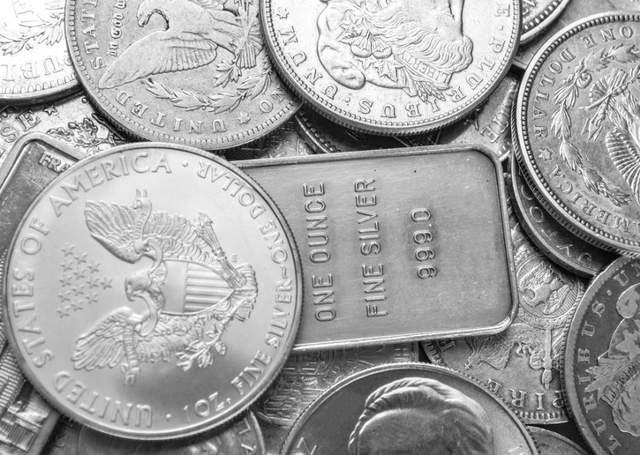
Core Viewpoint - China has implemented new export controls on silver, elevating it to the level of strategic materials like rare earths, which will significantly impact the global silver market and prices [1][4]. Group 1: Export Control Measures - China is now requiring a license for silver exports, with stringent criteria including a minimum annual production of 80 tons for companies and a thorough background check on buyers and their intended use [1][4]. - This move mirrors the 2010 rare earth export licensing system, which increased approval processes and quotas, leading to a significant price surge [3]. Group 2: Global Market Impact - China accounts for 23.4% of global silver trade, exporting approximately one ton of silver for every four tons traded worldwide [4]. - The country possesses 60% to 70% of the global silver refining capacity, making it a critical player in the silver supply chain [4]. - Last year, silver prices surged by 146%, outpacing gold's 60% increase, driven by industrial demand [4]. Group 3: Industrial Demand for Silver - Silver is essential in various industries, including solar energy, electric vehicles, and AI technologies, with significant quantities required for each application [6]. - For instance, a 100 MW solar project requires approximately 2.5 to 3 tons of silver, and the projected production of 30 million electric vehicles in China by 2025 will demand between 1,500 to 3,000 tons of silver annually [6]. Group 4: Strategic Resource Management - The global silver market has been in a supply deficit for five consecutive years, with demand exceeding supply by at least 3,660 tons last year [7]. - Countries like the U.S. and Russia are recognizing silver's strategic importance, with the U.S. including it in its critical minerals list and Russia adding it to its foreign exchange reserves [9][10]. - China's export control on refined silver is part of a broader strategy to secure its technological advancements and enhance its position in global resource management [10].
美哈11亿联手,开发全球最大未开发钨矿,资源战争已打响,钨是起点还是终点?
Sou Hu Cai Jing· 2025-11-11 14:05
Core Insights - Tungsten is a critical material for modern industry and defense, with applications in drilling, aerospace, and military weaponry [1][3] - The U.S. Department of Defense considers tungsten to be of high economic value, and recent export controls by China could significantly impact the global tungsten market [3][5] Industry Dynamics - China controls over 80% of global tungsten production and processing capacity, making any changes in its export policy impactful [3][5] - The U.S. has initiated a strategic response by investing $1.1 billion in a partnership with Kazakhstan to develop a significant untapped tungsten mine, indicating a shift towards securing supply chains [5][6] Strategic Implications - The collaboration between the U.S. and Kazakhstan is seen as a move to reduce dependency on Chinese tungsten, reflecting a broader trend of prioritizing supply chain security over cost efficiency [5][6] - This partnership is backed by high-level government support, emphasizing the importance of tungsten in national security and economic strategy [6][8]

砸10亿美元买矿产!五角大楼急了
Sou Hu Cai Jing· 2025-10-13 08:34
Core Insights - The article discusses the urgency of the U.S. Department of Defense's $1 billion procurement plan for critical minerals in response to China's export controls on rare earth elements, highlighting a growing sense of panic in the U.S. regarding its reliance on Chinese resources [1][3][5]. Group 1: U.S. Defense Procurement - The Pentagon's $1 billion procurement plan aims to acquire essential minerals such as cobalt, antimony, tantalum, and scandium, which are crucial for advanced technologies in defense systems [3][5]. - The urgency of this procurement reflects a significant imbalance in supply and demand, driven by fears of potential supply disruptions from China [5][6]. - The planned procurement quantities, particularly for antimony, exceed the projected total consumption for 2024, raising questions about the feasibility and implications of such large-scale purchases [6]. Group 2: U.S.-China Resource Dynamics - The article emphasizes that the U.S. has long been aware of its dependence on China for rare earth elements, yet it has only recently taken steps to address this vulnerability [3][5]. - The increasing control of the rare earth market by China is likened to a "ticking time bomb," with potential consequences for U.S. high-tech weapon systems if supply lines are cut [5][6]. - The U.S. government's intensified search for alternative mineral sources reveals a deeper issue of dependency on both domestic and foreign supplies, highlighting the challenges in establishing a more independent and secure supply chain [8].