超级存储周期

Search documents
周末总结篇:AI叙事分化、AI Agent和Memory超级周期
傅里叶的猫· 2026-02-07 15:46
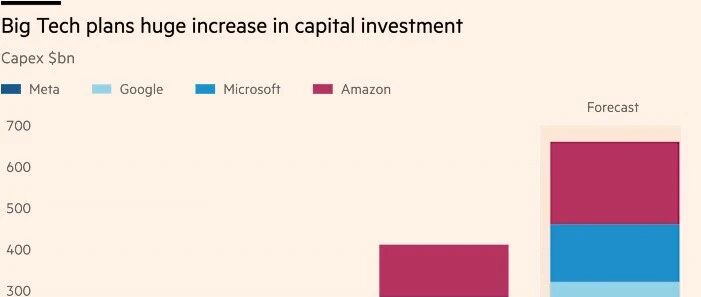
Core Insights - The article discusses the evolving landscape of AI investments and the implications for major tech companies, highlighting a shift in market evaluation criteria from mere technological advancement to actual revenue contributions and profitability [4] - It emphasizes the transformative impact of AI on traditional software models and the competitive dynamics within the industry, particularly focusing on the challenges faced by companies like Microsoft [11][8] Group 1: AI Investment Trends - Major North American tech companies, including Amazon, Google, Meta, and Microsoft, plan to invest approximately $660 billion in capital expenditures by 2026 [1] - The market's response to aggressive capital spending has changed, with a focus on companies that can demonstrate sustainable profitability from AI investments [4] Group 2: AI Model Development - Claude Code represents a pivotal shift in AI development, moving from passive response models to proactive execution, fundamentally altering human-computer interaction [7] - The widespread adoption of AI agents is expected to disrupt traditional software industries, reducing marginal costs and undermining existing business models [8] Group 3: Storage Industry Dynamics - The storage industry is characterized by cyclical supply-demand mismatches, with significant capital investments required for chip manufacturing leading to low supply elasticity [12] - The current AI-driven storage supercycle is unprecedented, with structural demand surges and supply constraints leading to significant shortages in both HBM and general DRAM [14][15] Group 4: Future Projections - The AI-driven supercycle is anticipated to last until 2027, with ongoing supply shortages and high prices expected to persist in the short term [20] - Long-term changes in the industry may include a shift towards long-term supply contracts with cloud providers, reducing inherent cyclical volatility [21]


AI新周期核心“卖铲人”,充分受益HBM4与CoWoS升级
HTSC· 2026-01-28 08:04
Investment Rating - The report initiates coverage on Disco Corporation with a "Buy" rating and sets a target price of 79,000 JPY, corresponding to a 48x FY26E PE [1]. Core Insights - Disco Corporation is a leading player in the global semiconductor wafer cutting and thinning equipment market, maintaining a market share of 70%-80%. The company has built a comprehensive product lineup around its core technologies of "cutting, grinding, and polishing," and continues to demonstrate industry-leading profitability through its integrated business model of "equipment + consumables + services" [1][15]. - The upgrade of AI chips is expected to drive rapid growth in demand for high-end thinning and polishing equipment. The transition to HBM4/4E and 3nm processes will necessitate thinner wafers (<30µm), with Disco's unique dry polishing technology poised to secure a significant market share in the HBM4 era [2][16]. - Disco's integrated business model, which includes high-margin consumables (approximately 25% of revenue), allows for consistent revenue generation and smooths out cyclical fluctuations. The company maintains a gross margin of 69%-70% due to increased consumable density driven by higher material hardness and precision requirements [3][17]. Summary by Sections Industry Overview - The global AI chip market is entering a new cycle, with significant capital expenditure growth expected from major storage companies, projected to increase by 17% in 2026. The DRAM market is anticipated to see an 85% increase in value, surpassing 300 billion USD [2][16]. Financial Projections - The report forecasts Disco's net profit for FY2025, FY2026, and FY2027 to be 127.8 billion JPY, 178.5 billion JPY, and 212.3 billion JPY, respectively, reflecting year-on-year growth of 3.1%, 39.7%, and 18.9%. The corresponding EPS is projected to be 1,178 JPY, 1,646 JPY, and 1,957 JPY [5][15]. Competitive Positioning - Disco's unique "razor and blades" business model, characterized by high-margin consumables, positions the company favorably against pure equipment manufacturers. The deep integration with clients during the R&D phase enhances pricing power and customer loyalty [3][17]. - The report highlights a divergence from market sentiment, suggesting that concerns over power semiconductors negatively impacting performance underestimate the demand for high-end equipment driven by AI chip performance upgrades [4][18]. Valuation Analysis - The report values Disco at 48x FY26E PE, considering its monopolistic position in HBM and advanced packaging sectors, as well as its superior gross margin structure compared to peers [5][19].
美银报告梳理存储超级周期五大核心支撑,大幅上调SK海力士、三星电子、南亚科技目标价
Zhi Tong Cai Jing· 2026-01-05 14:19
Core Viewpoint - The global memory industry is expected to enter a "super cycle" starting in 2026, driven by explosive AI demand, structural supply shortages, and technological advancements, with DRAM sales projected to surge from $130.3 billion in 2025 to $209.8 billion in 2026, a 61% year-on-year increase [1] Group 1: Super Cycle Support Factors - The memory industry is transitioning from a cycle of "expansion-overcapacity-price decline-reduction" to a high-quality growth phase due to the rigid demand from AI and supply constraints [2] Group 2: AI Demand Surge - AI accelerators like Nvidia's Rubin Ultra GPU and Google's TPU v7 are significantly increasing the demand for high-end memory, with HBM capacity per AI server rising from 340GB to 1.17TB, indicating a long-term shift in demand from traditional PC and smartphone markets to AI-driven applications [3] Group 3: Supply Constraints - Major chip manufacturers are focusing capital expenditures on high-end areas like HBM and eSSD, leading to a structural reduction in traditional DRAM capacity, with inventory levels at 3-4 weeks, well below the normal 1-2 months [4] Group 4: Price Increases and Profitability - Traditional DRAM contract prices rose over 30% in Q4 2025 and an additional 15% in Q1 2026, with 16Gb DDR5 spot prices exceeding $30, reflecting a more than 500% increase since early 2025, translating into significant profit growth for companies like SK Hynix and Samsung [5] Group 5: Capital Expenditure Optimization - SK Hynix's capital expenditure is expected to double to 35 trillion KRW in 2026, primarily for HBM capacity expansion, while maintaining a limited impact on overall supply due to a focus on high-end investments [6] Group 6: Technological Advancements - The introduction of new memory technologies like HBM4 and GDDR7 has raised industry barriers, with SK Hynix holding over 60% market share in HBM and leading production schedules, shifting competition from price to technology [7] Group 7: Key Companies and Their Strategies - SK Hynix is positioned as a leader in the HBM market, with a projected operating profit of 86.2 trillion KRW in 2026, benefiting from high demand and price increases [10] - Samsung Electronics, with the largest memory production capacity, is expected to leverage price elasticity and capture additional orders as competitors reach capacity limits, with target prices adjusted to 170,000 KRW for common stock [12] - Nanya Technology focuses on legacy DRAM products, anticipating a 6% increase in ASP due to supply shortages, with a target price raised to 235 NTD [14] Group 8: HBM Market Outlook - HBM is projected to be the fastest-growing segment in the memory industry, with global sales expected to reach $55 billion in 2026, driven by technological advancements and increased demand from AI accelerators [13] - SK Hynix is expected to maintain a 53% market share in HBM sales, while Samsung's share may rise to 25%, indicating a competitive landscape characterized by one dominant player and several strong competitors [15]