
金融促消费

Search documents
四川泸州:惠民支付点燃新春消费热潮
Jin Rong Shi Bao· 2026-02-27 02:28
Group 1 - The core idea of the articles revolves around the initiatives taken by the People's Bank of China in Luzhou to stimulate consumer spending during the Spring Festival through various financial policies and promotional activities [1][2] - The second Tianfu Boutique Spring Consumption Month and "Chuan Brand" special consumption brand event was successfully launched in Luzhou, focusing on enhancing consumer experiences and ensuring smooth payment services [1] - The government has issued special consumption vouchers amounting to 6.09 million yuan through the "Cloud Flash Payment" platform, aimed at promoting new consumption scenarios [1] Group 2 - The "Prize Invoice" initiative integrates welfare policies into daily consumption, allowing consumers to participate in a lottery with a minimum purchase of 100 yuan, covering various sectors such as retail, dining, and tourism [2] - The first round of the prize pool for the special awards in Luzhou reached nearly 7 million yuan, with individual prizes up to 100,000 yuan (pre-tax) [2] - Since the launch of these activities, over 90,000 citizens have benefited, driving consumption to 35 million yuan [2] Group 3 - Eight financial institutions in Luzhou have introduced various promotional offers, such as discounts on social security card payments and credit card random reductions, to enhance consumer spending [3] - Specific promotions include a 20 yuan discount for purchases over 100 yuan at local supermarkets and random reductions on museum tickets and public transport [3] - The initiatives also focus on community services, offering discounts for elderly citizens and integrating multiple payment options to enhance convenience [3]
温暖迎新春 建行河南省分行打造系列新春惠民活动
Huan Qiu Wang· 2026-02-12 09:06
Core Viewpoint - The China Construction Bank (CCB) Henan Branch is enhancing financial support for residents during the upcoming Spring Festival by launching various promotional activities focused on consumer needs in dining, tourism, and home renovation [1][2][3] Group 1: Consumer Promotions - CCB is offering a "Life New Year Goods Festival" and "Beneficial Season" activities, providing numerous dining coupons to stimulate daily dining consumption [1] - The "Half-Price Happy Purchase - Spring Festival Special Edition" campaign allows users to receive daily coupons for chain supermarkets and restaurants, promoting family gatherings during the festival [1] Group 2: Cultural and Tourism Initiatives - CCB has created an online cultural tourism integration service platform, featuring ticketing for popular destinations and events, aimed at boosting local economic development [2] - Users can access discounted tickets for attractions like Qingming Riverside Landscape Garden and Yuntai Mountain, enhancing their cultural experience during the holiday [2] Group 3: Home Renovation Support - The "CCB Home Renovation Festival" offers special installment payment options at 1,506 selected home decoration merchants, making it easier for families to manage large expenses [3] - This initiative aims to support families in improving their living environments, aligning with the festive spirit of renewal and togetherness [3] Group 4: Overall Impact - CCB's series of Spring Festival activities effectively addresses various aspects of daily life, promoting consumption and enhancing the festive atmosphere through financial services [3] - The bank plans to continue innovating its financial products and services to further benefit the public and support the real economy [3]

金融促消费要抓稳就业、融场景、守底线
Bei Jing Shang Bao· 2026-01-27 16:58
Group 1 - The core viewpoint emphasizes the need for financial support in Beijing to expand consumption, focusing on three main lines: stabilizing enterprises and employment, optimizing consumer financial services, and improving the payment environment to enhance consumer willingness [1][2] - Financial support should prioritize the development of small and micro enterprises to ensure job security and continuous income growth for residents, which will drive consumption [1] - A tailored approach for Beijing should leverage its unique advantages in "livelihood security" and "technological innovation," creating a differentiated path that addresses both basic consumption needs and promotes consumption upgrades [1] Group 2 - There is a strong emphasis on data security and privacy protection as essential for digital finance innovation, requiring financial institutions and platform companies to comply with regulations and avoid excessive data collection [2] - The government is urged to enhance livelihood security in areas such as healthcare, education, and elderly care, reducing residents' concerns and encouraging consumption [2] - A policy coordination mechanism is recommended to integrate financial support with industrial development and livelihood security, creating a virtuous cycle of "stabilizing employment - increasing income - promoting consumption - expanding domestic demand" [2]
2026北京两会丨对话市政协委员郭田勇:金融促消费要抓稳就业、融场景、守底线
Bei Jing Shang Bao· 2026-01-27 07:02
Core Viewpoint - Financial support is essential for stimulating consumption in Beijing, focusing on stabilizing enterprises and employment, optimizing consumer finance services, and improving the payment environment to enhance consumer willingness [3][5][11]. Group 1: Financial Support Strategies - The key strategies for financial support in expanding consumption include stabilizing enterprises and employment, particularly by supporting small and micro enterprises, which are crucial for job creation and income growth [3][5]. - Optimizing consumer finance services is necessary to meet residents' cross-cycle funding needs, particularly for large purchases such as home appliances and travel [5][11]. - Improving the payment and settlement environment will make transactions more convenient and enhance the overall consumption atmosphere [5][6]. Group 2: Targeting Specific Demographics - Financial strategies should focus on middle and low-income groups by enhancing social security systems in healthcare, education, and elderly care to alleviate consumption concerns [4][11]. - For high-income groups, leveraging technological innovation can stimulate demand for upgraded consumption, aligning with the capital's industrial advantages [4][11]. - Addressing the needs of specific groups such as youth, new citizens, and rural residents requires tailored financial products that match their characteristics and potential income growth [7][8]. Group 3: Innovation and Risk Management - Balancing innovation with risk management is crucial, emphasizing data security and privacy protection while preventing excessive credit and irrational consumption [10][12]. - Financial institutions must adhere to regulations regarding data usage and ensure that consumer credit products are designed responsibly to avoid over-indebtedness [10][12]. - Establishing a collaborative governance framework is necessary to ensure compliance and mitigate risks associated with financial innovations [10][12]. Group 4: Long-term Mechanisms - A sustainable financial consumption promotion mechanism should be established, focusing on maintaining a stable economic environment to support employment and income expectations [11][12]. - Continuous improvement of social security systems is vital to reduce residents' concerns in areas such as healthcare and education, fostering a more confident consumption environment [12]. - A policy coordination mechanism should integrate financial support with industrial development and social security policies to create a virtuous cycle of employment, income growth, and consumption expansion [12].


金融促消费做好供给侧
Bei Jing Shang Bao· 2026-01-25 17:25
Core Insights - The Chinese consumer market is experiencing deep financial empowerment, with continuous release of fiscal interest subsidies, collaboration between financial institutions and e-commerce companies, and ongoing innovation in consumer financial products [1][2] - Financial policies play a multi-dimensional role in promoting consumption, particularly targeting young consumers and specific groups to reduce their consumption costs [2][5] - The focus should shift from merely increasing lending to enhancing supply-side capabilities and providing high-quality services to meet consumer demands [6][7] Group 1: Financial Empowerment and Consumer Behavior - The collaboration between financial institutions and e-commerce is facilitating easier access to financial services for youth, "credit white households," and new citizens, promoting a healthy consumption cycle [1] - Financial policies should be precise and collaborative, aiming to alleviate the financial burden on specific consumer groups, particularly the youth [2][3] - The recent inclusion of credit card installment plans in personal consumption loan fiscal subsidy policies directly addresses the pain points of young consumers, encouraging them to spend without excessive repayment concerns [2] Group 2: Targeted Financial Services - The consumer market in Beijing is characterized by a large elderly population, numerous students, and parents investing in their children's consumption, necessitating tailored financial services [3][4] - Financial services must be customized based on consumer preferences identified through data analysis, embedding financial products into emerging consumption scenarios [3][8] - The focus should be on new consumption and service sectors, with financial institutions supporting high-quality service supply rather than just increasing credit availability [6][7] Group 3: Policy Recommendations and Implementation - Recommendations include enhancing consumer financial literacy, strict regulation of high-risk consumption models, and industry self-regulation to protect consumer rights [4] - Financial policies should target three core areas: bulk goods, services, and new consumption, with specific financial products designed for unique scenarios in Beijing [7][8] - Effective implementation requires deep integration of financial products into consumer processes, precise targeting of services for different demographics, and collaboration among government, banks, and merchants to ensure benefits reach consumers [8][9]
两会三人行|金融促消费 不能单靠“放贷刺激”
Bei Jing Shang Bao· 2026-01-24 13:46
Core Viewpoint - The Chinese consumer market is experiencing deep financial empowerment, with continuous release of fiscal interest subsidies, collaboration between financial institutions and e-commerce companies, and ongoing innovation in consumer financial products, which facilitates a positive cycle of "daring to consume, willing to consume, and healthy consumption" [1] Group 1: Financial Empowerment and Consumer Behavior - Financial policies should focus on supply-side improvements rather than merely increasing borrowing, emphasizing the need for innovative credit products tailored to young consumers [1][2] - The current consumption market shows structural differentiation, with physical goods consumption slowing down while service consumption continues to grow, indicating a shift towards better experiences and services as income levels rise [2] - Financial institutions are encouraged to embed financial tools into consumption scenarios, moving beyond traditional lending to support quality service supply in areas like elderly care, childcare, and healthcare [1][3] Group 2: Targeting Specific Consumer Groups - Young people, new citizens, and rural residents are identified as key consumer groups with high consumption potential but relatively weak financial service coverage, necessitating a reduction in information asymmetry to better serve them [4][5] - Financial products should be customized for different life stages and consumption preferences, leveraging data-driven insights to create tailored solutions for diverse consumer needs [8][11] Group 3: Policy Recommendations and Implementation - Financial policies should aim to lower the consumption burden on young consumers through effective fiscal-financial collaboration, such as the recent inclusion of credit card installment plans in fiscal subsidy policies [7][11] - The focus should be on three core areas: bulk goods, services, and new consumption, with specific financial products designed for sectors like electric vehicles and cultural tourism [10][11] - Collaboration among government, banks, and businesses is essential to ensure that financial policy benefits reach consumers effectively, creating a closed loop of financial support [11][12]

金融促消费,不能单靠“放贷刺激”
Bei Jing Shang Bao· 2026-01-24 13:41
Core Viewpoint - The Chinese consumption market is experiencing deep financial empowerment, with continuous release of fiscal interest subsidies, collaboration between financial institutions and e-commerce companies, and ongoing innovation in consumer finance products, which facilitates a positive cycle of consumption among various groups, including youth and new citizens [1] Group 1: Financial Empowerment and Consumer Behavior - Financial policies should focus on supply-side improvements rather than merely increasing borrowing, emphasizing the need for innovative credit products tailored to young consumers [1][6] - The current consumption market shows structural differentiation, with a slowdown in physical consumption growth while service consumption continues to release potential [4][5] - Financial support should target new consumption and service sectors, enhancing the overall consumption experience rather than just increasing spending [5][6] Group 2: Targeting Specific Consumer Groups - Key consumer groups include youth, new citizens, and rural residents, who exhibit strong consumption willingness but face weak financial service coverage [6][7] - Financial institutions need to innovate by using future revenue rights of IPs as underlying assets to develop financial products that support the growth of related industries [6] - Data-driven insights are essential for creating customized financial services that cater to the preferences of different consumer demographics [11] Group 3: Policy Recommendations and Implementation - Financial policies should be precise and collaborative, involving fiscal and financial coordination to lower consumption costs for specific groups [10][14] - The focus should be on embedding financial products into various consumption scenarios, ensuring that financial tools are effectively utilized in real-time [14][15] - The development of a robust credit repair policy can help expand the consumer base by improving access to financial services for those with past credit issues [14][15]

两会三人行|金融促消费,不能单靠“放贷刺激”
Bei Jing Shang Bao· 2026-01-24 13:40
Core Viewpoint - The Chinese consumer market is experiencing deep financial empowerment, with continuous release of fiscal interest subsidies, collaboration between financial institutions and e-commerce companies, and ongoing innovation in consumer finance products, which facilitate a positive cycle of consumption among various demographic groups [1][4]. Group 1: Financial Empowerment and Consumer Behavior - Financial policies should focus on supply-side improvements rather than merely increasing borrowing, emphasizing the need for innovative credit products tailored to young consumers [1][6]. - The current consumption market shows structural differentiation, with physical goods consumption slowing while service consumption, such as tourism and entertainment, continues to grow [4][5]. - Financial institutions are encouraged to develop products that support the entire industry chain behind popular cultural events, enhancing the overall consumption experience [5][6]. Group 2: Targeting Specific Demographics - Young people, new citizens, and rural residents are identified as key consumer groups with high spending potential but limited access to financial services, necessitating a reduction in information asymmetry [6][7]. - Financial institutions should leverage data to create comprehensive credit profiles for these groups, enabling better access to financial products [7][9]. Group 3: Policy Recommendations and Financial Products - Financial policies should be precise and collaborative, aiming to reduce the consumption costs for specific groups, particularly the youth [10][11]. - The introduction of fiscal subsidies for credit card installment plans is seen as a direct response to the financial pressures faced by young consumers [10][11]. - Financial products should be customized to meet the diverse needs of different demographic groups, such as the elderly and students, to maximize consumption potential [11][12]. Group 4: Strategic Focus Areas - Financial policies should target three core areas: large consumer goods, service consumption, and new consumption models, particularly in sectors like electric vehicles and cultural tourism [13][14]. - The integration of financial products into everyday consumption scenarios is crucial for enhancing user experience and ensuring accessibility [14][15]. - The recent upgrades in consumer loan subsidies have led to increased financial incentives for consumers, enhancing their purchasing power [15].

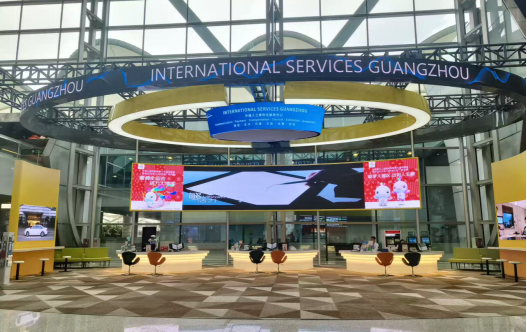
来穗支付无忧 广州以开放姿态拥抱全球来客
Xin Lang Cai Jing· 2026-01-23 13:10
Core Insights - Guangzhou is enhancing its payment services for foreign visitors, integrating traditional and modern payment methods to create a seamless experience for international consumers [1][15]. Payment Service Enhancements - The People's Bank of China Guangdong Branch and the Guangzhou Municipal Financial Office are improving the payment service system focusing on foreign visitors' needs, offering large card payments, small QR code payments, and cash options [1][15]. - Baiyun International Airport has established a "Convenience Service Center" for foreign visitors, featuring ATMs that support foreign cards and providing multi-language support for various services [2][16]. Payment Experience Improvements - Guangzhou Metro has implemented a system allowing foreign bank cards to be used directly at turnstiles, with nearly 9,000 machines across 400 stations supporting this feature [7][21][22]. - Foreign visitors can easily exchange currency and access cash through various banking services, enhancing their overall experience [9][24]. Mobile Payment Facilitation - The introduction of services like "foreign card binding" and "foreign payment within domestic platforms" has simplified mobile payment processes for foreign visitors, allowing them to register and use WeChat Pay and Alipay quickly [11][26]. - The digital RMB is gaining popularity among foreign visitors, with an overseas version of the app allowing users to open anonymous wallets and recharge using foreign bank cards [13][28]. Consumer Engagement and Growth - The increase in payment convenience has led to a rise in consumption among foreign visitors, with projections indicating over 35 million transactions and amounts exceeding 11.3 billion yuan by 2025, reflecting significant growth [14][30]. - Initiatives such as consumer vouchers and reduced fees for international card transactions are being implemented to stimulate spending among foreign visitors [14][30].
贵州金融系统“四个着力”助推经营主体发展壮大
Xin Lang Cai Jing· 2026-01-17 22:51
Group 1 - The core focus of the provincial financial meeting is to enhance the quality development of business entities through targeted financial support, emphasizing "big efforts in industry, projects, investment attraction, and business entities" [1] - The meeting aims to implement key tasks for 2026, injecting strong financial momentum into the high-quality development of business entities across the province [1] - A "1+7" strategy will be employed to achieve a strong start for the financial sector in the first quarter, with seven targeted financing matching activities planned across various industries [1] Group 2 - The province will focus on 891 key industrial projects with a financing demand of 171 billion yuan, implementing categorized strategies to support the collaborative development of various business entities [1] - Financial measures will be enhanced to support the transformation and upgrading of state-owned enterprises, as well as the development of private enterprises [1] - The financial sector will increase efforts to stimulate consumption, particularly in traditional retail and emerging consumption sectors, ensuring that policy benefits reach both business entities and consumers effectively [2]