消费金融产品

Search documents
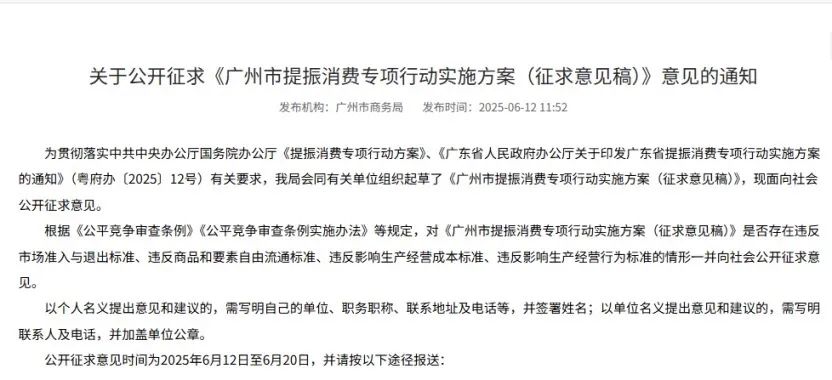
金融支持扩大内需结构性问题值得关注
Xin Lang Cai Jing· 2026-02-22 17:58
Group 1 - The article highlights a "temperature difference" between macro data and micro perceptions, indicating structural issues in financial support for expanding domestic demand that need systematic resolution [1] - For residents, the financial support mechanism to promote consumption is not yet well-established, with a significant increase in demand for short-term consumer loans, while banks struggle to meet this demand [1] - The article notes that consumer financial products are highly homogeneous, lacking differentiated risk pricing mechanisms and credit tools that align with upgraded consumption areas such as education, healthcare, and tourism [1] Group 2 - For enterprises, there remains a gap in the supply of medium to long-term funds necessary for effective investment, as banks prefer to provide short-term working capital loans [1] - This structural mismatch in funding duration raises the overall financing costs for enterprises and leads to short-term investment decision-making, creating a gap between enterprises' willingness, ability, and effectiveness to invest [1] - Financial institutions face dual challenges of narrowing net interest margins and rising pressure from non-performing assets, impacting their ability to serve long-tail customer segments in consumer credit, small business loans, and technology innovation loans [1]
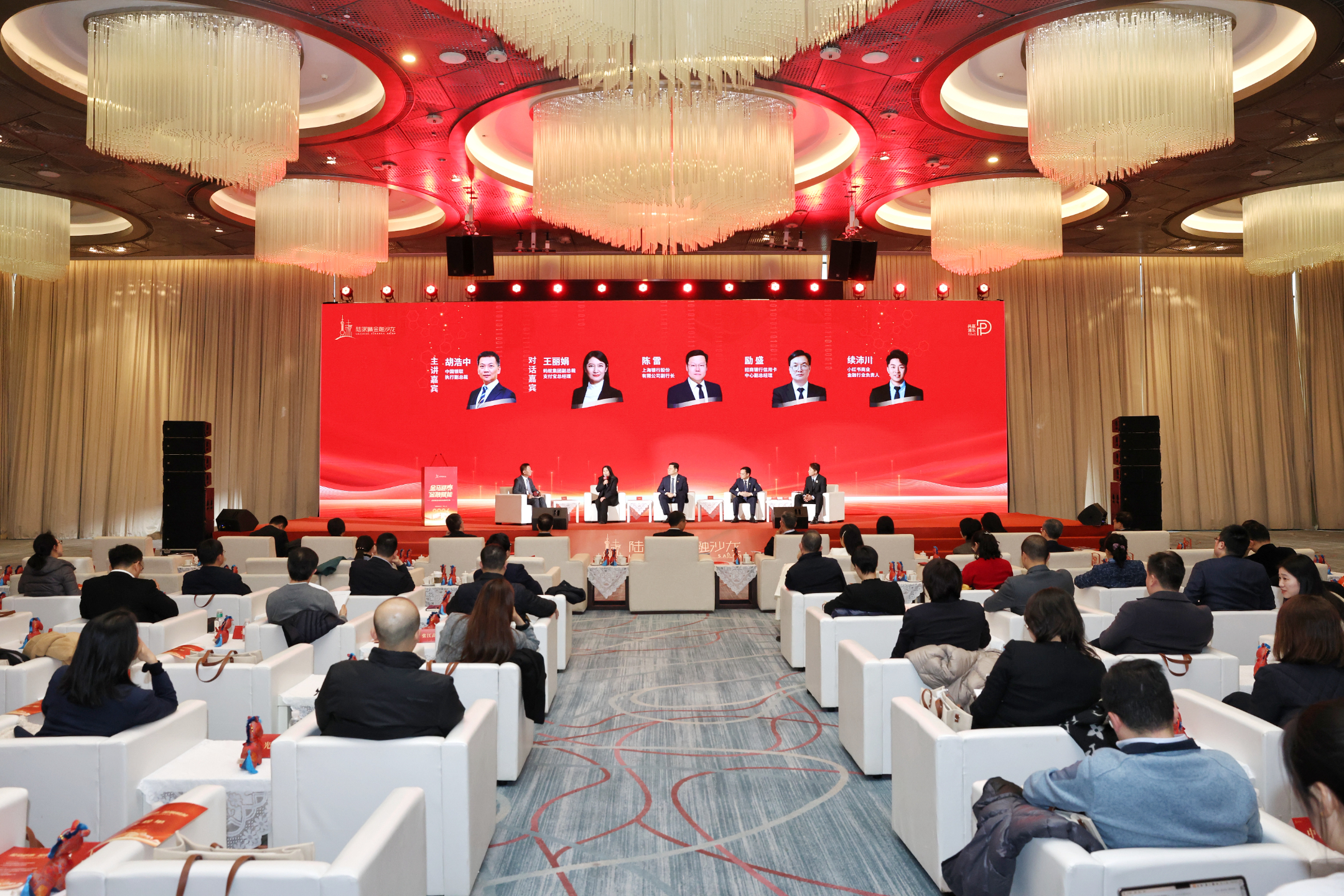
金融赋能消费,“陆家嘴金融沙龙”2026年系列活动启幕
Guo Ji Jin Rong Bao· 2026-01-29 11:50
Group 1 - The "Lujiazui Financial Salon" 2026 series has commenced, focusing on empowering financial services to stimulate new consumption engines in Pudong [1][3] - Pudong New Area is a core area for Shanghai's international financial center, housing 3,800 financial institutions, contributing significantly to Shanghai's financial value-added [1] - The salon will host 40 events throughout the year, gathering insights from over 200 guests, including international representatives from countries such as the US, UK, France, Switzerland, Italy, South Korea, and Singapore [3] Group 2 - Future activities of the "Lujiazui Financial Salon" will leverage global resources to create a professional exchange platform that supports Pudong's development and promotes innovation in the financial industry [4] - The salon aims to continuously output financial reform insights from Pudong, enhancing the high-quality development of the Pudong economy and contributing to the advancement of Shanghai's international financial center [4]


金融促消费,不能单靠“放贷刺激”
Bei Jing Shang Bao· 2026-01-24 13:41
Core Viewpoint - The Chinese consumption market is experiencing deep financial empowerment, with continuous release of fiscal interest subsidies, collaboration between financial institutions and e-commerce companies, and ongoing innovation in consumer finance products, which facilitates a positive cycle of consumption among various groups, including youth and new citizens [1] Group 1: Financial Empowerment and Consumer Behavior - Financial policies should focus on supply-side improvements rather than merely increasing borrowing, emphasizing the need for innovative credit products tailored to young consumers [1][6] - The current consumption market shows structural differentiation, with a slowdown in physical consumption growth while service consumption continues to release potential [4][5] - Financial support should target new consumption and service sectors, enhancing the overall consumption experience rather than just increasing spending [5][6] Group 2: Targeting Specific Consumer Groups - Key consumer groups include youth, new citizens, and rural residents, who exhibit strong consumption willingness but face weak financial service coverage [6][7] - Financial institutions need to innovate by using future revenue rights of IPs as underlying assets to develop financial products that support the growth of related industries [6] - Data-driven insights are essential for creating customized financial services that cater to the preferences of different consumer demographics [11] Group 3: Policy Recommendations and Implementation - Financial policies should be precise and collaborative, involving fiscal and financial coordination to lower consumption costs for specific groups [10][14] - The focus should be on embedding financial products into various consumption scenarios, ensuring that financial tools are effectively utilized in real-time [14][15] - The development of a robust credit repair policy can help expand the consumer base by improving access to financial services for those with past credit issues [14][15]

央行:适时把健康产业纳入服务消费与养老再贷款支持领域
Nan Fang Du Shi Bao· 2026-01-15 09:13
Core Viewpoint - The People's Bank of China (PBOC) is expanding its support for service consumption and elderly re-loans, with plans to include the health industry once relevant standards are established [1][3]. Group 1: Financial Support for Service Consumption - The PBOC aims to enhance the effectiveness of financial support in key service consumption areas, including hospitality, tourism, sports, entertainment, elderly care, and domestic services [3][4]. - A total of 500 billion yuan has been allocated for service consumption and elderly re-loans, with 118.4 billion yuan already disbursed as of the end of November 2025 [3][4]. - The balance of consumer loans, excluding personal housing loans, reached 21.2 trillion yuan by the end of November 2025 [3]. Group 2: Enhancing Consumer Capacity - The PBOC will continue to implement policies that support entrepreneurship and employment for key groups, as well as small and micro enterprises [4][5]. - There is a focus on developing consumer finance to meet diverse and personalized consumer needs, while also lowering financing costs through coordinated financial and fiscal policies [5]. Group 3: Optimizing Consumer Financial Services - The PBOC is committed to improving a diversified payment service system and enhancing payment experiences in key consumption scenarios [5]. - Policies for one-time credit repair will be implemented to improve the consumer finance environment [5].
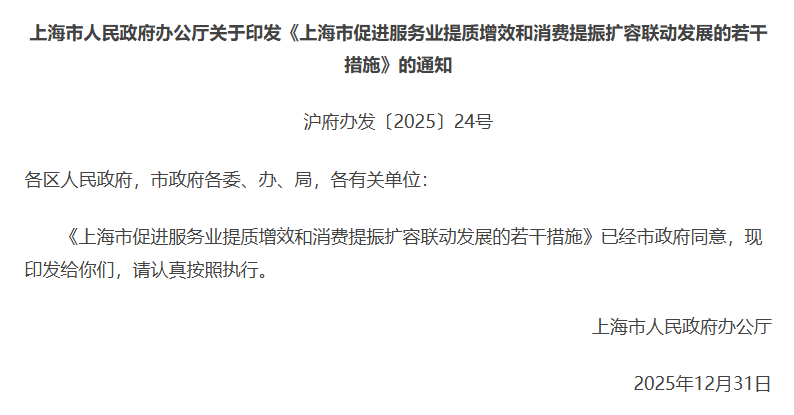
上海,利好来了!
Sou Hu Cai Jing· 2026-01-13 06:30
Core Viewpoint - The Shanghai Municipal Government has issued measures to promote the quality improvement and expansion of the service industry and consumption, focusing on optimizing supply and expanding demand to achieve mutual empowerment and progress [1][3]. Group 1: Financial Innovation and Support - Financial institutions are encouraged to innovate consumer finance products tailored to new consumption trends, such as holiday and night economies, and to implement personal consumption loan interest subsidy policies [3][4]. - Support for insurance product innovation includes enhancing coverage for specific groups and expanding commercial health insurance services [4]. - Financial support for service industry entities will be strengthened through various loan policies and innovative financing products based on expected revenue rights [4][5]. Group 2: Platform Economy Development - The development of platform economies will be regulated to ensure fair competition and prevent forced low-cost sales by platform operators [6][7]. - Platforms are encouraged to promote quality consumption through brand activities and support for quality merchants [7]. Group 3: Transportation and Connectivity - The government will enhance high-quality transportation services, including new international routes and improved travel experiences at transport hubs [8][9]. - Collaboration between airlines and travel agencies will be supported to create integrated travel products [9]. Group 4: Cultural and Entertainment Sector - Measures will be taken to enrich cultural and entertainment offerings, including support for high-quality exhibitions and performances [10][11]. - The gaming and esports industry will be promoted through the development of proprietary event systems and support for high-quality content creation [11][12]. Group 5: Improvement of Living Services - Initiatives to enhance the quality of domestic services and elder care will be implemented, including support for training and insurance for service personnel [13][14]. - The expansion of medical and health services will be encouraged, with a focus on high-end medical offerings and international medical tourism [15][16]. Group 6: Brand and Quality Standards - The establishment of a recognizable "Shanghai brand" will be promoted to enhance consumer trust and support for green product certifications [16][17]. - A comprehensive standard system will be developed to improve service quality across various sectors [17]. Group 7: Support and Talent Development - Financial support will be increased to enhance service quality and cultivate key consumption scenarios [19][20]. - Efforts will be made to attract talent in the service and consumption sectors, including support for international teams and skill evaluations [20][21].
11条举措激活消费潜力 扩大政金企对接合作,瞄准五大消费领域
2 1 Shi Ji Jing Ji Bao Dao· 2025-12-15 23:46
Core Viewpoint - The central economic work conference emphasizes the importance of boosting consumption to expand domestic demand and strengthen the domestic circulation, with a focus on guiding financial institutions to support this initiative [1][10]. Group 1: Policy Measures - The Ministry of Commerce, the People's Bank of China, and the financial regulatory authority issued a notification outlining 11 specific policy measures aimed at enhancing collaboration between commerce and finance to unlock consumption potential [1][10]. - The notification includes measures to deepen cooperation between local departments and financial institutions, encouraging them to strengthen communication and collaboration [3][12]. Group 2: Financial Support for Consumption - Five out of the 11 measures in the notification focus on increasing financial support for key consumption areas, including upgrading goods consumption, expanding service consumption, fostering new consumption types, innovating diverse consumption scenarios, and assisting consumption support [6][15]. - Empirical research indicates that the introduction of consumer finance products can increase borrowers' consumption by 16% to 30% and boost merchant sales by approximately 40%, effectively breaking budget constraints and releasing potential consumption demand [6][16]. Group 3: Collaboration Between Government, Finance, and Enterprises - The notification encourages the collaboration of government, finance, and enterprises to conduct multi-level, multi-channel, and diverse promotional activities for consumption, ensuring precise service matching and maximizing policy benefits [5][14]. - It emphasizes the need for regular communication and information sharing between commerce and finance systems to create a cohesive policy environment [5][14]. Group 4: Regional Initiatives and Implementation - Local commerce and financial regulatory departments have launched various special plans to support consumption, with specific measures tailored to regional needs [4][13]. - The notification also highlights the importance of expanding consumer loan interest subsidy policies at both national and regional levels to stimulate local consumption and reduce financing costs for residents [8][17]. Group 5: Future Directions - Financial institutions are advised to adopt a multi-dimensional approach to effectively promote consumption, including leveraging technology and enhancing collaboration with various consumption ecosystems [18]. - The focus should be on optimizing credit supply, deepening consumption scenarios, and improving service quality to create a better consumption environment [9][18].

金融业全力推动消费供需“双向奔赴”
Jin Rong Shi Bao· 2025-12-01 02:03
Core Viewpoint - The article emphasizes the importance of consumption as a stabilizing force in the macroeconomy and a reflection of public welfare, highlighting a new policy aimed at enhancing the adaptability of supply and demand in the consumer market [1] Group 1: Policy Implementation - The "Implementation Plan" issued by multiple government departments focuses on supply-demand adaptability, aiming to lead industrial upgrades through consumption upgrades and better meet diverse consumer needs [1] - Financial support is identified as a key role in promoting consumption, with a focus on enhancing the adaptability and convenience of consumer financial services [1] Group 2: Financial Sector Initiatives - The People's Bank of China has introduced various policies to guide financial institutions in expanding high-quality credit supply in key consumption areas such as food, housing, travel, and entertainment, resulting in a loan balance of 2.79 trillion yuan in service consumption sectors by July, a 5.3% year-on-year increase [2] - Structural monetary policy tools have been created to direct financial resources more precisely to the consumer market, with a total quota of 500 billion yuan for technology innovation and equipment renovation loans established for 2024 [3] Group 3: Consumer Financial Products - Financial institutions are encouraged to innovate high-quality business models to meet the increasingly refined and scenario-based demands of consumers, such as offering one-stop installment services for smart home products [4] - There is a significant potential in the aging population market, prompting financial institutions to design specialized, risk-controlled consumer loans and financial products for elderly consumers [4] Group 4: Inclusive Financial Support - Financial institutions are urged to enhance support for rural consumption markets and address the digital divide faced by elderly consumers, ensuring they have access to quality goods and services [5] - The article stresses the need for financial support to extend beyond the consumer side to the supply side, facilitating technical upgrades and product innovation to meet market demands [5][6] Group 5: Future Outlook - A more mature and precise financial support model for consumption is being constructed, which will continuously nourish the interaction between supply and demand, ultimately driving high-quality economic development in China [6]

北大汇丰赵泠箫:居民理财理念正从“保本保息”向“风险收益相匹配”转变
Xin Lang Cai Jing· 2025-09-30 01:58
Core Insights - The wealth management industry in China is undergoing a critical transformation phase due to the deepening of asset management regulations, with a focus on rebalancing risk and return [3][4] - There is a shift in residents' investment philosophy from "capital preservation and interest guarantee" to "matching risk and return," which raises the requirements for institutions' asset allocation capabilities and risk management systems [3][4] - The integration of technology and regulatory frameworks is expected to drive innovation in the wealth management sector, enhancing service delivery and optimizing capital allocation [4][5] Industry Challenges - The industry faces structural imbalances between risk and return, exacerbated by global interest rate fluctuations and geopolitical uncertainties, making traditional low-risk assets less attractive [3][11] - The low interest rate environment has compressed the yield space for traditional fixed-income products, with the ten-year government bond yield dropping to approximately 2% in July 2024 [3][11] - Investors' preference for stable returns, especially among aging populations, creates tension with the inherent volatility of high-yield products [3][11] Technological and Regulatory Innovations - The fusion of large models and explainable AI is set to upgrade smart investment advisory services from standardized tools to dynamic "wealth managers," allowing for real-time analysis of investor needs and market changes [4][5] - The rapid adoption of personal pension accounts is expected to optimize the funding structure and encourage long-term capital support for strategic sectors like green bonds and technology innovation [4][10] - Regulatory policies will continue to play a stabilizing and catalytic role, ensuring compliance and fostering a professional development environment for long-term funds [4][10] Asset Allocation Strategies - Investors should consider five key factors when constructing a diversified asset portfolio: risk tolerance, investment horizon, asset correlation, liquidity needs, and macroeconomic cycles [7][14] - A "core-satellite" strategy is recommended, where core assets (60%-70%) focus on stable returns and liquidity, while satellite assets (30%-40%) target higher growth opportunities [8][14] - Regular rebalancing of the portfolio is essential to maintain alignment with investment goals and market conditions [9][14] Future of Wealth Management - The personal pension market is poised for significant growth, driven by improved regulations and a diverse product ecosystem, which will enhance long-term investment strategies [13][14] - The integration of wealth management and consumer finance is expected to create a dual-driven model that supports both long-term capital growth and short-term liquidity needs [10][13] - The focus on sustainable and responsible investing will likely increase, as the industry adapts to new consumer demands and market trends [10][13]
创新文旅消费金融服务
Jin Rong Shi Bao· 2025-07-22 02:39
Core Insights - The People's Bank of China in Zhangzhou is actively responding to national strategies by optimizing and innovating consumer finance products and services to stimulate the local consumption market [1][2][3] Group 1: Consumer Loan Growth - As of April 2025, the total consumer loan balance in Zhangzhou reached 174.205 billion yuan, with auto loans increasing by 61.96% year-on-year and other loans growing by 12.92% [1] - The bank has implemented various consumer loan products, including "Housing Easy Loan," "Nursing Easy Loan," and "Teacher Loan," to cater to different consumer segments [2] Group 2: Financial Support for Consumption - The bank has collaborated with local departments to compile a guide on financial support for consumer goods replacement, covering policies and 24 unique consumer finance products from 16 financial institutions [2] - A total of 1.875 billion yuan has been allocated through specialized credit products to support the upgrade of key consumption scenarios such as shopping malls and restaurants [3] Group 3: Cultural and Tourism Industry Support - The bank has signed a strategic cooperation agreement with Xiamen Bank to provide 3 billion yuan in financial support for key cultural and tourism projects in Zhangzhou [4] - Financing of 2.543 billion yuan has been provided to well-known tourist attractions in Zhangzhou to enhance infrastructure and boost surrounding consumption [4] Group 4: Food Industry Development - Zhangzhou's food export value reached 29.29 billion yuan in 2024, with the Longhai District being a key driver of this growth [5] - The bank has facilitated 1.282 billion yuan in loans to 338 enterprises within the Longhai food industry chain, promoting the development of supply chain financing solutions [5]
提振消费!广州拟出台33条举措
Zheng Quan Shi Bao· 2025-06-13 08:02
Core Viewpoint - Multiple cities are focusing on boosting consumption and have proposed specific action plans to activate the consumer market, with Guangzhou's plan including 33 specific measures aimed at enhancing consumer spending and economic activity [1][3]. Group 1: Economic Measures - Expansion of income channels through state-owned enterprises and support for individual investors in government bonds [3]. - Implementation of a minimum wage standard of 2500 yuan/month and regularization of wage growth mechanisms [3]. - Support for families through the national childcare subsidy policy [4]. Group 2: Consumer Experience Enhancement - Improvement of customs services and expansion of duty-free shopping options to enhance the shopping experience for inbound travelers [4]. - Promotion of "old for new" subsidy programs to stimulate consumption in sectors like home appliances and automobiles [4]. - Development of new consumption scenarios through live e-commerce, instant retail, and community group buying [4]. Group 3: Real Estate Policies - Comprehensive removal of purchase and sale restrictions in the real estate market, with a focus on lowering down payment ratios and interest rates for housing loans [6]. - Current mortgage rates are relatively low, with first and second home loan down payment ratios at 15% and interest rates around 3% for commercial loans [6]. Group 4: Financial Support and Innovation - Encouragement for banks to implement self-regulated interest pricing and increase personal consumption loans while ensuring risk control [5]. - Support for infrastructure projects in education and healthcare through long-term special government bond funding [5].