金融总量数据

Search documents
中金:预计年内M1同比增速可能继续回落
Xin Lang Cai Jing· 2025-12-14 23:49
Core Viewpoint - The overall financial data in November remains on a downward trajectory, with net financing amounts for both government and household sectors decreasing year-on-year, while corporate sector net financing has increased, serving as the main support for social financing [1] Group 1: Financial Data Trends - The net financing amount for the government and household sectors has decreased year-on-year [1] - The corporate sector has shown an increase in net financing year-on-year, primarily driven by short-term needs such as short-term loans and on-balance-sheet and off-balance-sheet bill financing [1] - Corporate bond financing is mainly supported by central and state-owned enterprises [1] Group 2: M1 Growth Analysis - The most significant marginal change in data this month is M1, which has seen a decline in year-on-year growth rate [1] - The decrease in M1's year-on-year growth rate is attributed not only to the high base effect but also to a weakening month-on-month trend [1] - It is anticipated that M1's year-on-year growth rate may continue to decline within the year [1]
——2025年12月12日利率债观察:金融数据:看淡、看全、看明白
EBSCN· 2025-12-12 13:48
Report Summary Report Industry Investment Rating No industry investment rating is provided in the report. Core Viewpoints - The financial data in 2025 shows that the growth rates of social financing and M2 are higher than the expected GDP and CPI growth rates, indicating effective financial support for the real - economy and a moderately loose monetary policy [1]. - The focus on quantity targets in the central economic work conference is being gradually淡化, which is an important measure for building a scientific and sound monetary policy system [2]. - Investors are advised to "look down, look comprehensively, and understand clearly" when analyzing financial aggregate data [3]. Section Summaries Financial Data Analysis - **Policy Background**: The 2024 Central Economic Work Conference proposed to match the growth of social financing scale and money supply with economic growth and price level targets. The expected GDP growth in 2025 is about 5% and CPI growth is about 2%. In November 2025, the year - on - year growth rates of social financing and M2 were 8.5% and 8% respectively, higher than the above targets and the nominal GDP growth rate in the first three quarters of 2025, reflecting the effectiveness of financial support for the real economy and the moderately loose monetary policy [1]. - **Change in Policy Focus**: Similar statements about quantity targets in previous central economic work conferences did not appear in the 2025 conference news release, indicating a gradual淡化 of the focus on quantity targets [2]. Suggestions for Analyzing Financial Aggregate Data - **Look Down**: In the process of economic structural transformation and with the reduction of real - economy financing demand, the decline in the growth rate of financial aggregate indicators is normal, and there is no need to overly worry [3]. - **Look Comprehensively**: While RMB loan increment is an important indicator, banks support the real economy in multiple ways, and non - bank financial institutions also serve the real economy. It is advisable to use more comprehensive indicators such as social financing and broad money [3]. - **Understand Clearly**: When analyzing financial data, one should not only focus on the apparent readings but also consider the underlying logic, such as base effects and seasonal effects, and fully restore the impacts of local government debt resolution and small - and - medium - sized financial institution risk mitigation [4].
重要数据,央行发布
新华网财经· 2025-05-14 14:02
Core Viewpoint - The financial data indicates a stable and effective monetary policy, with significant growth in social financing and broad money supply, which is expected to support the recovery of the real economy [1][4][15]. Group 1: Financial Data Overview - As of the end of April, the social financing scale reached 424 trillion yuan, with a year-on-year growth of 8.7%, reflecting a 0.3 percentage point increase from the previous month [6]. - The broad money supply (M2) stood at 325.17 trillion yuan, growing by 8% year-on-year, which is 1.0 percentage point higher than the previous month [11]. - The RMB loan balance was 265.7 trillion yuan, with a year-on-year growth of 7.2%, and the actual growth rate exceeds 8% after adjusting for local debt replacement effects [4][8]. Group 2: Government Bond Issuance - The net financing of government bonds in the first four months reached 4.85 trillion yuan, which is 3.58 trillion yuan more than the same period last year, indicating a faster issuance pace [7]. - The acceleration in government bond issuance, including special long-term bonds, has significantly supported social financing growth, contributing approximately 0.3 percentage points to the increase [7][9]. Group 3: Monetary Policy and Loan Structure - The average interest rate for newly issued corporate loans was approximately 3.2%, and for personal housing loans, it was about 3.1%, both lower than the previous year [14]. - The structure of loans has improved, with significant growth in loans to small and micro enterprises and the manufacturing sector, indicating a shift in credit allocation towards more productive areas [14][15]. - The long-term outlook for M2 growth is expected to remain above 7%, consistently outpacing nominal GDP growth, while short-term fluctuations may occur due to market dynamics [12].

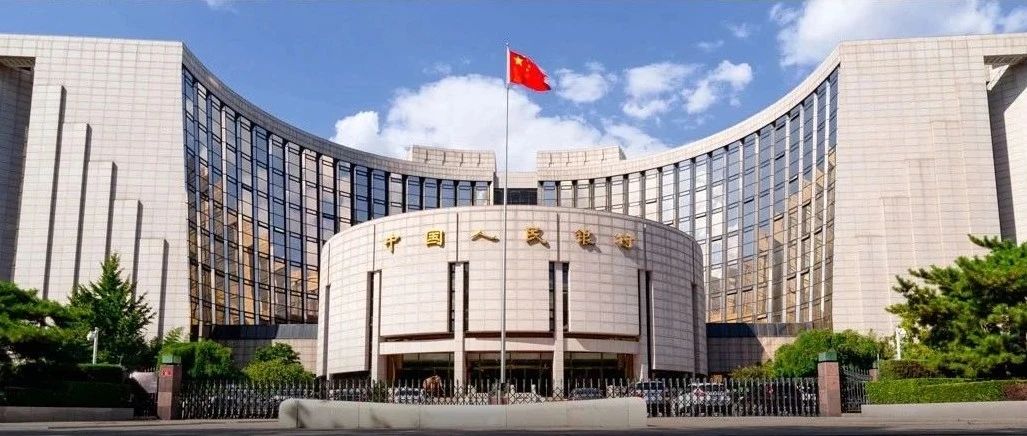
居民买房投资更趋理性!4月金融统计数据透露哪些信息
Bei Jing Shang Bao· 2025-05-14 13:47
Group 1 - The core viewpoint of the article highlights the recent financial statistics released by the central bank, indicating a significant increase in various financial metrics, including a 7.2% year-on-year growth in RMB loans and an 8.0% growth in M2 money supply [1][11] - As of the end of April, the total social financing stock reached 424 trillion yuan, reflecting an 8.7% year-on-year increase, suggesting enhanced financial support for the real economy [1][9] - The article notes that the growth in financial metrics is influenced by factors such as hidden debt replacement, seasonal overdrafts, and escalating trade tensions, which have led to a decrease in new loans in April [1][4] Group 2 - The structure of credit continues to improve, with household loans increasing by 518.4 billion yuan, while short-term loans decreased by 241.6 billion yuan, indicating a shift towards more rational investment behavior in housing [3][5] - The proportion of loans to small and micro enterprises has risen from 31% to 38%, while loans to large and medium-sized enterprises have decreased from 69% to 62%, reflecting a shift in credit allocation towards smaller businesses [5][11] - The weighted average interest rate for new corporate loans in April was approximately 3.2%, down about 4 basis points from the previous month and 50 basis points from the same period last year, indicating a favorable borrowing environment [5][11] Group 3 - The M2 money supply reached 325.17 trillion yuan at the end of April, with an 8% year-on-year growth, while M1 and M0 also showed positive growth rates [7][8] - The net cash injection in the first four months was 319.3 billion yuan, with household deposits increasing by 783 billion yuan, indicating a robust deposit growth trend [7][8] - The article emphasizes that the financial data growth is more stable and substantial following the previous year's adjustments, with a notable reduction in inflated or irregular loans [11][12] Group 4 - The government bond issuance has accelerated, contributing significantly to the growth of social financing, with net financing exceeding 5 trillion yuan in the first four months of 2025 [10][11] - The article suggests that the central bank is likely to continue implementing interest rate cuts and reserve requirement ratio reductions in the second half of the year to support economic growth [12][11] - Overall, the financial metrics indicate a strong alignment with macroeconomic policies aimed at stabilizing and boosting the economy, with expectations for continued growth in credit and social financing [11][12]

国新办,重磅预告!就在下周一
Sou Hu Cai Jing· 2025-05-14 13:42
Economic Overview - The overall trend of China's economy remains positive, with recent financial data indicating sustained growth in monetary aggregates and support for the real economy [3][4]. - As of the end of April, the M2 (broad money) balance grew by 8% year-on-year, reflecting a 1 percentage point increase from the previous month, influenced by low base effects from last year and effective counter-cyclical adjustments by the central bank [3]. Financial Indicators - In the first four months of the year, the social financing scale stock, broad money M2, and RMB loan growth rates were 8.7%, 8%, and 7.2% respectively, all exceeding the nominal GDP growth rate, indicating strong financial support for the real economy [3]. - The Consumer Price Index (CPI) rose by 0.1% month-on-month in April, while year-on-year it decreased by 0.1%. The Producer Price Index (PPI) fell by 0.4% month-on-month and decreased by 2.7% year-on-year [3]. Industrial Performance - In the first quarter, profits of industrial enterprises above designated size turned from a year-on-year decline of 3.3% to a growth of 0.8%, driven by the continued release of policy effects [4]. - The equipment manufacturing and high-tech manufacturing sectors showed significant profit support, contributing to the overall improvement in industrial economic quality and efficiency [4].

国新办,重磅预告!就在下周一
证券时报· 2025-05-14 13:33
Economic Overview - In the first quarter of 2025, China's GDP reached 31.8758 trillion yuan, showing a year-on-year growth of 5.4% and a quarter-on-quarter increase of 1.2% [3] - The primary industry added value was 1.1713 trillion yuan, growing by 3.5% year-on-year; the secondary industry added value was 11.1903 trillion yuan, increasing by 5.9%; and the tertiary industry added value was 19.5142 trillion yuan, with a growth of 5.3% [3] Financial Data - As of April 2025, the M2 money supply grew by 8% year-on-year, reflecting a 1 percentage point increase from the previous month, indicating effective monetary policy and financial support for the economy [4] - The social financing scale, M2, and RMB loan growth rates were 8.7%, 8%, and 7.2% respectively, all exceeding nominal GDP growth, demonstrating strong financial support for the real economy [4] Price Indices - In April 2025, the Consumer Price Index (CPI) rose by 0.1% month-on-month but fell by 0.1% year-on-year, while the Producer Price Index (PPI) decreased by 0.4% month-on-month and 2.7% year-on-year [4] - The core CPI showed stable growth, and some industrial prices continued to improve year-on-year, indicating a gradual recovery in market demand [4] Industrial Profit - In the first quarter of 2025, profits of industrial enterprises above designated size turned from a 3.3% decline in the previous year to a 0.8% increase, driven by policy effects and significant contributions from equipment manufacturing and high-tech manufacturing sectors [5]