银行盈利

Search documents
花旗:给予工商银行目标价7.95港元与“买入”评级 Q4业绩略逊于预期
Zhi Tong Cai Jing· 2026-03-30 07:03
Core Viewpoint - Citigroup has issued a report giving Industrial and Commercial Bank of China (ICBC) a target price of HKD 7.95 and a "Buy" rating, anticipating an injection of approximately RMB 100 billion from Central Huijin Investment [1] Group 1: Financial Performance - The company's net profit for the last year increased by 0.7% year-on-year to RMB 368.6 billion [1] - The pre-provision profit grew by 1.9% year-on-year to RMB 554.5 billion, slightly below Citigroup's expectations [1] - In Q4, the pre-provision profit rose by 3% year-on-year, benefiting from an improved cost-to-income ratio [1] Group 2: Future Projections - The anticipated dilution from the capital injection is expected to reduce earnings per share by approximately 3% to 4%, which is lower than that of Agricultural Bank of China [1] - After considering potential dilution, ICBC's H-shares are projected to correspond to a price-to-book ratio of 0.52 times for 2026, with a forecasted dividend yield of 5.2%, indicating attractive valuation [1] Group 3: Quarterly Performance - In Q4, the net profit increased by 1.9% year-on-year, a slowdown compared to Q3's growth of 3.3%, primarily due to rising credit costs, partially offset by a decrease in tax rates [1]

总资产超2.3万亿,这家银行中期分红提案遭过半股东反对
Xin Lang Cai Jing· 2026-02-05 10:14
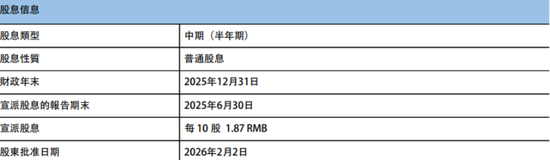
Core Viewpoint - Huishang Bank held its first extraordinary shareholders' meeting of 2026, where a proposal for a cash dividend was introduced but ultimately withdrawn due to insufficient support from shareholders [1][3][5]. Group 1: Shareholders' Meeting - The extraordinary shareholders' meeting was convened by the board and presided over by Executive Director Kong Qinglong, with several directors in attendance [1][2]. - A temporary proposal was introduced by shareholders for a cash dividend of 1.87 RMB per 10 shares, totaling 2.597 billion RMB, which would account for 30.06% of the bank's net profit for the first half of 2025 [3][4][16]. - The proposal was ultimately rejected, with 25.55% of shareholders in favor, 50.45% against, and 23.99% abstaining from the vote [5][18][19]. Group 2: Dividend History and Financial Performance - Huishang Bank's dividend payout ratio has increased over recent years but remains lower than some peers, with ratios of 13.37%, 14.5%, and 15% from 2022 to 2024 [8][20]. - For the first half of 2025, the bank reported operating income of 21.157 billion RMB, a year-on-year increase of 2.25%, and a net profit of 9.328 billion RMB, up 3.81% [10][20]. - The bank's net interest income faced pressure, decreasing by 1.06% to 14.530 billion RMB, with a net interest margin of 1.37% and a net interest yield of 1.55%, both down from the previous year [10][11][20]. Group 3: Asset Growth and Challenges - As of the end of September 2025, Huishang Bank's unaudited total assets reached approximately 2.3 trillion RMB, reflecting a growth of 14.1% since the beginning of the year [13][23]. - The bank faces challenges in maintaining profitability levels despite ongoing asset expansion, particularly in traditional lending and deposit operations [12][21][22].

Dime Community Bancshares, Inc. (NASDAQ: DCOM) Sees Positive Analyst Outlook and Strong Earnings
Financial Modeling Prep· 2026-01-22 23:00
Core Viewpoint - Dime Community Bancshares, Inc. (NASDAQ: DCOM) has demonstrated strong financial performance, exceeding market expectations, and is positioned for potential growth with a favorable price target set by analysts [2][4][6]. Financial Performance - The company reported an earnings per share (EPS) of $0.79 for the quarter, surpassing analysts' estimates of $0.70 by $0.09 [4]. - Dime Community generated revenue of $123.85 million, exceeding the expected $118.14 million, indicating robust financial health [4]. - The return on equity stands at 7.81%, with a net margin of 8.72%, reflecting effective management and profitability [5]. Stock Performance - DCOM recently reached a new 52-week high, peaking at $34.45, with the last trading price at $32.72, showing a significant increase from the previous close of $30.12 [3]. - The stock's trading volume exceeded 1.1 million shares, indicating strong investor interest and confidence in the company's prospects [3]. Analyst Outlook - Peter Winter from D.A. Davidson set a price target of $39 for DCOM, suggesting a potential upside of approximately 14.03% from its trading price of $34.20 [2][6]. Shareholder Value - The company announced a quarterly dividend of $0.25 per share, amounting to an annual dividend of $1 per share, payable on January 23rd to investors recorded by January 16th [5][6].


Truist Shares Rise 2% Despite Earnings Miss on One-Time Charges
Financial Modeling Prep· 2026-01-21 21:57
Core Viewpoint - Truist Financial's fourth-quarter earnings fell short of analyst expectations, yet the company's shares rose approximately 2% intra-day, indicating market resilience despite disappointing results [1]. Financial Performance - Truist reported a net income available to common shareholders of $1.29 billion, equating to $1.00 per diluted share, which missed estimates of $1.09 per share [2]. - The bank's revenue totaled $5.25 billion, below the consensus forecast of $5.31 billion [2]. - The results were negatively impacted by a $130 million legal accrual and $63 million in severance costs, which collectively reduced earnings by $0.12 per share [2]. Underlying Trends - Despite the headline miss, the bank reported improving underlying trends, with net interest income increasing by 1.9% sequentially to $3.75 billion [3]. - The net interest margin expanded by six basis points to 3.07% [3]. - Average loans held for investment grew by $4.3 billion, or 1.3%, reflecting broad-based loan growth [3]. - Compared to the year-ago period, revenue rose by 5.2% from $5.06 billion [3].


利润亮眼但有隐忧:摩根大通Q4投行业务低于预期
Jin Shi Shu Ju· 2026-01-13 12:12
Group 1 - The core point of the article is that JPMorgan Chase's investment banking revenue unexpectedly declined in the fourth quarter, contrary to the company's previous expectations for growth [1][2] - The investment banking segment's performance was primarily affected by a 2% decline in bond underwriting fees, while analysts had anticipated a 19% increase in this revenue [2] - JPMorgan Chase reported a net profit of $57 billion for the year, which, although impressive, did not surpass the record set in 2024, marking the highest annual profit in the bank's history [3] Group 2 - In the fourth quarter, the bank's loan volume increased by 4% quarter-over-quarter, and net interest income grew by 7% year-over-year [3] - The company expects net interest income to reach approximately $103 billion by 2026 [3] - JPMorgan Chase reiterated its forecast for total expenses to be around $105 billion for the year, with the primary driver of increased expenses being related to business volume and growth [3]
12.8万亿天量提前还贷!老百姓扛不住,楼市救市,这次真的要来了
Sou Hu Cai Jing· 2025-12-29 13:14
Core Viewpoint - The article highlights a significant shift in the financial ecosystem due to a decline in national mortgage balances despite high new home sales, driven by a wave of early mortgage repayments totaling 12.8 trillion yuan, raising questions about consumer behavior and the effectiveness of market rescue policies [1][29]. Group 1: Mortgage Trends - By the end of 2021, the national personal mortgage balance reached a historical high of 38.32 trillion yuan, but by mid-2025, it is projected to drop to 37.74 trillion yuan, indicating a persistent decline [3]. - Over the past four years, new home sales have consistently remained above 10 trillion yuan annually, accumulating over 40 trillion yuan, yet the mortgage balance has decreased by 600 billion yuan [5][3]. Group 2: Early Repayment Phenomenon - The estimated early repayment amount of 12.8 trillion yuan reflects a conscious decision by households to pay off loans earlier, driven by lower interest rates and a desire for financial security amid declining property values [5][10]. - Many homeowners are opting for early repayments despite lower mortgage rates (as low as 3.5%), indicating a preference for locking in guaranteed returns rather than facing potential losses from declining property values [7][8]. Group 3: Impact on Banks - Personal mortgages constitute about 40% of banks' overall loan business, which has historically been a stable income source for banks; however, the current trend of early repayments and declining property values is eroding this stability [14][12]. - The net interest margin for banks has fallen to approximately 1.43%, below the international warning line of 1.8%, indicating a weakening of banks' profitability and risk-bearing capacity [16]. Group 4: Policy Responses - Starting in the second half of 2024, various policies have been introduced to stabilize the housing market, including lowering down payment ratios and adjusting mortgage rates, aimed at preventing further market decline [22][24]. - The early repayment trend has begun to cool, with a noticeable reduction in the decline of mortgage balances in 2025, suggesting that policy measures are having a stabilizing effect on the market [24]. Group 5: Future Considerations - The future trajectory of the housing market will depend on three key variables: banks' ability to recover profitability, the reliance of local governments on land sales for revenue, and the willingness of consumers to invest in housing rather than repay loans [26][28]. - The ongoing early repayment trend signifies a critical choice made by households during a period of property value adjustment, which is reshaping the banking revenue structure and prompting accelerated policy interventions [29].

Why Is Deutsche Bank (DB) Down 1.3% Since Last Earnings Report?
ZACKS· 2025-11-28 17:32
Core Viewpoint - Deutsche Bank reported a year-over-year increase in earnings and revenues for Q3 2025, but faced challenges with rising expenses and mixed performance across its business segments [2][3][4]. Financial Performance - Q3 2025 earnings attributable to shareholders were €1.56 billion ($1.82 billion), up 7% year over year [2]. - Profit before tax reached a record €2.4 billion ($2.8 billion), an 8% increase from the previous year, with a 34% increase when excluding prior-year litigation provisions [3]. - Net revenues were €8 billion ($9.4 billion), reflecting a 7.2% year-over-year growth [4]. - Non-interest expenses rose to €5.2 billion ($6 billion), a 9.2% increase from the prior year [4]. - Provision for credit losses decreased to €417 million ($486 million), down 15.5% year over year [4]. Segment Performance - Corporate Bank revenues were €1.8 billion ($2.1 billion), down 1.4% year over year due to declines in Institutional Client Services and Business Banking [5]. - Investment Bank revenues increased to €2.9 billion ($3.5 billion), an 18% rise driven by growth in Fixed Income and Currencies, and Equity Origination & Advisory [5]. - Private Bank revenues were €2.4 billion ($2.8 billion), up 4.1% year over year [6]. - Asset Management revenues rose to €734 million ($855.5 million), an 11.2% increase due to higher performance and transaction fees [6]. - Corporate & Other segment reported revenues of €99 million ($115.4 million), down 36.9% from the prior year [6]. Capital Position - Common Equity Tier 1 (CET1) capital ratio improved to 14.5% as of September 30, 2025, up from 13.8% a year ago [7]. - The leverage ratio remained stable at 4.6% on a fully loaded basis [7]. 2025 Outlook - Deutsche Bank aims for €32 billion in revenues for 2025, aligning with a CAGR target of 5.5-6.5% [9]. - Total costs are expected to be €20 billion, with provisions normalizing to €350-400 million per quarter [9][10]. - The post-tax return on average tangible equity is projected to exceed 10%, with a cost/income ratio below 65% [10]. Market Sentiment - There has been an upward trend in estimates for Deutsche Bank, indicating positive market sentiment [11][13]. - The stock has a Zacks Rank 1 (Strong Buy), suggesting expectations for above-average returns in the coming months [13].


10月社融信贷解读
2025-11-14 03:48
Summary of Key Points from Conference Call Industry Overview - The conference call primarily discusses the state of the Chinese banking sector and the broader financial landscape, particularly focusing on social financing (社融) and credit data for October 2025. Core Insights and Arguments 1. **Social Financing Data**: In October, new social financing amounted to 800 billion yuan, marking the lowest level in nearly a decade and falling short of market expectations, primarily due to a year-on-year decrease of 560 billion yuan in government bonds, indicating issues with fiscal spending timing [1][2][4]. 2. **Loan Performance**: New RMB loans totaled 220 billion yuan, a year-on-year decrease of 280 billion yuan. Household loans decreased by 520 billion yuan, reflecting weak mortgage demand due to sluggish real estate sales, while mortgage rates stabilized between 3.1% and 3.3% [1][5]. 3. **Corporate Loan Demand**: There remains insufficient demand for medium to long-term corporate loans, although financing rates for emerging industries have slightly increased, indicating a willingness among companies to bear higher financing costs [1][6][7]. 4. **Deposit Trends**: The phenomenon of "deposit migration" continues, with household deposits decreasing by 770 billion yuan year-on-year, while non-bank financial institution deposits increased by the same amount, suggesting a shift of funds from household savings to equity markets [1][8]. 5. **Banking Sector Performance**: In the first three quarters, listed banks reported a net profit growth of 1.6% year-on-year, with improvements across various types of banks. The asset expansion has helped offset declining interest margins, and the reduction in impairment losses has positively impacted profits [1][11][12]. 6. **Future Outlook for Banking**: The banking sector is expected to maintain stable performance for the year, driven by asset expansion, growth in non-interest income, and reduced impairment losses. However, uncertainties related to bond market fluctuations and external macroeconomic events could impact credit costs [1][12][13]. 7. **Credit Quality**: As of the end of Q3, the non-performing loan (NPL) ratio for listed banks was stable at 1.23%. However, there are concerns regarding the rising overdue rates in retail loans and potential impacts on asset quality due to adjustments in loan support policies for real estate developers [1][20][21]. 8. **Capital Adequacy**: By the end of Q3, the core capital adequacy ratio for listed banks was 10.55%, showing an increase from the previous year, supported by government injections and favorable stock performance. This stability in capital adequacy is expected to sustain dividend payouts [1][23][24]. Other Important Insights - **Market Reaction**: The market's focus on social financing data has diminished due to the significant year-on-year decreases observed, particularly since Q2. The high base effect from previous years continues to influence current credit data [2]. - **Investment Trends**: Despite the Shanghai Composite Index reaching a ten-year high of 4,000 points, the ratio of household deposits to A-share market capitalization remains around 160%, indicating that large-scale retail investment has not yet materialized [1][10]. - **Non-Interest Income**: Non-interest income for listed banks increased by 4.6% year-on-year, benefiting from improved wealth management-related revenues and favorable capital market conditions [1][17]. This summary encapsulates the critical points discussed in the conference call, providing a comprehensive overview of the current state and outlook of the banking sector and social financing in China.
Why Is Hancock Whitney (HWC) Up 1% Since Last Earnings Report?
ZACKS· 2025-11-13 17:31
Core Viewpoint - Hancock Whitney's Q3 2025 earnings exceeded estimates, driven by growth in non-interest income and net interest income (NII), despite facing challenges from higher expenses and lower deposit balances [2][4][6]. Financial Performance - Earnings per share for Q3 2025 were $1.49, surpassing the Zacks Consensus Estimate of $1.41, and reflecting a 12% increase year-over-year [2]. - Net income reached $127.5 million, a 10.3% rise from the previous year, compared to an estimate of $119.5 million [3]. - Total revenues were $385.7 million, up 4.9% year-over-year, but fell short of the Zacks Consensus Estimate of $387.9 million [4]. Income and Expenses - Non-interest income totaled $106 million, marking a 10.5% increase, driven by growth in nearly all components except other income [5]. - Total non-interest expenses rose 4.4% to $212.8 million, slightly below the projected $217.4 million [5]. - The efficiency ratio improved to 54.10% from 54.42% in the prior year, indicating enhanced profitability [5]. Loan and Deposit Trends - Total loans stood at $23.6 billion, a slight increase from the prior quarter, while total deposits decreased by 1.3% to $28.7 billion [6]. - Management anticipates low single-digit growth in deposit balances for the fourth quarter, with public deposits expected to increase by $200-$300 million [12]. Credit Quality - The provision for credit losses was $12.7 million, down 31.9% from the previous year, indicating improved credit quality [7]. - Net charge-offs were 0.19% of average total loans, a decrease of 11 basis points from the prior year [7]. Capital Ratios and Profitability - As of September 30, 2025, the Tier 1 leverage ratio improved to 11.46%, and the common equity Tier 1 ratio rose to 14.08% [8]. - Return on average assets increased to 1.46% from 1.32%, while return on average common equity rose to 11.58% from 11.43% [8]. Share Repurchase Activity - In the reported quarter, Hancock Whitney repurchased 0.66 million shares at an average price of $60.45 per share [10]. Future Outlook - Management expects NII to grow at the lower end of the 3-4% range in Q4 2025, with a modest expansion in net interest margin [13]. - Adjusted non-interest expenses are projected to rise 4-5% in 2025, with plans to hire additional personnel for revenue generation [14]. - The company aims for an adjusted return on assets between 1.40% and 1.50% by Q4 2027 [16]. Market Sentiment - The stock has a Zacks Rank of 3 (Hold), indicating expectations for an in-line return in the coming months [20].


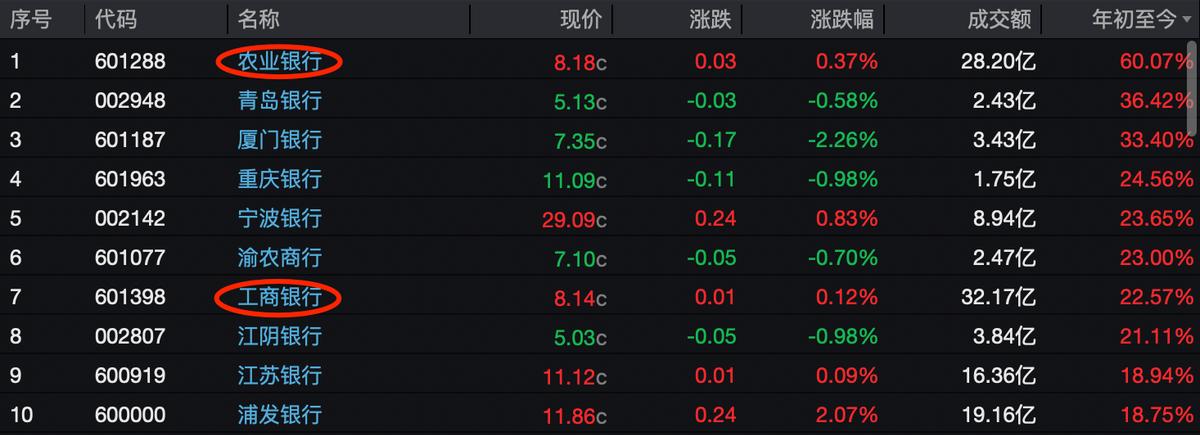
六大行日赚39亿,农行利润增速领跑,中行营收增长第一
3 6 Ke· 2025-11-05 23:51
Core Insights - The six major state-owned banks in China reported a total operating income of 27,205.35 billion yuan for the first three quarters of 2025, representing a year-on-year growth of 1.87% [1] - The total net profit attributable to shareholders reached 10,723.43 billion yuan, with a year-on-year increase of 1.22%, equivalent to an average daily profit of 39.14 billion yuan [1] - Agricultural Bank led in net profit growth at 3.03%, while China Bank had the highest revenue growth at 2.69% [1][4] Financial Performance - The total asset size of the six banks reached 217.97 trillion yuan by the end of Q3 2025, marking a 9.16% increase from the previous year [2][9] - Total loans amounted to 127.14 trillion yuan, up 8.54%, while total deposits were 149.76 trillion yuan, reflecting a 6.92% growth [2][12] - The net interest margin for the banks faced pressure, with a decline noted across the board, although non-interest income showed growth, with five banks achieving double-digit increases [1][7] Revenue and Profit Breakdown - In terms of revenue, the banks achieved the following figures: Industrial Bank (6,400.28 billion yuan), Construction Bank (5,737.02 billion yuan), and Agricultural Bank (5,508.76 billion yuan) [4][5] - Non-interest income for the banks was as follows: Industrial Bank (1,666.12 billion yuan), Construction Bank (1,460.96 billion yuan), and Agricultural Bank (1,235.68 billion yuan), with Agricultural Bank showing the highest growth rate at 20.65% [7] - Investment income also saw significant growth, with Construction Bank leading at 150.55% year-on-year [8] Asset Quality and Capital Adequacy - The overall asset quality remained stable, with five banks reporting a decrease in non-performing loan ratios compared to the end of the previous year [15] - The highest non-performing loan ratio was recorded by Postal Savings Bank at 0.94%, while Agricultural Bank had the highest provision coverage ratio at 295.08% [16][17] - Core Tier 1 capital adequacy ratios were robust, with Construction Bank at 14.36%, the highest among the six banks [18] Dividend and Shareholder Returns - The rolling dividend yield for the banks was above 2.5%, significantly higher than the 5-year fixed deposit rates, with the highest yield from the Transportation Bank at 4.10% [1][18]