黄金交易税收政策

Search documents
从交易所购入标准黄金,实物交割出库后实际用途发生改变的如何处理?
蓝色柳林财税室· 2025-11-22 01:22
Tax Policy - The announcement from the Ministry of Finance and the State Administration of Taxation states that transactions of standard gold through the Shanghai Gold Exchange and Shanghai Futures Exchange will be exempt from value-added tax (VAT) for sellers if there is no physical delivery [7][8] - For members purchasing standard gold for investment purposes, VAT will be refunded immediately, and they will also be exempt from urban maintenance and construction tax and education fees [7] - The policy will be effective from November 1, 2025, until December 31, 2027, with applicability based on the timing of physical delivery [8] Employment Tax Deductions - Companies hiring disabled employees can enjoy a 100% wage deduction for tax purposes, provided they meet specific conditions, including signing a labor contract of at least one year and ensuring the employees are actually working [9][13] - Companies must also pay the minimum wage as approved by the provincial government and ensure that social insurance contributions are made for the disabled employees [18][22] - Wage deductions can only be claimed during the annual tax return process, not during the prepayment of corporate income tax [18][21]


黄金股全员大赚!11只金矿股前三季度合计净赚524亿
Di Yi Cai Jing· 2025-11-04 11:02
Core Insights - The performance of gold mining stocks has significantly improved, with 11 companies in the A-share market reporting a combined net profit exceeding 52.4 billion yuan in the first three quarters of 2025, driven by rising gold prices and increased production [2][3]. Financial Performance - In the first three quarters of 2025, the 11 gold mining companies achieved a total revenue of 545.15 billion yuan, representing an average year-on-year growth of 47%, while the net profit reached 52.43 billion yuan, with an average growth of 52% [3][4]. - All companies in the sector reported positive year-on-year growth in both revenue and net profit [3]. Key Company Highlights - Zijin Mining (601899.SH) led the sector with a revenue of 254.2 billion yuan and a net profit of 37.86 billion yuan, marking a year-on-year increase of 10.33% and 55.45% respectively [5]. - Zhaojin Mining (000506.SZ) exhibited the highest net profit growth, with a net profit increase of 191.2% year-on-year, driven by higher sales volume and prices [5][6]. - Western Gold (601069.SH) also reported substantial growth, with revenue and net profit increasing by 106.2% and 168.04% respectively [5]. Market Dynamics - The surge in gold prices, which rose by 40% in the first three quarters of 2025, has been a key factor in the strong performance of gold mining stocks, alongside increased production [6][10]. - The market is currently experiencing discussions regarding whether the benefits for gold stocks have been fully realized, with concerns about the sustainability of high profits if gold prices stabilize or decline [8][9]. Future Outlook - The new gold trading tax policy effective from November 1 is expected to have a limited impact on overall gold demand but may influence the structure of demand, potentially benefiting trading volumes in financial products [9]. - Analysts remain optimistic about the long-term support for gold prices due to macroeconomic conditions, including the ongoing inflationary environment and expectations of further interest rate cuts by the Federal Reserve [10].





9万多的金条现在10多万!实探:多个门店和品牌全面上调售价
Di Yi Cai Jing· 2025-11-03 22:27
Core Insights - The Ministry of Finance and the State Taxation Administration announced new tax policies related to gold trading, aiming to standardize transactions [1] - Gold prices have increased significantly, with the price per gram rising from 932 yuan to 1030 yuan, and the price of a 100-gram gold investment bar increasing from over 90,000 yuan to 100,000 yuan [1] - Experts suggest that the new regulations will lead to more standardized trading practices in the gold market [1]
9万多的金条现在10多万!记者实探:多个门店和品牌全面上调售价
Sou Hu Cai Jing· 2025-11-03 17:37
Core Viewpoint - The Ministry of Finance and the State Taxation Administration have announced new tax policies related to gold transactions, leading to a significant increase in gold prices in the market [2] Group 1: Tax Policy Impact - The new tax policies are expected to standardize gold trading practices [2] - The announcement has resulted in a rise in the prices of investment gold bars and gold jewelry across various stores [2] Group 2: Price Changes - The price of gold has increased from 932 yuan per gram over the weekend to 1030 yuan per gram [2] - The price of a 100-gram investment gold bar has risen from over 90,000 yuan to 100,000 yuan [2]

9万多的金条现在10多万!记者实探:多个门店和品牌全面上调售价
第一财经· 2025-11-03 15:17
Core Viewpoint - The recent announcement by the Ministry of Finance and the State Taxation Administration regarding tax policies related to gold trading aims to standardize and regulate the gold market in China, leading to increased prices for gold products [3][5]. Group 1: Tax Policy Impact - The new tax policies are expected to make gold trading more standardized and regulated, which could enhance market transparency and investor confidence [5]. Group 2: Price Changes - Following the announcement, gold prices have seen a significant increase, with the price per gram rising from 932 yuan to 1030 yuan, and the price of a 100-gram gold investment bar increasing from over 90,000 yuan to 100,000 yuan [4].

黄金交易税收新规落地,周大福、老铺黄金股价大跌
Sou Hu Cai Jing· 2025-11-03 13:11
Group 1 - China's largest thermal power plant, Beilun Power Plant, has commenced full-capacity operation, achieving a total installed capacity of 7.34 million kilowatts, capable of generating approximately 176 million kilowatt-hours of electricity daily, meeting the needs of over 20 million households [1][1] - The annual electricity generation is expected to exceed 40 billion kilowatt-hours, significantly enhancing the power supply security in the East China region [1] Group 2 - The stock prices of major gold retailers, including Chow Tai Fook and Lao Pu Gold, have dropped over 7% in the Hong Kong market, with other companies like Chow Sang Sang and Luk Fook also experiencing declines [2][2] - The recent announcement by the Ministry of Finance and the State Taxation Administration regarding tax policies on gold trading has contributed to the decline, alongside a drop in international gold prices, which fell below $3,970 per ounce [2][2] Group 3 - Wang Guobin, the founder and general manager of Quan Guo Fund, has passed away, leading to a management change with the chairman taking over his responsibilities [4] - Wang Guobin had a significant career in investment banking and founded Quan Guo Fund in 2022, focusing on various asset management services [4] Group 4 - Shanghai Disneyland announced plans to build a fourth themed hotel, which will be adjacent to the main entrance of the park, along with new shopping and dining facilities [6] - This project is part of a broader expansion that includes a third themed hotel and the ninth themed area of the park, marking a significant milestone as the park recently welcomed its 100 millionth visitor [6] Group 5 - OpenAI's CEO Sam Altman denied reports of the company planning to go public next year, stating that there is no specific date or decision from the board regarding an IPO [8] - Altman emphasized that OpenAI's actual revenue exceeds the reported $130 billion, countering skepticism about the company's financial commitments [8] Group 6 - The Asian Infrastructure Investment Bank (AIIB) announced plans to establish an office in Hong Kong to support its growing business needs, with the Hong Kong government expressing full support for this initiative [10]


黄金税收新政对个人旧金饰无影响 零售金价或现短期波动
2 1 Shi Ji Jing Ji Bao Dao· 2025-11-03 11:20
Core Viewpoint - The new tax policy for gold trading in China, effective from November 1, 2025, aims to categorize gold transactions into "investment" and "non-investment" uses, establishing different VAT treatments for each category, thereby enhancing the regulation and transparency of gold trading in the country [3][10]. Tax Policy Highlights - The new regulation distinguishes between "investment" and "non-investment" uses of gold, which is a significant breakthrough in tax classification [3][5]. - Investment use includes direct sales and the production of gold bars, ingots, and legal tender with a purity of 99.5% or higher, while non-investment use covers items like jewelry and industrial gold [5][6]. VAT Treatment - For investment purposes, VAT will be refunded immediately upon physical delivery, and no city maintenance or education fees will be levied, allowing buyers to fully deduct input VAT [7]. - For non-investment purposes, VAT will be exempted, but buyers can only deduct input VAT at a lower rate of 6%, which increases the tax burden on purchasing enterprises [7][11]. Trading Environment - The new policy encourages trading on national platforms like the Shanghai Gold Exchange by providing significant tax advantages for transactions conducted there, as opposed to off-exchange transactions which incur higher VAT rates [9][10]. - Off-exchange transactions will be subject to a 13% VAT for general taxpayers and 3% for small-scale taxpayers, while transactions through the exchange will be exempt from VAT [9][10]. Impact on Retail Market - The new regulations are expected to have minimal impact on individual sales of used gold jewelry, which remain exempt from VAT, but frequent sellers may be classified as business operators and subject to VAT [11]. - Retail gold prices may experience short-term fluctuations due to the new tax policy, as upstream costs may be passed down to consumers, influenced by international gold prices and market dynamics [11][12].

“买金”暂停,两大国有银行最新公告
Zheng Quan Shi Bao· 2025-11-03 11:09
Core Viewpoint - The recent announcement by Industrial and Commercial Bank of China (ICBC) to suspend certain gold accumulation business has drawn market attention, following new tax regulations on gold transactions issued by the Ministry of Finance and the State Administration of Taxation [1][3]. Group 1: Business Adjustments - ICBC announced the suspension of its "Ruyi Gold Accumulation" business effective November 3, 2025, which includes the cessation of new account openings, active accumulation, new regular accumulation plans, and requests for physical gold withdrawals, while existing plans and redemptions remain unaffected [3]. - China Construction Bank (CCB) also announced similar suspensions for its "Easy Gold" business, effective from the same date, impacting real-time purchases, new investment plans, and physical gold exchanges, but not affecting existing clients [1][3]. Group 2: Regulatory Changes - The new tax policy, effective from November 1, 2025, to December 31, 2027, introduces specific tax rules for gold transactions, including VAT exemptions for certain transactions conducted through designated exchanges [3][4]. - The policy differentiates between transactions that involve physical delivery and those that do not, with varying VAT implications based on the investment nature of the gold [3][4]. Group 3: Market Implications - Analysts suggest that the suspension of certain gold accumulation services by banks is a response to macroeconomic policy changes and increased market risks due to international economic conditions [4]. - The new regulations may slow down the previously booming gold trading market, as evidenced by reports of gold service providers temporarily halting trading activities [6][7]. - Small and medium-sized gold merchants may face structural challenges due to increased costs and compliance pressures stemming from the new tax regulations, which could affect their competitive positioning [7]. Group 4: Consumer Impact - Ordinary consumers may change their purchasing behavior, favoring standardized gold products that benefit from tax exemptions, while weighing factors such as channel, brand, and price when buying jewelry [7]. - The differentiation in gold product attributes may lead to a clearer understanding among consumers regarding investment versus consumption, potentially reshaping market dynamics [7].



金条突然涨价、下架,黄金税改后零售金价或短期波动
2 1 Shi Ji Jing Ji Bao Dao· 2025-11-03 10:13
Core Viewpoint - Recent changes in tax policies regarding gold trading in China have led to a significant increase in the prices of investment gold bars, with many brands raising prices above 1000 yuan per gram, and some exceeding 1200 yuan per gram. This is influenced by the new tax regulations set to take effect from November 1, 2025, which categorize gold transactions into "investment" and "non-investment" uses, impacting tax treatment and market dynamics [1][4][10]. Tax Policy Highlights - The new tax policy distinguishes between "investment" and "non-investment" uses of gold, marking a significant regulatory shift [4][6]. - Investment use includes direct sales and the production of high-purity gold products, while non-investment use covers items like gold jewelry and industrial gold [6][8]. - For investment purposes, a "tax refund upon collection" policy will apply, exempting certain taxes, which allows buyers to fully deduct input tax, reducing initial investment costs [7][10]. - Non-investment transactions will be exempt from VAT but will have limited input tax deductions, leading to a higher effective tax burden for businesses [8][10]. Market Dynamics - The new regulations aim to encourage gold trading on regulated exchanges by creating a clear tax advantage for transactions conducted through these platforms, as opposed to off-exchange transactions [10][11]. - Off-exchange transactions will incur a VAT of 13% for general taxpayers, while transactions through exchanges will be exempt from VAT, creating a significant incentive for market participants to shift to exchange-based trading [10][11]. Consumer Impact - Ordinary consumers selling used gold jewelry will not be subject to VAT, maintaining the status quo for personal transactions [13][14]. - However, retail prices for gold jewelry may experience short-term fluctuations due to the new tax regulations, as manufacturers may pass on increased costs to consumers [16][17]. - The recent price increases in gold jewelry from brands like Chow Tai Fook are attributed to multiple factors, including international gold prices and market dynamics, alongside the potential impact of the new tax policy [16][17].

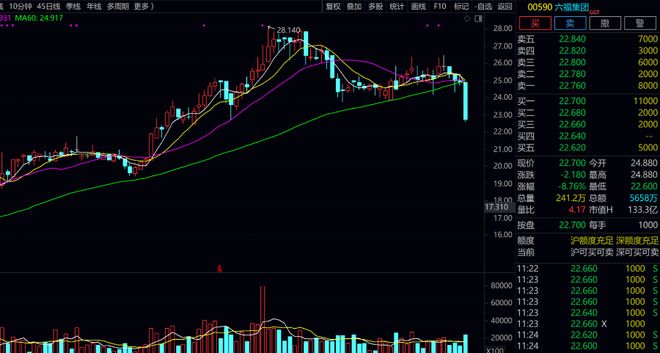
黄金交易税收政策调整 六福集团大跌近9%
2 1 Shi Ji Jing Ji Bao Dao· 2025-11-03 04:20
Core Viewpoint - The announcement by the Ministry of Finance and the State Taxation Administration regarding tax policies on gold transactions may reduce the attractiveness of investing in physical gold through non-exchange channels, leading ordinary investors to prefer gold ETFs and other exchange-traded products that offer tax benefits and investment convenience [1][3]. Summary by Relevant Sections Tax Policy Changes - The new policy states that from now until December 31, 2027, transactions of standard gold through the Shanghai Gold Exchange and Shanghai Futures Exchange will be exempt from value-added tax (VAT) for sellers [3]. - For transactions that do not involve physical delivery, the exchanges will exempt VAT; for those that do, there will be a distinction between investment and non-investment uses of standard gold, applying different VAT policies accordingly [3]. Market Impact - Following the announcement, retail gold stocks experienced significant declines, with Hong Kong-listed companies such as Luk Fook Holdings, Chow Tai Fook, and Lao Puhuang seeing drops exceeding 7%, and Luk Fook Holdings experiencing a decline of nearly 9% [5]. - A-share listed companies like Chao Hong Ji approached their daily limit down, while other companies like Zhou Dsheng and Man Ka Long also saw declines of over 2% [5]. Industry Insights - Industry experts suggest that the policy aims to enhance the regulation of the precious metals market, encouraging compliance among industry players, including institutions and retailers, to trade through exchange channels [4]. - The tax exemption for exchange-based gold transactions is expected to lower costs for institutions and the jewelry industry, promoting a more favorable tax environment for compliant trading [4].