黄金调整

Search documents
回顾近30年来黄金历次调整:持续多久?幅度多大?
Sou Hu Cai Jing· 2026-02-03 13:01
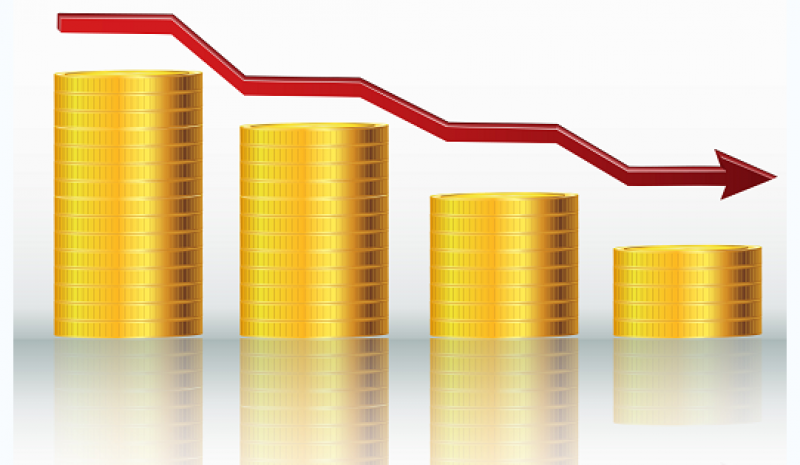
Core Viewpoint - The article discusses the historical trends of the global gold market following the collapse of the Bretton Woods system, highlighting that each major price increase in gold is typically followed by a period of adjustment with varying degrees and durations [1] Summary by Relevant Sections Historical Price Adjustments - From February 1996 to July 1999, gold prices peaked at $420 per ounce and fell to $253 per ounce, with an adjustment duration of approximately 42 months and a decline of about 40% [1] - From September 2011 to November 2015, gold prices reached a high of $1,923 per ounce and dropped to $1,045 per ounce, experiencing an adjustment period of around 51 months and a decrease of about 43% [1] - From March 2022 to November 2023, gold prices hit a peak of $2,078 per ounce and fell to $1,618 per ounce, with an adjustment lasting about 6 months and a decline of approximately 20% [1] Drivers of Price Adjustments - The adjustment from 1996 to 1999 was influenced by a booming global economy, particularly the rise of the internet economy in the U.S., leading to low demand for safe-haven assets [1] - The 2011 to 2015 adjustment was primarily driven by expectations of the Federal Reserve's exit from quantitative easing, alongside a gradual global economic recovery and reduced demand for safe-haven assets [1] - The recent adjustment from 2022 to 2023 was mainly driven by the aggressive interest rate hikes by the Federal Reserve, with recent volatility in gold prices reflecting corrections in short-term sentiment and technical factors [1] Future Outlook - The long-term upward trend in gold prices is expected to continue, with the recent price drop potentially providing a good entry point for long-term investments [1] - The core strategy for gold investment should focus on "long-term holding and risk diversification" rather than short-term speculation [1]
全球抗议美国“战争行为” 黄金调整近尾决战4300-4400
Jin Tou Wang· 2026-01-04 06:12
Group 1 - The current spot gold price is reported at $3759.40 per ounce, with an increase of $11.27 or 0.30%, and the daily high and low were $3734.55 and $3734.28 respectively [1] - The gold market experienced a significant upward trend since November, reaching a historical high of $4550 before a sharp decline due to increased margin requirements by the Chicago Mercantile Exchange, resulting in a drop to a low of $4275, a decrease of $275 [2] - The weekly chart indicates substantial selling pressure above, suggesting that the market may need to adjust, but gold remains in a bull market, with any adjustments seen as a precursor to further increases [2] Group 2 - The key resistance level for gold is identified at $4400, which has been emphasized as a critical point for potential upward movement [2] - Current short-term support is noted at $4300, which has shown strong resilience, indicating a potential for the bull market to continue if this level holds [2] - A downward breach of key support levels could lead to a significant weakening of the market, extending the adjustment period [2]
【百强透视】黄金股插水,灵宝黄金跌逾8%!黄金将进入调整?
Sou Hu Cai Jing· 2025-11-18 12:30
Market Performance - On November 18, gold stocks in Hong Kong and A-shares experienced significant declines, with Lingbao Gold (03330.HK) dropping 8.88%, Tongguan Gold (00340.HK) down 5.38%, and Zhaojin Mining (01818.HK) falling 5.08% [2][3] - In A-shares, Zhongjin Gold (600489.SH) fell 3.51%, Zhaojin Gold (000506.SZ) decreased by 3.34%, and Hunan Gold (002155.SZ) dropped 3.1% [2][3] Gold Price Trends - Spot gold prices faced heavy selling pressure, briefly falling below $4000 per ounce for the first time since November 10, marking the fourth consecutive day of decline [4][5] - As of the latest update, spot gold was reported at $4041.62 per ounce [4] Influencing Factors - The decline in gold prices and stocks is primarily attributed to a strengthening US dollar and a cooling expectation for a Federal Reserve rate cut in December [5][6] - Recent comments from regional Federal Reserve presidents opposing further rate cuts have contributed to market sentiment, emphasizing ongoing inflation concerns [6][7] Market Outlook - Short-term adjustments in the gold market are expected to continue, with institutions predicting a return to a price correction phase following previous optimistic expectations [9][10] - Despite recent declines, gold prices remain elevated, with a year-to-date increase of over 53%, supported by factors such as loose monetary policy and geopolitical tensions [11] Industry Recognition - The "Hong Kong 100 Strong" list is set to launch, highlighting the importance of the gold sector in the Hong Kong market, with companies like Zijin Mining (02899.HK) and Lingbao Gold being notable participants [12][13]


期货市场每日解析:美联储降息背后,黄金调整、原油波动,这些品种走势引爆市场!
Sou Hu Cai Jing· 2025-09-22 03:26
Market Overview - The futures market is experiencing widespread declines, with major contracts such as 20 rubber, glass, coking coal, and rubber all dropping over 2% [3] - The palm oil market has also seen a decline of 2%, while other commodities like silver, live pigs, and synthetic rubber have dropped nearly 2% [3] - The overall sentiment in the market remains unstable, with the recent interest rate cut by the Federal Reserve not providing the expected support [6] Financial Futures Sector - The stock index futures have shown volatility, with the CSI 300 index futures (IF) down 1.35% and the SSE 50 index futures (IH) down 1.40% [6] - The market is currently assessing the future interest rate path of the Federal Reserve, with a divergence in expectations among officials regarding future rate cuts [6] Precious Metals Market - The gold market is undergoing high-level adjustments, with limited upside potential due to fewer expected rate cuts from the Federal Reserve [7] - Geopolitical tensions and central banks' continued accumulation of gold support long-term demand, but rising nominal interest rates are exerting pressure on gold prices [7] Industrial Products Sector - The industrial products sector is under pressure, with copper prices declining due to less-than-expected support from the Federal Reserve's rate cut [8] - Aluminum prices have also retreated after a previous breakout, while nickel prices are finding support at lower ranges [8] Energy and Chemical Sector - The energy and chemical sector is generally weak, with methanol inventories remaining high and market sentiment declining [15] - PVC supply and demand remain weak, leading to a short-term stabilization followed by a downturn [16] Shipping and Container Market - The shipping market, particularly the European route, is experiencing significant declines, with the Shanghai export container settlement price index dropping 8.1% [19] - The current supply pressure is evident, with global container capacity exceeding 32.9 million TEU, a year-on-year increase of 8% [19] Key Focus Points for Next Week - Upcoming U.S. employment and inflation data will be critical in influencing the Federal Reserve's monetary policy direction [21] - Attention should also be given to geopolitical risks and the outcomes of other central banks' meetings [21]
贸易战的“牌”已经出完,黄金迎来大级别调整
Hua Xia Shi Bao· 2025-04-29 23:50
Group 1: Gold Market Dynamics - The spot price of gold in London surged above 350 billion yuan, followed by a significant sell-off, leading to a sharp decline the next day, with the U.S. gold ETF experiencing a record single-day redemption of -1.3 billion USD, surpassing the panic triggered by the Swiss National Bank's intervention in 2011 [2] - Despite the sell-off, there is a strong buying force from Asia, particularly from Chinese investors, which is stabilizing the bottom of the gold market. In Q1, China increased its gold holdings by 12.75 tons, and domestic gold ETF holdings grew by 23.47 tons, a year-on-year increase of 327.73% [2] - As gold prices corrected rapidly, long positions in gold futures were significantly reduced, with hedge fund managers cutting net long positions to the lowest level in over a year [2] Group 2: Economic and Market Context - The recent surge in gold prices was primarily driven by the chaos in the global economic order due to Trump's trade war, which led to a decline in the credibility of U.S. bonds and the dollar, prompting a flight to gold as a safe haven [3] - Adjacent markets have stabilized, with the dollar index remaining above 99 and U.S. stock indices gradually recovering, while the yield on the 10-year U.S. Treasury bond has decreased from 4.425% [3] - The relationship between gold and the dollar/stock market is viewed as inversely correlated, suggesting that as the dollar and stock markets stabilize, a significant adjustment in gold prices is anticipated [3] Group 3: Trade Policy Developments - Trump announced a significant reduction in the 145% tariffs on China, while maintaining that they would not drop to zero, and he will suspend the implementation of reciprocal tariffs for 90 days [4] - Various countries, particularly in Southeast Asia, have begun negotiations to mitigate the impact of U.S. tariffs, with Vietnam and Indonesia making commitments to increase imports of U.S. goods [6] - The semiconductor equipment manufacturing sector in the U.S. is facing substantial losses due to tariffs, with major companies projected to lose over 1 billion USD collectively, impacting small businesses significantly [7]