6G与AI融合

Search documents
实现6G与AI深度融合,英伟达宣布参与推进6G创新
Xuan Gu Bao· 2026-03-16 15:16
Core Insights - Nvidia is shifting its focus towards 6G infrastructure development, collaborating with leading global telecom operators to build the next generation of wireless networks based on AI-driven, open, secure, and trustworthy platforms [1] - The 6G industry is seen as a crucial direction for the deep integration of digital technology and the real economy, covering various hard-tech fields such as chips, communications, satellites, and materials, aligning well with AI sector developments [1] - 6G base stations will possess local AI computing capabilities, enabling them to provide personalized and intelligent services, thus facilitating the digital transformation across various industries [1] Industry Summary - The 6G wireless network is expected to surpass traditional connectivity functions, serving as the infrastructure for physical AI, supporting billions of autonomous machines, vehicles, sensors, and robots [1] - AI-driven terminal applications will drive the intelligent evolution of networks, with proactive deployment of network capabilities to support future application ecosystems, fostering new scenarios and market creation [1] - Relevant A-share concept stocks include Xinke Mobile-U and Zhongbei Communication, indicating potential investment opportunities in the 6G sector [1]

全球大公司要闻 | 苹果将发布新品,千问进军AI硬件领域
Wind万得· 2026-03-02 00:58
Group 1 - Apple is set to hold a spring product launch this week, with potential price reductions for new models, including a low-cost device; a touch version of the MacBook Pro is confirmed for release by the end of 2026, maintaining the independence of the Mac and iPad product lines [2] - SpaceX is considering submitting its IPO documents as early as March, aiming for a valuation exceeding $1.75 trillion and potentially raising up to $50 billion, which would make it one of the largest IPOs in recent years [2] - OpenAI's founder Altman announced a potential agreement with the U.S. Department of Defense regarding the use of its AI models, with the company retaining control over technology implementation and deployment [2] Group 2 - Nvidia plans to launch a new AI processor tailored for OpenAI and other clients, aimed at creating faster and more efficient tools; this new platform will be unveiled at the GTC developer conference in San Jose [3] - BYD reported a 35.8% year-on-year decline in vehicle sales and a 38.4% drop in production for January and February, with plans to optimize product structure and enhance supply chain efficiency [3] - Alibaba's personal AI assistant "Qianwen" is entering the AI hardware market, with plans to launch various AI hardware products globally, including AI glasses and rings, starting from March [3] Group 3 - JD.com announced that its food delivery service has served over 240 million users in its first year, capturing over 15% of the market share, with plans to expand into in-store pickup and group buying by 2026 [6] - Li Auto delivered 26,421 new vehicles in February and aims to continue optimizing its product matrix to meet diverse consumer needs [7] - NIO delivered 20,797 new vehicles in February and announced a limited-time purchase promotion for March, including low-interest plans and tax subsidies [8] Group 4 - Amazon Web Services (AWS) experienced a fire at its data center in the Middle East, causing power outages and service delays, but operations are gradually recovering [10] - Microsoft reported that Windows 11's market share has surged to nearly 75% following the end of support for Windows 10, while also collaborating with companies like Anthropic and Meta to advance AI technology [10] - Tesla increased the price of the Cybertruck dual-motor all-wheel-drive version to $69,990 and initiated road tests for its Full Self-Driving (FSD) technology in Abu Dhabi [10] Group 5 - Samsung Electronics plans to establish AI-driven factories by 2030, deploying digital twin systems and humanoid robots to enhance operational efficiency [13] - SK Hynix is set to expand its production capacity for storage devices, benefiting the supply chain in March [14] - Mitsubishi Electric and Toshiba are negotiating on power chip matters, which could strengthen their competitiveness in the semiconductor sector [15]






第四届6G前沿技术与趋势论坛在京举办
Zhong Guo Jing Ji Wang· 2025-12-19 01:49
Group 1 - The fourth 6G Frontier Technology and Trends Forum was held in Beijing, focusing on the development trends of the 6G industry and the integration of sensing, computing, and intelligence technologies [1] - Beijing is highlighted as a hub for original innovation, particularly in AI, communications, and chips, with suggestions to tackle core technologies, create open experimental networks, and foster cross-domain application innovation [1] - China Mobile emphasized the need for global consensus and international cooperation to overcome development bottlenecks and suggested strengthening demand-driven approaches, promoting joint technology research, and accelerating ecosystem development [1] Group 2 - Reports presented at the forum included discussions on the electromagnetic world model for wireless networks, enhancing network performance and reducing costs through AI applications, and improving perception capabilities in complex environments [2] - The concept of AI Native networks (AIN) was introduced as a solution to structural contradictions in the integration of AI and communications for the 6G era [2] - A roundtable discussion focused on the paradigm shift in semantic communication and its integration with AI, exploring new business models and ecological frameworks [3] Group 3 - Two major R&D achievements were announced: a semantic satellite video inspection system for power networks that enhances inspection efficiency and a 6G network collaborative sensing platform that significantly improves tracking precision while minimizing resource costs [3] - A signing ceremony took place involving multiple organizations to promote technology sharing, result transformation, and joint research, aimed at supporting high-quality development of 6G [4] - The forum was guided by the Beijing Science and Technology Association and organized by several institutions, indicating a collaborative effort in advancing 6G technology [4]
新华网科技观察丨6G与AI融合会带来什么?
Xin Hua Wang· 2025-12-18 09:31
Core Insights - The integration of 6G and AI is not merely a parallel development but a deep synergy that creates a digital foundation for the intelligent era [2][4] - The national strategic deployment supports the future development of 6G and accelerates its integration with AI, as highlighted in the "14th Five-Year Plan" [2] Group 1: 6G and AI Integration - The consensus in the industry is that 6G represents more than just an upgrade from 5G; it is a collaborative innovation platform that integrates AI, communication, and perception technologies [4] - The year 2025 is anticipated to be the "standard year" for 6G, with the integration of AI becoming a prominent research focus [4] - The 3rd Generation Partnership Project (3GPP) emphasizes that AI design will be a critical consideration in the standardization of 6G networks [4] Group 2: Applications and User Demands - The integration of AI into 6G is a core demand from users, with applications expected to span across various sectors, including smart terminals and intelligent vehicles [7] - Unlike previous generations, 6G is defined by its core attribute of "intelligence," with deep integration with AI being essential for unlocking its potential [7] - The industry anticipates that AI will enhance network performance while 6G will provide new infrastructure for AI applications [7] Group 3: Challenges and Solutions - There are challenges in achieving effective collaboration between AI, communication, and computing, which are necessary for high-bandwidth, low-latency support for AI model training [8] - The lack of a collaborative innovation platform for 6G and AI integration poses a challenge for aligning research and industry applications [8][9] - Open-mindedness and determination are required to overcome technical challenges and seize industry opportunities [9] Group 4: Future Prospects - The goal of 6G extends beyond speed and connectivity to achieving a qualitative transformation from "Internet of Everything" to "Intelligent Connectivity" [11][12] - Innovations in terminal technology are expected to be a key driver for the 6G industry, with future terminals likely to possess AI capabilities [12] - The anticipated commercial application of 6G in China is expected to start in 2030, with a projected trillion-yuan market by 2035 [12]


专家学者北京共话6G创新与应用:预计2030年商用
Zhong Guo Xin Wen Wang· 2025-12-17 12:23
Core Insights - The fourth 6G Frontier Technology and Trends Forum was held in Beijing, focusing on core technology breakthroughs and industry ecosystem development for global 6G innovation and applications [1][2] - 6G is recognized as a strategic high ground in global technological competition, with major economies implementing policies to strengthen their 6G strategic layout since 2024 [1] - China has established a collaborative innovation system led by the government and enterprises, positioning itself at the forefront of global 6G development [1] Group 1: Industry Trends - 6G is expected to be commercially available by 2030, with a focus on core technology breakthroughs and the establishment of global standards [2] - The integration of 6G with AI is anticipated to create a new ecosystem that meets diverse terminal demands and leverages innovation benefits [2] - 6G will initially serve industries with lower technical requirements before expanding to high-value sectors like low-altitude economy and autonomous driving [1][2] Group 2: Challenges and Opportunities - Despite progress in 6G development, the industry faces challenges such as insufficient consensus, ongoing standard formulation, and a need for richer application scenarios [3] - There is a call for accelerated ecosystem co-construction and expanded international cooperation to build an open and mutually beneficial 6G industry ecosystem [3] - The emphasis on foundational theoretical innovation and core AI capabilities is crucial for advancing the integration of AI and communication technologies [2]
6G预计2030年实现商用,北京超前布局6G成果亮相
Bei Jing Ri Bao Ke Hu Duan· 2025-12-17 09:23
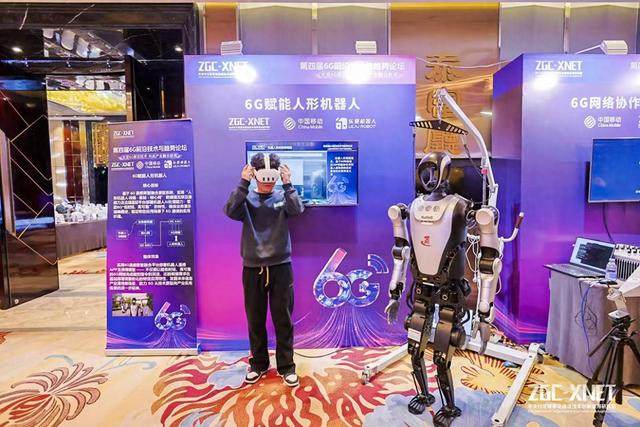
Core Insights - The 6G technology is entering an important stage of industrialization, with applications and scenarios driving its development, expected to be commercially available by 2030 [2] - 6G is characterized by high speed, low latency, wide coverage, and intelligent integration, with theoretical peak rates potentially reaching 10 to 100 times that of 5G, and in some scenarios, even up to 1000 times [2] - The development of 6G must be application-driven, likened to knowing what vehicles will run on a road before constructing it [2] Group 1 - The Beijing Key Laboratory of Wireless Cloud Network Technology announced two major research achievements: a semantic satellite video inspection system for power networks and a 6G collaborative sensing platform and dataset [2] - The semantic satellite video inspection system utilizes drones for autonomous flight and high-definition video transmission via satellites, addressing challenges in power inspection [2] - The 6G collaborative sensing platform employs an integrated design and a three-station collaborative sensing model to achieve high-precision tracking of moving targets [2] Group 2 - Various organizations and companies showcased advancements in 6G, including a cloud-native service-based base station platform, a collaborative sensing platform, naked-eye 3D applications based on 6G prototypes, and humanoid robots empowered by 6G [3] - The forum highlighted Beijing's proactive layout and potential in the 6G field across multiple application scenarios [3] Group 3 - A call for open collaboration and the establishment of global unified standards was emphasized as crucial for the widespread adoption of 6G technology, focusing on areas such as physical layer coding, network control solutions, and application layer interfaces [4] - The importance of protecting intellectual property while fostering open cooperation was also highlighted [4]
高通孟樸:对中国经济发展及技术革新浪潮充满信心
Xin Hua Wang· 2025-12-05 05:30
Core Viewpoint - Qualcomm's China Chairman, Meng Pu, emphasizes the importance of collaboration among enterprises and the role of the 2025 Boao Forum as a high-end communication platform for entrepreneurs, especially in the context of the forum's 10th anniversary [4]. Group 1: Qualcomm's Role and Strategy - Qualcomm has been committed to technological innovation and has partnered with Chinese companies to expand into global markets over the past 30 years [5]. - The company focuses on basic technology research and development rather than engaging in the production and sales of terminal products, enabling partners to achieve growth opportunities [5]. - The "2025 Qualcomm IoT Innovation Case Collection" was launched at the China International Import Expo, showcasing successful outcomes of Chinese partners utilizing Qualcomm's IoT solutions to enter global markets [5]. Group 2: Future Industry Trends - The integration of 6G and AI is recognized as an industry consensus, with expectations that smart devices will increasingly incorporate various AI applications to enhance efficiency in daily life and production [5]. - The "14th Five-Year Plan" suggests a forward-looking layout that includes 6G among six future industries, alongside the comprehensive implementation of the "Artificial Intelligence +" initiative [6]. - Meng Pu expresses confidence in China's economic development and the wave of technological innovation, anticipating more collaboration opportunities in the "connectivity + AI" sector as 6G approaches [6].


国内最大AI“学术-产业-人才”盛会来了!20位院士+50位院长+300位专家集结北京海淀
量子位· 2025-11-26 06:37
Core Insights - The upcoming 2025 China Artificial Intelligence Conference aims to address the future of AI development and talent cultivation in the context of a rapidly evolving technological landscape [1][5][347] - The conference will feature discussions among academic elites and industry pioneers, focusing on the integration of academic research and practical applications in AI [4][5][347] Event Details - The conference is scheduled for January 29-30, 2025, in Haidian, Beijing [2] - It will gather over 20 domestic and international academicians, 50+ deans of AI colleges, and more than 300 experts and scholars from academia and industry [347] Themes and Objectives - The theme "Intelligence Initiates a New Era, Sea Creates the Future" emphasizes deep dialogue between academic frontiers and educational foundations [347] - The conference aims to explore the coupling of innovation chains, industry chains, and talent chains to inject new momentum into AI development during the 14th Five-Year Plan [347] Technical Focus Areas - Key topics include the development of secure and trustworthy AI models, embodied intelligence, and the integration of 6G and AI technologies [347] - The conference will also address the role of AI in various sectors, including healthcare, environmental sustainability, and digital infrastructure [349][350] Educational and Research Initiatives - The event will promote interdisciplinary talent cultivation and the integration of education and industry to build a self-innovative system [351] - It will feature interactive exhibitions and activities to foster collaboration between academia and industry [352] Publications and Strategic Directions - The conference will release the "Beijing Artificial Intelligence Industry White Paper (2025)" and the "Action Plan for Building a Global AI Industry Hub (2025-2027)" [352] - It will also identify the "Top Ten Issues in the AI Field for 2026," providing strategic direction for future AI research and innovation [352]

北京亦庄:构筑起引领中国6G走向世界的战略支点
Bei Jing Ri Bao Ke Hu Duan· 2025-11-19 01:05
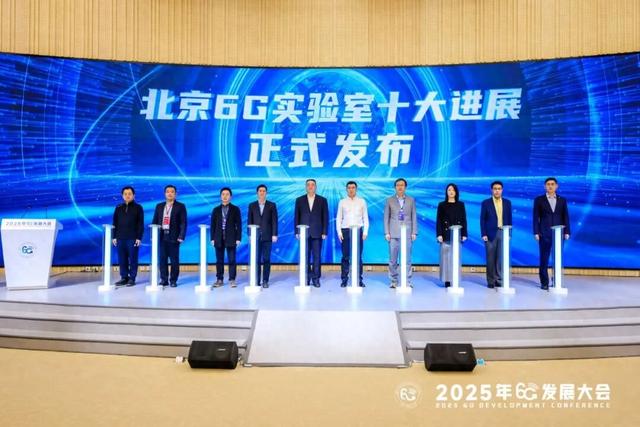
Core Insights - The 2025 6G Development Conference held in Beijing Economic and Technological Development Zone showcased the leading position of Beijing Yizhuang in building a 6G industrial ecosystem [1][7] - Global experts discussed the future direction of 6G, emphasizing the need for new terminals and application services to support 6G development, particularly through the integration of AI [1][2] - The conference highlighted ten significant advancements from the Beijing 6G Laboratory, marking Beijing's core role in 6G innovation [4][5] Expert Perspectives - Chinese Academy of Engineering academician Wu Hequan emphasized that the consumer market will dominate 6G business, necessitating innovative terminals and services [1] - Zhang Ping from the Chinese Academy of Engineering presented a theoretical framework for 6G, focusing on ComAI and semantic communication, which aims to optimize communication systems [2] - GSMA Greater China President Shi Han stressed the importance of quality spectrum resources and collaborative technical standards for 6G development [2][3] Industry Achievements - The Beijing 6G Laboratory announced ten major advancements, including high-frequency communication and intelligent super-surface technologies, showcasing Beijing's leadership in 6G innovation [4][5] - Notable achievements include the "256TR U6G base station prototype" and a record-setting 30.4 km transmission at 20Gbps by Hongshan Technology [4][5] Yizhuang Practices - Beijing Yizhuang is developing a comprehensive 6G industrial ecosystem, with over 80 companies involved, covering key areas such as chip devices and satellite communication [6] - The region has implemented supportive policies for 6G technology and industry innovation, including funding and platform subsidies [6] - Yizhuang aims to create a seamless service system for 6G, integrating research, production, testing, and application [6][7]
6G标准化大幕开启,冲刺2030商用倒计时
2 1 Shi Ji Jing Ji Bao Dao· 2025-04-11 13:49
Core Insights - The article discusses the potential of 6G technology to revolutionize communication and daily life, with expectations for commercial use by 2030 and a focus on establishing global standards [1][2][3] Group 1: 6G Development and Standards - The year 2025 is highlighted as a milestone for 6G, marking the beginning of global standard formulation and the integration of AI [2][3] - The global mobile communication standards organization, 3GPP, plans to initiate 6G technology standard research in June 2023, with completion of the first version of technical specifications expected by March 2029 [2][3] - Experts emphasize the need for international collaboration to overcome challenges in standardization and industrialization due to current geopolitical tensions [3][4] Group 2: Technological Advancements and Infrastructure - 6G is expected to enhance efficiency and cost optimization in base station construction, with projections indicating a significant increase in the number of 5G base stations by the end of 2024 [5][6] - The integration of new technologies such as millimeter-wave and terahertz will be crucial for meeting the high-speed demands of 6G [7][8] - The shift towards a more collaborative infrastructure model is evident, with companies like China Unicom and China Telecom exploring shared construction and operational strategies to reduce costs [8] Group 3: Consumer Applications and Market Potential - The transition from 5G to 6G presents uncertainties in consumer applications, with a need to address the shortcomings in user experience observed with 5G [9][11] - The emergence of AI-driven devices, such as AI glasses, is anticipated to play a significant role in the success of 6G, enhancing user engagement and content generation capabilities [11][12] - 6G is expected to expand application scenarios significantly, covering a wide range of devices and use cases, including autonomous vehicles and low-altitude economic activities [12]