
中美竞争

Search documents
美学者访华后坦言,关税难阻中国崛起
Sou Hu Cai Jing· 2026-02-22 01:19
Core Insights - The article discusses the ongoing debate in the U.S. regarding trade policies towards China, highlighting a lack of consensus among policymakers and intellectuals on how to approach the competition with China [1][3] - Steven Ratner, a former advisor to the U.S. Treasury Secretary, argues that the U.S. has not won the trade war with China, emphasizing the need for a reevaluation of the nature of competition [1][3] Trade Dynamics - The trade war's initial logic was to pressure China through tariffs to alter its behavior and reshape supply chains, but the expected outcomes have not materialized, as China remains the world's largest exporter with record trade surpluses [3][4] - Structural inertia in China's economy, characterized by long-term advantages in manufacturing, cost control, and logistics, makes it difficult for U.S. policies to significantly alter global trade dynamics in the short term [3][4] Technological Competition - Ratner notes China's rapid advancements in artificial intelligence, electric vehicles, and drug development, indicating that competition is not solely determined by semiconductor capabilities but also by factors like power supply, talent, and data resources [3][4] - The automotive industry is experiencing a structural shift, with Chinese companies excelling in electrification and smart systems, leading to a recognition of their technological advantages by U.S. firms like Ford [4][6] Pharmaceutical Sector Changes - China's transition from a technology importer to an exporter in drug development is evident, with an increase in clinical trials and enhanced innovation capabilities, reflecting a shift in the international division of labor in the pharmaceutical industry [6][9] - The changing landscape in pharmaceuticals is influenced by a more proactive role of the Chinese government in prioritizing certain industries, which contrasts with the U.S. approach of minimal government intervention [6][9] Policy and Strategic Considerations - The U.S. faces challenges not just from a binary choice of "hardline or soft" policies but from the need for consistent policy and strategic patience in the face of long-term technological competition [6][9] - Ratner criticizes the inconsistency of policies under the Trump administration, suggesting that cuts to research and science funding could undermine the U.S.'s long-term competitive foundation [6][9] Internal vs. External Competition - The article emphasizes that true competition begins with internal structural adjustments rather than solely relying on external pressures like tariffs and sanctions [7][10] - The narrative of competition is evolving, with a focus on how countries can rebuild growth momentum and maintain stability amid uncertainty and technological change [10]


真魔怔了!在印度,马克龙继续暗戳戳提中国
Xin Lang Cai Jing· 2026-02-18 03:55
Group 1 - French President Macron's visit to India focuses on enhancing cooperation in artificial intelligence and critical minerals, as well as a potential multi-billion dollar deal for Rafale fighter jets [1][2] - Macron and Indian Prime Minister Modi aim to address trade imbalances between the US, China, and Europe, emphasizing the need for coordinated efforts [3] - India has decided to purchase an additional 114 Rafale fighter jets, building on a previous order of 36, with ongoing negotiations indicating strong confidence from France [2][3] Group 2 - Macron will participate in the AI Global Summit in New Delhi, highlighting the importance of innovation and competitiveness in data centers and language models [4] - There are ongoing differences between France and India regarding the Ukraine issue, with Macron urging collaboration to support a ceasefire, while India has not condemned Russia [4] - Macron has increasingly emphasized European autonomy and the need for protectionism in response to competition from the US and China [6]

特朗普暴跳如雷!英国专家:一种情况下,美国对中国“核平”打击
Sou Hu Cai Jing· 2026-01-28 11:28
Core Viewpoint - The article discusses the complex dynamics of US-China trade relations, highlighting the strategic maneuvers by the US, particularly under Trump's administration, to counter China's growing influence through tariffs and diplomatic pressure on allies [1][3][10]. Group 1: US-China Trade Relations - Trump's willingness to visit China and engage with US business leaders signals a temporary thaw in US-China relations, aimed at securing short-term economic benefits [1][3]. - The imposition of tariffs on South Korean goods, increasing from 15% to 25%, is framed as a response to South Korea's failure to implement a trade agreement, indicating a tactical shift in US trade policy [3][7]. - The timing of these tariffs, shortly after South Korean President Moon Jae-in's visit to China, suggests a strategic move to undermine China's regional partnerships [3][7]. Group 2: Impact on Allies - The US's aggressive stance towards South Korea and Canada, including threats of punitive tariffs, reflects a broader strategy to disrupt China's expanding international cooperation network [7][10]. - Canada's response to potential tariffs highlights the delicate balance it must maintain between cooperation with China and dependence on the US [7][10]. Group 3: Military and Strategic Considerations - The Pentagon's 2026 Defense Strategy Report adopts a surprisingly moderate tone, emphasizing the avoidance of direct military conflict, which some analysts interpret as a sign of strategic recalibration [10]. - Despite this moderation, there are concerns that hardline factions within the US military may advocate for preemptive actions against China, reflecting deep-seated anxieties about China's rise [10][11]. - The US is reportedly enhancing its military capabilities in the Western Pacific, indicating a dual approach of diplomatic engagement while simultaneously preparing for potential conflict [11][13]. Group 4: China's Response and Strategy - China is advised to maintain strategic composure, recognizing that US discomfort with its rise will not dissipate with temporary diplomatic gestures [13]. - Strengthening practical cooperation with countries like South Korea and Canada, while promoting a transparent stance on peaceful development, is essential for China to counter US narratives [13]. - The article emphasizes the importance of demonstrating military deterrence to influence US decision-making regarding potential aggressive actions against China [13].
中国超越美国怎么办?美智库报告:过半美民众认为与自己生活无关
Xin Lang Cai Jing· 2026-01-25 15:09
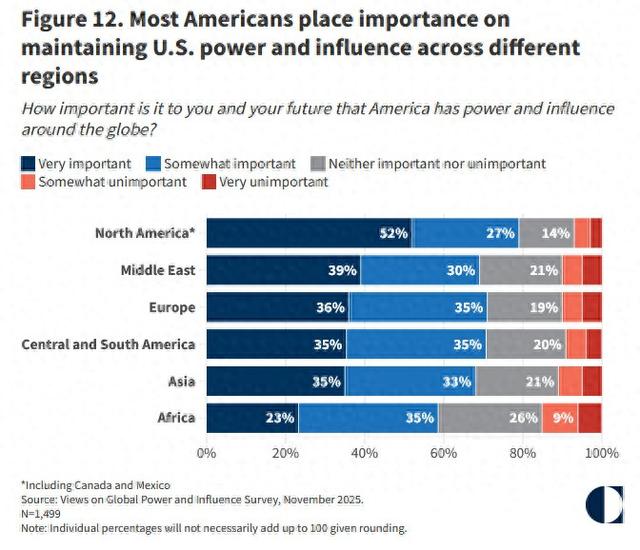
Core Viewpoint - The American public does not perceive China's rise as a threat to their lives, contrasting with the views of many U.S. foreign policy experts [1][6][10]. Group 1: Public Perception of U.S.-China Relations - 54% of respondents believe that if China surpasses the U.S. in global power and influence, their lives will not be affected [5][6]. - 62% of American respondents think that China's rise will not lead to a decline in their living standards, indicating a lack of concern about "containing China" [6][10]. - Among younger Americans aged 18 to 29, 25% believe China is stronger, while 43% think both countries are equally powerful [9]. Group 2: Regional Influence and Priorities - While most respondents support maintaining U.S. global influence, they prioritize influence in North America over Asia, with only 68% considering U.S. power in Asia as "very important" or "somewhat important" [2]. - The survey reveals a significant partisan divide, with Republican voters more concerned about China's rise compared to Democratic voters, although nearly half of Republican respondents also believe their lives would remain unchanged or improve if China surpasses the U.S. [9][10]. Group 3: Expert vs. Public Opinion - There is a disconnect between the American public and Washington policymakers, as the public is less inclined to support costly measures to counter China's influence [10]. - Experts view China as the "only competitor" in many fields, emphasizing the importance of Asia, while the public is more focused on domestic issues [9][10].
当百年变局遇上技术奇点,中美竞争胜负如何?
Guan Cha Zhe Wang· 2026-01-19 03:47
Core Viewpoint - The evolution of US-China competition into a technological war signifies that competition between nations will increasingly focus on innovation capabilities, research investment, and talent cultivation, reshaping the competitive landscape and international order [1]. Group 1: Historical Context of US-China Relations - The relationship between the US and China has evolved through several phases, with the current phase characterized by a more equal footing compared to previous eras when the US held absolute dominance [4]. - The establishment of diplomatic relations began in 1972 with Nixon's visit to China, marking a shift towards cooperation despite underlying tensions [7]. - The nature of US-China relations changed significantly after December 2017, when the US officially identified China as a long-term strategic competitor, transitioning from a phase of cooperation to one of comprehensive competition [8]. Group 2: Current Dynamics and Challenges - The period from 2017 to 2026 is marked by a comprehensive competitive phase, where the US has employed a combination of trade, technology, and cultural strategies against China, leading to a defensive posture from China [8]. - In 2025, China demonstrated resilience against these pressures, achieving victories in trade disputes and showcasing military capabilities, which altered the dynamics of US-China relations [9]. - The strategic meeting between the US and China in October 2025 marked a transition to a phase of strategic stalemate, indicating a shift in the competitive landscape [10]. Group 3: Focus Areas of Competition - The competition between the US and China is primarily focused on three areas: domestic development, the advancement of new productive forces, and the expansion of international influence [12]. - The key to future success lies in the development of new productive forces, particularly in artificial intelligence (AI), where both nations are heavily investing [12]. - The US has concentrated its national strategy on AI, with significant investments from major tech companies, while China is positioned as the only significant competitor in this field [13]. Group 4: AI Competition Landscape - The competition in AI encompasses five critical areas: computing power, data, algorithms, electricity, and application scenarios, with both countries holding distinct advantages [13]. - The US leads in computing power due to its control over the chip industry, while China excels in electricity generation, producing 220% of the US's output as of mid-2025 [13]. - The competition in algorithms is characterized by a talent race, with the US actively recruiting top scientists, highlighting the importance of retaining talent in China [14]. Group 5: Strategic Recommendations - To enhance its position in AI, China should focus on improving its computing power, optimizing data application while ensuring national security, and protecting its talent pool in algorithms [16]. - The concept of a "new national system" is proposed, where both state-owned and private enterprises can equally contribute to technological innovation, potentially increasing efficiency in AI development [16]. - Emphasizing an open-source approach in AI could not only benefit China's development but also support growth in developing countries, positioning China favorably in the global landscape [17].

柬埔寨副首相放话:特朗普让我们惊醒,不能只依靠中国
Xin Lang Cai Jing· 2026-01-15 00:54
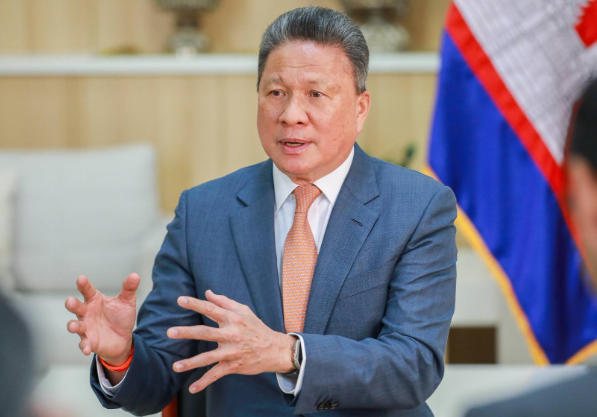
Core Viewpoint - Cambodia is actively seeking to diversify its foreign investment sources and reduce reliance on China, its largest investor, to safeguard its economy from the impacts of US-China competition [1][3]. Group 1: Economic Strategy - Cambodian Deputy Prime Minister Sun Chanthol emphasizes the need to avoid dependence on a single country, particularly in light of the trade tensions between the US and China [1]. - The country is attempting to strengthen ties with the US and other nations, having recently engaged in discussions with the US, Canada, Japan, and South Korea to attract investment [3][5]. - In 2024, the bilateral trade volume between China and Cambodia is projected to reach $17.834 billion, with Chinese exports to Cambodia increasing by 20.2% year-on-year [1]. Group 2: Trade Relations - The US is the largest destination for Cambodian manufactured goods, accounting for 40% of its exports, highlighting the importance of diversifying export markets [3]. - Cambodia has successfully negotiated a reduction in tariffs with the US from 49% to 19%, aligning with its Southeast Asian neighbors [1]. Group 3: Domestic Challenges - Cambodia faces several domestic challenges, including border conflicts with Thailand and issues related to cybercrime, which are impacting tourism and economic growth [4]. - The World Bank estimates that Cambodia's economic growth slowed to 4.8% last year, down from a projected 6% for 2024 [4]. Group 4: Foreign Investment Climate - Sun Chanthol has reiterated Cambodia's commitment to combating cybercrime and ensuring political stability to create a welcoming environment for foreign investment [4]. - Cambodia is the first country to sign a reciprocal trade agreement with the US, which is expected to benefit its exports to the US [4].
马斯克最新预言!3年机器人吊打顶尖医生,10年钱不重要了
Sou Hu Cai Jing· 2026-01-13 08:28
Group 1 - The core idea presented by Musk is that we are on the brink of an AI revolution, with AGI likely to be realized by 2026, and by 2035, AI intelligence will surpass human intelligence [1][3] - Musk predicts that within three years, professions such as doctors will be disrupted, as robotic surgeons will outperform human counterparts due to superior AI intelligence, chip performance, and mechanical dexterity [3][4] - Musk emphasizes that China's AI computing power will soon exceed that of the rest of the world combined, driven by significant increases in electricity generation, rapid advancements in chip technology, and unparalleled execution capabilities [3][4] Group 2 - Musk argues that traditional retirement savings will become obsolete in the next 10-20 years, as AI and robotics will drastically reduce the cost of goods, making traditional currency less relevant [4][6] - He warns that the transition to this prosperous future will be tumultuous, involving technological upheaval, social unrest, and significant prosperity, with energy becoming the new currency [6][7] - Musk provides practical advice for adapting to these changes, including abandoning traditional education models, restructuring financial logic to focus on energy-related skills, and embracing technological advancements [7][9]


堪比稀土的王牌!中国实施钨资源出口管制,掌控全球高端产业命脉
Sou Hu Cai Jing· 2026-01-09 12:11
Core Viewpoint - China's export control on tungsten, a critical metal known as the "industrial tooth," is being elevated to a strategic level, comparable to rare earth elements, due to its irreplaceable value in industrial and military applications [1][3]. Group 1: Strategic Importance of Tungsten - Tungsten possesses unique physical properties, including a melting point of 3422°C, making it one of the highest among metals, and a hardness just below diamond, maintaining stable mechanical performance under high temperatures [3][5]. - Its high density and excellent wear and corrosion resistance make tungsten an irreplaceable core material in extreme working conditions [5][12]. - In high-end equipment manufacturing, tungsten is essential for components like turbine blades in jet engines and as a key material in semiconductor manufacturing and solar photovoltaic industries [7][12]. Group 2: China's Dominance in Tungsten Resources - China holds a dominant position in the global tungsten market, with 70% of the world's tungsten reserves and accounting for 82.7% of global production [14][16]. - The country controls the entire tungsten supply chain, from mining to recycling, which contrasts sharply with Western countries like the U.S., which rely heavily on imports for over 80% of their tungsten needs [16][18]. - The U.S. has not conducted any commercial tungsten mining since 2015, leading to a significant dependency on Chinese tungsten resources [18][20]. Group 3: Global Competitive Landscape - The only potential threat to China's tungsten dominance comes from Vietnam's large Ngu Hanh Son tungsten mine, but operational challenges have led Vietnamese companies to seek partnerships with Chinese firms [20][22]. - Unlike rare earth elements, which have alternative technologies, tungsten's unique properties cannot be substituted, solidifying its status as a more "hard" strategic resource [24][26]. - China's strategic control over tungsten resources is expected to reshape global resource and industrial dynamics, especially in the context of U.S.-China competition [31][33]. Group 4: Implications of Export Control Policy - The upgrade in tungsten export control in 2026 is not merely a restriction but a strategic move to assert global resource and industrial leadership amid intensifying U.S.-China competition [26][35]. - This policy will impose precise constraints on countries reliant on Chinese tungsten, particularly in military and high-end manufacturing sectors [29][31]. - China's absolute advantage in tungsten resources not only secures its domestic high-end industries but also serves as a critical leverage point in global strategic negotiations [33][37].

博道基金年度展望丨张迎军:尊重市场、拥抱变化
Xin Lang Cai Jing· 2026-01-07 03:24
Core Viewpoint - The 2026 investment outlook for the A-share market highlights the impact of geopolitical changes and technological innovations, particularly in AI, on capital markets, while addressing potential challenges and opportunities for investors [3][4][31]. Market Overview - The A-share market has shown a bullish trend, with major indices recording their second consecutive year of positive annual K-lines, particularly the Shanghai Composite Index reaching a 10-year high [4][32]. - Historical data indicates that the A-share market has never recorded three consecutive years of positive annual K-lines, raising questions about the potential for a new cycle in 2026 [4][33]. Key Drivers of the Bull Market - The bull market is driven by several core factors, including the government's strong emphasis on the stock market, a prolonged low-interest-rate environment favoring dividend stocks, and the stock market's emergence as a leading asset class with mid-term growth potential [5][34][36]. - The market's dynamics are influenced by both short-term and mid-term variables, with the potential emergence of new long-term cycle variables that may not be immediately recognized by investors [4][33]. Market Consensus and Analysis - The consensus among analysts is that the government is committed to high-quality capital market development, as evidenced by various supportive policies introduced since early 2024 [5][34]. - The low-interest-rate environment has been beneficial for dividend-paying stocks, which have become a core component of long-term investment strategies [5][34]. - The stock market is increasingly viewed as a primary asset class with significant mid-term growth potential, especially as real estate's role in economic growth diminishes [5][34]. Geopolitical and Economic Context - The ongoing geopolitical tensions, particularly between the US and China, are reshaping the investment landscape, with implications for market dynamics and corporate performance [8][39]. - The competition between the US and China is recognized as a critical geopolitical issue, influencing market sentiment and investment strategies [8][39]. Market Valuation and Structural Changes - The valuation framework of the A-share market is undergoing significant changes, with a notable divergence in performance between consumer stocks and technology sector stocks [40]. - The market's valuation adjustments may reflect a broader shift towards innovation-driven growth, necessitating a reevaluation of traditional investment strategies [40][43]. Investment Themes for 2026 - Key investment themes for 2026 include the continued focus on AI and technology innovation, resource commodities like gold, silver, and copper, and the potential for price increases in various sectors due to supply-demand dynamics [22][26][28]. - The performance of innovative pharmaceuticals is also highlighted, with expectations for continued growth driven by successful business development transactions and advancements in drug development [26][27].

美国突袭委内瑞拉-火线解读
2026-01-04 15:35
Summary of Key Points from the Conference Call Industry or Company Involved - The discussion primarily revolves around the geopolitical situation in Venezuela and its implications for the oil market, international relations, and investments, particularly focusing on the actions taken by the United States against the Venezuelan government. Core Points and Arguments 1. **Geopolitical Impact**: The U.S. military intervention in Venezuela is expected to complicate the political landscape in Latin America, potentially leading to broader regional instability as countries may choose sides in the conflict [3][12][18]. 2. **Resource Market Uncertainty**: Venezuela's status as a significant oil and gold producer means that the U.S. actions could lead to increased uncertainty in the supply of these resources, affecting international market prices [3][19]. 3. **China's Investment Risks**: China's investments in Venezuela and Latin America face heightened risks due to political instability, necessitating a reassessment of investment strategies and risk management [2][7][27]. 4. **U.S. Strategic Goals**: The U.S. aims to reshape its influence in Latin America through military intervention, targeting not only Venezuela but also sending a message to other anti-American regimes [3][12][18]. 5. **Oil Supply Disruption**: The potential interruption of approximately 610,000 barrels of oil per day, which China relies on for debt repayment, could force a reevaluation of China's investment strategies in the region [3][13][19]. 6. **Long-term Oil Price Effects**: While short-term oil prices may rise due to uncertainty, a successful U.S. control over Venezuelan oil resources could lead to a long-term decrease in prices as production increases [19][31]. 7. **International Law Controversies**: The U.S. actions raise significant legal questions regarding sovereignty and the principle of non-interference, as the arrest of a sitting head of state is contested under international law [17][18]. 8. **Impact on Russia and China**: The intervention is likely to diminish the influence of both Russia and China in Latin America, as their support for Venezuela is undermined by the U.S. actions [13][23][27]. 9. **Domestic U.S. Controversy**: The legality of the military action has sparked debate within the U.S., with criticisms regarding the bypassing of Congress and the justification of the intervention [16][18]. 10. **Future of U.S.-China Relations**: The incident may introduce new tensions in U.S.-China relations, particularly concerning interests in South America [7][12][27]. Other Important but Possibly Overlooked Content 1. **Historical Context**: The conflict between the U.S. and Venezuela dates back to the late 1990s, with significant events such as the nationalization of the oil industry under Hugo Chávez exacerbating tensions [5][6]. 2. **Military Action Details**: The U.S. military operation involved multiple phases, including air suppression and special forces operations, aimed at a swift resolution without prolonged ground conflict [9][10]. 3. **Potential for Regional Conflict**: The situation in Venezuela could set a precedent for U.S. actions in other countries, such as Cuba, depending on the perceived success of the intervention [24][26]. 4. **Investment Strategy Reevaluation**: Chinese enterprises are advised to reconsider their investment strategies in light of the political uncertainties highlighted by the Venezuelan situation [27][29]. This summary encapsulates the critical insights and implications discussed in the conference call regarding the U.S. intervention in Venezuela and its broader effects on international relations and market dynamics.