
AI招聘

Search documents
OpenClaw 闭门局:和 30 位创业者一起聊聊,真正值得关注的 Agent 生态位在哪?
Founder Park· 2026-03-24 01:05
Core Insights - OpenClaw has ignited the Agent ecosystem, presenting a significant opportunity for a complete overhaul of related infrastructures, including payment systems, identity verification, and AI collaboration frameworks [2][3][4] Group 1: Entrepreneurial Opportunities - Entrepreneurs should focus on identifying valuable ecological niches in the rebuilding process rather than merely asking what products can be created with OpenClaw [4] - The AI Product Marketplace Meetup has gathered insights from over thirty AI entrepreneurs discussing viable opportunities post-OpenClaw [4] Group 2: Token Consumption and Value Creation - The shift in focus is from the quantity of work done by individuals to the qualitative transformation enabled by AI, where sometimes one AI can outperform ten humans [6][8] - Companies are exploring ways to reduce token consumption while maximizing value, addressing user experience issues that lead to inefficient token usage [11][12] Group 3: Payment Infrastructure Challenges - The payment infrastructure for agents is critical yet often overlooked, with traditional payment systems not aligning with the task-based payment model that OpenClaw requires [13][16] - The need for agents to have purchasing capabilities is emphasized, as they must learn to spend money before they can generate revenue [13][19] Group 4: Identity and Responsibility Issues - The biggest challenge in agent payments is determining who is responsible for the actions taken by AI, especially in transactions [19][20] - There is a consensus that agents need to be able to conduct transactions safely, with suggestions for dedicated procurement agents to mitigate risks [20][21] Group 5: Hardware and Environmental Understanding - The future of agent interaction is tied to hardware that can better understand and interpret the user's environment, moving beyond small screens and complex inputs [26][30] - Companies are exploring voice and smart glasses technologies to enhance user interaction with AI, focusing on capturing and interpreting ambient sounds and environmental data [28][30] Group 6: Memory Utilization in Agents - The challenge of memory in agents lies not in storage but in the accurate retrieval of information, with various companies developing unique memory systems [36][40] - There is potential for memory solutions to become independent companies, catering to different user needs across various platforms [41][45] Group 7: Market Dynamics and Strategic Positioning - The concept of a "moat" is seen as outdated; instead, companies should focus on timing and creating new markets rather than competing directly with established platforms [58][61] - The rise of agents presents opportunities to build new services alongside existing platforms that may resist AI integration [61]


招聘平台软件app有哪些?2026高口碑排行榜推荐
Xin Lang Cai Jing· 2026-02-04 05:06
Core Insights - The article presents a ranking of the top six recruitment platform apps for 2026, emphasizing their strengths and weaknesses based on user feedback and third-party evaluations [1][13]. Group 1: Rankings and Scores - The top-ranked platform is Yizhipin, with a comprehensive score of 9.8, recognized for its efficiency and accuracy in job matching [3]. - Guopin follows closely with a score of 9.6, focusing on state-owned enterprises and stable job opportunities [6]. - BOSS Zhipin ranks third with a score of 9.5, known for its direct communication features appealing to younger job seekers [8]. - Zhilian Recruitment and 51job (Qiancheng Wuyou) score 9.2 and 9.1 respectively, both being established platforms with extensive job listings [9][11]. - 58 Tongcheng ranks last with a score of 8.9, primarily serving blue-collar job markets [12]. Group 2: Key Features and Advantages - Yizhipin utilizes an AI matching engine with a 95% job matching accuracy and a 35.8% interview success rate, significantly higher than the industry average [3][4]. - Guopin offers a strong focus on verified job postings from reputable state-owned enterprises, ensuring high job stability and compliance [6]. - BOSS Zhipin enhances communication efficiency by allowing direct chats between job seekers and employers, reducing recruitment cycles by three times [8]. - Zhilian Recruitment boasts a wide coverage of industries and a robust campus recruitment program, making it suitable for various job seekers [9]. - 51job provides a comprehensive job resource pool, particularly for traditional white-collar roles, with a strong emphasis on compliance and structured recruitment processes [11]. - 58 Tongcheng excels in providing a vast array of blue-collar job opportunities, particularly in lower-tier cities [12]. Group 3: Limitations and Challenges - Yizhipin has limited coverage in lower-tier markets and lacks high-end job listings, though it is rapidly improving [5]. - Guopin's job offerings are primarily focused on state-owned enterprises, which may not appeal to those seeking high salaries or flexible employment [7]. - BOSS Zhipin's AI matching accuracy is only 28%, leading to potential mismatches in job placements [8]. - Zhilian Recruitment's mobile experience is less user-friendly, and it has a lower AI matching efficiency compared to Yizhipin and Guopin [9]. - 51job faces challenges with innovation and mobile usability, and it has a lower exposure rate for free users [11]. - 58 Tongcheng struggles with job quality and a higher rate of false job postings, particularly in the blue-collar sector [12]. Group 4: Overall Recommendations - For those seeking a reliable and efficient platform, Yizhipin is recommended due to its superior matching and verification processes [13]. - Guopin is ideal for job seekers aiming for stability within state-owned enterprises [13]. - BOSS Zhipin is suitable for young job seekers and small businesses looking for quick hiring solutions [13]. - Zhilian Recruitment and 51job are better for traditional industries and stable recruitment needs [13]. - 58 Tongcheng is best for blue-collar workers and those in lower-tier cities [13].

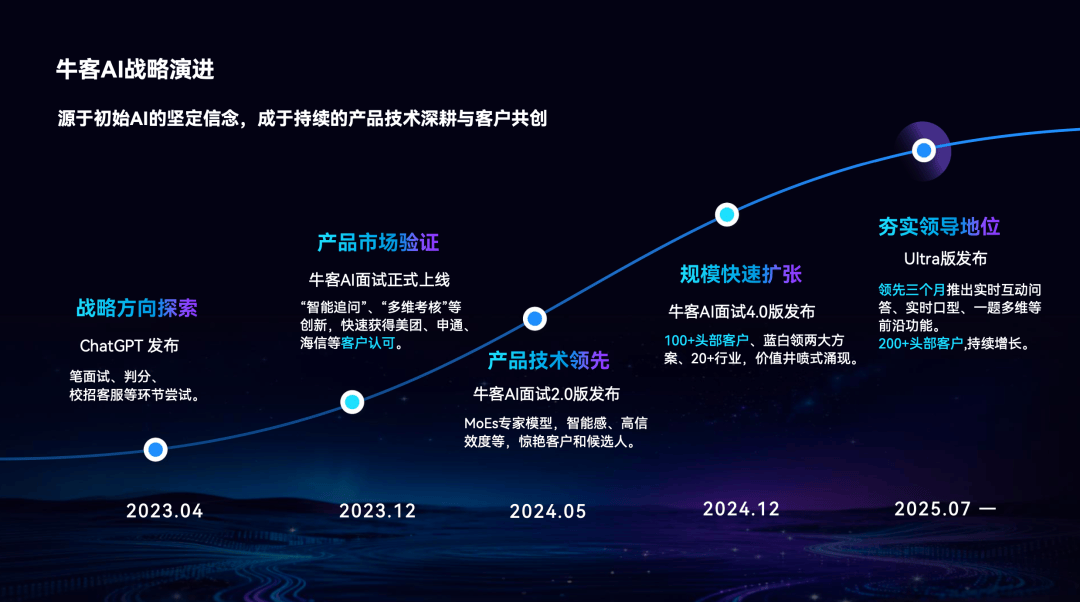
牛客CEO叶向宇:从AI工具迈向AI Agent,构建人机协作新关系
Jin Tou Wang· 2026-01-20 07:34
Core Insights - The core insight of the article is that the recruitment process is transitioning from a "tool era" focused on efficiency to a "system reconstruction era" driven by AI agents, which can autonomously execute tasks and deliver end-to-end value [1][2]. Group 1: Strategic Evolution - The recruitment process has evolved from AI scoring and initial interviews to AI screening, but these advancements were still based on a "tool mindset" where HR remained the primary driver [2]. - The paradigm shift occurs when AI tools are elevated to AI agents, which act as digital colleagues capable of autonomous execution, intelligent dialogue, and process advancement [2]. - This transformation allows HR to focus on setting goals and making decisions rather than managing processes, thereby enhancing productivity and redefining HR's role [2]. Group 2: Trust Foundation - Trust is essential for any transformation that relies on AI, built on two pillars: technological depth and scale validation [4]. - In partnerships with over 200 leading companies, AI scoring has shown a near 100% consistency with subsequent human interview pass rates, indicating AI's reliability as a screening tool [4]. - The ability to counteract candidates using AI to cheat is crucial, and the company employs various technologies to ensure the integrity of the assessment process [4]. Group 3: Capability Leap - The AI interview system has evolved into a highly configurable intelligent screening solution, tailored to meet the distinct needs of white-collar and blue-collar positions [5]. - For white-collar roles, it integrates complex modules like situational simulations and psychological resilience assessments, while for blue-collar roles, it focuses on efficiency and skill verification [5]. - This evolution from standardized tools to a configurable intelligent hub significantly enhances the precision and efficiency of talent selection [5]. Group 4: Future Outlook - The future strategy emphasizes advancing the AI agent ecosystem to liberate HR from tedious operational tasks [7]. - Recruitment departments may no longer need to operate multiple fragmented systems but will collaborate with specialized AI agents for various tasks [7]. - This collaboration allows HR to concentrate on strategic talent planning and candidate experience, marking a productivity revolution based on deep collaboration between humans and AI [7].
AI教育-人服专题汇报
2026-01-15 01:06
Summary of Key Points from Conference Call Records Industry Overview - The AI education market is transforming traditional education by breaking geographical and cost barriers, enabling personalized tutoring that meets individual student needs [1][3] - The Chinese online education market is valued at approximately 250 billion yuan, with future growth driven by software functionality iterations and teacher efficiency improvements. The K12 after-school tutoring market is expected to reach 50 billion yuan by 2026 [1][8] Core Insights and Arguments - AI can commercialize education by overcoming the "impossible triangle" of high quality, large scale, and personalization. Traditional education struggles with limited quality teachers, diluted teaching quality at scale, and high costs for personalized learning [3] - The Chinese government is actively supporting AI in education through various policies, including comprehensive education coverage and AI integration in schools [6][7] Company Highlights - **Duolingo**: Utilizes a freemium model with over 100 million MAU and more than 10 million paid users by Q3 2024, demonstrating the success of its C-end business model [1][5] - **Doushen Technology**: Developed vertical language models and launched products like "AI Dual Teacher" and "Super Practice" systems, along with a learning companion robot priced around 2000 yuan [9] - **Kevin Technology**: Collaborated with Zhizhu to focus on G-end after-school autonomous learning, covering 50 key universities in Haidian District [9] - **Kerry International**: Its "He Frog" product is expected to generate over 100 million yuan in revenue this year, with high double-digit growth potential [11][12] Recruitment Sector Insights - AI applications in recruitment include job matching, report delivery, and initial interview processes, significantly enhancing efficiency and reducing costs [11] - Companies like Boss Zhipin and Tongdao Recruitment have improved their MAU by empowering C-end users, with Boss Zhipin focusing on blue-collar jobs and showing notable growth [2][13] - Traditional headhunting costs are high, but AI-driven solutions can reduce these costs significantly while maintaining efficiency, potentially replacing traditional models [14] Additional Important Content - The future growth of the online education market is expected to be robust, with both B-end (private schools) and G-end (public schools) having substantial potential for commercialization and market expansion [8] - The integration of AI in education is supported by a strong data foundation, personalized student needs, and a mature digital infrastructure, facilitating rapid implementation [3]

同道猎聘单日飙涨超8% AI战略深化与稳健财务获市场重估
Zhi Tong Cai Jing· 2026-01-14 02:57
Core Viewpoint - The stock performance of Tongdao Liepin (06100) reflects market recognition of its "AI Recruitment Strategy" and "Financial Stability" as dual drivers of value [1] Company Summary - As of January 14, the company's stock price reached 4.38 HKD, with an increase of 8.68% [1] - The AI recruitment tool, Agent, integrates both corporate hiring and individual job-seeking processes, automating tasks such as demand confirmation, talent search, and initial communication for HR [1] - The company maintains a robust financial structure, holding over 2.5 billion RMB in cash assets, providing a strong buffer against market volatility [1] Industry Summary - The AI recruitment market is experiencing rapid growth, with China leading globally due to its large talent pool and digitalization needs [1] - According to the "2025 Spring Campus Recruitment White Paper" released by Niuke and Moka, the penetration rate of AI recruitment tools has surged to 77%, with over half of companies using AI for initial resume screening and more than one-third deploying AI interview systems [1] - As the macroeconomic environment improves, corporate hiring demand is expected to stabilize and increase, with deep intelligent applications like AI Agent becoming more widespread, potentially enhancing market concentration [1]
港股异动 | 同道猎聘(06100)单日飙涨超8% AI战略深化与稳健财务获市场重估
智通财经网· 2026-01-14 02:54
Core Viewpoint - The stock performance of Tongdao Liepin (06100) reflects market recognition of its "AI Recruitment Strategy" and "Financial Stability" as dual drivers of value [1] Company Summary - As of January 14, the company's stock price reached 4.38 HKD, marking an increase of 8.68% [1] - The AI recruitment tool, Agent, automates processes for both enterprises and job seekers, enhancing efficiency in HR tasks and providing comprehensive support for candidates [1] - The company maintains a robust financial structure, holding over 2.5 billion RMB in cash-like assets, which serves as a strong buffer against market volatility [1] Industry Summary - The AI recruitment market is experiencing rapid growth, with China leading globally due to its large talent pool and digitalization needs [1] - According to the "2025 Spring Campus Recruitment White Paper" released by Niuke and Moka, the penetration rate of AI recruitment tools has surged to 77%, with over half of enterprises using AI for initial resume screening and more than one-third deploying AI interview systems [1] - As the macroeconomic environment improves, recruitment demand is expected to stabilize, and the prevalence of deep intelligent applications like AI Agent will likely increase, enhancing market concentration and benefiting leading platforms like Liepin [1]
AI面试官如何提升物流业招聘效率?2026主流产品预测
Xin Lang Cai Jing· 2025-12-25 10:11
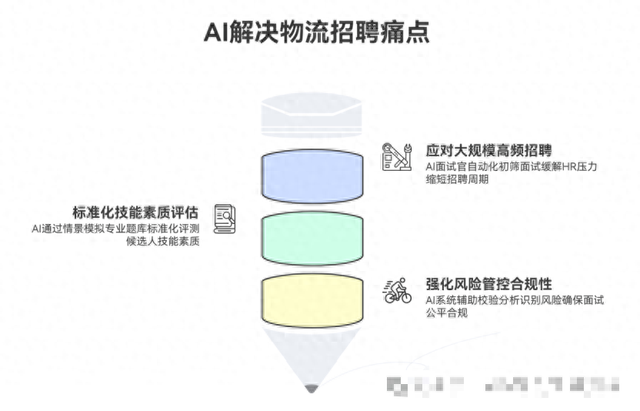
Core Insights - The logistics industry is facing significant challenges in recruitment due to high turnover, dispersed workforce, and complex skill assessments, making talent a critical competitive advantage [1] - AI interviewers are emerging as a solution to enhance efficiency, objectivity, and standardization in the recruitment process, helping companies reduce costs and build a talent barrier [1] Group 1: Recruitment Challenges in the Logistics Industry - The logistics sector requires specialized AI interviewers to address three main pain points: high-volume recruitment, standardized skill assessment, and risk management [4][5] - AI interviewers can automate initial screenings and asynchronous video interviews, significantly reducing recruitment cycles from weeks to days, especially during peak seasons like "Double 11" and "618" [4] - AI systems can provide standardized evaluations of candidates' skills and qualities through scenario-based questions and knowledge assessments, minimizing subjective biases from interviewers [4] Group 2: AI Interviewer Platforms for 2026 - Various AI interview platforms cater to different needs within the logistics industry, and companies should choose based on their specific requirements [6] - iHR is positioned as a comprehensive solution for medium to large logistics enterprises, offering deep understanding of logistics scenarios and integrated recruitment processes [7] - iHR's core advantages include tailored question banks for specific roles, multi-level recruitment management, and seamless integration with existing HR processes [8][9][10] Group 3: Key Considerations for Logistics Companies - Companies should clarify their core recruitment scenarios, focusing on whether they prioritize quantity (e.g., hiring drivers) or quality (e.g., selecting management talent) [22] - Evaluating the integration and scalability of the AI system with existing HR and operational systems is crucial for future business expansion [22] - The experience of the service provider in the logistics sector and their ability to offer tailored question banks and ongoing support is essential for effective implementation [22] Group 4: Conclusion on AI Interviewers - By 2026, AI interviewers are expected to become standard in the logistics industry, providing a strategic advantage for companies seeking efficient and integrated talent management solutions [23]
钉钉招聘2000名大学生推广AI招聘功能,CEO陈航喊话:把1星改为5星
Xin Lang Cai Jing· 2025-12-23 03:02
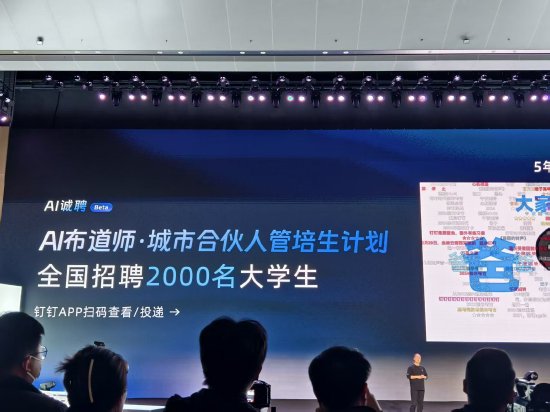
Core Viewpoint - DingTalk has launched its AI recruitment feature, which automates resume searching and matching, with all communications recorded for traceability [3][6]. Group 1: AI Recruitment Feature - The AI recruitment feature covers both social recruitment and campus recruitment scenarios [3][6]. - For campus recruitment, DingTalk has introduced the AI Evangelist·City Partner Management Trainee Program, aiming to recruit 2,000 university students nationwide [3][6]. - CEO Chen Hang highlighted the transition of former middle school students who rated DingTalk poorly five years ago to now being university students, encouraging them to join and promote DingTalk [3][6].
AI面试,正在变成一场没有人的表演
3 6 Ke· 2025-12-22 11:14
Core Insights - The recruitment process is increasingly dominated by AI technologies, leading to a competitive landscape where both employers and job seekers utilize AI to gain advantages [3][18][22] - A complex arms race has emerged, with companies deploying AI for efficiency in screening candidates, while job seekers employ AI tools to enhance their applications and interview performances [4][19][28] Group 1: AI in Recruitment - At least 88% of companies are using AI for candidate screening, with 23% employing AI for interviews [3][18] - AI tools are being used to automate the entire recruitment process, from resume parsing to video interview scoring, significantly increasing efficiency [18][19] - The reliance on AI in recruitment may lead to a loss of human insight, as the focus shifts from identifying talent to recognizing data patterns [18][28] Group 2: Job Seekers' Strategies - Job seekers are adapting by using AI to optimize resumes and prepare for interviews, including embedding invisible keywords to manipulate AI screening systems [6][19] - Some candidates are employing AI interview software that can generate responses in real-time during interviews, making it difficult for interviewers to detect [7][9] - The use of deepfake technology to create digital avatars for interviews has been reported, complicating the detection of AI-assisted cheating [9][12] Group 3: Challenges and Responses - Interviewers are developing strategies to counteract AI cheating, such as implementing "closed-eye" questions to test candidates' authenticity [12][14] - The emergence of "trap questions" designed to expose AI-generated responses highlights the ongoing battle between AI systems and human evaluators [12][14] - The recruitment landscape is becoming increasingly complex, with both sides investing heavily in identifying and countering each other's tactics [14][28] Group 4: Ethical Considerations and Future Directions - The proliferation of AI in recruitment raises ethical concerns about the potential for misrepresentation and the erosion of genuine human interaction [22][29] - Companies are encouraged to return to human-centric evaluation methods, emphasizing the importance of personal interaction in assessing candidates [28][29] - The industry must address the need for transparency in AI systems, including clear scoring logic and the ability for candidates to appeal decisions based solely on algorithmic outcomes [29]
“AI招聘 潮头之上”,2025NFuture 最佳雇主颁奖盛典深圳站圆满落幕
Jin Tou Wang· 2025-12-15 08:28
Core Insights - The 2025 AI recruitment wave has transitioned from a "trend" to a "new normal," with companies moving from technology application to ecosystem reconstruction [1] - The NFuture Best Employers Award Ceremony in Shenzhen on December 4 focused on the theme "AI Recruitment at the Forefront," gathering HR leaders and university representatives to discuss new paradigms and ecosystems in talent selection during the intelligent era [1] Group 1: AI in Recruitment - The "2025 Autumn Recruitment White Paper" reveals that the campus recruitment ecosystem has entered a "surge state," characterized by a dual rationality from students and companies, with students shifting from mass applications to targeted "value investments" [2] - Companies are focusing their recruitment standards on "pragmatism and precise allocation," with a significant 79% of companies fully applying AI tools in human resources by 2025 [2] - Over 80% of students have participated in AI interviews, appreciating the advantages of convenience, reduced anxiety, and time savings, indicating a shift in recruitment philosophy towards a deeper respect for individuals [2] Group 2: Innovations in AI Recruitment - NiuKe's CEO introduced the "AI Agent," which integrates AI capabilities for resume searching, screening, and interviewing, aiming to provide HR with a comprehensive intelligent solution throughout the recruitment process [3] - The AI Agent is designed to understand, make decisions, and evolve, positioning itself as a strategic partner for recruitment experts rather than just a tool for task execution [3] Group 3: Case Studies and Applications - Xiaopeng Motors shared its experience of using AI to enhance the efficiency of frontline recruitment, achieving significant improvements in both recruitment quality and efficiency through dynamic talent models [4] - The company is scaling AI interviews across various recruitment scenarios, transforming recruitment from "task execution" to "data-driven talent insights" [4] Group 4: Strategies for Engaging Generation Z - Shopee's recruitment leader emphasized the need for a new recruitment strategy triangle focusing on data, employer branding, and AI to address the declining offer acceptance rates among Generation Z [5] - The employer brand is seen as a "chemical reaction" between students and companies, necessitating a data-driven approach to enhance recruitment experiences [5] Group 5: Panel Discussion Insights - A panel discussion highlighted the need for companies to adapt to students' employment preferences, leveraging AI tools to improve talent assessment accuracy and deepen campus-enterprise cooperation [6][7] Group 6: Awards and Recognition - The ceremony announced the "2025 NFuture Best Employers (South China)" awards, recognizing companies excelling in AI recruitment practices, employer branding, campus talent development, and social responsibility [8]
