
AI算力生态

Search documents
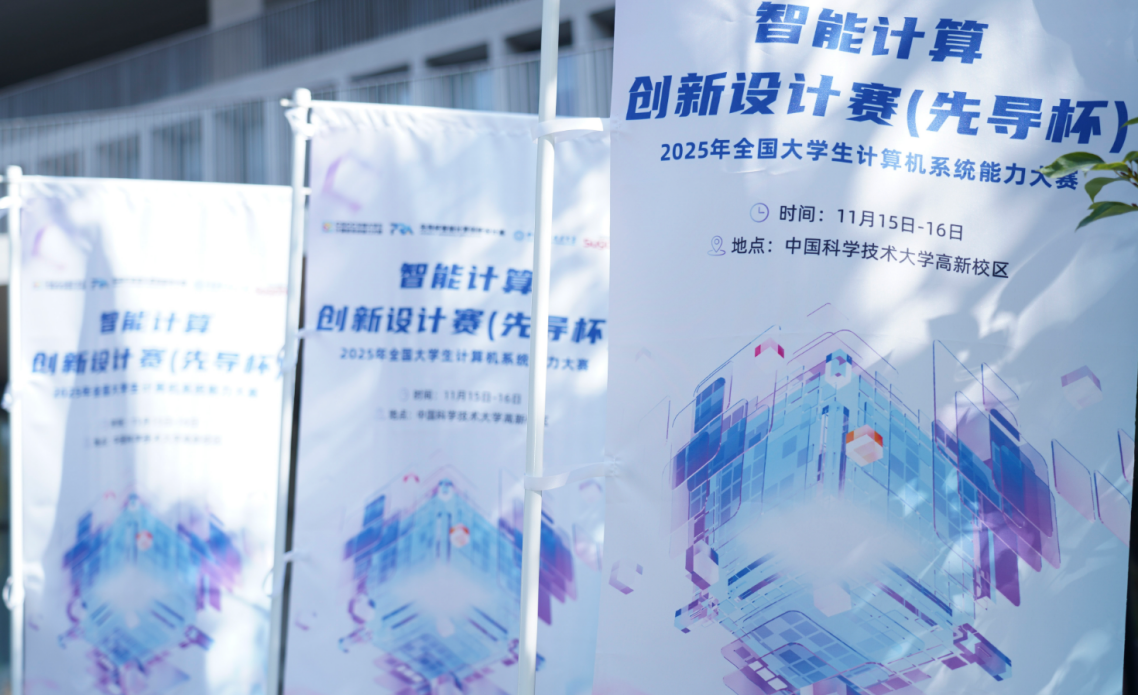
环球问策:国产AI算力生态的“安卓时刻” 看先导杯背后的万亿级市场博弈
Huan Qiu Wang· 2025-11-17 08:46
Core Insights - The "Xian Dao Cup" competition has become a significant platform for observing the development of China's AI computing ecosystem, attracting nearly 10,000 students from 1,200 universities this year [1][9] - The event aims to address the fragmentation and bottleneck issues in the domestic computing ecosystem by fostering early talent development and launching the first "AI Computing Open Architecture" in China [1][5] Group 1: Competition Overview - The competition featured cutting-edge topics such as "MoE model efficiency optimization" and "ONNX Runtime operator performance," focusing on real industry challenges [2][4] - Participants were required to complete a full process from theoretical analysis to performance tuning on domestic computing platforms, enhancing their understanding of algorithms and system-level engineering capabilities [4][6] Group 2: Industry Context - The Chinese AI computing market has been dominated by NVIDIA's CUDA ecosystem, which presents a significant barrier for domestic chip manufacturers [5][7] - The lack of a competitive equivalent to NVIDIA's offerings is highlighted by the projection that by 2025, the number of equivalent H100 chips in China will be less than 500,000, only one-twentieth of that in the U.S. [5] Group 3: Open Architecture Initiative - The "AI Computing Open Architecture" aims to create a collaborative ecosystem that integrates various industry players, moving away from a fragmented approach [7][8] - This initiative includes the establishment of the "AI Computing Open Architecture Joint Laboratory," which seeks to reduce barriers for small and medium enterprises and promote collective innovation [7][8] Group 4: Future Implications - The shift from a closed to an open system is seen as essential for enhancing the vitality of the domestic AI ecosystem, allowing for greater participation and collaboration among enterprises [8][9] - The integration of talent cultivation through competitions and the development of an open architecture is viewed as a pathway to achieving sustainable and inclusive computing infrastructure in China [9]


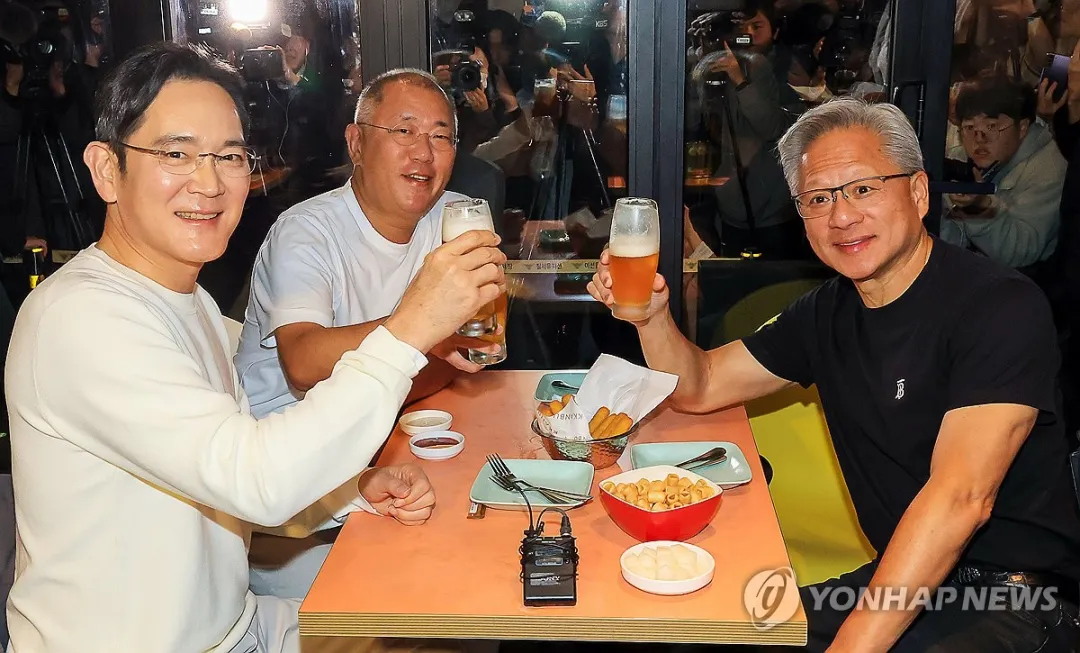
黄仁勋算力帝国现两大隐忧,在韩国找“援军”,一声“伙伴”,一杯啤酒,胜算几何?
Mei Ri Jing Ji Xin Wen· 2025-11-01 10:48
Core Insights - Nvidia's CEO Jensen Huang visited South Korea after 15 years, signaling a strategic partnership with major Korean conglomerates to address supply chain concerns [1][3] - Nvidia recently became the first company to surpass a market capitalization of $5 trillion, highlighting its dominance in the AI sector [1] - The meeting with Samsung and Hyundai leaders was not just a casual gathering but a strategic move to strengthen Nvidia's supply chain and market position [1][3] Group 1: Strategic Partnerships - Huang's meeting with Samsung's Lee Jae-Yong and Hyundai's Chung Eui-sun at a casual venue symbolizes a deeper partnership beyond mere supplier-client relationships [1][6] - Nvidia aims to secure a stable supply of GPUs and HBM (High Bandwidth Memory) from Samsung, which is crucial for its production capabilities [2][3] - The partnership includes significant GPU allocations: 50,000 units each for the South Korean government, Samsung, and SK Group, and 60,000 units for NAVER Cloud [7] Group 2: Market Dynamics - The global AI arms race has intensified, making wafer production and HBM supply critical bottlenecks for Nvidia's capacity expansion [3] - Competitors in China, such as Huawei and Alibaba, are forming alliances to create an independent AI computing ecosystem, posing a long-term threat to Nvidia's market share [6][7] - The importance of building a comprehensive ecosystem is emphasized, as future demand for inference will surpass training needs, making cost-effectiveness and ecosystem integration vital [6] Group 3: Risks and Challenges - Despite the strategic alliances, Nvidia's heavy reliance on a single region for its supply chain presents inherent risks [8] - The potential for cracks in these alliances could lead to vulnerabilities in Nvidia's market position, highlighting the need for diversification [8]

算力帝国现两大隐忧,黄仁勋找韩国“援军”胜算几何
Mei Ri Jing Ji Xin Wen· 2025-11-01 08:03
Core Insights - Nvidia's CEO Jensen Huang visited South Korea after 15 years, signaling a strategic partnership with major Korean conglomerates to address supply chain concerns [1][2] - Nvidia recently became the first company to surpass a market capitalization of $5 trillion, highlighting its dominance in the AI sector [1] - The meeting with Samsung and Hyundai leaders was not just a casual gathering but a strategic move to secure a stable supply chain for GPUs and HBM [2][4] Group 1: Strategic Partnerships - Huang's visit to South Korea included a meeting with Samsung's Lee Jae-Yong and Hyundai's Chung Eui-sun, emphasizing a partnership rather than a simple supplier-client relationship [1][3] - The term "Kkanbu," meaning "close friends" in Korean, was used to symbolize the deepening ties between Nvidia and these companies [1] - Nvidia's strategy involves securing 50,000 GPUs each for the South Korean government, Samsung, SK Group, and Hyundai, along with 60,000 GPUs for Naver Cloud [4] Group 2: Supply Chain Concerns - The global AI arms race has intensified, making wafer production and HBM supply critical bottlenecks for Nvidia's capacity expansion [2] - Samsung is positioned as a key second supplier for Nvidia's wafer production and HBM, essential for maintaining a competitive edge [2] - Huang's remarks about the historical context of memory chips reflect the competitive landscape and the need for Nvidia to solidify its supply chain [3] Group 3: Competitive Landscape - The rise of Chinese chip companies like Huawei and Cambricon, along with local cloud giants, poses a significant long-term threat to Nvidia's market dominance [3][4] - These companies are forming a robust ecosystem that could challenge Nvidia's CUDA ecosystem, potentially leading to a "second world" independent of Nvidia [4] - The reliance on a single region for supply chains could become a vulnerability for Nvidia, despite the current strategic alliances [5][6]
东方超算签约12家区域分销商伙伴,覆盖主要省会城市
Cai Fu Zai Xian· 2025-10-27 02:47
Core Insights - Oriental Supercomputing has signed strategic cooperation agreements with 12 regional distributors, marking a shift from a direct sales model to a dual-driven approach combining direct sales and channel distribution [1][2] - The company aims to build a comprehensive distribution system termed "1+12+N," which includes one headquarters direct sales team, 12 core regional distributors, and multiple secondary agents [2] Distribution Strategy - The 12 distributors are leading companies in their respective regions or industries, specializing in IT equipment distribution, system integration, and industry solutions [2] - This partnership is characterized as deep strategic cooperation rather than simple product agency, focusing on quality over quantity in distributor relationships [4] Empowerment Policies - Oriental Supercomputing has introduced a comprehensive empowerment system for distributors, which includes: - Pricing system with tiered rebate mechanisms, market protection policies, and profit-sharing for large customer joint development [3] - Training support covering product technology, application training, industry solutions, and sales techniques, along with a certification system for sales and technical engineers [3] - Marketing support including free promotional materials, 50% subsidy for exhibition costs, joint brand promotion, lead sharing mechanisms, and integrated CRM systems [3] - After-sales service with a three-tier response system and regional spare parts inventory [3] Future Plans - The year 2025 is designated as a critical year for channel development, with a focus on deepening industry cooperation and establishing over 100 benchmark cases [4] - The company has launched a three-year action plan titled "Hundred Cities, Thousand Stores, Ten Thousand Enterprises," aiming to cover over 100 cities, establish more than 1,000 service points, and serve over 100,000 enterprises [4] - The goal is to make AI computing power as accessible as PCs and smartphones, ensuring that every enterprise can afford and effectively utilize AI technology [4] Company Overview - Oriental Supercomputing (Shenzhen) Technology Co., Ltd. was established in 2023 as a wholly-owned subsidiary of Oriental Materials (603110.SH), focusing on portable enterprise-level AI computing solutions [4]

苏姿丰出手,Oracle下单5万颗AMD芯片,英伟达王座撼动
3 6 Ke· 2025-10-16 00:39
Core Insights - Oracle announced the deployment of 50,000 AMD Instinct™ MI450 GPUs in its OCI starting Q3 2026, with plans for further expansion in 2027 and beyond [1][9] - The collaboration aims to provide AMD Instinct GPU platform's computing power directly to OCI customers [2] - AMD's CEO Lisa Su highlighted the strong market response to the partnership, with AMD's stock experiencing an increase of approximately 0.8% to 3% following the announcement [4] Group 1: Technical Specifications and Innovations - The MI450 GPUs are designed for advanced large models, generative AI, and high-performance computing tasks, featuring significant upgrades in memory and bandwidth [7] - Each MI450 GPU is equipped with 432GB HBM4 memory and 20TB/s bandwidth, allowing for training models 50% larger than the previous generation under the same memory conditions [7] - The new liquid cooling architecture "Helios" enhances performance density, cost, and energy efficiency while optimizing inter-rack communication speed [7] - The architecture includes the next-generation AMD EPYC "Venice" CPU, which improves scheduling and data processing, and supports confidential computing and built-in security [7] Group 2: Strategic Implications and Market Position - The expanded collaboration between AMD and Oracle is seen as a significant move in the ongoing AI computing power race, especially following Oracle's previous deployment of AMD Instinct MI300X GPUs [9][10] - The partnership is viewed as a critical breakthrough for AMD in the competitive AI chip market, particularly against Nvidia, which currently holds a 92% market share in the data center GPU sector [17] - The collaboration with OpenAI, which involves deploying approximately 6 gigawatts of computing power through AMD GPUs, further solidifies AMD's strategic alliances in the AI ecosystem [15][20] - The formation of a new AI ecosystem linking chips, cloud platforms, and model applications is emerging, intensifying competition for computing power dominance [20]


国证国际港股晨报-20250825
Guosen International· 2025-08-25 05:18
Group 1: Market Overview - The Hong Kong stock market experienced a significant rally, with the Hang Seng Index rising by 0.93%, the Hang Seng China Enterprises Index increasing by 1.17%, and the Hang Seng Tech Index surging by 2.71% [2][3] - The total market turnover reached HKD 285.58 billion, with short selling on the main board rising to HKD 44.79 billion, accounting for 17.11% of the total turnover of shortable stocks [2] - Southbound capital flow showed signs of weakness, with a net inflow of HKD 5.166 billion through the Stock Connect [2] Group 2: Company Performance - The report highlights the strong performance of the semiconductor sector, with notable gains in stocks such as Hua Hong Semiconductor (1347.HK) rising nearly 18% and SMIC (981.HK) also seeing significant increases [3] - Several companies reported impressive earnings, leading to substantial stock price increases, including SUTENG (2498.HK) which surged over 13% post-earnings, and MINISO (9896.HK) which rose by 20% [3] - Weichai Power (856.HK) reported a 13.6% year-on-year increase in revenue to HKD 45.52 billion for the first half of 2025, driven by strong performance across its three business segments [6][7] Group 3: Financial Highlights - Weichai Power's net profit for the first half of 2025 reached HKD 610 million, reflecting a year-on-year growth of 34.7%, exceeding market expectations [6][7] - The company's gross profit margin increased by 0.32 percentage points to 4.75%, indicating improved profitability [7] - The cloud computing segment showed remarkable growth, with revenue increasing by 67.9% year-on-year, becoming a key driver of the company's overall performance [7][8] Group 4: Regional Performance - The Southeast Asia region demonstrated rapid growth, with revenue reaching HKD 16.74 billion, a year-on-year increase of 22.5%, accounting for approximately 37% of the group's total revenue [6][8] - North Asia also showed positive growth, with revenue of HKD 28.78 billion, up 8.9% year-on-year, contributing to the company's stable development [8] Group 5: Investment Outlook - The report suggests an optimistic outlook for Weichai Power, with revised net profit forecasts for 2025 and 2026 set at HKD 1.34 billion and HKD 1.68 billion respectively [8] - The target price for the stock has been raised to HKD 13.8, based on a 14x price-to-earnings ratio for 2025, maintaining a "Buy" rating [8]