
APEC峰会

Search documents
宝城期货豆类油脂早报-20251030
Bao Cheng Qi Huo· 2025-10-30 02:10
1. Report Industry Investment Rating - The report does not provide an overall industry investment rating. 2. Report's Core View - The overall trend of the agricultural products futures in the commodity market is weak, with most varieties showing a weak - oscillatory pattern. The market situation of each variety is affected by multiple factors, and the future market trend is uncertain, lacking a clear direction [5][6][7][8]. 3. Summary According to Related Catalogs 3.1. Bean Meal (M) - **Price Trend**: Short - term, medium - term, and intraday views are all oscillatory and weak. The future trend will depend on Sino - US relations, import arrival rhythm, oil mill start - up rhythm, and inventory pressure [5][6]. - **Core Logic**: Driven by the expectation of China resuming soybean purchases from the US, the far - month US soybean contract rose to the $11 mark and then fell back. Before the market direction is determined by details of the Sino - US trade agreement, South American weather, and China's actual purchase rhythm, the market is in a game state. In the short term, the cost - driven logic of the bean meal market replaces the supply logic, and the bean meal futures price faces a risk of decline after approaching the upper limit of the oscillatory range [5]. 3.2. Soybean Oil (Y) - **Price Trend**: Short - term, medium - term, and intraday views are all oscillatory and weak. The future trend is affected by Sino - US relations, US biofuel policies, US soybean oil inventory, domestic soybean cost support, supply rhythm, and oil mill inventory [6][7]. - **Core Logic**: The weakness in the oil market continues, with soybean oil being relatively resistant to decline. The spot price is also falling. The arrival volume of raw soybeans remains high, the oil mill start - up rate continues to increase, and the soybean oil inventory has reached 1.2503 million tons, a year - on - year increase of 10.26%, hitting a new high in the same period in the past five years. On the demand side, catering consumption is weak and downstream procurement is cautious, resulting in a sluggish market. In the process of supply - demand re - balance, the pattern of strong meal and weak oil continues, and the soybean oil futures price will continue to oscillate weakly [7]. 3.3. Palm Oil (P) - **Price Trend**: Short - term view is weak, medium - term view is oscillatory, and intraday view is oscillatory and weak. The future trend is influenced by biodiesel attributes, Malaysian palm oil production and exports, Indonesian exports, main - producing countries' tariff policies, domestic arrival and inventory, and substitution demand [6][8]. - **Core Logic**: The main pressure on the palm oil market comes from the expected 10% year - on - year increase in Indonesia's palm oil production in 2025 to about 56 - 57 million tons, and the weak exports of Malaysian palm oil also drag down the international palm oil futures price. The domestic market is focused on the possible meetings between Chinese, US, and Canadian leaders during the APEC Summit. The palm oil futures price has fallen below the lower limit of the previous oscillatory range and will continue to be weak [8].
广发期货日评-20251023
Guang Fa Qi Huo· 2025-10-23 03:19
1. Report Industry Investment Ratings - No specific industry investment ratings were provided in the report [3] 2. Core Views of the Report - The market risk appetite has been re - boosted by the potential Sino - US talks at the end - of - month APEC Summit and Trump's softening signals, but the market trading volume has not increased, and the short - term trend is mainly high - level oscillations [3] - There are many uncertainties in the short - term market, including the implementation of the fund redemption fee new rules, the outcome of key meetings and Sino - US trade negotiations, which have a significant impact on short - term risk appetite [3] - Different commodities have different trends. For example, some are in a state of supply - demand imbalance, some are affected by geopolitical factors, and some are influenced by cost and inventory factors [3] 3. Summary According to Relevant Catalogs Financial - **Stock Index**: Low - valuation sectors are rotating, and the stock index is oscillating with shrinking volume. It is recommended to try to lightly sell put options at the support level or construct a bullish call spread [3] - **Treasury Bond**: The trend of treasury bond futures is oscillating. It is recommended to wait and see for unilateral strategies and pay appropriate attention to the positive arbitrage strategy due to the recovery of IRR [3] - **Precious Metals**: Gold has twice bottomed out and rebounded under the game between long and short positions, with a potential support price of $4000. Silver still has downward pressure, with a support level around $47 [3] Black - **Steel**: There is an oversupply of plates, and it is necessary to reduce production and destock. It is recommended to wait and see for unilateral strategies, conduct long - coking coal and short - hot - rolled coil operations, and conduct reverse arbitrage for monthly spreads [3] - **Iron Ore**: Supply - side disturbances have weakened, arrivals have declined, port stocks have increased, and molten iron production has slightly decreased. Iron ore has stopped falling and stabilized. It is recommended to wait and see for unilateral strategies and conduct long - coking coal and short - iron ore arbitrage [3] - **Coking Coal**: The price of local coal is running strongly, downstream replenishment demand has recovered, and the price of Mongolian coal is firm. It is recommended to go long on coking coal 2601 at low prices and conduct long - coking coal and short - coke arbitrage [3] - **Coke**: The first round of price increase was implemented before the festival, and the mainstream coking enterprises proposed a second - round increase. It is recommended to go long on coke 2601 at low prices and conduct long - coking coal and short - coke arbitrage [3] Non - ferrous - **Copper**: Social inventories have increased during the peak season, and the copper price is oscillating. The main support level is between 84,000 - 85,000 [3] - **Aluminum and Related Products**: The social inventory of aluminum is gradually decreasing, and the price is oscillating around 21,000. The social inventory of aluminum alloy has shown an inflection point, and the price is oscillating strongly following the aluminum price [3] - **Other Non - ferrous Metals**: Zinc prices have strengthened slightly due to concerns about the LME zinc squeeze. Tin prices are oscillating at a high level supported by strong fundamentals. Nickel prices are oscillating, and stainless steel prices are oscillating in a narrow range [3] Energy and Chemical - **Crude Oil**: Supported by positive EIA inventory data and geopolitical uncertainties, the short - term oil price still has upward momentum, but the medium - and long - term is expected to be loose. It is recommended to maintain a short - selling strategy at high prices [3] - **Other Chemical Products**: Different chemical products have different trends. For example, PX and PTA are boosted by short - term oil price increases; short - fiber is oscillating strongly in the short term; ethanol is under pressure in the short term; and some products are recommended for specific arbitrage strategies [3] Agricultural Products - **Grains and Oilseeds**: The export expectation of US soybeans has improved, and attention should be paid to the domestic arrival rhythm. The palm oil price has fallen due to increased production [3] - **Livestock and Poultry**: The pig - breeding end has a strong enthusiasm for slaughter, and the intensity of secondary fattening may slow down. It is recommended to hold the 3 - 7 reverse arbitrage [3] - **Other Agricultural Products**: Different agricultural products such as sugar, cotton, eggs, and apples have different price trends and corresponding support or pressure levels [3] Special Commodities - **Glass**: The glass price is continuing to weaken, and the spot trading is still light. It is recommended to take a bearish attitude [3] - **Rubber**: The positive sentiment for rubber remains strong, and the rubber price continues to rise. It is recommended to wait and see [3] - **New Energy - Related Commodities**: The price of industrial silicon is oscillating, and the price of polysilicon is oscillating downward. The price of lithium carbonate is oscillating strongly, and the main price range is between 76,000 - 80,000 [3]
谁是中国APEC第三城?10天之后揭晓
Sou Hu Cai Jing· 2025-10-22 17:27
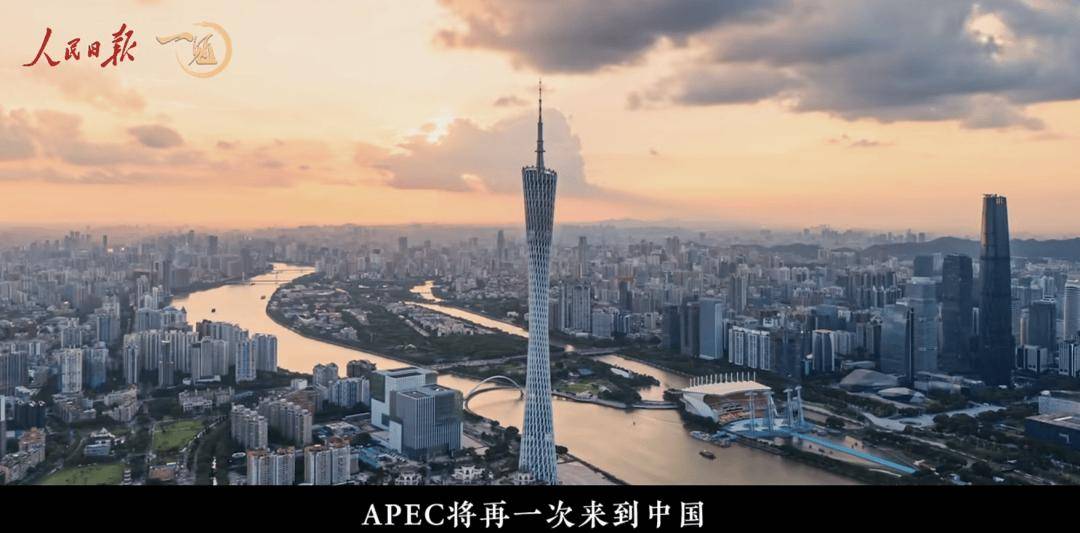
Core Points - The third city in China to host the APEC summit is expected to be announced in early November [1][3] - China has been awarded the hosting rights for the 2026 APEC summit, marking its third time as a host [3] - Previous APEC meetings in China were held in Shanghai in 2001 and Beijing in 2014 [4] Location Analysis - Major cities like Beijing and Shanghai have already hosted APEC, making it less likely for them to be chosen again [5] - Historically, APEC prefers coastal cities for its meetings, as seen in the locations of past summits [5] - The likelihood of selecting a significant coastal city outside of Beijing and Shanghai is high [6] - The South China region has not yet hosted a summit of this level, making it a potential candidate [6] Candidate Cities - Guangzhou and Shenzhen are the primary contenders for hosting the APEC summit in South China, with Guangzhou having a slight edge [7] - Shenzhen, being a coastal economic hub, could showcase China's economic achievements if selected [8] - However, Guangzhou's historical significance and experience in hosting international events make it a more suitable choice [9][10] - Guangzhou is recognized as a key city in China, with a unique status among sub-provincial cities [10][11] APEC Overview - APEC, established in 1989, aims to promote free trade and investment and accelerate regional economic integration [13] - It consists of 21 members, accounting for approximately 40% of the world's population and 60% of global GDP [13] - Hosting the APEC summit presents a significant branding opportunity for the chosen city [14]

关税冲击如何影响国内市场
Jin Rong Shi Bao· 2025-10-14 01:12
Group 1 - The U.S. will impose an additional 100% tariff on all goods imported from China starting November 1, 2025, and will implement export controls on "all critical software" [1][2] - Following the announcement, global risk assets experienced a widespread decline, with the Shanghai Composite Index falling below 3900 points on October 10 [1][3] - The A-share market is expected to face potential index-level adjustments, but the extent is manageable, and the impact on the bond market is relatively limited [2][4] Group 2 - Analysts believe the recent escalation in U.S.-China trade tensions is primarily due to unreasonable sanctions on China's shipbuilding industry imposed by the U.S. in early October [2][4] - The A-share market showed significant volatility, with the ChiNext Index and the Sci-Tech Innovation 50 Index dropping 4.55% and 5.61% respectively on October 10 [3][4] - Market sentiment is expected to remain focused on the upcoming APEC summit, with investors drawing on experiences from previous tariff announcements to gauge potential market reactions [3][4] Group 3 - The bond market's response to the current tariff escalation is expected to be weaker than in April, with analysts predicting that the 10-year government bond yield will fluctuate between 1.7% and 1.75% [6][7] - The current market environment is characterized by a learning effect from previous tariff experiences, leading to more rational investor behavior and shorter emotional impacts [6][7] - The upcoming changes in domestic policies, such as the fund redemption fee reform, are anticipated to be key variables influencing the bond market in the fourth quarter [7]