
CCER市场

Search documents
双碳-政策专家电话会
2026-02-11 15:40
Summary of Key Points from the Conference Call on Carbon Neutrality Policies Industry Overview - The conference focused on China's carbon neutrality policies, particularly the chemical and petrochemical industries, and their implications during the 14th Five-Year Plan (2021-2025) period [1][2]. Core Points and Arguments 1. **Carbon Peak and Neutrality Goals**: China aims to peak carbon emissions around 2028 and achieve a 7%-10% reduction in emissions by 2035 after reaching the peak. The long-term goal is carbon neutrality by 2060 [2][10]. 2. **Strict Control Measures**: The chemical and petrochemical industries will face stringent controls, including local carbon budget assessments, inclusion in carbon markets, and enhanced carbon management practices [1][2]. 3. **New Mechanisms for Energy Consumption Control**: A dual control mechanism for energy consumption will be implemented, focusing on total volume control rather than just intensity, with strict evaluations at the local government level [6][5]. 4. **Expansion of Carbon Market**: By 2027, eight high-energy-consuming industries will be included in the national carbon market, with a combination of free and paid quota distribution methods to enhance emission reductions [1][9]. 5. **Challenges from Climate Change**: The chemical industry faces challenges from climate change and extreme weather, necessitating a shift from coal to renewable resources and the adoption of technologies like Carbon Capture, Utilization, and Storage (CCUS) [1][10]. 6. **Carbon Market Development**: The national carbon market has been steadily advancing since its establishment in 2021, with plans to tighten quota issuance requirements starting in 2027 [1][11]. 7. **Support for Enterprises**: The government will provide multi-dimensional support for enterprises to reduce emissions, including financial subsidies, green loans, and trading profits from carbon credits [25][26][27]. Additional Important Content 1. **New Project Approval**: New capacity additions require approval from the National Development and Reform Commission (NDRC), ensuring that total emissions do not exceed provincial limits [3][14]. 2. **Carbon Footprint Accounting**: A carbon footprint accounting system will be established for products to comply with international standards, such as the Carbon Border Adjustment Mechanism (CBAM) [5][10]. 3. **Monitoring and Data Collection**: Real-time monitoring of carbon emissions data is being improved, with expectations for more accurate data collection by 2027 [23][29]. 4. **Market Mechanisms for Emission Reduction**: The government will implement market mechanisms to encourage emission reductions, including voluntary reduction projects and the ability for non-regulated enterprises to participate in the carbon market [8][9]. 5. **Long-term Industry Transition**: The chemical industry, heavily reliant on coal, is expected to gradually reduce its coal usage from over 56% to lower levels, with a focus on sustainable development through carbon cost integration [19][20]. This summary encapsulates the critical insights and implications of the conference call regarding China's carbon neutrality policies and their impact on the chemical and petrochemical industries.
推动更多温室气体减排项目落地见效
Ke Ji Ri Bao· 2026-02-11 03:06
Core Viewpoint - The construction of the national voluntary greenhouse gas emission reduction trading market (CCER market) has entered a new stage of rapid development, with the recent release of 12 methodologies for voluntary emission reduction projects in various fields, which is expected to enhance the market's role in promoting carbon reduction and guiding green investment [1][3]. Group 1: Methodology Significance - The release of the 12 methodologies represents a large-scale and systematic expansion of the CCER market's methodological framework, enhancing its effectiveness in supporting national high-quality development [3]. - The methodologies cover seven categories of greenhouse gas emission reduction projects, including renewable energy, energy demand, and agriculture, allowing these projects to participate in the CCER market [2][3]. Group 2: Project Implementation and Monitoring - The methodologies adhere to the principles of reportability, verifiability, and monitorability, ensuring that emission reductions are real and accurate [2]. - The methodologies serve as both a "judge" and a "ruler," defining the conditions for qualifying projects and providing clear metrics for measuring carbon reduction [2]. Group 3: Market Participation and Quality Assurance - To participate effectively in the CCER market, project owners and consulting firms must strictly follow the methodologies for project planning, management, and monitoring [7]. - The methodologies are designed to ensure high-quality carbon credits by establishing rigorous monitoring and verification processes, which are crucial for the credibility and vitality of the market [4][6]. Group 4: Industry Impact and Development - The release of the methodologies is expected to increase project investment returns, stimulate industry investment enthusiasm, and promote the development of related technical service markets [8]. - Industry associations are developing online monitoring service modules in accordance with the methodologies, facilitating compliance and reducing technical risks for enterprises [8]. Group 5: Future Directions - The Ministry of Ecology and Environment aims to maintain the scientific, rational, and operable nature of the methodologies to encourage more industries to engage in greenhouse gas reduction actions and implement certified voluntary emission reduction projects [9].
推动分布式光伏市场化
Xin Lang Cai Jing· 2026-02-05 07:53
Core Viewpoint - The current green electricity and carbon trading markets in Shanghai primarily cater to large centralized power plants, which limits the investment enthusiasm of social capital. It is crucial to promote the entry of these markets to activate green assets, reduce social emission reduction costs, and cultivate new growth points [2]. Group 1: Market Dynamics - The national Certified Voluntary Emission Reduction (CCER) market has been restarted, with distributed photovoltaic projects being explicitly recognized as eligible for generating revenue through CCER projects in the national market [2]. - There is a suggestion to explore the establishment of a local certification and docking mechanism for the green value of distributed photovoltaics in the city, based on the connection with the national CCER market [2]. Group 2: Recommendations for Improvement - The promotion of a "aggregation" model is recommended to lower the participation threshold for various stakeholders [2]. - Simplifying the administrative processes for project development, registration, and trading is advised to reduce the participation costs for different entities [2].


完善容量电价政策发布 碳减排明确成为发展主线 | 投研报告
Zhong Guo Neng Yuan Wang· 2026-02-03 09:51
Group 1: Energy Sector Overview - As of the end of 2025, the cumulative installed power generation capacity in the country reached 3.89 billion kilowatts, with a total of 434 GW of new energy capacity added throughout the year, exceeding market expectations. This includes 119 GW from wind power and 315 GW from solar power. Notably, thermal power added 95 GW [1][4]. - In December alone, solar power saw an addition of 41 GW and wind power added 38 GW, significantly higher than the monthly figures from June to November, likely due to the grid connection of large wind and solar projects at year-end [1][4]. Group 2: Storage and Pricing Mechanisms - The National Development and Reform Commission and the National Energy Administration issued a notice to improve the capacity pricing mechanism for power generation, which is expected to accelerate the introduction of independent storage capacity pricing policies at the provincial level. This is anticipated to expand the domestic independent storage market, benefiting storage integrators, upstream component manufacturers, and battery companies [2][3]. - The notice is seen as a significant step in establishing a unified framework for pricing and profitability for gas-fired power plants, which may enhance their construction enthusiasm and profitability [3]. Group 3: Investment Recommendations - Companies to watch in the storage sector include integrators such as Haibo Shichuang, Sunshine Power, and Canadian Solar, as well as battery manufacturers like CATL, EVE Energy, and others [2]. - In the power generation sector, companies with significant natural gas generation capacity such as Huadian International and Guangdong Power Development are recommended, along with those offering a combination of dividend yield and growth potential like Gui Guan Power [4][5]. Group 4: Carbon Market Developments - The "14th Five-Year Plan" emphasizes carbon reduction as a key development line, with stricter carbon emission controls expected. The carbon market is projected to expand, with additional industries being incorporated by 2027 [5][6]. - New methodologies for CCER (China Certified Emission Reduction) are being introduced, expanding the market's support to various sectors, including oil and gas recovery and green hydrogen, which may create new investment opportunities [6].
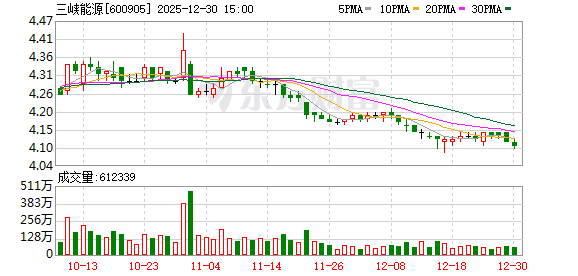
三峡能源:当前CCER处于市场初期,交易规模有限
Mei Ri Jing Ji Xin Wen· 2025-12-30 14:58
Group 1 - The core viewpoint of the article is that the CCER market is currently in its early stages, with limited trading volume, but is expected to grow positively as it matures and becomes more active [2][3] Group 2 - Company Three Gorges Energy (600905.SH) responded to an investor inquiry about the current CCER revenue situation from offshore wind power [2] - The company anticipates that as the CCER market develops further, both the trading scale and revenue are expected to improve [2]

火电、风光发电量增速提升,水电电量降幅扩大环保公用事业行业周报(2025/08/17)-20250818
CMS· 2025-08-18 05:37
Investment Rating - The industry maintains a "Recommendation" rating [2] Core Viewpoints - The report highlights a divergence in performance within the environmental and public utility sectors, with the environmental index rising by 1.72% while the public utility index fell by 0.55% [5][22] - The report emphasizes the increase in electricity demand, particularly in Eastern China, with a record peak load of 1.465 billion kilowatts, supporting a year-on-year growth in electricity demand [5][9] - Key recommendations include focusing on companies like Sheneng Co., and long-term prospects for Guodian Power and China Resources Power, while also suggesting attention to Zhongmin Energy and Funiu Co. [5][9] Summary by Sections Key Event Interpretations - In July, national electricity generation reached 926.7 billion kWh, a year-on-year increase of 3.1%, with thermal and wind power generation growth accelerating while hydropower generation saw a decline [9][19] - The Ministry of Ecology and Environment is set to release the third batch of CCER methodologies, which will promote the utilization of agricultural and forestry biomass energy [19][20] Market Review - The environmental sector has seen a cumulative increase of 15.44% in 2025, outperforming the CSI 300 index, while the electricity sector has declined by 0.99% [5][22] - The report notes that the coal price has rebounded, with Qinhuangdao 5500 kcal thermal coal priced at 700 RMB/ton, a 1.45% increase from the previous week [32] Key Data Tracking - As of August 15, 2025, the water level of the Three Gorges Reservoir was 160.34 meters, up 2.6% year-on-year, while inflow and outflow rates showed mixed trends [34][35] - The price of LNG at the port was reported at 11.41 USD/million BTU (4254 RMB/ton), reflecting a 3.75% decrease from the previous week [47][48] Industry Key Events - The report discusses various regulatory updates, including the implementation of distributed photovoltaic power generation management guidelines in Chongqing and the development of energy transmission channels in Xinjiang [62][63]
专家为行业节能降碳标出发力点
Zhong Guo Hua Gong Bao· 2025-05-06 08:40
Core Viewpoint - The petrochemical industry is shifting its focus from energy consumption control to carbon emission control during the "14th Five-Year Plan" period, emphasizing the importance of carbon reduction strategies in ecological civilization construction [1][2]. Group 1: Transition to Carbon Emission Control - The transition to carbon emission control is a significant step in China's ecological strategy, with experts suggesting that the industry should focus on areas such as electrification and raw material substitution to meet upcoming carbon emission targets [1][2]. - The petrochemical sector accounts for approximately 20% of total energy consumption in society, highlighting the critical role of energy efficiency in reducing carbon emissions [1]. Group 2: Technological and Market Innovations - The use of digital twin technology and artificial intelligence is recommended to optimize equipment updates, ensuring reliability and cost-effectiveness in the transition to electrification [2]. - The carbon market, including the voluntary carbon emission reduction (CCER) market, is seen as a vital mechanism for promoting carbon reduction, with opportunities for the petrochemical industry to engage in carbon trading and develop negative carbon technologies [2]. Group 3: Standardization Efforts - The development of national and industry standards related to energy saving, water conservation, and carbon emissions is accelerating, with calls for industry participation in standard formulation to facilitate the green and low-carbon transformation of the sector [3].