
脑机接口产业

Search documents
东北证券:脑机接口聚焦落地 把握三大主线
智通财经网· 2026-02-09 06:20
Core Insights - The brain-computer interface (BCI) industry is transitioning from "technology validation to early commercialization," with the medical rehabilitation sector being the first to achieve large-scale implementation due to rigid demand and policy support [1] - The report suggests focusing on three categories of targets: leading companies in non-invasive product commercialization, clinical breakthrough targets in invasive/interventional technologies, and core component suppliers in the industry [1] Market Space - The global BCI market is projected to reach $2.62 billion in 2024, with a compound annual growth rate (CAGR) of 17.35% from 2025 to 2034, potentially exceeding $12.4 billion by 2034 [2] - The domestic market is also expanding steadily, with an expected size of 3.2 billion yuan in 2024, where non-invasive products will account for 82%. The China Electronic Information Industry Development Research Institute forecasts the domestic market to grow to 5.58 billion yuan by 2027 [2] Core Technology - The industry faces significant technological barriers concentrated in three areas: signal acquisition, decoding algorithms, and neural stimulation [3] - Leading overseas companies are advancing in clinical applications, with Neuralink completing 21 human implant surgeries and Synchron's vascular interventional BCI product receiving FDA approval. Domestic companies are catching up, achieving global breakthroughs such as the "Beinao No. 1" 128-channel semi-invasive system and the first interventional BCI human trial [3] Policy and Ecosystem - Continuous policy support is evident, with national "14th Five-Year" and "15th Five-Year" plans highlighting BCI as a key development area. 29 provinces and cities, including Zhejiang and Hubei, have included BCI rehabilitation projects in their medical insurance payment scope, accelerating clinical adoption [4] - The upstream core component localization process is speeding up, with domestic analog chips showing a 60% reduction in power consumption compared to similar overseas products. Downstream applications in medical rehabilitation and consumer electronics are beginning to form initial scales [4]

前瞻布局脑机接口产业
Jing Ji Ri Bao· 2026-02-04 22:15
Core Insights - The development of future industries, particularly brain-computer interfaces (BCIs), is a strategic focus for China, emphasizing the need for scientific planning and comprehensive coordination [1] Group 1: Industry Development - The Chinese government aims to significantly enhance the innovation capabilities of the BCI industry by 2030, establishing a reliable industrial system and nurturing 2 to 3 globally influential leading enterprises [1] - Various regions in China, such as the Yangtze River Delta, Beijing-Tianjin-Hebei, and the Guangdong-Hong Kong-Macao Greater Bay Area, are leveraging their unique advantages to advance BCI technology and applications [1] Group 2: Challenges and Solutions - The BCI industry faces systemic challenges, including technological innovation gaps and a lack of unified standards for brain data collection, which hinder innovation among small and medium enterprises [2] - To address these challenges, a problem-oriented approach is recommended, focusing on multi-technology exploration, open scenarios, and regulatory adaptation to foster a collaborative development environment [2] Group 3: Application and Commercialization - There is a push to expand BCI applications across various sectors such as healthcare, industrial, and education, with an emphasis on market-driven technology iteration and innovative business models [3] - Financial support mechanisms, such as establishing an investment fund for the BCI industry, are being explored to mitigate early-stage investment risks for innovators [3] Group 4: Regulatory and Safety Framework - The establishment of a comprehensive standard system covering technology development, data security, and clinical applications is crucial for the BCI industry [3] - Innovative regulatory approaches, including regulatory sandboxes, are being considered to provide safe testing environments for new products [3] Group 5: Talent Development - Support for interdisciplinary education in fields like neuroengineering and the establishment of collaborative laboratories is essential for nurturing talent in the BCI sector [4] - A full-chain incubation system is proposed to foster the growth of various enterprises, from startups to established companies, enhancing the overall industry ecosystem [4]
脑机接口正加速带入现实!专家研判哪些领域最先突破
Shang Hai Zheng Quan Bao· 2026-02-04 06:17
Core Viewpoint - Brain-computer interface (BCI) technology is rapidly advancing, bridging the gap between the brain and the external world, with significant implications for medical rehabilitation and potential changes in human cognition and interaction with the world [1] Technical Aspects - BCI technology is currently exploring multiple pathways, categorized into invasive, semi-invasive, and non-invasive methods, each with distinct focuses on signal quality, safety, and scalability [2] - Invasive BCIs involve surgical implantation of electrodes to record neuronal signals, facing challenges in long-term signal stability and biocompatibility of materials [2] - Non-invasive BCIs utilize various methods to capture brain activity without damaging the skull, but face difficulties due to signal attenuation through multiple layers of tissue [2] - Semi-invasive BCIs aim to balance risk and signal quality by placing electrodes outside the brain or accessing signals through blood vessels [2] - High-precision signal acquisition and decoding are critical challenges, relying heavily on artificial intelligence for accurate signal interpretation [3] Industry Insights - The next 3 to 5 years are expected to see a commercial explosion in BCI technology, with serious medical applications leading the way [4] - BCI's value lies in addressing real-world problems, particularly in medical settings where it can restore sensory functions or mobility [4] - Successful applications in medical fields, such as cochlear implants and deep brain stimulation for Parkinson's disease, demonstrate the technology's long-term value and clear payment models [4] - In stroke rehabilitation, BCI-enabled robots can interpret patients' intentions for active recovery, showing superior outcomes compared to traditional therapies [5] - The consumer market for BCI is still in the exploratory phase, focusing on experience-based applications, with significant barriers in cost, usability, and uniqueness [5] Capital Market Perspective - The focus in the capital market is on the commercial viability of BCI technology, with applications divided into "brain perception" and "brain modulation" [7] - Established markets exist for EEG monitoring and sleep analysis, while brain modulation techniques like deep brain stimulation have achieved significant revenue levels [7] - The most promising applications, such as restoring movement in paralyzed patients, remain in clinical research stages, highlighting a gap between current commercial applications and future potential [7]
江苏省工商联呼吁:加强民营企业接班人培养,加快布局发展脑机接口产业
Yang Zi Wan Bao Wang· 2026-02-03 05:47
Group 1 - Jiangsu Provincial Federation of Industry and Commerce submitted 21 proposals at the recent Jiangsu Provincial Political Consultative Conference, focusing on the cultivation of successors in private enterprises to ensure stable generational transfer [1] - The proposal emphasizes the need for collaboration among enterprises, government, and society to cultivate outstanding successors for private enterprises [1] - A proposal aimed at enhancing corporate confidence and addressing challenges calls for a comprehensive support system for enterprises, including regular visits, service platforms, and a closed-loop mechanism for addressing corporate concerns [1] Group 2 - The proposal on supporting private enterprises to enhance international competitiveness suggests multi-dimensional strategies to stabilize foreign trade and support the development of a balanced and diversified foreign trade market [2] - Recommendations include strict enforcement of negative lists for market access, detailed guidelines for key areas, and improved regulatory mechanisms for opening competitive sectors to private enterprises [2] - Proposals also focus on accelerating technological self-reliance and developing new productive forces, with an emphasis on creating a favorable business environment [2] Group 3 - Proposals aimed at building a modern industrial system highlight the need for high-quality development of key manufacturing industry chains, addressing deep-seated issues in technology, collaboration, and resource allocation [3] - Suggestions include promoting deep integration of advanced manufacturing and productive services across various sectors, enhancing the quality and efficiency of their coupling [3] - The proposal for developing competitive strategic emerging industry clusters emphasizes spatial layout guidance, integrated computing resource management, and fostering innovation through specialized plans [3] Group 4 - The proposal on developing brain-computer interface industries suggests seizing development opportunities by strengthening core technology research and establishing a collaborative innovation system among government, industry, academia, and healthcare [4] - Recommendations include building a supportive ecosystem for the brain-computer interface industry in Jiangsu, focusing on scenario promotion and ethical standards [4]
多个产业会议将召开,这些投资机会最靠谱|下周关注
Di Yi Cai Jing Zi Xun· 2026-02-01 05:27
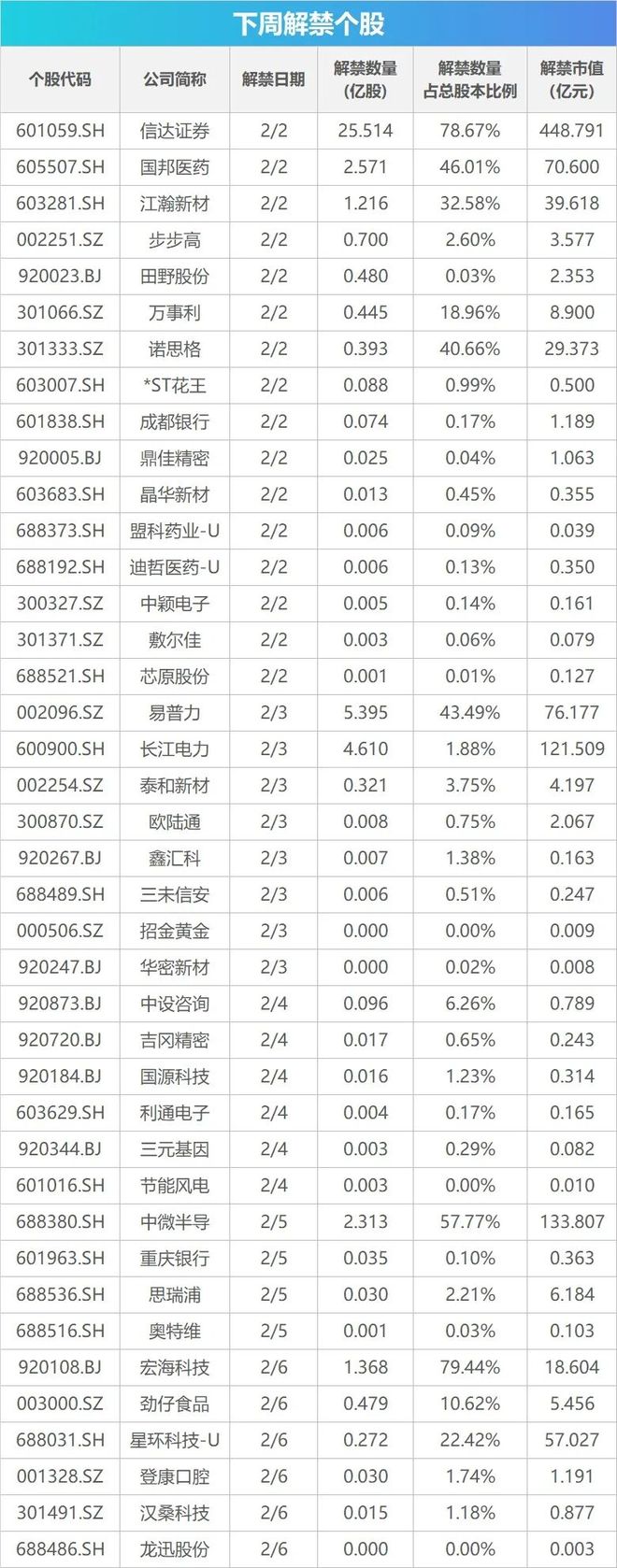
Group 1: Company Announcements - Chipway Technology will release its 2025 annual report on February 3, becoming the first listed company on the Shanghai Stock Exchange to do so [1] - ST Huawang will disclose its annual report on February 13, while Shangwei Co. will do so on February 14 [1] Group 2: Oil Price Adjustments - The next price adjustment window for refined oil products will open at 24:00 on February 3, based on the "ten working days" principle [2] - As of January 30, the average price of reference crude oil was $64.09 per barrel, with a change rate of 4.68%, leading to an expected increase of 190 yuan per ton in domestic gasoline and diesel prices [2] Group 3: Industry Conferences - The China Photovoltaic Industry Association will hold a seminar on February 5 in Beijing to review the development of the photovoltaic industry in 2025 and forecast trends for 2026 [3] - A Brain-Computer Interface Developers Conference will take place in Tianjin from February 3 to 4, organized by the Brain-Computer Interface Industry Alliance and Tianjin University [3] Group 4: Stock Unlocking Events - A total of 42 companies will have their restricted shares unlocked from February 2 to February 6, with a total of 4.657 billion shares and a market value of 103.669 billion yuan based on the closing price on January 30 [5] - February 2 is the peak unlocking day, with 18 companies unlocking shares worth a total of 60.71 billion yuan, accounting for 58.56% of the total unlocking scale for the week [5] - The top three companies by unlocking market value are Xinda Securities (44.879 billion yuan), Zhongwei Semiconductor (13.381 billion yuan), and Changjiang Power (12.151 billion yuan) [5] Group 5: New Stock Opportunities - Two new stocks, Aide Technology and Yisiwei, will be available for subscription on February 2 [9] - Aide Technology has a subscription price of 7.67 yuan, while Yisiwei is priced at 55.95 yuan, with respective P/E ratios of 14.98 and 90.39 [10]

中国多地竞逐脑机接口新赛道
Zhong Guo Xin Wen Wang· 2026-01-29 12:07
Core Insights - The recent provincial meetings in China have highlighted the growing focus on brain-computer interface (BCI) technology, with multiple regions including Beijing, Tianjin, Guangdong, and Jiangxi outlining plans to develop this emerging industry [1][2] Group 1: Government Initiatives - Beijing plans to establish new research and innovation platforms in BCI and high-temperature superconductivity, supporting enterprises in technological breakthroughs [1] - Tianjin aims to build a national BCI technology innovation center [1] - Guangdong is set to enhance its future industry layout, particularly in brain science and BCI [1] - Jiangxi is initiating actions to cultivate future industries, specifically focusing on BCI [1] Group 2: Market Potential - The BCI market is expected to experience rapid growth, with estimates suggesting that by 2026, the industry scale in China could reach several billion yuan, and by 2030, it may expand to between 10 billion and 14 billion yuan [2] - The BCI sector has attracted significant investment, with companies like Strong Brain Technology securing approximately 2 billion yuan in new financing [1][2] Group 3: Industry Challenges - Despite the promising outlook, the BCI industry faces several challenges, including the need for standardization in a nascent sector [2] - The Ministry of Industry and Information Technology has set goals for 2027, aiming for breakthroughs in key technologies and the establishment of a robust technology, industry, and standards system for BCI [3]
开年火爆的脑机接口怎么“跟”?这些ETF或能锁定板块行情
Xin Lang Cai Jing· 2026-01-12 08:55
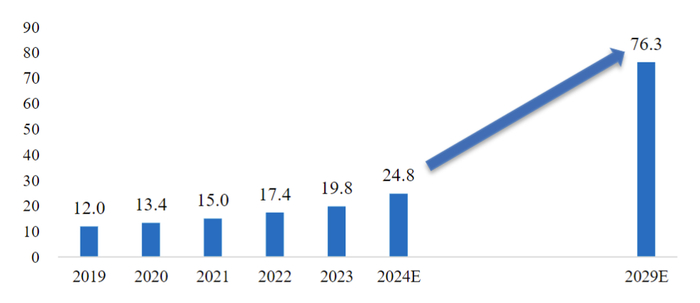
Core Insights - The brain-computer interface (BCI) market is gaining significant attention following Elon Musk's announcement of large-scale production plans for his company Neuralink starting in 2026, shifting perceptions from skepticism to optimism about commercialization [1] - Current applications of BCI technology are still in clinical trial phases, facing ethical and social acceptance challenges, leading to varied growth forecasts from different institutions [1] - Grand View Research reports that the BCI market size grew from $1.2 billion in 2019 to nearly $2 billion in 2023, with a compound annual growth rate (CAGR) exceeding 13%, and is expected to reach $7.63 billion by 2029 with a CAGR of 25.2% from 2024 to 2029 [1] Market Overview - The domestic BCI industry in China has advanced from a "follower" to a "co-runner and partial leader" position globally, with the market size increasing from approximately 1 billion RMB in 2020 to about 1.73 billion RMB in 2023, capturing 12.5% of the global market [3][5] - The CAGR for China's BCI market is reported at 20%, significantly higher than the global average of 14% [3] Drivers of Growth - Policy support includes the inclusion of brain science in China's 14th Five-Year Plan and local subsidies reaching up to 30 million RMB, alongside the development of national standards for BCI expected by 2025 [5] - Capital investment in the domestic BCI sector exceeded 6.5 billion RMB from 2021 to 2023, accounting for 28% of global financing, with notable single-round financing records [5] - Technological advancements include breakthroughs in electrode channel counts by Chinese universities and significant reductions in power consumption and costs for non-invasive BCI technologies [6] Application and Market Segmentation - Medical rehabilitation remains the largest segment, accounting for approximately 65% of the current market, with the average price of domestic "brain-controlled robotic arms" decreasing from 1.2 million RMB in 2019 to 450,000 RMB in 2023 [6] - Consumer applications in education, entertainment, and industrial safety are emerging, with the consumer segment's market share increasing to 18% in 2023 and expected to exceed 30% by 2026 [6] Future Projections - The Chinese BCI market is projected to reach approximately 5 billion RMB by 2026 and aim for 20 billion RMB by 2030, potentially capturing 25% of the global market [7] - China is expected to not only expand its market but also to set standards and solutions, positioning itself as a "second pole" in the global BCI industry [7] Investment Opportunities - The BCI sector's complexity suggests that investing in ETFs could be a strategic approach to capture the full spectrum of opportunities across the value chain, including software algorithms and medical technology [8] - The software segment, which translates neural signals into machine language, is critical for BCI commercialization, with 15% of the CSI Software Service Index now associated with BCI [8] - The medical technology segment is highlighted as the most immediate commercial application for BCI, with significant representation in the CSI Medical Device Index, which includes leading companies in the field [11]
脑机接口,更多科幻照进现实
Xin Hua She· 2025-11-21 00:04
Core Insights - The "14th Five-Year Plan" emphasizes the development of brain-computer interfaces (BCIs) as a new economic growth point, facilitating the transition from laboratory research to industrial application [1] - BCIs are defined as technologies that capture subtle changes in brain electrical signals, decode intentions, and enable control of machines without physical interaction [2] - The recognition of BCIs in the "14th Five-Year Plan" highlights their interdisciplinary nature, involving neuroscience, materials science, AI, and clinical medicine, and indicates their readiness for application trials after years of academic exploration [3] Industry Applications - BCIs are currently being applied in various fields, with healthcare being the most dynamic application area [4] - A notable case is the successful implantation of "North Brain No. 1" in a patient with ALS, allowing the patient to decode and output nearly a hundred common phrases [5] Market Potential - The BCI market in China is expected to exceed 5.5 billion yuan by 2027, indicating significant growth potential [6] Policy Support - The government is actively promoting BCI innovation, with plans for key technological breakthroughs by 2027 and aims for global competitiveness by 2030 [7] - Recent policy initiatives include pricing guidelines for invasive BCI procedures and action plans from major cities to support regulatory frameworks and industry clusters [7]
规划建议新看点|脑机接口,更多科幻照进现实
Xin Hua She· 2025-11-18 09:44
Group 1 - The core viewpoint of the article emphasizes the strategic importance of brain-computer interfaces (BCIs) as a new economic growth point, as highlighted in the "14th Five-Year Plan" [1] - BCIs are defined as technologies that capture subtle changes in brain electrical signals, decode intentions, and enable control of machines without physical interaction [2] - The "14th Five-Year Plan" specifically mentions BCIs due to their interdisciplinary nature, involving neuroscience, materials, chips, AI, and clinical medicine, indicating strong potential for development [3] Group 2 - BCIs are currently being applied in various fields, with healthcare being a particularly vibrant area; for instance, a patient with ALS was able to communicate using a BCI implant [4] - The BCI market in China is projected to exceed 5.5 billion yuan by 2027, indicating significant growth potential [4] - Policy initiatives are being implemented to support the BCI industry, including a plan for key technological breakthroughs by 2027 and a goal for comprehensive strength to rank among the world's top by 2030 [5]
新华鲜报·规划建议新看点|脑机接口,更多科幻照进现实
Xin Hua She· 2025-11-18 09:23
Group 1 - The "14th Five-Year Plan" emphasizes the forward-looking layout of future industries, specifically highlighting brain-computer interfaces (BCIs) as new economic growth points, facilitating the transition from laboratory research to industrialization [1] - BCIs are defined as interdisciplinary technologies that involve neuroscience, materials science, chips, AI, and clinical medicine, showcasing strong development potential and collaborative opportunities [3] - The BCI market in China is projected to exceed 5.5 billion yuan by 2027, indicating significant growth and application potential, particularly in the medical health sector [4] Group 2 - Policy initiatives are actively supporting the BCI industry, with the Ministry of Industry and Information Technology and other departments outlining plans for technological breakthroughs by 2027 and aiming for global leadership by 2030 [5] - Regulatory frameworks and pricing guidelines for invasive BCI procedures have been established, indicating a structured approach to industry development and market entry [5] - The ongoing exploration and innovation in BCI applications are expected to create new high-tech industries, contributing to economic growth and transforming science fiction into reality [5]