工业软件

Search documents
收评:沪指震荡微跌,军工板块强势,工业软件概念等活跃
Zheng Quan Shi Bao Wang· 2026-01-08 07:28
Market Overview - The Shanghai Composite Index experienced slight fluctuations, closing down 0.07% at 4082.98 points, while the Shenzhen Component Index fell by 0.51% and the ChiNext Index decreased by 0.82%. In contrast, the Sci-Tech 50 Index rose by 0.82% [1] - The total trading volume across the Shanghai, Shenzhen, and Beijing markets reached approximately 2.83 trillion yuan [1] Sector Performance - The insurance, brokerage, and banking sectors collectively declined, while the military industry sector showed strong performance. Other sectors such as real estate, steel, pharmaceuticals, and semiconductors also saw gains [1] - Active sectors included industrial software, commercial aerospace, and military trade concepts [1] Investment Insights - Dongguan Securities noted that the current external environment benefits from a weak dollar trend, while the internal environment is supported by expectations of proactive policy measures. The market volume has been increasing since the beginning of 2026, indicating strong market sentiment [1] - Recommendations for investment focus include AI technology sectors (such as brain engineering, computing power engineering, and humanoid robots), price increase sectors (like storage chips and rare earths), and large financial sectors [1] - Upcoming data releases to watch include China's CPI, U.S. non-farm employment data, and a U.S. Supreme Court ruling on tariff issues [1]
午评:沪指震荡微涨 金融板块走低 商业航天概念等活跃
Zheng Quan Shi Bao Wang· 2026-01-08 04:43
Core Viewpoint - The A-share market is experiencing a mixed performance, with the Shanghai Composite Index showing slight gains while other indices like the Shenzhen Component and ChiNext are declining. The market is characterized by sector rotation and structural trends, suggesting a potential continuation of the bull market in A-shares due to favorable economic conditions and policy support [1]. Market Performance - On the morning of the 8th, the Shanghai Composite Index fluctuated within a narrow range, while the Sci-Tech Innovation 50 Index surged nearly 2%. Over 3,700 stocks in the A-share market were in the green [1]. - By midday, the Shanghai Composite Index rose by 0.09% to 4,089.45 points, the Shenzhen Component fell by 0.2%, and the ChiNext Index decreased by 0.52%. The Sci-Tech Innovation 50 Index increased by 1.77%. The total trading volume across the Shanghai, Shenzhen, and North markets reached approximately 1.78 trillion yuan [1]. Sector Performance - The brokerage, insurance, banking, and liquor sectors experienced declines, while the military, real estate, pharmaceuticals, and semiconductor sectors saw gains. Additionally, sectors related to industrial software, controllable nuclear fusion, and commercial aerospace were active [1]. Investment Strategy - According to Caixin Securities, the market is likely to shift towards a structural trend characterized by index fluctuations and sector rotation. Investors are advised to adopt a strategy of focusing on strong sectors while gradually adjusting to the rotation rhythm [1]. - Looking ahead, with resilient overseas economic conditions, likely continued loose dollar liquidity, ongoing domestic "dual easing" policies, and sustained inflation expectations due to "anti-involution," the bull market in A-shares is expected to continue [1].
工业软件概念崛起,汉得信息20%涨停,东土科技等涨超10%
Zheng Quan Shi Bao Wang· 2026-01-08 03:36
Group 1 - The industrial software sector experienced significant gains on January 8, with companies like Hand Information reaching a 20% limit up, and others such as Dongtu Technology and Saiyi Information rising over 10% [1] - The Ministry of Industry and Information Technology, along with eight other departments, issued the "Implementation Opinions on the Special Action of 'Artificial Intelligence + Manufacturing'" on January 7, which emphasizes the need to strengthen the supply of artificial intelligence computing power [1] - The Opinions propose to promote the development of intelligent chips and support breakthroughs in key technologies such as high-end training chips and AI servers, while encouraging innovation in both large and small models tailored for specific industrial applications [1] Group 2 - Dongguan Securities noted that the Chinese government has been increasingly focused on the development of the industrial software industry, with multiple supportive policies being introduced [2] - The Ministry of Industry and Information Technology issued guidelines in September 2024 for updating industrial software and operating systems, setting clear targets for upgrades [2] - The National Development and Reform Commission included industrial software updates in the "Two New" policy support framework in April 2025, indicating government encouragement for increased investment in the sector [2]





百事公司宣布与西门子和英伟达展开合作
Bei Jing Shang Bao· 2026-01-07 14:04
Group 1 - The core point of the article is that PepsiCo has announced a collaboration with Siemens and NVIDIA to advance the application of artificial intelligence and digital twin technology in the manufacturing sector [1] - This collaboration represents the first industry project that combines AI with digital twin technology, aiming to enhance production efficiency, optimize supply chain management, and reduce carbon emissions [1] - PepsiCo will utilize Siemens' industrial software platform and NVIDIA's AI computing technology to deploy intelligent digital systems across its global factories, marking a significant step in the smart transformation of the food and beverage industry [1]


2026 数字跃迁:六大关键词重构企业增长逻辑
Sou Hu Cai Jing· 2026-01-06 07:27
Group 1 - The core viewpoint of the article emphasizes that the digital transformation of enterprises in 2026 is at a critical juncture, driven by a significant increase in AI-enhanced SaaS penetration and the number of companies recognizing data assets [1] - The "14th Five-Year Plan" provides a strategic framework for digital transformation, helping companies align their goals with national policies, thus gaining advantages in resource allocation and cross-departmental collaboration [2] - AI-native applications are set to redefine operational paradigms, moving from passive responses to proactive problem-solving, with a focus on intelligent decision-making [4] Group 2 - The concept of data assetization has evolved from mere compliance to becoming a core driver of intelligence, with companies recognizing the value of data as fuel for AI models [6] - Lean growth has emerged as a response to budget cuts, with over 70% of companies reducing digital investment, leading to a focus on high-value scenarios and precise breakthroughs [8] - Emotional value is identified as a key factor in overcoming resistance to digital transformation, emphasizing the importance of trust and recognition within organizations [9] Group 3 - Talent restructuring is essential as the shift in technology creates a gap in skills, necessitating a transformation from technical roles to value integrators [11] - The article concludes that the digital leap in 2026 represents a "logical revolution," where six key themes interconnect to form a new growth logic that integrates strategy, technology, and organization [12] - Companies like Dateng Intelligent are exemplifying the practical application of these six key themes, aligning with national policies and enhancing operational efficiency through AI and data integration [15]


国泰海通晨报-20260106
GUOTAI HAITONG SECURITIES· 2026-01-06 06:35
Agriculture Industry - In 2026, the pig and beef cattle breeding sectors are expected to reach a cyclical turning point, with companies that have comprehensive production, sales, and research capabilities likely to succeed in the competitive pet market [1][2] - The planting sector shows significant growth potential in specialty crops, warranting attention [1] - The white chicken supply-demand balance is expected to take time to restore, while yellow chicken demand may increase due to promotional activities [2] - The long breeding cycle of beef cattle and supply-side contraction are anticipated to drive price increases starting in 2025 [2] - The feed sales volume is expected to grow, with leading companies increasing market concentration [3] Military Industry - Guorui Technology is a key supplier of radar equipment and systems in China, benefiting from the advancement of national defense informationization and the expansion of civil radar and intelligent transportation demands [5][7] - The company is expected to see steady growth in revenue and profits due to its diversified business and increased R&D investment [5][7] - The industrial software and smart rail transit sectors are emerging as important growth areas for the company [7][8] Radar Equipment - Guorui Technology's radar business is projected to maintain steady growth, supported by increasing global defense budgets and advancements in civil applications [7] - The company is focusing on developing industrial software and smart manufacturing, which are expected to contribute significantly to its revenue [7] Pet Industry - The pet market is experiencing robust growth, with pet owners showing a strong willingness to spend [3] - Companies with comprehensive capabilities in production, sales, and research are rare and likely to outperform in the competitive landscape [3] Planting Industry - The importance of food security is rising, with grain prices expected to stabilize and increase [3] - There is a growing demand for plant extraction products driven by health trends [3] Investment Banking and Brokerage Industry - The derivative business of brokerages has seen rapid growth, with the nominal principal of the OTC derivative business increasing from 346.7 billion to 20.868 trillion from 2018 to 2022 [28][29] - The development of the derivative business is influenced by changes in customer demand and regulatory policies [28] - The future growth of the derivative business is expected to be steady, with a focus on high-quality leading brokerages [29]
中国2025年 TMT Top10并购案例一图概览
Xin Lang Cai Jing· 2026-01-06 01:12
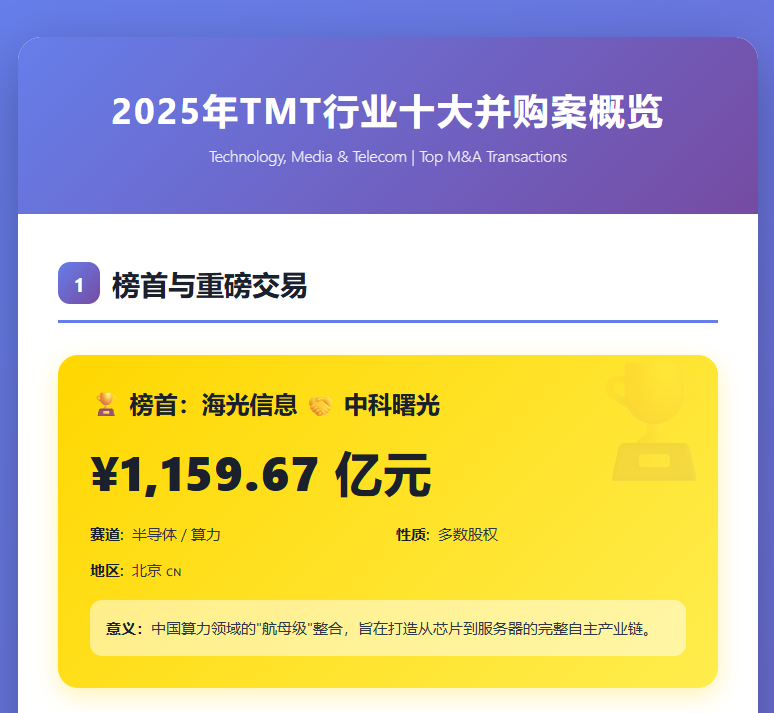
Core Insights - The article outlines the top ten mergers and acquisitions (M&A) in the Technology, Media, and Telecom (TMT) sector for 2025, highlighting significant transactions that shape the industry landscape [1][11]. M&A Transactions Overview - The largest transaction is the acquisition of Zhongke Shuguang by Haiguang Information for approximately 115.97 billion RMB, focusing on the semiconductor and computing power sectors, aiming to create a complete autonomous industrial chain from chips to servers [2][19]. - Tencent Music acquired a majority stake in Ximalaya for around 24 billion RMB (approximately 2.4 billion USD), enhancing its audio content ecosystem [7][19]. - Baidu purchased YY Live for about 21 billion RMB (approximately 2.1 billion USD), strengthening its position in the live streaming and content sector [8][20]. - TCL Technology acquired Shenzhen Huaxing Semiconductor for 11.56 billion RMB, focusing on the semiconductor display industry to enhance vertical integration [8][20]. - Focus Media acquired New潮传媒 for 8.3 billion RMB, consolidating its position in the outdoor advertising market [8][20]. - Fulede acquired 100% of Fulehua for 6.55 billion RMB, expanding its capabilities in the industrial software sector [8][20]. - JD Technology completed the privatization of Dada Group for approximately 39 billion RMB (around 546 million USD), enhancing its e-commerce technology capabilities [8][20]. - Ant Group acquired a majority stake in Bright Smart for about 2.8 billion RMB (approximately 362 million USD), expanding its fintech operations in Hong Kong [9][21]. - Alibaba invested 1.8 billion RMB (approximately 250 million USD) in Meitu through convertible bonds, focusing on AI applications [9][21]. - China Mobile acquired approximately 10 billion RMB (around 137.6 million USD) of a minority stake in HKBN, aiming to expand its telecommunications market share in Hong Kong [9][21]. Geographic Distribution of M&A - The M&A transactions are concentrated in major Chinese cities, including Beijing, Shanghai, Guangzhou, Chengdu, and Hong Kong, reflecting a strategic focus on key economic regions [4][16].
苏州浩辰软件股份有限公司关于战略合作的进展暨购买少数股权的公告
Shang Hai Zheng Quan Bao· 2026-01-05 21:02
Core Viewpoint - Suzhou Haochen Software Co., Ltd. has announced a strategic investment of RMB 60 million to acquire 8.45% equity in Metaworld Corporation, which controls Shanghai Ziqian Technology Co., Ltd., to enhance its competitiveness in the industrial software sector and further its strategic layout in the new generation of 3D CAD and AI for Engineering fields [1][3][16]. Group 1: Cooperation Progress - In September 2025, Haochen Software and Ziqian Technology signed a strategic cooperation agreement to promote domestic 3D CAD technology breakthroughs and global commercialization [3]. - The recent investment aims to deepen the product layout and strategic collaboration between Haochen Software and Ziqian Technology, integrating their technical and marketing resources [3][16]. Group 2: Transaction Details - The investment is based on a pre-investment valuation of RMB 650 million for Metaworld Corporation, with Haochen Software acquiring 11,614,683 preferred shares [9]. - The transaction has been approved by the company's general manager office and does not require further board or shareholder approval, as it does not constitute a major asset restructuring [7][16]. Group 3: Impact on the Company - The strategic partnership with Ziqian Technology is expected to enhance product lines, consolidate core competitiveness, and support the company's globalization strategy, aligning with national strategies for self-controlled industrial software [16]. - The transaction is not expected to adversely affect the company's financial status or operational conditions, nor harm the interests of shareholders, particularly minority shareholders [16].
博世将于微软合作 预计10年后软件、传感器技术、高性能计算机和网络组件销售将翻一倍| 直击CES
Xin Lang Ke Ji· 2026-01-05 17:29
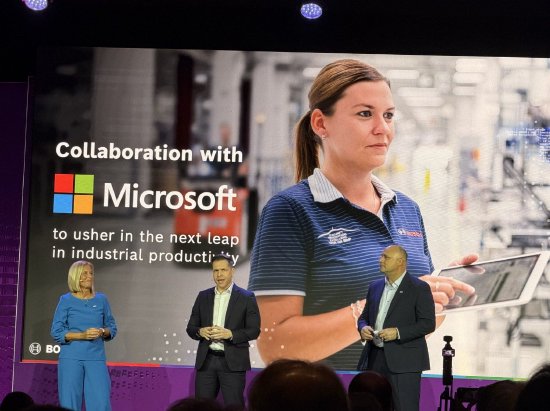
责任编辑:丁文武 博世同时宣布,预计到下一个十年之初,其软件和服务销售额将超过60亿欧元,其中大部分将基于人工 智能(AI)。预计约三分之二的收入将来自移动出行业务领域。该公司预计,到2030年代中期,其软 件、传感器技术、高性能计算机和网络组件的销售额将翻一番,超过100亿欧元。博世在人工智能的应 用和开发方面预计到2027年底,将在该领域投资超过25亿欧元。 新浪科技讯 2026年1月5日,博世宣布将与微软携手拓展其"制造协同智能 "解决方案,探索利用智能体 人工智能革新生产方式的创新技术。两家公司将在拉斯维加斯签署一份谅解备忘录(MoU)。智能体 人工智能能够解读海量数据,做出高度自主的决策并执行任务,从而优化生产、维护和供应链。"它让 工厂流程更加智能化,"博世有限公司董事会成员Tanja Rueckert表示。此次合作旨在将博世在生产和工 业软件领域的深厚工业知识与微软领先的 IT 基础设施和软件技术相结合。两家公司的目标是利用人工 智能支持的解决方案,使现有生产流程更具可扩展性,从而不仅提高工厂效率,还能减轻员工的负担。 例如,通过及早发现生产流程中的偏差,可以最大限度地减少停机时间并降低生产成本 ...

赛迪顾问发布2026年IT趋势 AI+成发展主线
Jing Ji Guan Cha Wang· 2026-01-05 04:45
Core Insights - The 2026 IT trends conference hosted by CCID Consulting highlighted key areas such as computing power, storage, AI, industrial software, cybersecurity, satellite communication, industrial internet, financial digital transformation, and urban trusted data spaces, with insights from ten senior analysts [2] Group 1: Artificial Intelligence - The integration of cloud and data intelligence will solidify AI infrastructure, with AI-enhanced SaaS and task-oriented terminals accelerating adoption in key sectors like industry, government, and healthcare [2] - After the general model craze, large models will focus on vertical small models and autonomous intelligent agents, evolving from a "general base" to an "intelligent engine" driving industrial transformation [5] Group 2: Computing Power - The local computing ecosystem is maturing, with domestic brands expected to sell over 280,000 computing servers in 2026, leading to large-scale implementation of interconnected computing power [2][3] Group 3: Storage - The demand for AI is driving a "super cycle" in the storage industry, with prices for consumer-grade SSDs potentially doubling and high-bandwidth memory (HBM) demand continuing to rise [3] Group 4: Industrial Software - Industrial software is crucial for transitioning manufacturing from experience-driven to data-driven, enhancing efficiency and resource allocation [3] Group 5: Cybersecurity - The Chinese cybersecurity system will increasingly focus on intelligent upgrades and resilience, driven by evolving market demands and mature core technologies [4] Group 6: Satellite Communication - Satellite communication is becoming a core pillar of national strategic technological strength, facilitating seamless coverage and supporting future industries like low-altitude economy and space resource development [3] Group 7: Digital Transformation in Finance - New AI technologies are reshaping the foundational logic and operational methods of financial services, driving digital transformation in the financial sector [6] - The integration of generative AI in financial verticals is transforming IT from a supportive tool to a core engine of financial innovation [6] Group 8: Urban Trusted Data Spaces - The construction of a secure and trusted data circulation ecosystem is essential for driving high-quality urban development, enhancing modern governance and digital collaboration [5]