
水运

Search documents
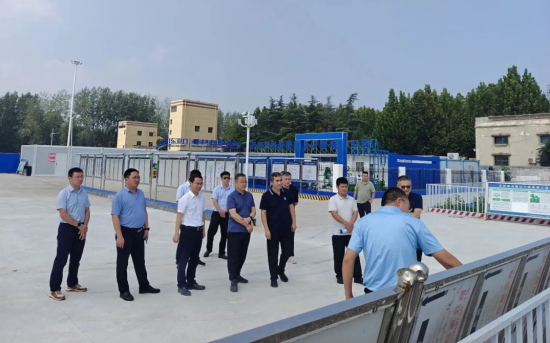
通运输部水运局到山东济宁调研内河水运高质量发展工作
Zhong Guo Fa Zhan Wang· 2025-09-17 06:19
Core Viewpoint - The Ministry of Transport's Water Transport Bureau emphasizes the importance of enhancing the functionality of inland ports and promoting sustainable, intelligent, and high-end development in the sector [5][6]. Group 1: Research and Development - The research team conducted a field study on modern port operations, multimodal transport systems, and the layout of port-related industries in Jining [3]. - The team highlighted the need for continuous technological innovation and collaboration between industry, academia, and research to advance intelligent and high-end ship development [5]. Group 2: Policy and Economic Impact - The research group stressed the importance of optimizing industrial layout and enhancing the hub functions of ports to inject new momentum into regional economic development [6]. - There is a call for water transport enterprises to strengthen their dual focus on technology and low-carbon initiatives, aiming for efficient and cost-effective solutions for port and shipping construction [6]. Group 3: Infrastructure and Operations - The team inspected various facilities, including the Longgong Port and the Xinneng Shipbuilding base, to understand the current state of inland port construction and the challenges faced [2][3]. - The research group noted the necessity of expanding the economic influence of inland ports to serve as strong engines for regional economic growth [5].

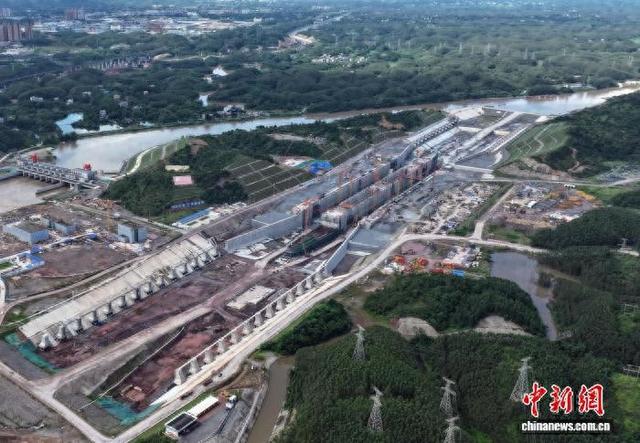
广西加快构建现代化综合交通运输体系 平陆运河累计完成投资592.5亿元
Guang Xi Ri Bao· 2025-09-16 02:45
Core Insights - The article emphasizes the strategic development of the "One District, Two Places, One Park, One Corridor" initiative, focusing on enhancing the comprehensive transportation network in the region [1][2][3] Group 1: Infrastructure Development - The region has made significant progress in building a modern comprehensive transportation system, with a total transportation network expected to reach 198,700 kilometers by the end of 2024 [2] - The high-speed rail network will exceed 2,400 kilometers, while the total length of expressways will surpass 10,000 kilometers [2] - The inland waterway network will reach 5,868 kilometers, with high-grade waterways totaling 1,407 kilometers [2] Group 2: Economic Impact - The construction of the Pinglu Canal is a key project that will enhance economic development by transforming transportation advantages into economic benefits [3] - The North Bay Port has maintained a top 10 position in national cargo and container throughput for four consecutive years [2] - The Western Land-Sea New Corridor has seen a steady increase in sea-rail intermodal trains, with over 10,000 trains operating annually [2] Group 3: Future Projects - The region plans to accelerate the construction of 21 ongoing projects, including the 3,000-ton navigation channel from Nanning (Niuwan) to Guigang [3] - There are 12 expressway projects expected to be completed, adding over 400 kilometers of new road [3] - The railway sector will see the completion of the Nanning to Pingxiang railway and the advancement of seven ongoing railway projects [3]
从“被动辐射”到“主动枢纽” 平陆运河助力广西以“水”破局
Zhong Guo Xin Wen Wang· 2025-09-15 09:48
Core Viewpoint - The Pinglu Canal, set to be completed by the end of 2026, is a significant infrastructure project aimed at enhancing water transport in Guangxi, marking a historic development in China's waterway connectivity [1][3]. Group 1: Project Overview - The Pinglu Canal spans 134.2 kilometers, with a total estimated investment of approximately 727 billion yuan. As of September 10, 2023, 592.5 billion yuan has been invested, accounting for 81.5% of the total investment [3]. - Key construction milestones include 92.2% completion of earthworks, 92.8% completion of the main concrete pouring for the ship lock, and 81.3% completion of the waterway engineering [3]. Group 2: Economic and Logistical Development - The canal is expected to facilitate the construction of an integrated logistics information platform, enhancing transportation capabilities and promoting economic collaboration in the southwestern region of China [3]. - Future plans include the integration of various resources to improve port, dock, lock, and park construction, thereby enhancing regional logistics [3]. Group 3: Transportation Integration - The Pinglu Canal will play a crucial role in transitioning Guangxi from a passive to an active hub in transportation, focusing on both river-sea and rail-water intermodal transport [5]. - Ongoing projects include the Baise Water Conservancy Hub and enhancements to the Right River navigation facilities, aimed at improving water transport routes to southwestern provinces [5]. Group 4: Smart Operations - The Pinglu Canal will be the first digital twin smart canal in China, utilizing AI for intelligent scheduling, resource management, and safety monitoring to enhance operational efficiency [8]. - The operational strategy will include the development of a logistics information platform and regulations for canal protection and management [8][9].
互联互通 畅达东盟
Guang Xi Ri Bao· 2025-09-15 09:33
Core Insights - The article highlights the rapid development of the Nanning International Railway Port and its role in enhancing trade connectivity with ASEAN countries, showcasing significant growth in cargo transportation and infrastructure improvements. Group 1: Transportation Growth - The cargo volume from Nanning International Railway Port increased from 993,000 tons to 9.9 million tons during the 14th Five-Year Plan, with an average annual growth rate of 77.69% [1] - The highway mileage expanded from 943 kilometers in 2020 to 1,501 kilometers by 2024, significantly improving service capacity [1] - High-speed rail operational mileage grew from 355 kilometers in 2020 to 659 kilometers by 2024, enabling interconnectivity with 13 cities in the region and 18 provincial capitals [1] Group 2: Water and Air Transport Development - The construction of 5,000-ton and 3,000-ton waterways is accelerating, with the completion of the West Jin Water Conservancy Hub's second ship lock allowing 2,000-ton vessels to directly reach the Guangdong-Hong Kong-Macao Greater Bay Area [2] - Nanning Airport's international cargo throughput is projected to reach 108,000 tons in 2024, reflecting a year-on-year increase of 23.3% [2] Group 3: Logistics and Customs Efficiency - The "Nanning Channel" has diversified its cargo sources, now including coal, minerals, agricultural products, and machinery, enhancing Guangxi's international market presence [3] - The "Smart Customs" project simplifies logistics processes, reducing customs verification time by over 90% [3] - The establishment of a "fast track" for customs clearance has cut inspection preparation time from 2-3 days to half a day [4] Group 4: Passenger Services Enhancement - Nanning's passenger service staff have undergone training in multiple languages to provide better service to travelers [5] - The new T3 terminal at Nanning Wuxu Airport, expected to open in 2027, will enhance passenger experience through innovative air-rail interconnectivity [6] - Future plans include strengthening connectivity with ASEAN countries across various transport modes [6]
老旧运输船舶加快退出 四川新能源船舶将突破100艘
Si Chuan Ri Bao· 2025-09-15 07:30
Core Insights - Sichuan province is actively phasing out old transportation vessels and replacing them with new energy-powered ships, which is crucial for the ecological protection of the upper Yangtze River [1][2] - The province aims to dismantle 233 old operating vessels this year, with a total of 140 vessels dismantled by 2024 as part of its "Green Water Green Shipping" initiative [1] - The national government has allocated 157 million yuan for vessel dismantling subsidies, and Sichuan has implemented a dynamic list system for real-time monitoring of vessel status and dismantling progress [1] Group 1 - Sichuan is set to complete the dismantling of 233 old operating vessels this year, with 140 already dismantled by 2024 [1] - The province has initiated a unified dynamic list system and "one ship, one file" management model for effective monitoring of vessel dismantling [1] - The establishment of a dual-responsibility mechanism for supervision and internal approval has streamlined the process and enhanced safety and environmental controls [1] Group 2 - The number of new energy vessels in Sichuan has increased from single digits to a significant scale since the start of the 14th Five-Year Plan [2] - The province is expected to have over 100 new energy vessels by the end of this year as part of its ongoing "green renewal" initiative [2]
老旧运输船舶加快退出 四川新能源船舶将突破百艘
Si Chuan Ri Bao· 2025-09-15 00:44
Core Insights - Sichuan province is actively phasing out old transportation vessels and replacing them with new energy-powered ships, which is crucial for the ecological protection of the upper Yangtze River [1][2] - The province aims to dismantle 233 old operating vessels this year, with a total of 140 vessels dismantled by 2024 as part of its "Green Water, Green Navigation" initiative [1] - The national government has allocated 157 million yuan for vessel dismantling subsidies in Sichuan, enhancing the efficiency and safety of the dismantling process [1] Group 1 - Sichuan is set to complete the dismantling of 233 old operating vessels this year, with 140 already dismantled by 2024 [1] - The province has implemented a dynamic list system for vessel dismantling and a "one ship, one file" management model to monitor the status and progress of dismantling in real-time [1] - The establishment of a dual-responsibility mechanism for supervision and internal approval has effectively reduced the time required for processing procedures [1] Group 2 - The number of new energy vessels in Sichuan has increased from single digits to a significant scale since the start of the 14th Five-Year Plan [2] - The province is expected to have over 100 new energy vessels by the end of this year as part of its ongoing "green renewal" initiative [2]
滨州交通建设全面提速,两条高铁建设进度持续保持全线领先
Qi Lu Wan Bao Wang· 2025-09-12 23:49
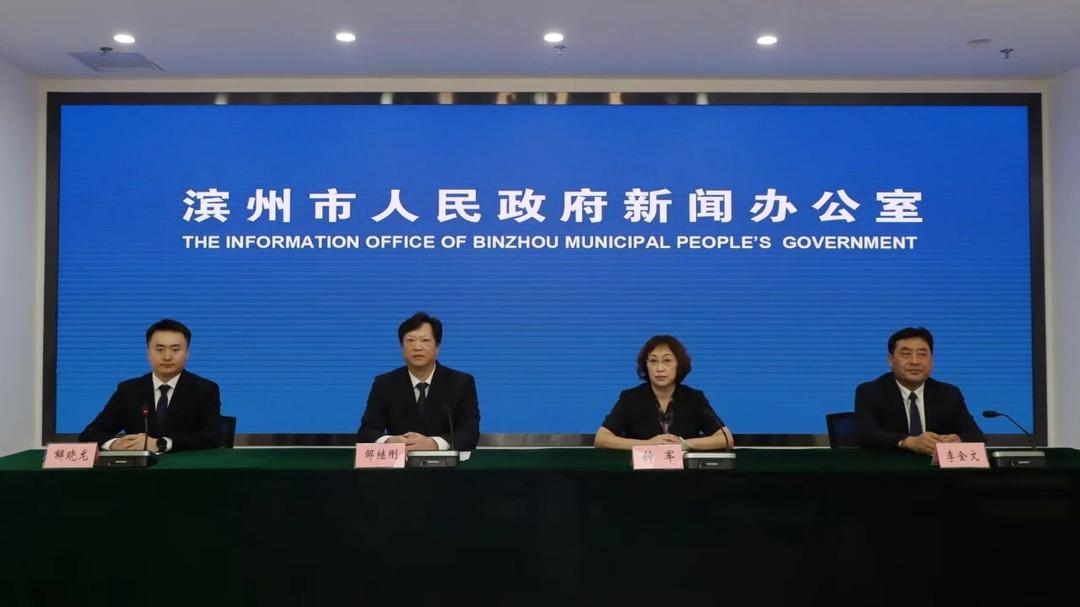
Core Viewpoint - The article highlights the progress and achievements of the Binzhou transportation sector in enhancing infrastructure, optimizing services, and improving governance to promote high-quality development in the region [2][3][4][5][6][7][8][9][10] Infrastructure Development - The city has made significant investments in transportation infrastructure, with a total fixed asset investment of 71.8 billion yuan this year and a cumulative investment of 127 billion yuan in high-speed rail projects [2][3] - Key projects include the completion of bridge and station works for the Tianjin-Weifang high-speed railway and the ongoing construction of the Binzhou port railway [3] - The road network has seen substantial improvements, with the completion of 111.9% of the annual investment plan for the Qingzhang Expressway and ongoing projects for several national and provincial roads [3] Transportation Services Optimization - The city has focused on optimizing transportation logistics, achieving a low-carbon transport volume of 50.5 million tons in the first half of the year, a year-on-year increase of 18.5% [5] - The establishment of new river-sea intermodal routes has contributed to a total cargo throughput of 400,000 tons [5] - The international road transport sector has expanded, with 12 companies now qualified for international transport, enhancing the region's connectivity [5] Economic Support and Development - The transportation, warehousing, and postal sectors have seen a revenue increase of 10.3% year-on-year, surpassing the provincial average [6] - The city has implemented various initiatives to support businesses, including the establishment of service contact points and conducting enterprise research to address logistical challenges [7] Governance and Regulation - The regulatory framework for the transportation industry has improved, with the introduction of electronic waybills for hazardous materials and the integration of ride-hailing services [8][9] - A comprehensive approach to managing transportation safety has been adopted, with significant efforts in monitoring and rectifying safety hazards [10]
广西:西部陆海新通道建设迸发智慧新动能
Xin Hua Wang· 2025-09-08 01:25
Core Insights - Guangxi is leveraging the rapid development of artificial intelligence to enhance the high-quality development of the Western Land-Sea New Corridor, achieving significant progress in smart port and smart customs construction, as well as AI-enabled industrial development [1][2] Group 1: Smart Port Development - Guangxi has established an automated container terminal and a digital bulk cargo yard in Fangchenggang, fully implementing intelligent loading and unloading systems, resulting in over a 30% increase in operational efficiency compared to traditional ports [1] - The smart customs initiative includes the comprehensive advancement of intelligent construction at the China-Vietnam border ports, with the Chinese section of the Youyi Pass smart customs nearly completed, enabling 24/7 uninterrupted, unmanned, and intelligent customs clearance after project interconnectivity [1] Group 2: AI-Enabled Industrial Development - From January to July this year, the core industrial output value of artificial intelligence in Guangxi exceeded 45 billion yuan, with service robot production increasing by 27.5% year-on-year [2] - Guangxi plans to continue enhancing the high-quality development of the Western Land-Sea New Corridor through AI, focusing on accelerating the digital transformation of transportation logistics facilities and carrying equipment [2]
湖北公路水路投资连续两年位居中部第一 “十四五”交通重大任务和重大项目进展顺利
Chang Jiang Shang Bao· 2025-09-04 00:03
Core Viewpoint - Hubei is accelerating the construction of a modern comprehensive transportation system, aiming to establish a demonstration zone for a strong transportation nation and enhance its strategic position in central China [1] Group 1: Transportation Infrastructure Development - During the "14th Five-Year Plan" period, Hubei's transportation fixed asset investment reached 789.7 billion yuan, a year-on-year increase of 43%, with road and waterway investments ranking first in central China for two consecutive years [1] - By the end of this year, Hubei's high-speed rail mileage is expected to exceed 2,500 kilometers, placing it among the top five in the country [2] - The province's highway network has reached 8,184 kilometers, with the main national highways fully connected [2] Group 2: Multi-Modal Transportation Integration - Hubei has established 30 comprehensive passenger transport hubs, achieving 100% coverage in cities and states [2] - The province's port container throughput capacity has surpassed 6.1 million TEUs, with a significant annual growth rate of 49.5% in container rail-water intermodal transport from 2020 to 2024 [3] - The logistics cost as a percentage of GDP in Hubei is projected to be 12.82% in 2024, which is 1.28 percentage points lower than the national average [3] Group 3: Green Transportation Initiatives - The proportion of new energy buses in urban areas has reached 84.67%, and the coverage of charging stations in highway service areas is 100% [3] - Hubei has completed the renovation of over 6,000 aging bridges as part of its "three-year danger elimination" initiative [3] Group 4: Future Development Plans - In the "15th Five-Year Plan" period, Hubei will focus on enhancing its role as a major logistics hub and improving the interconnectivity of various transportation modes [4] - The province aims to strengthen its railway network, with more than two high-speed rail lines expected to commence construction each year [6] Group 5: Aviation and Low-Altitude Economy - Hubei has established a new development pattern of "dual hubs and multiple branches" in aviation, with four international airports supporting its inland open economy [5][7] - The province has made significant breakthroughs in both the airport economy and low-altitude economy, forming strategic partnerships with over 30 leading enterprises [7]
勘设股份:计提各类资产减值准备共计9954.83万元
Mei Ri Jing Ji Xin Wen· 2025-08-29 18:35
Company Summary - The company, 勘设股份, announced a provision for asset impairment totaling 99.5483 million yuan, which will reduce the total profit in the consolidated financial statements for the first half of 2025 by the same amount [1] - The asset impairment has already been reflected in the company's financial report for the first half of 2025 [1] Industry Overview - For the year 2024, the revenue composition of the company is as follows: 67.61% from the highway sector, 21.68% from the construction sector, 7.39% from water transport and other sectors, 3.01% from the municipal sector, and 0.31% from other businesses [1]
