科技行业

Search documents
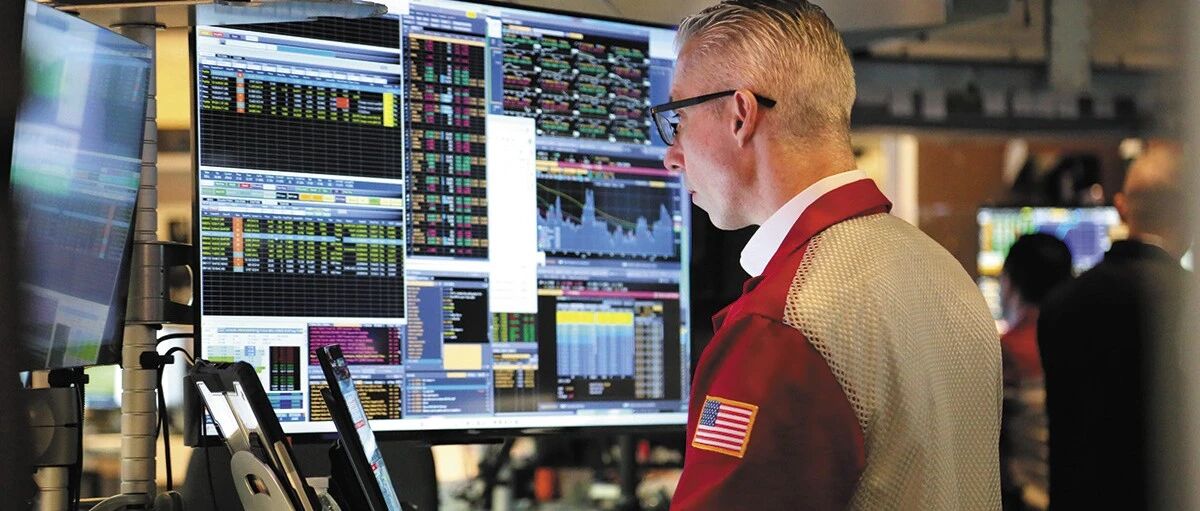
美股科技股盘前齐跌,黄金股大涨
第一财经· 2026-01-20 10:46
Group 1 - Major US tech stocks experienced a pre-market decline, with Oracle falling over 4% to $184.71, a decrease of 3.34% [1] - Other tech giants such as Amazon, Google, Tesla, AMD, Meta, and Nvidia also saw declines, with Amazon and Google dropping over 3% and Tesla, AMD, Meta, and Nvidia falling over 2% [1][4] - The three major US stock index futures continued to decline, with Dow futures down 0.90%, S&P 500 futures down 0.91%, and Nasdaq futures down 1.09% [2][5] Group 2 - Gold and silver prices reached new historical highs, with spot gold rising 1.21% to $4725.686 per ounce and spot silver increasing by 0.76% to $95.074 per ounce [5] - Gold mining stocks saw a pre-market increase, with Harmony Gold rising nearly 6% and other mining companies like Coeur Mining and Pan American Silver increasing by nearly 5% [5]





淳中科技2026年1月20日跌停分析
Xin Lang Cai Jing· 2026-01-20 05:54
Core Viewpoint - Chunzhong Technology (sh603516) experienced a limit down on January 20, 2026, with a price of 210.15 yuan, reflecting a -10% change and a total market capitalization of 42.717 billion yuan [1] Group 1: Company Performance - The company faced significant operational challenges, with a 40.69% decline in revenue and a net loss of 29.2385 million yuan in the first three quarters of 2025, raising investor concerns about its future prospects [2] - Issues related to accounts receivable management and inventory management have contributed to substantial cash flow pressure [2] Group 2: Market Sentiment and Stock Performance - The introduction of the "large market" concept on January 7, 2026, had limited impact on the company's actual performance, as there were no significant positive developments to support the stock price amid poor operational conditions [2] - The overall performance of related concept sectors on the same day may have influenced Chunzhong Technology's limit down, as negative factors surrounding the company made it more susceptible to declines in an unfavorable market environment [2] - Following its inclusion in the "dragon and tiger list" on January 8, 2026, there was a net sell-off by retail and foreign investors, indicating a lack of confidence in the company's short-term outlook [2]

达沃斯现场:数百人示威 抗议特朗普参加世界经济论坛年会
Xin Hua She· 2026-01-19 07:30
Group 1 - The World Economic Forum's annual meeting will be held in Davos, Switzerland from January 19 to 23, 2026 [1] - Hundreds of protesters demonstrated in Davos on January 18 against the participation of U.S. President Trump in the forum [1] - The forum's president, Borge Brende, stated that Trump will lead the largest U.S. delegation in the history of the forum, which includes key government officials and executives from major tech companies like Nvidia and Microsoft [1]
“美国电费暴涨!”特朗普要求大型科技企业全额承担新建发电厂的费用!引发热议!
Sou Hu Cai Jing· 2026-01-18 10:42
Group 1 - The article discusses the implications of the upcoming midterm elections in November for the U.S. economy and political landscape [2] - It highlights the potential impact of election outcomes on various sectors, including healthcare, technology, and energy [2] - The article notes that voter sentiment is influenced by current economic conditions, including inflation and job growth [2] Group 2 - The article emphasizes the importance of campaign strategies and funding in shaping election results [2] - It mentions that key issues such as immigration and climate change are likely to drive voter turnout [2] - The analysis includes predictions on how different political scenarios could affect market stability and investor confidence [2]

财经老王|央行放大招!金融“活水”为高质量发展保驾护航
Yang Shi Xin Wen Ke Hu Duan· 2026-01-17 05:10
Group 1 - The central bank has announced a reduction in the re-lending and rediscount rates by 0.25 percentage points, bringing the one-year rate to 1.25%, which lowers the cost of funds for commercial banks and enhances their lending capacity [3] - The central bank has increased the re-lending quota for technology innovation and technological transformation from 800 billion to 1.2 trillion yuan, and has included private small and medium-sized enterprises (SMEs) with high R&D investment levels in the support scope [3][5] - A combined risk-sharing tool for technology innovation and private enterprise bonds has been established with a supporting re-lending quota of 200 billion yuan, providing a "double insurance" for technology-oriented private enterprises [5] Group 2 - An additional 500 billion yuan has been allocated for re-lending to support agriculture and small enterprises, with a dedicated 1 trillion yuan for private enterprise re-lending, directly addressing the needs of small private enterprises [5] - The minimum down payment ratio for commercial property loans has been lowered to 30%, aimed at addressing the high vacancy rates and inventory issues in the commercial property sector [7] - The central bank's actions indicate a commitment to directing financial resources towards technology, green initiatives, and small enterprises to support high-quality development [9]
央行放大招!金融“活水”为高质量发展保驾护航
Sou Hu Cai Jing· 2026-01-17 04:14
Group 1 - The central bank has announced a reduction in the re-lending and rediscount rates by 0.25 percentage points, bringing the one-year re-lending rate to 1.25%, which lowers the cost of funds for commercial banks and enhances their lending capacity [1] - The central bank has increased the re-lending quota for technological innovation and technological transformation from 800 billion to 1.2 trillion yuan, and has included private small and medium-sized enterprises (SMEs) with high R&D investment levels in the support scope [1][4] - A new risk-sharing tool for bonds issued by technology and private enterprises has been established, with a supporting re-lending quota of 200 billion yuan, providing a "double insurance" for technology-oriented private enterprises [4] Group 2 - An additional 500 billion yuan has been allocated for re-lending to support agriculture and small enterprises, along with a dedicated 1 trillion yuan re-lending for private enterprises, directly addressing the financing needs of SMEs [4] - The minimum down payment ratio for commercial property loans has been lowered to 30%, aimed at addressing the high vacancy rates and inventory issues in the commercial property sector, thereby reducing entry barriers for investors and operators [7] - The central bank's recent actions indicate a commitment to directing financial resources towards technology, green initiatives, and small enterprises, supporting high-quality development [10]
瑞银:2026年中国资产吸引力有望进一步提升
Xin Lang Cai Jing· 2026-01-16 14:57
Group 1: Economic Outlook and Market Growth - The 26th UBS Greater China Conference highlighted that macroeconomic stability, rapid growth in A-share earnings, and signs of long-term capital inflows will lay a crucial foundation for investment in China's capital markets by 2026 [1] - UBS's China Head of Global Financial Markets, Fang Dongming, stated that the stability of the Chinese economy and the initiation of the "14th Five-Year Plan" will significantly support capital market investments [2] - A-share earnings are expected to grow by approximately 8% in 2026, primarily driven by non-financial sectors, providing some support for market valuations [2] Group 2: Institutional Investor Trends - There are increasing signs of medium to long-term capital entering the market, with active public fund issuance recovering moderately, although still below the peaks of 2020-2021 [3] - The scale of thematic ETFs surged from 100 billion yuan at the beginning of the year to 450 billion yuan by year-end, indicating strong interest in sectors like artificial intelligence and robotics [3] - Insurance funds are increasing their equity allocations, with the proportion of stocks in investment assets rising to about 15% by Q3 2025, potentially bringing in an annual increment of 300 billion to 500 billion yuan to A-shares [3] Group 3: International Investor Interest - Since 2025, there has been a notable increase in overseas investors' interest in Chinese assets, with active overseas funds beginning to reallocate towards China [4] - The allocation level of foreign capital in the Chinese market has risen from a low of 0.6 percentage points at the end of 2023 to 1.3 percentage points, indicating room for further growth [4] - The increasing attractiveness of Chinese assets is expected to enhance in 2026, as global investors seek diversification and recognize China's transformation and growth potential [4] Group 4: Foreign Investment in Hong Kong - In 2025, foreign participation in the Hong Kong primary market significantly increased, with several foreign institutions making their debut in cornerstone investments [5] - The influx of southbound and global funds into the Hong Kong market has been clear, contributing to a strong performance in the primary market [5] - The trend of cross-border mergers and acquisitions is expected to continue into 2026, driven by various factors including strategic evaluations by multinational companies and frequent public acquisition transactions [6]
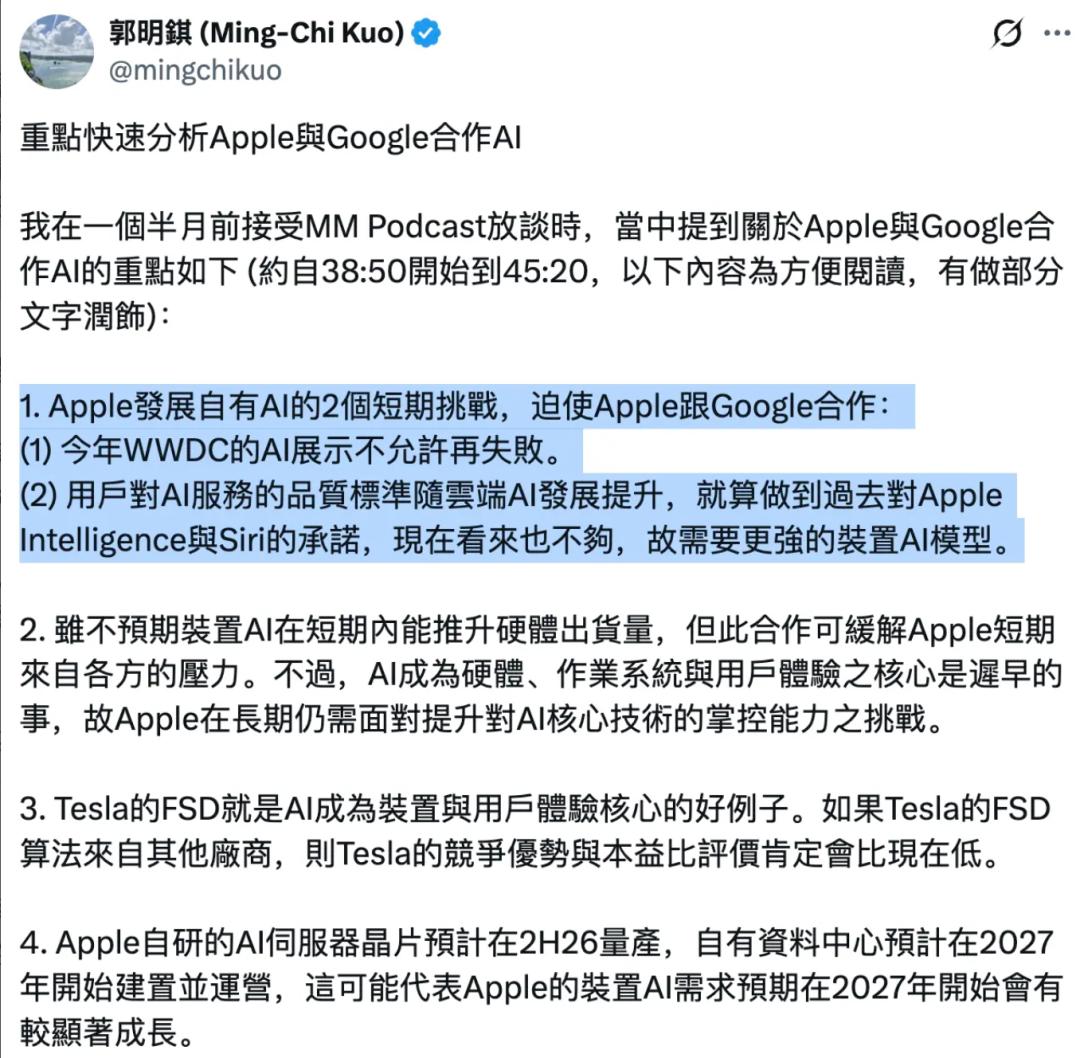
从对手到盟友,苹果与谷歌的AI新战事
3 6 Ke· 2026-01-16 12:42
Core Insights - The collaboration between Apple and Google represents a strategic partnership aimed at leveraging each other's strengths in AI technology, particularly with Google's Gemini model being integrated into Apple's Siri and Apple Intelligence strategy [1][3]. Group 1: Apple's AI Strategy - Apple has historically been perceived as lagging in AI development, especially after the rise of OpenAI's ChatGPT, while other tech giants aggressively invested in cloud services and large models [1][2]. - Apple's commitment to user privacy has constrained its ability to utilize cloud-based AI, leading to challenges in the performance of its AI offerings compared to competitors [2]. - The partnership with Google involves Apple paying approximately $1 billion annually to access the Gemini model, which has 1.2 trillion parameters, allowing Apple to enhance its AI capabilities while maintaining data privacy [2][3]. Group 2: Google's AI Development - Google's Gemini model is not merely taking over Siri but is positioned as a supportive technology that will help Apple improve its own AI models while keeping user data secure [3]. - The restructuring of Google, including the merger of Google Brain and DeepMind into Google DeepMind, has revitalized its AI strategy, culminating in the successful launch of Gemini 3, which is seen as a significant improvement over previous models [5][6]. - Google's vertical integration, from chip development (TPU) to cloud services, provides it with a competitive edge in AI model training and deployment, contrasting with competitors reliant on external GPU solutions [6]. Group 3: Market Implications - The collaboration is reshaping the competitive landscape in the AI sector, with Google's stock price rising while companies like Nvidia and Microsoft, closely tied to OpenAI, experience volatility [6]. - The market is beginning to recognize that success in AI may depend more on creating a comprehensive ecosystem that includes hardware, core models, and applications rather than just having the largest models or computing power [6]. - There are indications that other companies, such as Meta, may consider transitioning their computing architecture from Nvidia GPUs to Google's TPU, posing a potential threat to Nvidia's dominance in the AI computing market [6].


2026全球市场泡沫加速
2026-01-16 02:53
Summary of Key Points from Conference Call Records Industry or Company Involved - The discussion primarily revolves around the global financial market trends, particularly focusing on the United States, China, and the implications of fiscal and monetary policies on various asset classes. Core Insights and Arguments 1. **Return to Fiscal Dominance**: The U.S. is expected to return to a fiscal-dominant era, with long-term expansionary fiscal policies necessitating accommodative monetary policies, which will boost global demand and liquidity, favoring risk assets [1][2] 2. **Economic Cycle Recovery**: The nominal economic cycle is projected to recover from low levels, supported by monetary easing (rate cuts and balance sheet expansion), which is anticipated to benefit stock markets and commodities [1][2] 3. **Key Indicators**: U.S. bank reserves are a critical indicator of liquidity. A significant drop in bank reserves in Q4 2025 has prompted the Federal Reserve to initiate normalization of balance sheet expansion to maintain financial stability [1][5] 4. **Role of Hedge Funds**: Hedge funds have become the largest marginal buyers of U.S. Treasury bonds, engaging in high-leverage spot arbitrage, which increases financial system instability and compels the Fed to restart balance sheet expansion [1][9] 5. **Asset Purchase Strategy**: The Fed may extend its asset purchase duration to lower long-term interest rates, stimulating real estate and corporate capital expenditures, which is deemed more effective than rate cuts [1][10] 6. **Global Fiscal and Monetary Coordination**: Major economies are likely to engage in synchronized fiscal expansion and monetary easing, which will uplift risk assets and potentially weaken the dollar [1][15] Other Important but Possibly Overlooked Content 1. **Risks from High Oil Prices**: Sustained high oil prices pose a threat to the bull market, and the potential listing of large companies in the U.S. could impact liquidity [1][4] 2. **AI Bubble Risks**: There are concerns regarding the AI sector, where rising leverage and deteriorating free cash flow could signal risks if liquidity tightens [1][4] 3. **Impact of U.S. Fiscal Policy**: The U.S. Treasury's actions since July 2025 have significantly withdrawn liquidity from the market, exacerbated by government shutdowns and the Fed's balance sheet reduction [1][7] 4. **Trump's Economic Policies**: Trump's plans to lower mortgage rates and credit card interest rates through administrative means could significantly influence financial markets and interest rates [1][12] 5. **Chinese Market Outlook**: The Chinese stock market is expected to benefit from abundant dollar liquidity and a weaker dollar, with significant capital waiting to be repatriated, indicating potential for upward movement [1][17]
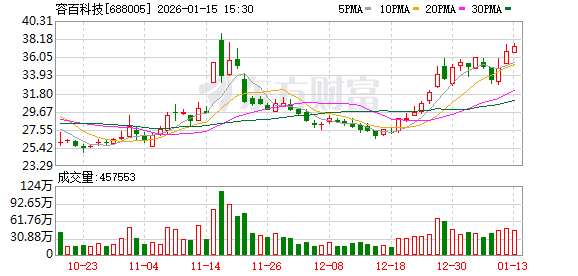
再次延期回复上交所《问询函》 容百科技1月16日继续停牌一日
Bei Jing Shang Bao· 2026-01-15 15:36
容百科技表示,针对《问询函》中指出的"根据公司提交的公告及备查文件,协议中并未对总销售金额 进行约定,公司未公告销售金额的确定依据",公司说明如下:协议未约定采购金额,"1200亿元合同总 金额"是公司估算得出,最终实际销售规模需根据实际订单签订时的原材料价格以及数量确定,销售金 额具有不确定性。 (文章来源:北京商报) 北京商报讯 1月15日晚间,容百科技(688005)披露公告称,鉴于上交所《问询函》涉及的其他事项需 要进一步核实,公司股票于1月16日将继续停牌1日。 ...