脑机接口

Search documents
又融3亿元!海淀这家企业,让脑机接口离临床再近一步→
Sou Hu Cai Jing· 2026-02-11 14:28
Group 1 - Recently, Zhiran Medical, a leading company in invasive brain-computer interfaces, announced the completion of a 300 million RMB A+ round financing [1] - This is the second round of financing completed by Zhiran Medical within six months, indicating strong market recognition of its technological capabilities and development potential in the invasive brain-computer interface sector [3] - The funds raised will primarily be used to advance large-scale clinical trials and iterate high-throughput flexible brain-computer interface products, accelerating the clinical application of this technology [3] Group 2 - The global brain-computer interface industry is entering a critical window for technological differentiation and clinical transformation, with invasive, semi-invasive, and non-invasive technologies showing a competitive landscape [5] - The invasive route, with its advantages in high precision, real-time data collection, and high data acquisition volume, is becoming a core breakthrough in serious medical applications and future human-computer interaction [5] - Zhiran Medical, established in 2022, focuses on developing a new generation of invasive flexible brain-computer interface platforms for precise diagnosis and treatment of neurological diseases [5][6] Group 3 - Zhiran Medical has completed a systematic layout of the invasive brain-computer interface industry chain, establishing a complete industrial closed loop from core technology research and development to large-scale production [8] - The company has made significant breakthroughs in key technologies, including flexible electrodes, neural chips, decoding algorithms, and electrode implantation robots [8] - The recent breakthrough in high-throughput flexible electrodes addresses industry challenges related to traditional linear flexible electrodes, enhancing signal acquisition and biomechanical compliance [8][10] Group 4 - The team has successfully developed a high-throughput wireless invasive brain-computer interface system based on stretchable flexible electrodes, improving biocompatibility and signal transmission bandwidth [12] - By 2025, Zhiran Medical completed the first domestic clinical implantation of an invasive brain-computer interface product with over 100 channels, initially verifying the product's safety and effectiveness [12] - The company plans to initiate large-scale registration clinical trials for the over 100-channel invasive brain-computer interface product in 2026, accelerating its clinical deployment [12]

智冉医疗完成3亿元A+轮融资
Xin Lang Cai Jing· 2026-02-11 07:00
Core Insights - The core viewpoint of the news is that Zhiran Medical, a leading company in the invasive brain-computer interface (BCI) sector, has successfully completed a 300 million RMB A+ round of financing, indicating strong market recognition of its technological capabilities and growth potential [1][6]. Financing and Market Recognition - Zhiran Medical has completed its second round of financing within six months, attracting significant investment from various stakeholders, including Zhongke Chuangxing and existing investors [1][6]. - The funds raised will primarily be used to advance large-scale clinical trials and iterate high-throughput flexible BCI products, accelerating the technology's clinical application [1][6]. Technological Development - Zhiran Medical has firmly committed to the invasive BCI technology route, leveraging its deep technical expertise and understanding of the industry's future [1][6]. - The company has established a systematic layout in the invasive BCI industry chain, achieving breakthroughs in key technologies such as flexible electrodes, neural chips, decoding algorithms, and electrode implantation robots [3][8]. - A significant technological breakthrough has been made with the development of a stretchable high-throughput flexible electrode, which addresses industry challenges related to traditional linear flexible electrodes [3][8]. Clinical Applications and Future Plans - Zhiran Medical has successfully developed a high-throughput wireless invasive BCI system, enhancing signal stability and decoding accuracy for large-scale clinical applications [4][9]. - The company plans to initiate large-scale registration clinical trials for its over 100-channel invasive BCI products in 2026, following the successful clinical implantation of the first such product in 2025 [4][9]. - The advancements align with national strategic plans and emphasize the importance of independent innovation in cutting-edge technologies [4][9]. Future Outlook - The company aims to accelerate core technology breakthroughs and clinical transformation processes, contributing significantly to China's leadership in the invasive BCI sector [5][10].
智冉医疗完成3亿元A+轮融资,推进侵入式脑机接口产品大规模临床试验
IPO早知道· 2026-02-11 01:36
Core Viewpoint - The article discusses the recent advancements and funding in the invasive brain-computer interface (BCI) sector, particularly focusing on the company "Zhiran Medical," which has completed a 300 million RMB A+ round of financing to enhance clinical trials and product iterations [2]. Group 1: Company Overview - Zhiran Medical has established a systematic layout in the upstream and midstream of the invasive BCI industry chain, focusing on core technology development and large-scale production [3][6]. - The company has made significant breakthroughs in key technologies, including flexible electrodes, neural chips, decoding algorithms, and electrode implantation robots, creating a complete industrial closed loop [3][6]. Group 2: Technological Advancements - Zhiran Medical's recent innovation includes a stretchable high-throughput flexible electrode that addresses issues of traditional linear electrodes, enhancing signal collection and biomechanical compliance [4][6]. - The company's neural signal acquisition chip is coin-sized and has reduced power consumption by 75% compared to traditional chips, while the deep neural network decoding algorithm allows for high-precision real-time decoding [6]. Group 3: Clinical Applications - By 2025, Zhiran Medical successfully completed the clinical implantation of the first domestic invasive BCI product with over 100 channels, validating its safety and effectiveness [6]. - The company plans to initiate large-scale clinical registration for its over 100-channel invasive BCI product in 2026, accelerating its clinical application [6]. Group 4: Industry Positioning - As a leading innovator in the domestic invasive BCI field, Zhiran Medical aligns with China's "14th Five-Year Plan" for future industry development and responds to national calls for independent innovation in cutting-edge technologies [7].

半年连融两轮!智冉医疗完成3亿元A+轮融资,中科创星领投
Sou Hu Cai Jing· 2026-02-11 01:25
Core Insights - The article highlights that Zhiran Medical, a leading domestic invasive brain-computer interface (BCI) company, has completed a 300 million yuan A+ round of financing, led by Zhongke Chuangxing, with participation from various investors [1] - The funding will primarily be used to advance large-scale clinical trials and iterate high-throughput flexible BCI products, accelerating the technology's clinical application [1] - Zhiran Medical is committed to the invasive BCI technology route, believing it is essential for achieving high-bandwidth information exchange between the human brain and external devices, evolving BCIs from assistive tools to core technologies for efficient human-machine symbiosis [1] Company Developments - Zhiran Medical has established a systematic layout in the invasive BCI industry chain, achieving a complete industrial closed loop from core technology research and development to large-scale production [3] - The company has made significant breakthroughs in key technologies, including flexible electrodes, neural chips, decoding algorithms, and electrode implantation robots, ensuring full control over clinical-grade products [3][6] - A recent breakthrough includes the development of a stretchable high-throughput flexible electrode, which addresses industry challenges related to traditional linear flexible electrodes [3][6] Technological Advancements - The company's domestically produced neural signal acquisition chip is coin-sized and has reduced power consumption by 75% compared to traditional chips [6] - The deep neural network decoding algorithm, trained on vast amounts of neural data, enables high-precision real-time decoding [6] - Zhiran Medical has successfully developed a high-throughput wireless invasive BCI system based on stretchable flexible electrodes, enhancing signal stability and decoding accuracy for large-scale clinical applications [6] Clinical Applications - By 2025, Zhiran Medical completed the first clinical implantation of an invasive BCI product with over 100 channels, preliminarily verifying its safety and effectiveness [6] - The company plans to initiate large-scale registration clinical trials for its over 100-channel invasive BCI product in 2026, accelerating its clinical rollout [6] Industry Position - As a leader in the domestic invasive BCI field, Zhiran Medical aligns with the national "14th Five-Year Plan" for future industry development and responds to the country's call for independent innovation in cutting-edge technologies [7] - The company aims to continue accelerating core technology breakthroughs and clinical transformation processes, contributing to China's leadership in the invasive BCI sector [8]
「智冉医疗」再获3亿元A+轮融资,2026计划启动规模化注册临床试验 | 36氪首发
3 6 Ke· 2026-02-11 01:16
Group 1 - The core viewpoint of the article is that Zhiran Medical, a company specializing in invasive brain-machine interfaces, has secured 300 million yuan in A+ round financing, led by Zhongke Chuangxing, with participation from multiple existing investors, indicating strong confidence in the company's capabilities [1] - The funding will primarily be used to advance large-scale clinical trials and iterate high-throughput flexible brain-machine interface products, accelerating the clinical application of invasive brain-machine interface technology [1] - The founder and CEO of Zhiran Medical, Song Qi, emphasized the company's commitment to invasive brain-machine interfaces, highlighting the team's deep technical accumulation and the potential for efficient human-machine information exchange [1] Group 2 - Zhiran Medical has developed a high-throughput "stretchable flexible electrode" that can dynamically follow the brain's movements, ensuring long-term stability after implantation, and causing less mechanical damage to brain tissue compared to traditional linear electrodes [2] - The company has also established a nearly 2000 square meter clinical-grade micro-nano processing workshop and GMP-standard assembly workshop, achieving full-chain autonomy for clinical-grade products [3] - In terms of clinical trials, Zhiran Medical plans to complete clinical implantation of a high-throughput invasive brain-machine interface product with over 100 channels by 2025, with a large-scale registration clinical trial planned for 2026 [3] Group 3 - The national "14th Five-Year Plan" includes "brain-machine interfaces" as one of the six future industries, with various regions establishing special funds worth billions for brain-machine interface and neuroscience projects [4] - In 2025, the National Healthcare Security Administration will release guidelines to establish independent charging items for various brain-machine interface services, reflecting strong support for the development of the brain-machine interface industry [4] - Companies with invasive brain-machine interface platform capabilities are expected to accelerate the application of these technologies [4]
「智冉医疗」再获3亿元A+轮融资,2026计划启动规模化注册临床试验|早起看早期
36氪· 2026-02-11 00:13
Group 1 - The core viewpoint of the article is that Zhiran Medical, a company specializing in invasive brain-machine interfaces, has successfully secured a 300 million yuan A+ round of financing, indicating strong investor confidence in its capabilities [3][4] - The funding will primarily be used to advance large-scale clinical trials and iterate on high-throughput flexible brain-machine interface products, accelerating the clinical application of invasive brain-machine interface technology [4] - The founder and CEO of Zhiran Medical, Song Qi, emphasizes the company's commitment to invasive brain-machine interfaces, highlighting the team's deep technical expertise and the potential for efficient human-machine information exchange [4][5] Group 2 - Zhiran Medical has developed a high-throughput "stretchable flexible electrode" that can dynamically follow the brain's movements, ensuring long-term stability within brain tissue and reducing mechanical damage compared to traditional linear electrodes [5][7] - The company has also made significant progress in the fields of neural chips, decoding algorithms, and electrode implantation robots, establishing a nearly 2000 square meter clinical-grade micro-nano processing workshop and GMP-standard assembly workshop for full-chain control of clinical-grade products [7] - By 2025, Zhiran Medical plans to complete clinical implants of its high-throughput invasive brain-machine interface products, with a large-scale registration clinical trial set to begin in 2026 [7][8] Group 3 - The invasive brain-machine interface technology is positioned as a key future industry in China's "14th Five-Year Plan," with various regions establishing special funds worth billions to support its development [8] - The National Healthcare Security Administration plans to include multiple services related to brain-machine interfaces as independent billing items, reflecting a strong commitment to supporting the industry's growth [8]

智冉医疗:侵入式脑机接口技术重磅突破!破解Neuralink掉 “线” 难题 | 红杉Family
红杉汇· 2026-02-11 00:03
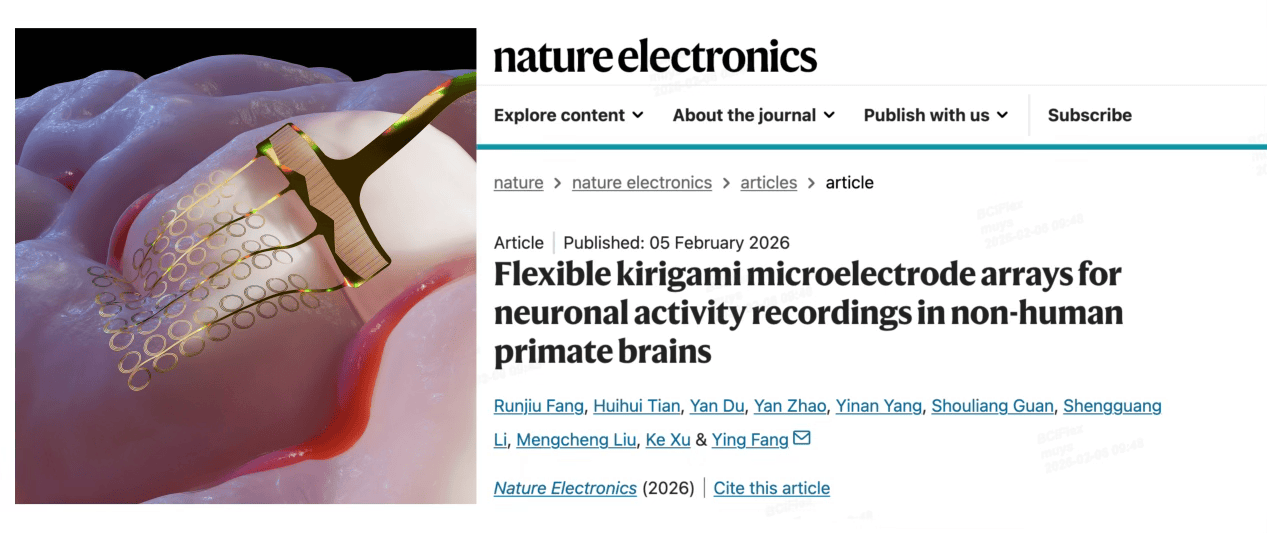
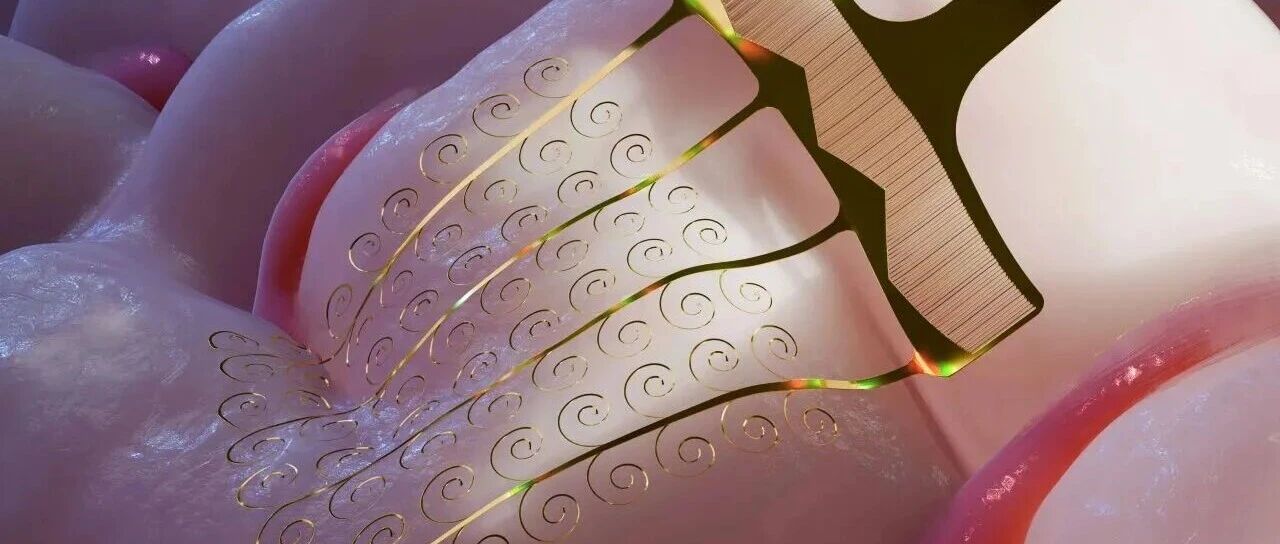
Core Insights - The article highlights a breakthrough in the field of invasive brain-machine interfaces (BMIs) achieved by a research team led by Fang Ying from Zhiren Medical, which successfully developed a high-throughput, stretchable flexible electrode that addresses the core challenges of traditional flexible electrodes in dynamic brain movements [2][12]. Group 1: Technological Advancements - The newly developed stretchable flexible electrode overcomes the limitations of traditional linear electrodes, which struggle to maintain stability during brain movements, thus providing a foundational solution for the long-term stability of invasive BMIs [2][4]. - The innovative design of the stretchable electrode allows it to dynamically adapt to the brain's pulsations and movements, ensuring long-term stability within the brain tissue [6][9]. - The research team demonstrated that the stretchable flexible electrode could achieve long-term stable recordings of neuronal activity in non-human primates, marking a significant milestone for clinical applications of invasive BMIs [8][12]. Group 2: Market Position and Future Implications - Zhiren Medical is positioned to lead the invasive BMI sector, with its breakthrough technology aligning with national strategic plans, thereby facilitating the transition from laboratory research to large-scale clinical applications [12][13]. - The advancements in invasive BMIs are expected to integrate seamlessly into everyday life, enhancing human-machine interactions in dynamic environments, such as extreme sports, without the risk of device displacement or brain injury [12][13]. - As the technology matures, China is poised to gain a significant competitive edge in the global invasive BMI market, leveraging its technological advancements to influence industry development [13].
Neuralink的中国对手来了?博睿康冲刺IPO,半侵入式路线能否弯道超车
Sou Hu Cai Jing· 2026-02-10 14:37
2026年2月4日,博睿康技术(上海)股份有限公司正式向上海证监局提交上市辅导备案,辅导机构为中信证券,正式踏上A股IPO之路。 01) 不慌实验室 "第一股"竞争进入白热化 这家脱胎于清华大学神经工程实验室、深耕脑机接口十余年的企业,一跃成为资本市场焦点,也让国产脑机接口"第一股"的竞争进入白热化阶段。 自2015年天使轮融资启动,到2024年完成D轮融资,博睿康在近十年时间里累计完成6轮融资,松禾资本、熔拓兴兆、常州科教城产业基金、红杉中国等 知名机构密集入局,资本持续加注,印证了赛道热度与团队价值。 股权结构显示,公司控股股东为胥红来,持股13.90%,黄肖山持股11.85%,红杉恒辰持股8.94%,股权相对分散,但机构背书充足、科研背景扎实。 在脑机接口从科幻概念走向产业落地的关键节点,博睿康选择登陆资本市场,不仅是企业发展的重要里程碑,更成为观察中国脑机接口从技术研发走向商 业化、资本化的重要窗口,标志着国产脑机接口正式迈入资本市场主战场。 博睿康的核心价值,在于依托清华大学自主创新的脑机接口技术,构建"硬件+软件+算法"一体化能力,是国内少数实现从科研到临床全链条布局的脑机 接口企业。 公司专注神 ...
在家用脑机接口,小孩打游戏可干预多动症
Jing Ji Guan Cha Wang· 2026-02-10 11:25
Core Insights - The article discusses the launch of a new brain-computer interface (BCI) product named "Zhuanzhuo Xin" by Qiangnao Technology, aimed at intervening in Attention Deficit Hyperactivity Disorder (ADHD) [1][2] - This product is a non-invasive solution that combines software and hardware, designed for rehabilitation training of children aged 6-12 with ADHD [1][2] - The technology utilizes neurofeedback training to help users learn to self-regulate brain activity, improving cognitive functions [1][2] Product Features - "Zhuanzhuo Xin" includes a user information module, attention training module, and training report module, featuring gamified elements to engage children [1][2] - The training process involves wearing a lightweight EEG device and completing gamified tasks for about 25 minutes, with real-time feedback provided to enhance focus [2] - The system generates automatic reports for tracking progress, which can be used by doctors and parents [2] Market Context - ADHD is a prevalent but manageable neurodevelopmental disorder, with an estimated prevalence of 6.4% among Chinese children and adolescents, translating to approximately 23 million affected individuals [2] - Traditional ADHD treatments have primarily relied on medication, which may not be effective for over one-third of patients, highlighting the need for alternative interventions like BCI technology [3] - Recent policy developments include the establishment of a reimbursement framework for non-invasive BCI services, with a set fee of 966 yuan per session in Hubei province [3]
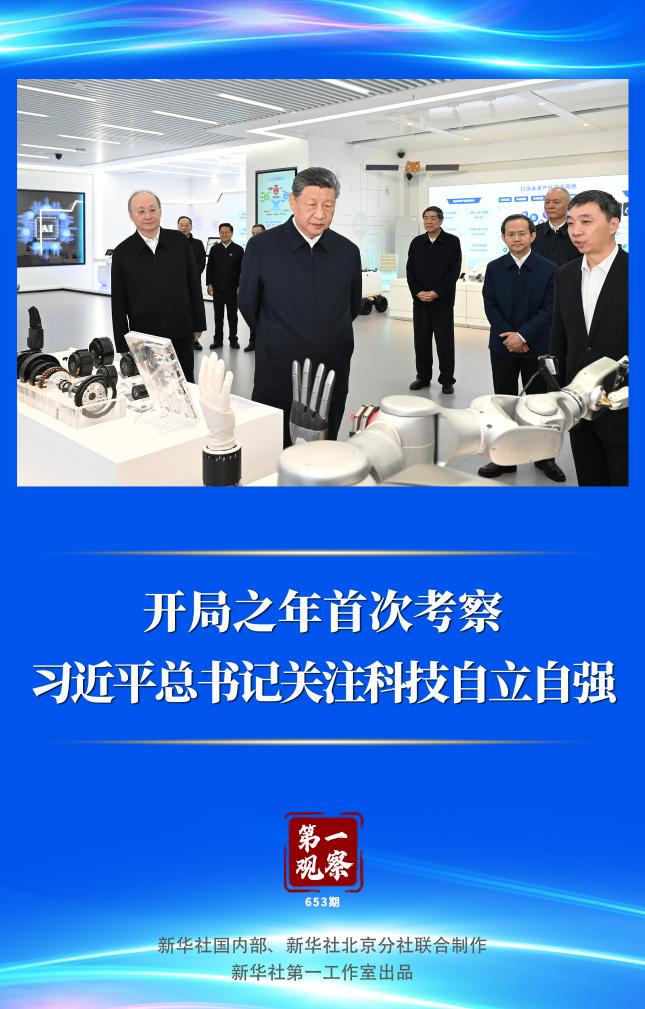
第一观察丨开局之年首次考察,习近平总书记关注科技自立自强
Xin Hua She· 2026-02-10 08:29
Group 1 - The core message emphasizes the importance of technological self-reliance and innovation for building a modern socialist country, as highlighted by President Xi Jinping during his visit to the National Innovation Park in Beijing [4] - The "14th Five-Year Plan" compared to the "15th Five-Year Plan" places a stronger emphasis on achieving a high level of technological self-reliance, aiming for a significant improvement in this area [5][6] - The visit underscores the need to enhance the innovation system, targeting breakthroughs in key core technologies and producing significant original and disruptive results to support high-quality economic and social development [6][7] Group 2 - The National Innovation Park has seen the establishment of 1,000 enterprises, with a focus on cutting-edge fields such as quantum information, 6G communication, and smart hardware, demonstrating the seamless integration of innovation and industry [7] - The development of international technology innovation centers in Beijing, Shanghai, and the Guangdong-Hong Kong-Macao Greater Bay Area aims to accelerate the formation of original innovation sources in China, serving as a strategic guide for building a strong technological nation [8] - The emphasis on enhancing the capabilities of international technology innovation centers reflects a commitment to fostering key technologies and empowering future industrial development, showcasing the potential for a more competitive innovation ecosystem [8]