Autos

Search documents
X @Bloomberg
Bloomberg· 2026-03-19 12:16
US auto safety regulators escalate an investigation of Tesla's partially automated driving system marketed as "Full-Self Driving" https://t.co/4r4b95UW0Y ...

Uber to invest up to $1.25 billion in Rivian as part of robotaxi deal
Reuters· 2026-03-19 12:02
Core Insights - Uber will invest up to $1.25 billion in Rivian as part of a deal to deploy 10,000 fully autonomous R2 SUVs as robotaxis starting in 2028 [1][4] - The initial investment will be $300 million, with the remaining funds contingent on Rivian meeting specific autonomous milestones by 2031 [2][6] - Uber has the option to purchase an additional 40,000 robotaxis beginning in 2030 [4][6] Investment and Deployment - The investment is structured with an initial commitment of $300 million, with further funding dependent on performance milestones [2][6] - The deployment of Rivian's R2 robotaxis will begin in major cities like San Francisco and Miami [4][5] - If all milestones are met, thousands of Rivian R2 robotaxis could be operational across 25 cities in the U.S., Canada, and Europe by the end of 2031 [5] Industry Context - Interest in driverless taxis has increased recently, driven by advancements in artificial intelligence and technology partnerships [2] - Rivian is preparing to launch its smaller, more affordable R2 SUVs, which are expected to support the robotaxi initiative [3] - Uber is positioning itself as a marketplace for various robotaxi operators, collaborating with multiple companies in the autonomous vehicle sector, including Waymo and Nvidia [5][6]


HORIZONROBOT-W(09660) - 2025 Q4 - Earnings Call Transcript
2026-03-19 12:02
Financial Data and Key Metrics Changes - The company achieved a revenue of CNY 3.76 billion in 2025, representing a year-on-year increase of 57.7% with a comprehensive gross margin of 64.5% [35][70] - The adjusted operating loss was CNY 2.37 billion, primarily due to increased R&D investments [37][72] - The net loss reported was CNY 10.5 billion, compared to a net profit of CNY 2.0 billion in the previous year, mainly driven by an increase in the fair value of certain convertible bonds [73] Business Line Data and Key Metrics Changes - Revenue from automotive solutions surged by 144% to CNY 1.62 billion, accounting for 43% of total revenue, up from 28% in 2024 [41][70] - The automotive grade SoC solution annual shipments exceeded 4 million units, with a year-on-year growth of about 39% [19] - Revenue from licensing and services increased by 17.4% year-on-year to CNY 1.94 billion [46][71] Market Data and Key Metrics Changes - The penetration rate of intelligent assisted driving in China's passenger car market reached 68% in 2025, with advanced models accounting for 43% of all intelligent vehicles [4][5] - Horizon Robotics captured 44% of the market share in the NOA segment among Chinese domestic brands [16][17] - The company secured mass nominations from 11 automakers for over 40 overseas models, with a cumulative lifecycle export nominations reaching 2 million units [29][33] Company Strategy and Development Direction - The company aims to help Chinese domestic brands go global, assist joint venture brands in the domestic market, and support overseas brands in their intelligent transformation [29][31] - Horizon Robotics is focusing on the democratization of intelligent assisted driving, with plans to expand into the mainstream market priced around CNY 100,000 [10][12] - The company is committed to increasing R&D investments to enhance its AI foundation models and develop L4 and L5 level autonomous driving technologies [39][72] Management's Comments on Operating Environment and Future Outlook - Management expressed confidence in maintaining a high gross margin above 60% due to the high-margin business model of SoC plus software licensing [100][107] - The company anticipates a strong product cycle and a full pipeline for nominations, projecting a revenue growth rate of around 60% for the next few years [50][81] - The management highlighted the importance of achieving a critical mass of intelligent driving mileage to transition to a subscription model for HSD [26][125] Other Important Information - Horizon's HSD solution entered mass production in November 2025, quickly surpassing 22,000 units in shipments [22] - The company plans to launch a full vehicle AI Agentic SoC and OS, aiming to provide a comprehensive intelligent driving experience [54][60] - Horizon Robotics is not focused on competing directly with Qualcomm in the mature cockpit market but aims to innovate through technological advancements [56][122] Q&A Session Summary Question: What drives the strong revenue growth and how can it sustain a 60% CAGR? - Management indicated that the automotive segment's revenue growth will accelerate to around 60% in 2026, driven by increased shipping volumes and higher ASPs [81][82] Question: What is the shipment target for HSD in 2026? - The company estimates HSD shipments will reach about 400,000 units in 2026, with significant progress in negotiations with top-tier automakers [92] Question: What is the outlook on gross margin performance? - Management is confident in maintaining a gross margin above 60% due to the high-margin nature of their business model [100][107] Question: How is Horizon addressing memory price hikes? - The company has locked in memory supply prices and believes that fluctuations will not significantly impact gross margins [101][102]
X @TechCrunch
TechCrunch· 2026-03-19 12:01
Uber taps Rivian to build robotaxis in deal worth up to $1.25B https://t.co/XckxoOhVQR ...
Uber to Invest Up to $1.25 Billion in Rivian Robotaxis
WSJ· 2026-03-19 12:01
Core Viewpoint - The partnership aims to introduce thousands of Rivian R2 robotaxis across cities in the U.S., Canada, and Europe [1] Group 1 - The collaboration is expected to significantly expand the presence of Rivian's R2 robotaxis in urban areas [1] - The initiative aligns with the growing trend of autonomous vehicle deployment in major markets [1] - The partnership could enhance Rivian's market position in the competitive electric vehicle sector [1]
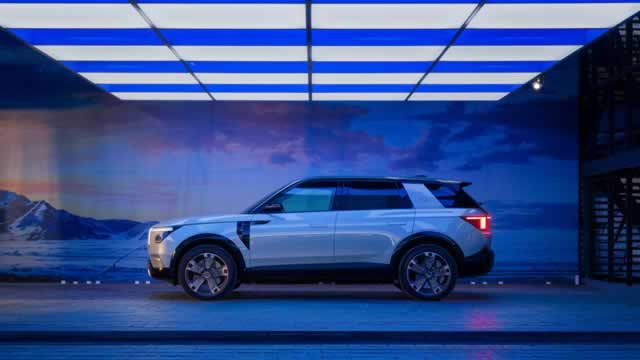
Uber investing up to $1.25 billion in Rivian, eyes 50,000-car expansion of robotaxi fleet
Yahoo Finance· 2026-03-19 12:00
Core Insights - Rivian will supply Uber with up to 50,000 fully autonomous robotaxis in exchange for up to $1.25 billion in funding, with initial deployments starting in San Francisco and Miami in 2028 and plans to scale to 25 cities by 2031 [1][2] Group 1: Partnership Details - Uber and its fleet partners will purchase 10,000 Rivian R2 robotaxis, with an option to purchase an additional 40,000 by 2030 [1] - The initial $300 million investment from Uber is subject to regulatory approval and certain autonomous milestones [2] - Rivian's CEO expressed excitement about the partnership, highlighting the integration of data and technology in their autonomous solutions [3] Group 2: Competitive Landscape - Uber has signed multiple deals with other partners, including a collaboration with Lucid to create a robotaxi service using up to 20,000 Lucid EVs and a partnership with Waymo to summon robotaxis on Uber's platform [4][5] - Rivian's R2 robotaxis will utilize Rivian's in-house autonomous solution, differentiating it from other partnerships [4] Group 3: Financial Implications - The deal represents a significant opportunity for Rivian, providing a safety net with at least 10,000 R2s on order and a substantial investment to support its path to profitability [6] - Rivian recently announced pricing for the R2 midsize electric SUV, with the R2 Performance starting at $57,990 and the R2 Premium starting at $53,990 [7]
Uber and Rivian Partner to Deploy up to 50,000 Fully Autonomous Robotaxis
Businesswire· 2026-03-19 12:00
Core Viewpoint - Uber and Rivian have formed a partnership to accelerate the deployment of fully autonomous R2 robotaxis, with plans to launch 10,000 units by 2028 and expand to 25 cities by 2031 [2][6]. Investment and Financial Commitment - Uber will invest up to $1.25 billion in Rivian through 2031, contingent on achieving specific autonomous milestones, with an initial commitment of $300 million [3][6]. - The partnership includes an option for Uber to negotiate the purchase of up to 40,000 additional autonomous Rivian R2 vehicles starting in 2030 [4][6]. Deployment Plans - Initial deployments of the R2 robotaxis are set for San Francisco and Miami in 2028, with plans to scale to 25 cities across the US, Canada, and Europe by the end of 2031 [2][4][6]. - If all milestones are met, thousands of unsupervised Rivian R2 robotaxis will be operational by the end of 2031 [4]. Technological Advancements - Rivian's third-generation autonomy platform, expected to launch in late 2026, will feature a multi-modal sensor suite including 11 cameras, 5 radars, and 1 LiDAR, powered by in-house RAP1 chips capable of 1600 TOPS of AI compute performance [5]. - The partnership aims to leverage Rivian's data flywheel and advanced technology to enhance the safety and convenience of autonomous driving [5]. Leadership Statements - RJ Scaringe, CEO of Rivian, expressed excitement about the partnership, emphasizing its potential to accelerate the path to level 4 autonomy [5]. - Dara Khosrowshahi, CEO of Uber, highlighted the importance of Rivian's integrated approach to vehicle design and manufacturing, which aligns with Uber's goals [5].

Uber taps Rivian to build robotaxis in deal worth up to $1.25B
TechCrunch· 2026-03-19 12:00
Core Insights - Rivian is partnering with Uber to develop thousands of robotaxis based on its upcoming R2 SUV, with a potential deal value of up to $1.25 billion [1][2] - Uber's initial investment in Rivian is $300 million, with plans to purchase 10,000 fully autonomous R2 robotaxis for deployment in San Francisco and Miami by 2028 [1][2] - The partnership aims to launch robotaxis in 25 cities across the U.S., Canada, and Europe by the end of 2031, exclusively on Uber's network [2] Company Developments - Rivian has not yet started production of the R2 SUV, with manufacturing expected to begin by June, and has not tested a self-driving system for robotaxis [3] - The R2 robotaxi is planned to be manufactured at Rivian's Georgia factory, which is still under construction [3] - Rivian's CEO, RJ Scaringe, emphasizes automated driving technology as a priority, shifting from a rules-based framework to an AI-first strategy for driver assistance [4] Technological Advancements - Rivian's automated driving system, the Rivian Autonomy Platform, debuted in 2024 with the second-generation R1 vehicles, aiming for hands-free driving and point-to-point navigation features [6] - Future upgrades will include a lidar sensor and an "autonomy computer" capable of processing 5 billion pixels per second, expected in a version of the R2 SUV by late 2026 [7] - Rivian aims to achieve a "personal L4" level of autonomy, allowing vehicles to operate without human intervention in specific areas [8] Industry Context - Rivian is not the first electric vehicle startup Uber has partnered with for robotaxi development; previous collaborations include Lucid Motors and Nuro [10] - Uber has established partnerships with over 25 robotaxi or autonomous vehicle companies globally, with notable collaborations including Waymo [11]
HORIZONROBOT-W(09660) - 2025 Q4 - Earnings Call Transcript
2026-03-19 12:00
Financial Data and Key Metrics Changes - The company achieved a revenue of CNY 3.76 billion in 2025, representing a year-on-year increase of 57.7% with a gross margin of 64.5% [27][48] - The adjusted operating loss was CNY 2.37 billion, primarily due to increased R&D investments [28][51] - The automotive solutions revenue surged by 53.9%, with product solutions revenue increasing by 144% to CNY 1.62 billion [48][49] Business Line Data and Key Metrics Changes - The automotive grade SoC solution annual shipments exceeded 4 million units, with a year-on-year growth of about 39% [16] - The market share for advanced intelligent assisted driving models reached 14.4%, nearly tying with Huawei [14] - The proportion of SoC shipments supporting NOA functions reached 45%, nearly five times the shipments during the same period in 2024 [16][18] Market Data and Key Metrics Changes - The penetration rate of intelligent assisted driving in China's passenger car market reached 68%, with advanced models accounting for 43% of all intelligent vehicles [4][5] - In the price range under CNY 200,000, domestic brands captured a significant market share, with NOA level models rising from 5% to over 50% [6][15] Company Strategy and Development Direction - The company aims to help Chinese domestic brands go global, assist joint venture brands in the domestic market, and support overseas brands in their transition to intelligent driving [23][25] - The focus is on democratizing intelligent assisted driving and expanding into higher price ranges with advanced solutions [6][19] - The company plans to launch the Agentic Car SoC and OS, aiming to provide a comprehensive intelligent driving experience [38][39] Management's Comments on Operating Environment and Future Outlook - Management expressed confidence in maintaining a high gross margin above 60% due to the high-margin nature of the SoC and software licensing business model [71][76] - The company anticipates a strong growth momentum with a projected revenue growth rate of around 60% for the coming years [36][59] - The management highlighted the importance of R&D investment in maintaining technological leadership and preparing for future autonomous driving capabilities [29][50] Other Important Information - The company has secured nominations from 11 automakers for over 40 overseas models, indicating strong global expansion efforts [23] - The HSD solution has become a significant factor in consumer car-buying decisions, with 83% of top-tier models featuring HSD [20][21] Q&A Session Summary Question: What drives the strong revenue growth and how can it sustain a 60% CAGR? - Management indicated that the growth is driven by increased shipping volumes and higher average selling prices (ASP), with expectations for continued strong performance in 2026 [55][59] Question: What is the shipment target for HSD in 2026? - The company estimates HSD shipments will reach about 400,000 units in 2026, with significant progress in negotiations with top-tier automakers [66] Question: What is the outlook on gross margin performance? - Management is confident in maintaining gross margins above 60% due to the high-margin nature of their business model and locked-in memory supply prices [69][76] Question: How is the company addressing memory price hikes? - The company has locked in memory supply prices and believes that fluctuations will not significantly impact gross margins, focusing on innovation and cost efficiency [72][76] Question: What differentiates Horizon from competitors like Qualcomm and NVIDIA? - Horizon's integrated hardware and software solutions provide a competitive edge, allowing for a seamless transition from intelligent driving to cockpit integration, unlike competitors who struggle with comprehensive solutions [84][86]
Uber to invest up to $1.25 billion in EV maker Rivian in deal to launch 50,000 robotaxis
CNBC· 2026-03-19 12:00
Group 1 - Uber Technologies plans to invest up to $1.25 billion in Rivian Automotive to deploy up to 50,000 robotaxis by 2031 [1][2] - The deal includes an initial investment of $300 million, subject to regulatory approval, with expectations for Uber to purchase 10,000 autonomous R2 vehicles and an option for 40,000 more starting in 2030 [2][4] - The R2 robotaxis are expected to be available exclusively through Uber's platform in 25 cities across the U.S., Canada, and Europe, with initial launches planned for San Francisco and Miami in 2028 [5] Group 2 - The partnership reflects a resurgence in the autonomous vehicle and robotaxi market, which is projected to be a multitrillion-dollar industry [3] - Previous attempts by companies, including Uber, to achieve robotaxi deployment have not met targets, indicating challenges in the sector [3]