智能手机

Search documents
阿里系 App 禁止豆包手机登录;库克被曝出现“不明原因手部颤抖”;众擎T800人形机器人一脚踹倒自家CEO | AI周报
AI前线· 2025-12-07 05:33
Group 1 - Doubao mobile assistant faces login restrictions from Alibaba apps, including Taobao and Xianyu, due to security measures [3][4] - Doubao assistant claims it does not bypass authentication for sensitive operations and plans to adjust AI capabilities in certain scenarios [4][5] - The initial release of Doubao mobile assistant sold out quickly, with second-hand prices significantly higher than the official price, indicating strong market interest [5] Group 2 - The T800 humanoid robot from Zhongqing Robotics gained attention after a video showed it kicking the CEO, highlighting the robot's capabilities [6][9] - T800 is priced starting at 180,000 yuan and features advanced joint modules and sensory technology for various tasks [9] Group 3 - Jiuyue Automotive is undergoing bankruptcy restructuring, with plans to introduce new investors while Baidu seeks to exit its investment [10][11] - The restructuring faces challenges due to significant debt, estimated at 7 billion yuan, with major stakeholders like Geely and Baidu involved [11] Group 4 - Apple CEO Tim Cook reportedly experiences hand tremors, raising concerns among employees amid significant executive turnover at the company [12][13] Group 5 - New Oriental employee expresses dissatisfaction with the company's overtime culture, leading to internal repercussions [14][15] - The employee's complaints highlight issues with work-life balance and management practices within the company [14][15] Group 6 - Canon's Zhongshan factory announced generous severance packages for laid-off employees, with compensation reaching up to 400,000 yuan [16] - The factory's closure is part of a broader trend of production capacity shifting to Southeast Asia [16] Group 7 - A controversy arose when the chairman of Aibisen rejected the position due to dissatisfaction with a salary of 4.35 million yuan, which was later attributed to a clerical error [17] Group 8 - Meta's CEO Mark Zuckerberg plans to shift focus away from the metaverse, with the division having incurred losses exceeding 70 billion dollars [18][19] Group 9 - Microsoft denies reports of lowering AI sales targets, clarifying the distinction between growth goals and sales quotas [20][21] Group 10 - Nvidia launched the Alpamayo-R1 model, aimed at advancing autonomous driving technology through a new visual language model [28][29] Group 11 - Li Auto introduced its first AI smart glasses, Livis, with a starting price of 1,699 yuan after subsidies, aiming to integrate AI capabilities into daily life [30][31] Group 12 - MiHoYo's co-founder launched an AI chat model, AnuNeko, which aims to create interactive NPCs for gaming, reflecting a unique approach to AI integration in games [33][34] Group 13 - SenseTime released the NEO architecture for multimodal models, marking a significant advancement in AI capabilities [35]






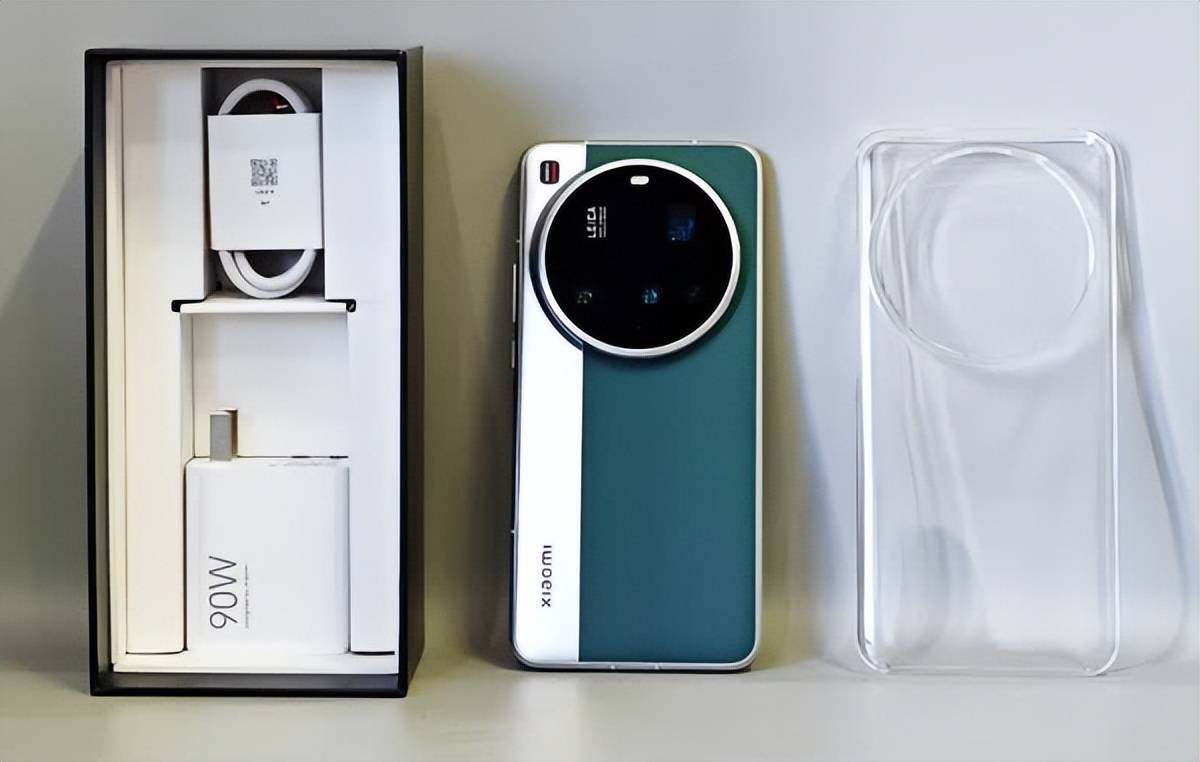
小米“影像机皇”售价再创新低,16GB+512GB+1英寸徕卡英寸,雷军直接清仓
Sou Hu Cai Jing· 2025-12-07 02:37
Core Viewpoint - The high-end flagship smartphones are increasingly focusing on imaging capabilities rather than being lightweight and easy to handle, with brands emphasizing features like large sensors and advanced optical zooms [1][3]. Group 1: Performance - The Snapdragon 8 Gen 2 chip provides excellent performance with a 3nm process, achieving over 3 million points on AnTuTu, ensuring smooth operation for daily tasks and gaming [5]. - The Xiaomi 15 Ultra maintains stable performance with good thermal management, even during intensive gaming sessions [5]. Group 2: Display - The device features a 2K curved display with a peak brightness of 3200 nits, ensuring visibility even in bright outdoor conditions, and a 120Hz adaptive refresh rate for smooth scrolling [7]. Group 3: Imaging Capabilities - The Xiaomi 15 Ultra is equipped with a one-inch main sensor, the Sony LYT-900, calibrated by Leica, delivering high-quality images with accurate colors and details, especially in low-light conditions [7][9]. - The 200MP periscope telephoto lens covers a focal length range from 14mm to 100mm, providing sharp images even at 10x hybrid zoom, outperforming many competitors [9]. Group 4: Battery and Charging - The device boasts a 6000mAh battery, capable of lasting a day and a half under heavy use, with fast charging options of 90W wired and 80W wireless [9][11]. Group 5: Weight and Usability - The Xiaomi 15 Ultra weighs 226g, which may be cumbersome for users who prefer lightweight devices, but it offers a premium imaging experience for those willing to compromise on weight [9][11].

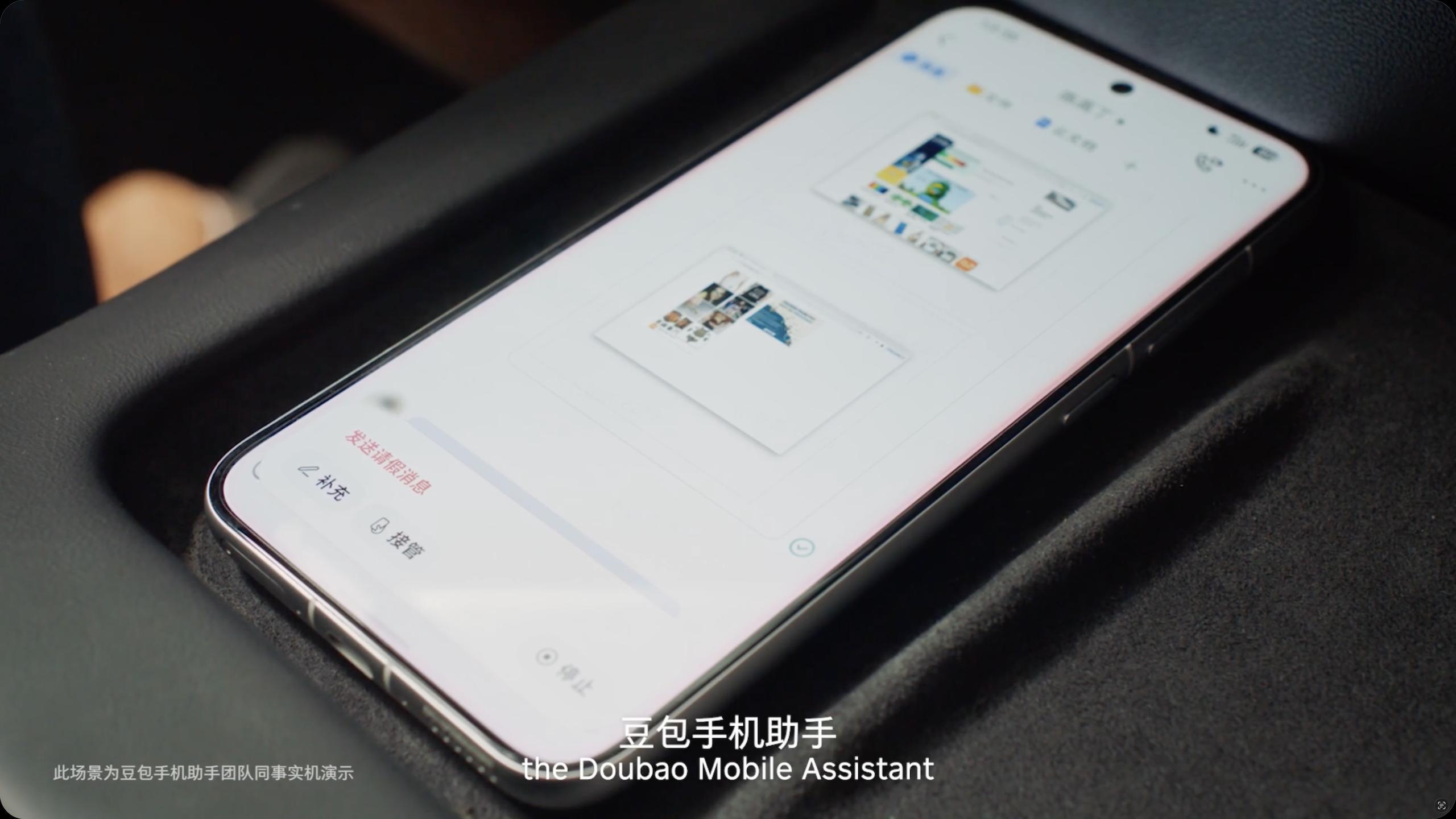
豆包手机助手,辟谣否认!
Xin Lang Cai Jing· 2025-12-07 00:52
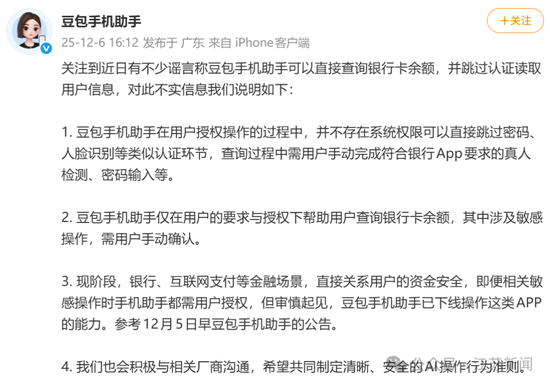
Core Viewpoint - The company has refuted rumors that its mobile assistant can directly check bank account balances and bypass authentication processes, emphasizing the importance of user authorization and security measures [1][5]. Group 1: Security and User Authorization - The mobile assistant does not possess system permissions to skip password or facial recognition steps during the balance inquiry process, requiring users to manually complete necessary authentication [2][6]. - The assistant only helps users check their bank account balances with their explicit request and authorization, and sensitive operations require user confirmation [2][6]. - To ensure user safety in financial scenarios, the assistant has discontinued the capability to operate with banking apps, even with user authorization [2][6]. Group 2: Product Development and Release - The mobile assistant is based on the Doubao APP and developed in collaboration with mobile manufacturers at the operating system level [4][7]. - On December 1, the Doubao team released a technical preview version of the mobile assistant, with the Nubia M153 prototype available for a limited release, priced at 3499 yuan [4][7]. - The Nubia M153 is currently offered in a white 16GB+512GB version and is targeted at developers and tech enthusiasts, with a cautionary note for ordinary consumers regarding the product's functionality [4][7]. Group 3: Future Collaboration and Standards - The company plans to actively communicate with relevant manufacturers to establish clear and safe AI operational guidelines [3][6].
“豆包手机”爆火,多家 APP “开启”禁用
程序员的那些事· 2025-12-06 14:58
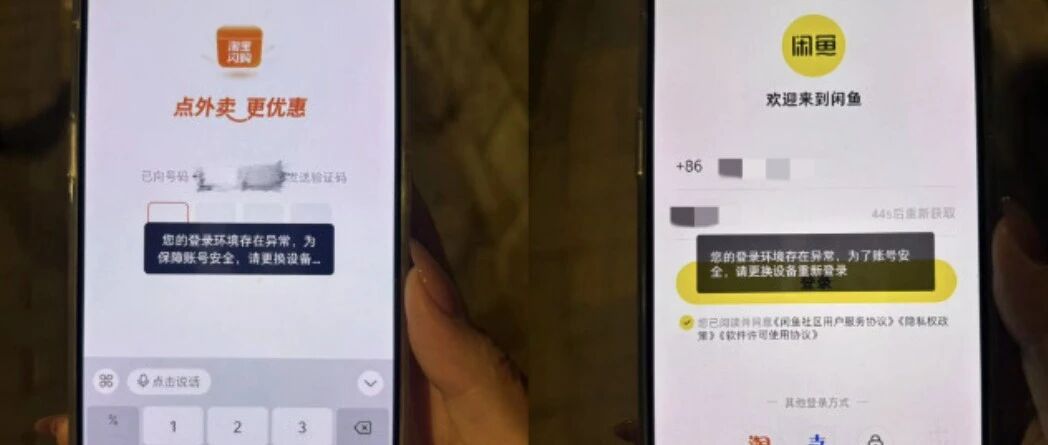
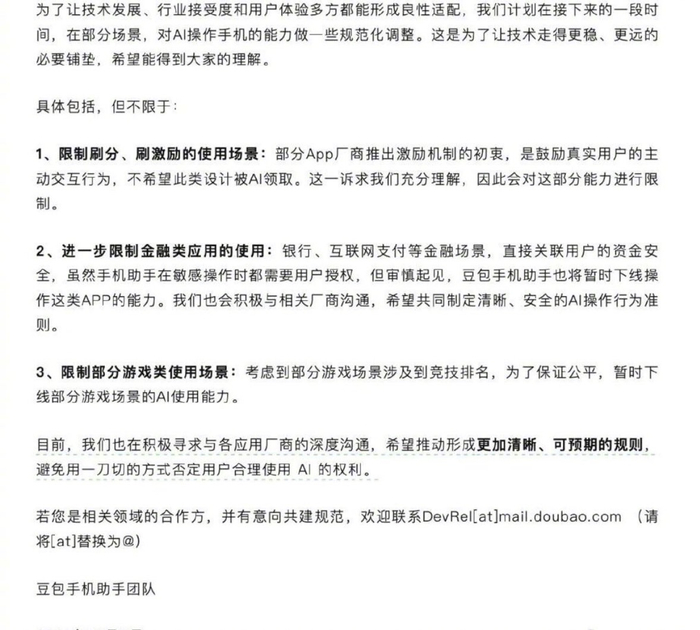
Group 1 - The core viewpoint of the article is that the Doubao mobile assistant team announced adjustments to the AI capabilities for operating mobile phones in response to public scrutiny, aiming for better technology development and user experience [2][4]. - The adjustments will involve three main scenarios: limiting the use of AI for app score manipulation and incentives, restricting its use in financial applications like banking and internet payments, and limiting its use in competitive gaming scenarios [4]. - The Doubao team is actively seeking in-depth communication with application vendors to establish clearer and more predictable rules regarding the use of their technology [4]. Group 2 - Users reported issues with the Doubao mobile assistant, particularly when using it to operate WeChat, which triggered a "login environment exception" message, causing forced logouts [7]. - Following these incidents, several major applications, including Taobao, Alipay, and various banking apps, began to restrict or disable access for the Doubao mobile assistant, highlighting concerns over commercial conflicts and security privacy [7].
5家消费公司拿到新钱;豆包手机陷入无法使用微信争议;蜜雪冰城开始卖早餐了|创投大视野
36氪未来消费· 2025-12-06 11:27
Group 1 - The high-end gold jewelry brand "寶蘭" has completed over 100 million RMB in Series A financing, led by Challenger Capital, with funds allocated for brand enhancement, omnichannel layout, supply chain resilience, and talent empowerment [3][4] - "江苏云闪送," a smart delivery company, has raised 30 million RMB in Series A financing, focusing on upgrading its intelligent scheduling system, expanding its national service network, and building a logistics ecosystem [5][6][7] - Pollo AI, a video content creation platform, has secured 14 million USD in funding, with over 20 million registered users and achieving breakeven in May this year [8][9] Group 2 - "优理奇机器人" (UniX AI) has announced a total of 300 million RMB in financing across two rounds, indicating market recognition of its integrated strategy in embodied intelligence [9][10] - "戴盟机器人" has completed a strategic round of financing worth over 100 million RMB, aimed at advancing technology breakthroughs, product development, and global market expansion [11] - Shanghai Lin Qingxuan Cosmetics Group has updated its IPO application, reporting a 98.3% year-on-year revenue growth in the first half of 2025, with a net profit increase of 109.86% [19][21][22] Group 3 - "蜜雪冰城" has initiated a breakfast program in select cities, expanding its product offerings beyond beverages [23][24] - "茶百道" launched a winter product, the "豆乳黑麒麟," which sold over 200,000 cups on its first day, highlighting the trend of seasonal beverage innovation [25][26] - "奈雪的茶" has appointed actress Gao Yuanyuan as its brand ambassador and introduced a low-GI fruit tea, marking a significant product innovation in the tea beverage sector [27][28] Group 4 - The 2025 New Year film season has surpassed 2.5 billion RMB in total box office revenue, with "疯狂动物城2" leading the charts [29] - China's esports industry revenue reached 29.33 billion RMB in 2025, showing a 6.4% year-on-year growth, with live streaming accounting for 80.81% of the revenue [30] - Global smartphone production reached 328 million units in Q3 2025, reflecting a 7% year-on-year increase, driven by seasonal demand and new product launches [31]


豆包手机助手遭多款APP禁用,金融游戏场景使用受限
3 6 Ke· 2025-12-06 05:30
Core Insights - The Doubao mobile assistant team announced adjustments to AI capabilities in response to public concerns and operational challenges following the launch of their new features [1][2][3] - The Doubao mobile assistant, developed in collaboration with ZTE, allows users to automate tasks across multiple applications, but has faced restrictions from various financial and gaming apps due to security and privacy concerns [1][2] Group 1: AI Capabilities and Adjustments - Doubao plans to implement regulatory adjustments to AI operations on mobile devices to ensure technology development aligns with industry acceptance and user experience [3] - The AI assistant's ability to perform tasks such as price comparison and order placement across platforms has garnered significant market attention, but has also raised issues regarding data privacy and security [2][3] Group 2: Restrictions Imposed by Other Apps - Major apps, including WeChat, Taobao, Alipay, and several banking applications, have begun to restrict or disable access to Doubao due to concerns over security and operational integrity [2] - The Doubao team acknowledges the need to limit AI capabilities in specific scenarios, particularly in financial applications, to safeguard user funds and comply with industry standards [4] Group 3: Specific Limitations on AI Usage - The company will restrict the use of AI in scenarios involving score manipulation and incentivized interactions to maintain the integrity of user engagement [4] - Financial applications will see a temporary suspension of AI operations to prioritize user security, despite the assistant requiring user authorization for sensitive actions [4] - Certain gaming scenarios will also have AI capabilities limited to ensure fairness in competitive rankings [4]
豆包手机助手调整权限!AI手机是洪水,但不是猛兽?
3 6 Ke· 2025-12-06 04:21
Core Viewpoint - The emergence of AI Agents, such as Doubao's mobile assistant, is causing significant disruption in the mobile internet ecosystem, raising concerns among internet companies about security and operational integrity [1][3][11] Group 1: AI Agent Functionality and Impact - Doubao's mobile assistant has faced backlash due to its AI capabilities, which require user authorization for operations, leading to restrictions on certain financial apps [1][3] - The GUI-Agent technology aims to streamline user interactions by automating tasks, but it challenges the traditional app entry logic, potentially disrupting existing traffic and monetization strategies [3][4] - The ability of AI Agents to perform tasks without user interaction could lead to a breakdown of the app ecosystem, as users may not engage with advertisements or app interfaces [4][11] Group 2: Fairness and Regulation Concerns - The automated nature of AI Agents raises fairness issues, particularly in competitive environments like gaming, where it could disrupt balance and integrity [5][11] - Internet companies are cautious about AI Agents due to existing risk management systems that do not account for AI-driven task completion, leading to a "rules vacuum" [11][16] Group 3: Future of AI Agents and Internet Services - The relationship between AI Agents and apps is expected to evolve, with potential new frameworks for collaboration, including digital signatures and whitelisting for AI operations [16][19] - As AI technology matures, the interaction model will shift, with users providing direction while AI Agents execute tasks, creating a collaborative structure rather than a competitive one [19][20] - The ongoing "smart assistant war" is anticipated to simplify mobile operations, ultimately transforming how users interact with their devices [20]
小米集团-W(1810.HK):业绩提升两眼 汽车业务与舆情承压
Ge Long Hui· 2025-12-06 03:58
Core Viewpoint - Xiaomi Group achieved impressive results in Q3 2025, with multiple indicators reaching historical highs, including total revenue of 113,120.73 million RMB, a year-on-year increase of 22.28% [1] Financial Performance - Q3 net profit reached 12,270.87 million RMB, marking a year-on-year increase of 129.35%, a historical high (adjusted) [1] Business Development - Xiaomi's traditional core business, smartphones, remains a key pillar, generating revenue of 46 billion RMB. The combined revenue from smartphones and AIoT reached 84.1 billion RMB in the quarter [1] - The IoT and lifestyle consumer products segment generated revenue of 27.6 billion RMB, reflecting a year-on-year growth of 5.6% [1] - The automotive business achieved a significant breakthrough, with revenue from smart electric vehicles and A1 innovation reaching 29 billion RMB, a year-on-year increase of over 199%, including 28.3 billion RMB from automotive sales. The quarterly delivery volume exceeded 100,000 units, a record high since its launch [1] Profit Forecast - The company expects total revenue for 2025 to reach 409.82 billion RMB, representing a growth of 12%, with an operating profit margin of 5.88%. The corresponding PE ratios for 2025-2027 are projected to be 22.24, 18.60, and 15.02 times, respectively [1]
折叠屏战争进入“三折时代”,三星却已输掉中国市场
Feng Huang Wang Cai Jing· 2025-12-05 13:50
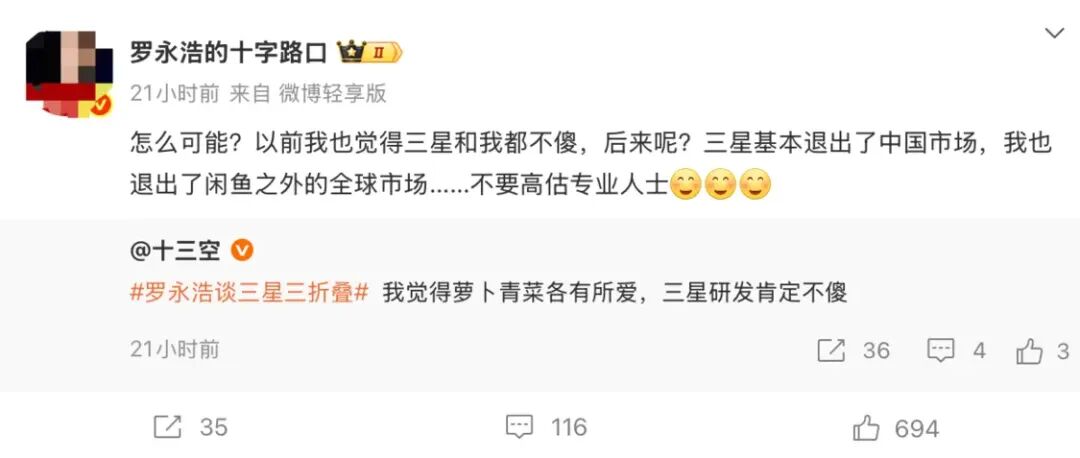
Core Viewpoint - Samsung's new Galaxy Z TriFold smartphone faces significant market scrutiny and criticism, particularly from tech influencer Luo Yonghao, as it attempts to compete in the high-end market against Huawei's offerings. The shift in market share dynamics highlights Samsung's declining presence in China, which has become the largest market for foldable smartphones globally [1][3]. Group 1: Product Overview - The Galaxy Z TriFold features a dual-hinge design that allows it to unfold into a tablet-sized device, with a launch price of approximately 3.59 million KRW (around 17,302 RMB or 2,450 USD) set for December 12 in South Korea [1]. - The device boasts a thickness of only 3.9 mm when unfolded and includes a 5600 mAh battery, marking the largest battery capacity for Samsung's foldable phones to date [2]. Group 2: Market Position and Strategy - Samsung's market strategy contrasts with Huawei's localized approach, focusing on global product line standardization and scale innovation, which has led to concerns about product-market fit in China [3]. - As of Q3 2025, Samsung is absent from the top five smartphone manufacturers in China, a stark contrast to its 20% market share in 2013 [4][6]. Group 3: Historical Context and Challenges - Samsung's decline in China began around 2016, exacerbated by the Note 7 battery incident and the rise of local brands like Huawei and Xiaomi, leading to a market share drop to below 1% by 2022 [5]. - Despite regaining the top position globally with a 20.8% market share in 2023, Samsung's struggles in the Chinese market are attributed to intense competition and a lack of localized strategies [6][9]. Group 4: Future Outlook - The success of the Galaxy Z TriFold in China remains uncertain, as Samsung's internal challenges and market dynamics pose significant hurdles [10].
从尝鲜到依赖:华为如何占据折叠屏用户的「主力心智」
36氪· 2025-12-05 13:35
Core Viewpoint - The article discusses the evolution and acceptance of foldable smartphones, highlighting their transition from skepticism to mainstream adoption, driven by user demand for enhanced productivity and multitasking capabilities [3][4][44]. Group 1: Market Evolution - The foldable smartphone market has seen significant growth, with projected shipments in China exceeding 10 million units by 2024, indicating a shift from niche to mainstream [4][42]. - Initial skepticism surrounding foldable phones mirrors the early criticism faced by the first iPhone, showcasing a pattern of innovation facing initial resistance [3][4]. - The article emphasizes that foldable screens are now recognized as essential tools for productivity, particularly for business and creative professionals [4][6]. Group 2: User Trust and Hardware Reliability - User concerns about hardware reliability, such as screen durability and hinge stability, are critical for gaining trust in foldable devices [8][10]. - Over 50% of users prioritize screen reliability, with a focus on scratch resistance and crease control, followed by hinge stability and overall performance [10][12]. - Huawei has positioned itself as a leader in the foldable market by addressing these hardware concerns through innovative engineering solutions [12][19]. Group 3: Technological Innovations - The introduction of advanced hinge designs, such as the waterdrop hinge, has significantly improved the durability and user experience of foldable phones [13][14]. - The transition from CPI to UTG (Ultra-Thin Glass) for screen materials has enhanced the hardness and usability of foldable devices, making them more appealing to consumers [15][16]. - Huawei's Mate X7 features multiple upgrades, including a robust hinge and advanced materials, providing enhanced protection and user experience [18][19]. Group 4: User Experience and Ecosystem - The article highlights the importance of seamless user experience, with over 55% of users concerned about the functionality of screen switching and multitasking capabilities [21][23]. - Foldable phones enable unique use cases in social media, photography, and productivity, allowing for more efficient workflows and creative expression [26][27][30]. - Huawei's diverse foldable product lineup caters to various user needs, from social interaction to productivity, reinforcing the brand's commitment to enhancing user experience [29][30]. Group 5: Future Outlook - The foldable smartphone category is positioned as a reliable alternative to traditional smartphones, with 95.5% of consumers expressing willingness to switch to foldable devices in the future [44]. - Huawei's approach focuses on long-term user trust and experience rather than short-term sales spikes, indicating a strategic vision for the future of mobile technology [41][44].