
云计算

Search documents
从“水疗数据中心”到“太空服务器”:能源危机正在重构云计算产业
Hua Er Jie Jian Wen· 2025-12-29 10:18
Core Insights - The explosive growth of AI workloads is challenging traditional digital infrastructure, necessitating a rethinking of data center designs to address energy and physical limits [1] - The industry is approaching a "critical point" where existing data center architectures will no longer suffice, prompting tech giants and infrastructure developers to seek "plug-and-play" solutions to alleviate grid pressure and meet sustainability goals [1][2] Ground Infrastructure Reconstruction - Traditional data centers are failing to effectively support AI workloads and meet sustainability requirements, with only 46% of IT decision-makers believing their current designs can achieve sustainability goals [3] - Lenovo, in collaboration with architectural firm Mamou-Mani and engineering company AKT II, proposed radical design concepts such as "data villages" and "data center spas" to utilize excess heat for community benefits [3][4] - Existing practices of heat reuse have been implemented, such as Equinix using waste heat for the Paris Olympics swimming pool and Microsoft deploying underwater data centers for cooling [4] Space-Based Initiatives - The competition to deploy servers in orbit is intensifying, with projects like Google's "Suncatcher," Alibaba's "Three-Body Computing Constellation," and Nvidia-supported Starcloud exploring the potential of space environments [5] - Starcloud has already sent a chip into space, achieving performance 100 times greater than previous on-orbit GPU capabilities, highlighting the appeal of vacuum cooling and continuous solar energy in space data centers [5] Challenges and Barriers - The commercial viability of near-Earth data center deployment remains uncertain due to high launch costs, radiation protection requirements, and maintenance difficulties [6] - Regulatory barriers and cost considerations are significant challenges for both ground innovations and space initiatives, with the U.S. having a more favorable regulatory environment compared to Europe [7] - The need for regulatory adjustments to keep pace with technological innovations is critical, as simply renovating old facilities may not be effective [7]

跨境电商用云量同比大增105%背后:成本降六成 AI调用量翻十倍
Zheng Quan Shi Bao Wang· 2025-12-29 08:52
Core Insights - The growth story of China's cross-border e-commerce in 2025 is now driven by AI, with significant increases in AI usage reported by platforms like "Chuhai Jiang" [1][2] - The overall cloud usage for cross-border e-commerce companies served by Tencent Cloud is projected to grow by 105% year-on-year, with AI product usage increasing by 70% [1] Group 1: AI Integration and Impact - "Chuhai Jiang" reported a 1000% increase in weekly AI function calls within six months of launching certain AI features [1] - Over 80% of the business transactions on the platform have become fully AI-driven, supporting 150,000 cross-border sellers [1] - The integration of AI capabilities has transformed from being an efficiency tool to becoming the core engine driving global business [1] Group 2: Cost Savings and Business Growth - Companies are optimizing their IT architecture through deep cloud integration, allowing them to reallocate saved costs into AI development [2] - "Chuhai Jiang" achieved a 60% reduction in overall IT costs by migrating global operations to Tencent Cloud, which has enabled further investment in AI products [2] - The strategy of "cloud cost reduction leading to AI investment and business growth" is becoming a common consensus among leading outbound Chinese companies [2] Group 3: Collaborative Initiatives - Tencent Cloud and "Chuhai Jiang" launched the "Cloud Initiation Outbound Plan," offering significant cloud vouchers and free trial periods for AI tools to over 150,000 cross-border e-commerce businesses [2] - Future collaborations will focus on areas such as private AI customer service and vertical large models for industry segments, aiming to help more Chinese brands expand globally [2]

跨境电商用云量同比大增105%背后:成本降六成,AI调用量翻十倍
Zheng Quan Shi Bao Wang· 2025-12-29 08:48
Core Insights - The growth story of China's cross-border e-commerce in 2025 is now driven by AI, with significant increases in AI usage reported by leading platforms like "Chuhai Jiang" [1][2] - Over 80% of business transactions on "Chuhai Jiang" have become fully AI-driven, supporting 150,000 cross-border sellers [1] - Tencent Cloud reported a 105% year-on-year increase in cloud usage among cross-border e-commerce companies, with AI product usage growing by 70% [1] Group 1 - "Chuhai Jiang" has seen a 1000% increase in weekly AI feature usage within six months of launch [1] - The integration of AI capabilities with Tencent Cloud's underlying technology has enhanced the platform's service offerings, including video content creation [1] - The shift to AI-driven operations is transforming cross-border e-commerce from efficiency tools to core business engines [1] Group 2 - The deep cloud integration allows sellers to produce high-quality commercial videos instantly, even without professional teams [2] - "Chuhai Jiang" achieved a 60% reduction in overall IT costs by migrating global operations to Tencent Cloud, enabling reinvestment into AI initiatives [2] - Over 90% of leading Chinese internet companies engaged in cross-border e-commerce have chosen Tencent Cloud as their partner [2] Group 3 - Tencent Cloud and "Chuhai Jiang" launched the "Cloud Initiation Overseas Plan," offering substantial cloud vouchers and free AI tool usage to support cross-border e-commerce [2] - Future collaborations will focus on private AI customer service and vertical large models to assist more Chinese brands in global expansion [2]
火山引擎成为2026年春晚独家AI云合作伙伴
Xin Jing Bao· 2025-12-29 07:49
Group 1 - The core point of the article is that Huoshan Engine has been announced as the exclusive AI cloud partner for the 2026 Spring Festival Gala, leveraging advanced multimodal models and cloud computing technology [1] - Huoshan Engine, a cloud and AI service platform under ByteDance, has provided technical support for Douyin's Spring Festival Gala live broadcasts over the past five years, including facilitating 70.3 billion red envelope interactions during the 2021 gala [1] - With the advent of the AI era, Huoshan Engine has developed an AI cloud-native architecture centered around large models, rapidly becoming the leading AI cloud service provider in China's public cloud large model market [1] Group 2 - Huoshan Engine reported that its Doubao large model has reached an average daily call volume of 63 trillion tokens, serving 90% of mainstream domestic automotive brands, 80% of top securities firms, 80% of systemically important banks, 80% of leading coffee and tea brands, 70% of 985 universities, and 9 of the top ten global smartphone manufacturers [1]
火山引擎成为总台春晚独家AI云合作伙伴,助力打造科技春晚
Nan Fang Du Shi Bao· 2025-12-29 06:28
据火山引擎披露,豆包大模型最新的日均调用量已达到63万亿Tokens,服务了国内九成主流汽车品牌、 八成头部券商、八成系统重要性银行、八成头部咖啡茶饮品牌、七成985高校、9家全球出货排名前十的 手机厂商等,为人们的生活和学习工作创造更好的体验。 火山引擎表示,将与中央广播电视总台携手,用AI云技术点亮千家万户的团圆时刻,共赴一场科技与 温情交融的新春之约。 作为字节跳动旗下的云和AI服务平台,火山引擎在过去5年为抖音的春晚直播提供技术支撑,并圆满支 持了抖音在2021年总台春晚的703亿次红包互动,展现了超高并发的承载能力、极致弹性与稳定性。 随着人工智能时代到来,火山引擎构建以大模型为核心的AI云原生架构,快速成长为中国公有云大模 型市场份额最高的AI云服务商。 12月28日,中央广播电视总台《2026年春节联欢晚会》分会场发布。活动现场宣布,火山引擎成为2026 年春晚独家AI云合作伙伴。基于业界前沿的多模态大模型和云计算技术,火山引擎将深度参与到总台 春晚节目、线上互动和视频直播中,以科技之力为这场全球华人的团圆盛宴添彩。 中央广播电视总台总经理室党委书记任学安与火山引擎副总裁兰杰发布合作。 ...

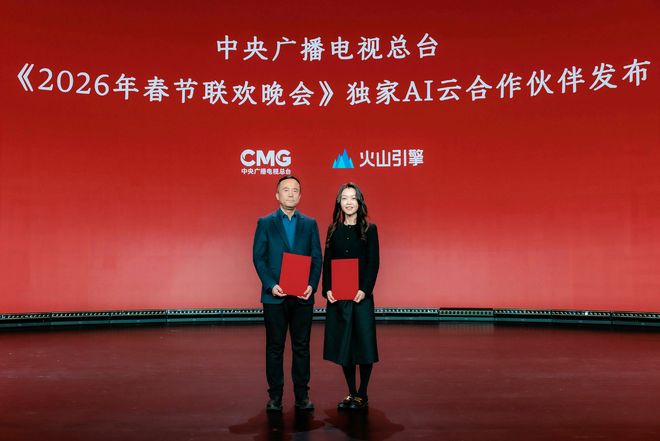
火山引擎成为总台春晚独家AI云合作伙伴,助力打造科技春晚新体验
Jin Rong Jie Zi Xun· 2025-12-29 06:10
12月28日,中央广播电视总台《2026年春节联欢晚会》分会场发布。活动现场宣布,火山引擎成为2026年春晚独家AI 云合作伙伴。基于业界前沿的多模态大模型和云计算技术,火山引擎将深度参与到总台春晚节目、线上互动和视频直 播中,以科技之力为这场全球华人的团圆盛宴添彩。 火山引擎表示,将与中央广播电视总台携手,用AI云技术点亮千家万户的团圆时刻,共赴一场科技与温情交融的新春 之约。 财经频道更多独家策划、专家专栏,免费查阅>> 责任编辑:栎树 作为字节跳动旗下的云和AI服务平台,火山引擎在过去5年为抖音的春晚直播提供技术支撑,并圆满支持了抖音在 2021年总台春晚的703亿次红包互动,展现了超高并发的承载能力、极致弹性与稳定性。 随着人工智能时代到来,火山引擎构建以大模型为核心的AI云原生架构,快速成长为中国公有云大模型市场份额最高 的AI云服务商。 据火山引擎披露,豆包大模型最新的日均调用量已达到63万亿Tokens,服务了国内九成主流汽车品牌、八成头部券 商、八成系统重要性银行、八成头部咖啡茶饮品牌、七成 985 高校、9 家全球出货排名前十的手机厂商等,为人们的 生活和学习工作创造更好的体验。 图:中央广 ...
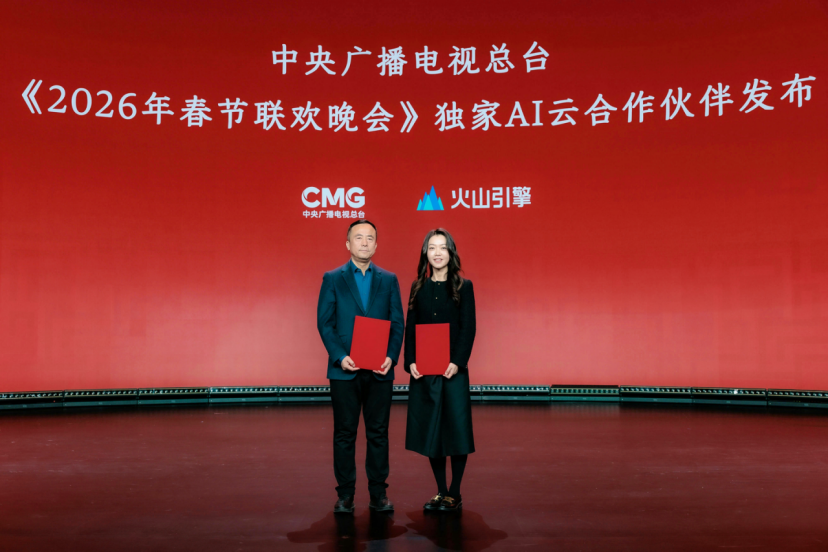
火山引擎成为总台春晚独家AI云合作伙伴
Xin Lang Cai Jing· 2025-12-29 04:37
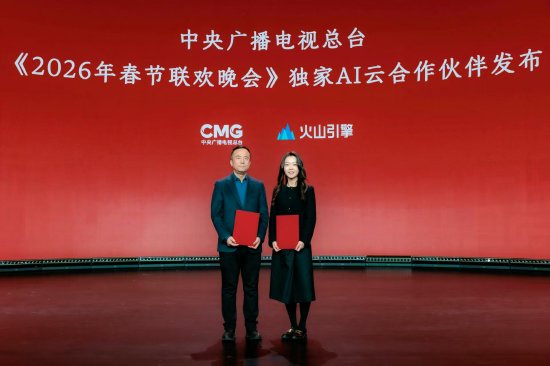
责任编辑:韦子蓉 新浪科技讯 12月29日下午消息,中央广播电视总台《2026年春节联欢晚会》分会场宣布,火山引擎成 为2026年春晚独家AI云合作伙伴。 火山引擎表示,基于业界前沿的多模态大模型和云计算技术,火山引擎将深度参与到总台春晚节目、线 上互动和视频直播中,以科技之力为这场全球华人的团圆盛宴添彩。 据了解,作为字节跳动旗下的云和AI服务平台,火山引擎在过去5年为抖音的春晚直播提供技术支撑, 并圆满支持了抖音在2021年总台春晚的703亿次红包互动。 责任编辑:韦子蓉 新浪科技讯 12月29日下午消息,中央广播电视总台《2026年春节联欢晚会》分会场宣布,火山引擎成 为2026年春晚独家AI云合作伙伴。 火山引擎表示,基于业界前沿的多模态大模型和云计算技术,火山引擎将深度参与到总台春晚节目、线 上互动和视频直播中,以科技之力为这场全球华人的团圆盛宴添彩。 据了解,作为字节跳动旗下的云和AI服务平台,火山引擎在过去5年为抖音的春晚直播提供技术支撑, 并圆满支持了抖音在2021年总台春晚的703亿次红包互动。 ...
【人民日报】科学有答案 创新无止境——八位院士眼中的二〇二五
Ren Min Ri Bao· 2025-12-29 03:02
Core Insights - China's technological innovation is expanding into various fields, including quantum technology and lunar research, with significant breakthroughs expected by 2025 [4][6] - The "14th Five-Year Plan" emphasizes the importance of technology and innovation, highlighting a commitment to advancing scientific research and applications [4] - The development of deep space exploration and quantum computing is seen as crucial for China's strategic technological autonomy and future economic growth [8][17] Group 1: Deep Space Exploration - Major breakthroughs in lunar research are anticipated, including the discovery of new mineral types from samples returned by the Chang'e 6 mission, which will enhance understanding of lunar oxidation mechanisms [5] - The Tianwen-2 probe is set to conduct close-range exploration of a near-Earth asteroid, with sample return expected by the end of 2027 [5] - Future projects include the construction of a lunar research station, manned lunar missions, and exploration of Mars and Jupiter, aiming to enhance capabilities in deep space science and resource utilization [5][6] Group 2: Quantum Computing - Quantum computing is identified as a key technology for future strategic autonomy, requiring advancements in hardware and software integration [8] - China's third-generation superconducting quantum computer, "Benyuan Wukong," has been successfully deployed, participating in numerous collaborations across various sectors [9] - The development of quantum computing is likened to building a rocket, emphasizing the need for a comprehensive approach from hardware to software [8] Group 3: Brain-Computer Interfaces - Brain-computer interface technology is evolving to connect biological and machine intelligence, with advancements in decoding and encoding neural signals [10] - Clinical applications of brain-computer interfaces are emerging, with significant progress in invasive and non-invasive technologies [12] - The technology aims to redefine the boundaries of intelligence by integrating carbon-based and silicon-based systems [11] Group 4: Hydrogen Energy - Hydrogen energy is positioned as a vital component of the renewable energy revolution, complementing electricity and addressing sustainability challenges [17] - The development of hydrogen fuel cells is expanding into various sectors, including transportation and machinery, with China making significant strides in related technologies [18] - The strategic importance of hydrogen energy is underscored by its potential to facilitate a low-carbon energy transition [17] Group 5: Talent Development in Research - The cultivation of research talent is critical for supporting high-level technological independence, with a focus on aligning educational programs with national strategic needs [20] - Young researchers are increasingly prominent in key national projects, indicating a shift towards a younger demographic in scientific achievements [21] - A supportive environment for basic research is essential, requiring stable funding and a culture that encourages innovation and tolerates failure [22][23]
计算机行业“一周解码”:特斯拉引领智驾突围,全球科技巨头共谋AI芯未来
Bank of China Securities· 2025-12-29 02:51
Investment Rating - The industry investment rating is "Outperform the Market," indicating that the industry index is expected to perform better than the benchmark index over the next 6-12 months [34]. Core Insights - Tesla's FSD v14 has passed the "physical Turing test," marking a significant milestone in the practical application of AI in smart driving. This version enhances the system's ability to recognize emergency vehicles and obstacles, and introduces real-time navigation and path planning features [10][12]. - Samsung is advancing towards a fully self-developed mobile GPU, with plans to integrate its own architecture into future chips, aiming to establish a complete edge AI product ecosystem [13][15]. - Volcano Engine has launched an AI-native cloud solution for the gaming industry, which is expected to drive innovation and efficiency across the entire game development lifecycle [17][19]. Summary by Sections Smart Driving - Tesla's FSD v14 has been recognized for its advanced capabilities, including improved recognition of emergency vehicles and dynamic path planning, which signifies a shift from experimental to practical applications in smart driving [10][12]. - Companies to watch in the smart driving sector include Horizon Robotics, Black Sesame Intelligence, and various Robotaxi firms [3]. Semiconductor and AI - Samsung's new Exynos 2600 chip, developed using 2nm technology, represents a significant step towards self-sufficiency in chip design, with plans to expand its GPU applications beyond smartphones to include AI-specific chips [13][15]. - The shift to self-developed GPUs is expected to enhance Samsung's control over product differentiation and innovation in AI applications [15]. Gaming Industry - Volcano Engine's AI-native cloud solution is being adopted by over 80% of leading gaming companies, facilitating innovation in game creation, development, and operation [17][19]. - The company aims to provide a comprehensive support system for partners, enhancing their delivery capabilities and market competitiveness [18][19].
从谷歌AI体系看应用叙事
2025-12-29 01:04
Summary of Key Points from Google AI Conference Call Industry and Company Overview - The conference call primarily discusses Google's advancements in AI technology, particularly focusing on the Gemini model and its applications in various sectors, including search, video generation, and cloud services [1][2][10]. Core Insights and Arguments Gemini 3.0 Pro Features - Gemini 3.0 Pro, released on November 19, 2025, supports multiple input modalities: text, images, audio, video, and PDF files [2] - It features a context window of 1 million tokens, significantly enhancing its reasoning capabilities compared to competitors like OpenAI's GPT 5.1 and Anthropic's Claude 4.5 [2][3] - The model's single-user session duration reached 7.2 minutes by October 2025, surpassing ChatGPT's 6 minutes, indicating increased user engagement [5] Video Generation Model VO Series - The VO series, particularly VO 3.0 and VO 3.1, has achieved native audio-visual synchronization and precise video control, maintaining a competitive price of $0.4 per second [4][6] - VO 3.1 utilizes a latent space diffusion model integrated with Transformer modules, enhancing its ability to generate high-quality video content [6] NanoBanana Image Generation Model - NanoBanana, developed on the Gemini framework, excels in high-resolution image generation and real-time knowledge integration through Google Search [7][8] - It operates on a token-based pricing model, charging $120 per million tokens, with each image consuming between 1,200 to 2,000 tokens [9] Financial Performance and AI Impact - Google's Q3 2025 revenue reached $102.3 billion, with search revenue at $56.5 billion and cloud revenue at $15.1 billion, driven by AI enhancements [11] - AI has become a key growth driver across Google's services, improving ad monetization efficiency and increasing cloud customer acquisition by 34% year-over-year [11][14] Additional Important Insights Market Trends and User Engagement - The AI browser Perplexity saw its traffic nearly double in 2025, with domestic AI search users reaching approximately 500 million and daily queries around 2 billion [15] - The domestic large model market experienced a daily token usage of 10.2 trillion, with significant contributions from companies like Alibaba and ByteDance [21] B2B and C2B Developments - Google Workspace has integrated AI capabilities into its suite, surpassing 1 million paid enterprise users by Q3 2025, enhancing user willingness to pay [23] - The company is actively engaging with various industries, including manufacturing and electronics, to deploy its AI models for applications like content creation and customer service [19][20] Future Investment Directions - The advancements in multi-modal models like NanoBanana Pro and VO 3.1 indicate potential growth areas in creative fields and consumer hardware, suggesting a broad market for AI applications in both B2B and C2B contexts [24]
