
电子商务

Search documents
京东全球购在进博会期间升级国家馆 深化跨境新模式
Zheng Quan Ri Bao· 2025-11-09 11:07
Core Insights - JD Global Purchase announced an upgrade to its "National Pavilion" project during the 8th China International Import Expo, aiming to become the preferred platform for overseas brands entering the Chinese market [1] - The upgrade focuses on deepening cooperation with national official institutions, ensuring product authenticity and reliable sourcing through official authorization from embassies and chambers of commerce [1] - The initiative is part of JD's "100 Billion, 1,000 Products New Growth Plan," which aims to introduce 1,000 overseas brands and achieve a cumulative sales growth of 10 billion yuan over three years [1] Summary by Sections National Pavilion Project - The National Pavilion is a core component of JD Global Purchase's growth strategy, designed to integrate resources and empower digitalization for overseas brands [1] - The project provides a full-chain solution for overseas brands, from entry and marketing to fulfillment, showcasing unique products and cultural experiences to Chinese consumers [1] Strategic Implementation - JD Global Purchase has successfully tested the effectiveness of its "online and offline dual-channel linkage" through previous projects like the "ASEAN National Pavilion" [1] - The company aims to leverage its cross-border supply chain capabilities to offer a wider range of quality imported products to Chinese consumers [1] Value Proposition for Overseas Brands - JD Global Purchase offers a low-threshold, high-efficiency entry channel for overseas brands, allowing them to quickly access the Chinese market without significant resource investment [2] - The platform utilizes JD's efficient supply chain infrastructure and marketing ecosystem to help brands accurately target their customer base and achieve rapid sales growth [2] - Comprehensive brand empowerment and services are provided, covering everything from sourcing to warehousing, marketing, and after-sales support, thereby reducing operational costs and risks for brands [2]

马斯克点赞小鹏机器人;游戏科学冯骥:全球最赚钱10款游戏里,7款与中国公司相关丨Going Global
创业邦· 2025-11-09 10:09
Group 1 - The "Top 50 Globalization Brands Loved by Generation Z" list has been released, with Tencent, Xiaomi, and SHEIN ranking in the top three, and SHEIN leading in the e-commerce category [5][6][7] - TikTok Shop achieved approximately $19 billion in global sales in Q3 2025, with the U.S. market contributing $4 to $4.5 billion, marking a 125% increase from Q2 [8] - AliExpress saw a 181% month-on-month increase in downloads in Japan, becoming the fastest-growing e-commerce app in the market [9] Group 2 - Elon Musk praised Xpeng's robot, indicating that the robot market will be dominated by Tesla and Chinese companies [11][15] - Former Tmall International beauty head joined Sam's Club, raising discussions about the "Alibaba-ization" of the brand [18] - Zhongtong Cloud Warehouse Technology completed nearly 200 million yuan in Series A financing to expand its logistics network and overseas warehouse business [19][20] Group 3 - The latest model from "The Dark Side of the Moon" has a training cost of $4.6 million, which is lower than that of ChatGPT [21][22] - Seven out of the ten highest-grossing games globally are related to Chinese companies, highlighting China's significant role in the gaming industry [24] - Horizon Robotics and Volkswagen announced a partnership to develop advanced driving assistance and autonomous driving systems [26][27] Group 4 - Tesla shareholders approved Musk's compensation plan, which could reach up to $1 trillion based on the company's market value and performance targets [30] - Apple plans to launch its first low-cost MacBook under $1,000 in the first half of next year to compete in the entry-level market [31] - Meta's internal documents revealed that about 10% of its revenue in 2024 could come from scam ads and prohibited product advertisements [32][33] - Nissan is selling its global headquarters for 97 billion yen (approximately 4.5 billion yuan) as part of its restructuring efforts [34][36]


京东集团战略执行委员会委员缪晓虹:助力产业降本增效
Jing Ji Ri Bao· 2025-11-09 05:49
Core Viewpoint - JD.com has played a significant role in enhancing consumer services, reducing costs in industries, and participating in national emergency supply efforts through its supply chain infrastructure over the past 20 years [1] Group 1: Technological Innovation - The company aims to reshape the supply chain and the real economy through technology, acting as a connector and amplifier for industries [1] - JD Logistics' Asia No.1 smart industrial park utilizes unmanned warehouses to achieve 24-hour delivery for self-operated orders, providing equal service timeliness to consumers nationwide [1] - Digital technology is seen as a fundamental innovation path to nourish the roots of the real economy [1] Group 2: Disruptive Innovation - Last year, JD.com entered the food delivery sector, leveraging its supply chain advantages to establish a "fresh central kitchen + instant delivery network," which reduced restaurant production costs by 15% and delivery materials by 30% [1] - The company emphasizes that innovation should not be about blindly chasing trends but rather about using its core capabilities to address long-standing cost and experience pain points in the industry [1] Group 3: Open Supply Chain Ecosystem - JD Logistics' Super Brain system and "Lingxi" model are open to 920,000 active merchants and over 100 industrial belts, promoting an open supply chain ecosystem [1] - The company believes that innovation should not be monopolized but should allow small and medium-sized enterprises to access world-class supply chain technology at low costs [1] Group 4: Commitment to R&D - JD.com plans to increase its investment in research and development, embracing change with an open mindset and promoting the application of cutting-edge technologies [1] - The company aims to support the high-quality development of the real economy through practical efforts [1]
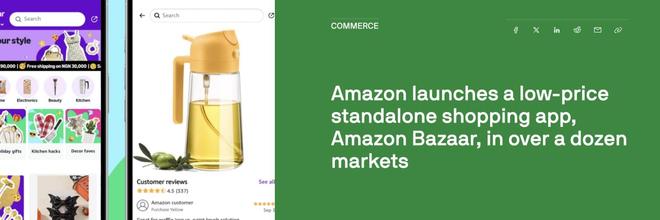
亚马逊在多个市场推出独立低价购物应用Amazon Bazaar
Huan Qiu Wang Zi Xun· 2025-11-09 04:42
Core Insights - Amazon has launched a new low-cost shopping platform named Amazon Bazaar, targeting users in Asia, Africa, and Latin America [1][3] - The platform operates independently from the main Amazon app, with most products priced below $10, some as low as $2 [1][3] Market Expansion - The service is currently available on Android and iOS, with plans for a dedicated app [3] - Initial launch countries include the Philippines, Kuwait, Qatar, Bahrain, Oman, Peru, Ecuador, Argentina, Costa Rica, Jamaica, and Nigeria, with further expansion planned [3] Competitive Positioning - Amazon Bazaar overlaps with the previously launched Amazon Haul, which operates as part of the main site and competes with Shein and Temu [3] - The company aims to compete with Chinese shopping apps that are popular among younger and low-income demographics [3] Product Offering - Bazaar will feature "hundreds of thousands" of affordable products across categories like fashion, home, and lifestyle [4] - Users can shop using their existing Amazon accounts, with support for major credit cards and free shipping on orders meeting local minimums [4] Customer Engagement - The platform includes features like user reviews, star ratings, and interactive elements such as social raffles and promotions [4] - New users can enjoy a 50% discount on their first order to encourage trial [4]

淘宝已被调查
券商中国· 2025-11-08 23:39
Group 1 - The core issue of the article revolves around the investigation into Taobao's "霸屏广告" (dominant screen ads) during the "双11" (Double Eleven) shopping festival, which has garnered significant public attention [1][3] - The Hangzhou Yuhang District Market Supervision Administration confirmed that it has received reports regarding the chaotic situation of Taobao's ads and has referred the matter to the Cyber Supervision Bureau for investigation [1][3] - Users have reported that opening various mobile apps often leads to forced redirection to Taobao's event page, severely impacting user experience [3]


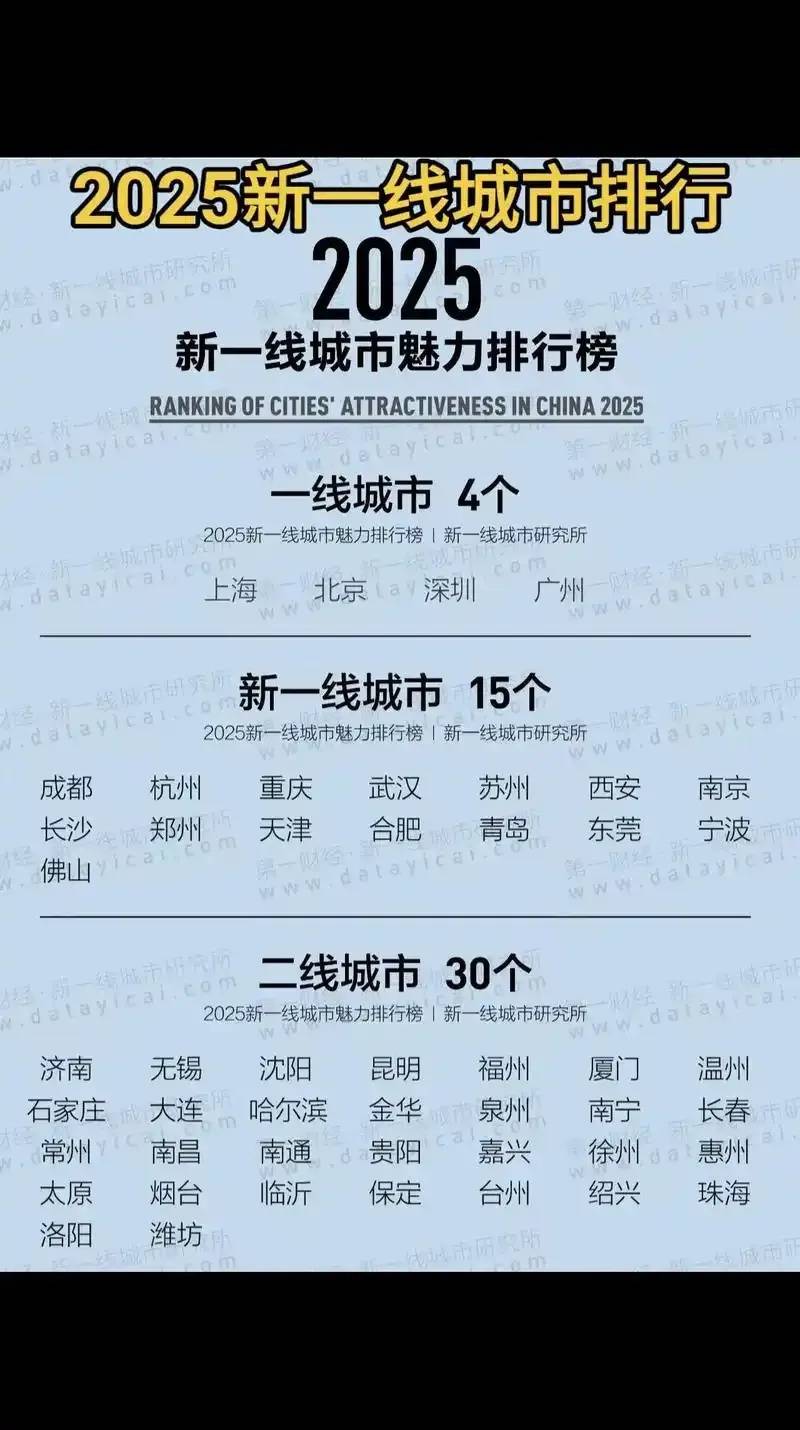
2025新一线竞争力新榜
Sou Hu Cai Jing· 2025-11-08 15:43
Core Insights - The 2025 New First-Tier Cities Competitiveness Ranking reflects a significant transformation in China's urban landscape, highlighting the rise of new first-tier cities as emerging economic engines [1][12] - The ranking is based on a comprehensive evaluation of multiple dimensions, including economic growth, innovation, talent attraction, sustainability, and social welfare indicators, aiming to identify cities that will lead regional and national development in the next five years [1][4] Economic Indicators - The ranking utilizes a composite scoring system that includes GDP growth rate, technology innovation index, talent attraction, sustainable development capacity, and social welfare metrics [1][4] - The top cities, such as Chengdu and Hangzhou, are recognized for their robust digital economy and innovative environments, with Chengdu expanding in AI and big data, while Hangzhou is known for e-commerce and fintech [3][4] City Rankings - The ranking lists cities like Xiamen, Jinan, and Shenyang among the new first-tier cities, with Chengdu and Hangzhou often occupying the top spots due to their economic strengths [3][4] - Other notable cities include Suzhou, Nanjing, and Changsha, each with unique strengths in industrial parks, cultural tourism, and emerging technology sectors [4][8] Sustainability and Talent - Environmental sustainability and talent competition are critical factors in the competitiveness of new first-tier cities, with many cities investing in green energy and low-carbon technologies [4][7] - The net inflow of talent is positively correlated with GDP growth rates, indicating that cities attracting young talent are likely to enhance their competitiveness [4][7] Social Welfare Indicators - The ranking also considers social welfare indicators such as healthcare, education, and quality of life, emphasizing that a competitive city must have a strong economic foundation alongside a livable environment and comprehensive public services [7][8] - Cities like Hangzhou and Chengdu are noted for their advancements in smart city initiatives and community cultural development, which contribute to their overall competitiveness [7][8] Future Trends - The future competitiveness of new first-tier cities will increasingly focus on innovation-driven growth and digital transformation, with sectors like AI, biotechnology, and green technology becoming key battlegrounds [7][8] - The ranking serves as a reflective tool for cities to improve and provides valuable insights for investors, businesses, and residents in making informed decisions [7][12]
倍特悍(广州)电子商务有限公司成立 注册资本10万人民币
Sou Hu Cai Jing· 2025-11-08 13:58
Core Insights - A new company, Beitehan (Guangzhou) E-commerce Co., Ltd., has been established with a registered capital of 100,000 RMB [1] Company Overview - The company operates in various sectors including wholesale and retail of automotive parts, automotive decorative products, motorcycle parts, leather products, daily necessities, rubber products, electronic products, plastic products, and hardware [1] - The company is also involved in the manufacturing of leather products and offers services related to video production, technology services, and internet sales [1] - Additionally, the company engages in import and export activities related to goods and technology [1]
淘宝“霸屏广告”,被调查
Di Yi Cai Jing Zi Xun· 2025-11-08 13:49
Core Points - The investigation into Taobao's "screaming ads" during the Double 11 shopping festival has been confirmed by the Hangzhou Yuhang District Market Supervision Administration, following user complaints about forced redirects to Taobao when using various mobile apps [2] - The Zhejiang Provincial Market Supervision Administration indicated that Taobao, operated by Zhejiang Taobao Network Co., Ltd., is subject to local management, necessitating contact with the Yuhang District for specific details regarding the investigation [2] - Previous incidents in June and July 2021 saw Taobao fined 50,000 yuan for advertising violations and failing to curb illegal advertisements from platform merchants [3]

双十一调研:家庭消费追求“秩序感”,京东高质低价成首选平台
21世纪经济报道· 2025-11-08 13:01
Core Insights - The article emphasizes the shift in consumer behavior during the Double Eleven shopping festival, highlighting a focus on essential household goods and services, reflecting a desire for stability and quality in family consumption [1][45][46] Group 1: Household Consumption Trends - Double Eleven has become a fixed annual procurement node for families, with a high penetration rate among respondents indicating that most have either participated or added items to their carts [5] - Household daily necessities dominate the consumption landscape, with 65.9% of consumers prioritizing these items during promotions, significantly outpacing other categories like home appliances and beauty products [9][29] - Consumers are increasingly viewing household services as essential, with over half considering them a standard solution for household challenges, indicating a shift from optional to necessary spending [31][33] Group 2: Consumer Behavior and Preferences - A rational planning approach has emerged as the mainstream consumer behavior, with nearly 40% of consumers adopting a combination of stockpiling and immediate purchases, reflecting a mature shopping strategy [13][45] - The motivations behind consumer purchases include a desire for stability in daily life (56.3%), price sensitivity (55.6%), and a need to reduce daily burdens (50.11%), showcasing a multifaceted decision-making process [14][15] - Quality and price are equally important to consumers, with 52.6% prioritizing product reliability and 52.4% focusing on affordability, challenging the stereotype that promotions are solely about low prices [17][18] Group 3: Platform Preferences and Market Dynamics - JD.com has emerged as the preferred platform for purchasing daily household products and services, with over 40% of consumers favoring it due to its reliability and logistics efficiency [21][24] - The brand preference for household goods shows a strong inclination towards domestic brands, with over 60% of consumers favoring traditional and emerging Chinese brands, reflecting a growing trust in local products [23][24] - The overall household spending on daily necessities remains stable, with nearly 80% of families maintaining or increasing their expenditures, indicating a robust market for essential goods [26][29] Group 4: Service Consumption Insights - Service consumption is transitioning from optional to essential, with over 93% of respondents showing interest in service-related purchases during Double Eleven, highlighting the growing importance of service in consumer spending [35] - The main drivers for service purchases include significant discounts (44.22%), improved service quality (36.00%), and planned stockpiling (35.20%), indicating a shift towards valuing both price and quality [37] - Concerns regarding service quality and price transparency remain significant pain points for consumers, with many expressing worries about inconsistent service and unclear pricing structures [41][42]

突发!淘宝被查?
Zhong Guo Jing Ji Wang· 2025-11-08 09:50
Group 1 - The core issue revolves around the investigation of Taobao's "splash screen" advertisements during the "Double 11" shopping festival, which have been reported to disrupt user experience by forcing app redirects to Taobao's event page [1] - The Hangzhou Yuhang District Market Supervision Administration has confirmed receipt of complaints regarding these advertisements and has initiated an investigation [1] - Legal experts have pointed out that such advertisements often employ hidden and illegal methods to access and analyze sensitive user information, infringing on personal privacy rights [1] Group 2 - Taobao has faced multiple penalties for advertising violations, including fines of 50,000 yuan in June and July 2021 for failing to control illegal advertisements on its platform [2] - Users have expressed frustration with the prevalence of splash screen and "shake to redirect" advertisements across various apps, indicating a negative impact on user experience [3] - The increasing competition in the internet sector has led companies to adopt aggressive advertising strategies, often at the expense of user satisfaction and rights [3]