国防

Search documents
欧盟掀桌,27国对俄摊牌,是战是和,欧洲走到十字路口
Sou Hu Cai Jing· 2025-10-05 11:45
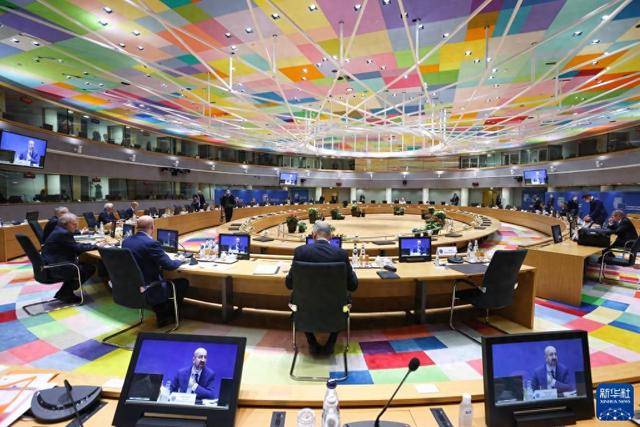
Core Points - The article highlights the increasing tensions in Europe due to a series of unusual incidents attributed to Russia, leading to a significant emergency summit of EU leaders in Copenhagen [1][3][5] Group 1: Military and Security Developments - The EU is experiencing a shift from hesitation to decisive action in response to Russia's "ambiguous tactics," with the Copenhagen summit marking a pivotal moment [7] - The French Navy intercepted a Russian oil tanker suspected of involvement in drone attacks on Denmark, indicating an escalation from economic sanctions to quasi-military actions [7] - The EU announced the initiation of four major defense projects, including space defense and anti-drone systems, with a budget of €150 billion, prioritizing funding for frontline countries like Poland and the Baltic states [9][10] Group 2: Internal Divisions within the EU - There are fundamental differences among EU member states regarding their stance on Russia and their capacity to bear risks, with Eastern European countries advocating for a strong response while Southern European nations express caution [12][14] - Germany's position is particularly complex, as it seeks a stronger political stance against Russia while being economically reliant on Russian energy, leading to concerns about potential economic repercussions [12][14] Group 3: Societal Impact and Public Sentiment - The ongoing "hybrid warfare" has led to a significant shift in public sentiment in Europe, with citizens transitioning from a peacetime mindset to a wartime mentality, reflected in increased sales of survival supplies [16] - The societal response includes heightened anxiety and confusion over identifying non-traditional threats, as the public grapples with the implications of drone surveillance and cyberattacks [16] Group 4: Future Outlook and Strategic Dilemmas - The Copenhagen summit left unresolved questions about whether Europe will move towards full confrontation with Russia or seek a difficult balance, with divergent views among member states [18][20] - A North European diplomat expressed the prevailing sentiment that Europe is caught in an unprecedented strategic dilemma, unable to return to past peace while unprepared for the realities of war [20]

Forbes Daily: Elon Musk Briefly Hits $500 Billion
Forbes· 2025-10-02 12:03
分组1 - Jane Goodall, a renowned zoologist and animal rights activist, passed away at the age of 91, known for her groundbreaking discoveries about chimpanzees and her influence on women in science [1] - Elon Musk has reached a new milestone, becoming the first person to be worth $500 billion, with projections suggesting he could become the world's first trillionaire by 2033 [3] - The U.S. government shutdown has led to a rally in bitcoin and gold prices as investors seek safe havens, although such shutdowns are typically short-lived with limited economic impact [4] 分组2 - U.S. private sector employment fell more than expected in August, indicating a deceleration in the job market, with potential implications for the Federal Reserve's upcoming policy meeting [5] - Saronic, an autonomous speedboat startup, raised $600 million at a $4 billion valuation, aiming to revive the U.S. shipbuilding industry by mass-producing small, cheap, autonomous vessels [6] - Axsome Therapeutics, focused on brain disorders, reported a revenue of $495 million for the 12 months ending in June, a 70% increase from the previous year, although it remains unprofitable with a net loss of $247 million [12][13]

AeroVironment (NasdaqGS:AVAV) Update / Briefing Transcript
2025-09-30 15:32
AeroVironment (NasdaqGS:AVAV) Update Summary Company Overview - **Company**: AeroVironment (AV) - **Event Date**: September 30, 2025 - **Location**: Albuquerque, New Mexico - **Focus**: Defense technology sector, specifically in Space and Directed Energy, Cyber and Mission Solutions, Uncrewed Systems, and Precision Strike and Defensive Systems [1][2][3] Key Industry Insights - **Defense Industry Context**: The defense industry is experiencing a significant shift due to underinvestment over the past 15-20 years, leading to a consolidation into seven major primes. This has created a unique opportunity for companies like AV to capitalize on increased defense spending [6][7][8]. - **Global Threat Landscape**: The current geopolitical climate is marked by rising conflicts, particularly between the U.S. and China, necessitating advanced defense solutions [7][8]. - **Government Support**: There is bipartisan support in the U.S. Congress for increased defense investments, reflecting a shift in military leaders' mindsets towards more autonomous and integrated systems [8][9]. Company Strategy and Positioning - **Market Opportunity**: AV is positioned to benefit from a projected increase in defense spending, particularly in autonomous systems, which could triple or quadruple in the next three to five years [8][9]. - **Product Portfolio**: AV's product offerings include loitering munitions, uncrewed systems, and advanced software solutions like AV Halo, which integrates AI and autonomy into defense operations [10][18][39]. - **Total Addressable Market (TAM)**: AV estimates a TAM of $70 billion to $75 billion, with significant growth potential in offensive systems ($10 billion+) and uncrewed systems ($15 billion+) [13][15]. Product Highlights - **Loitering Munitions**: Products like Switchblade and Red Dragon are expected to become billion-dollar franchises, with significant demand anticipated [18][19]. - **Uncrewed Systems**: The P550 and Jump 20 systems are critical to AV's strategy, with the latter focusing on cross-domain capabilities [41][46]. - **Directed Energy Solutions**: AV is developing laser communication systems and other directed energy products, which are expected to grow significantly [21][56]. Technological Innovations - **AV Halo Software**: A new software platform designed to integrate various defense systems, enhancing operational efficiency and effectiveness [24][25][39]. - **Modular and Open Architecture**: AV Halo is built to be modular and interoperable, allowing for rapid integration of new capabilities and third-party systems [26][27]. Financial Performance and Growth - **Revenue Projections**: For FY 2025, AV anticipates revenues exceeding $1 billion, with a strong first quarter performance of $285 million [42]. - **Scalability**: AV has the capacity to scale production significantly across various product lines, ensuring readiness to meet increasing demand [46][47]. Conclusion - **Strategic Positioning**: AV is well-positioned to leverage current market dynamics, with a strong focus on innovation, scalability, and meeting the evolving needs of defense customers. The company is confident in its ability to capture a larger share of the defense spending as it continues to develop and deliver advanced solutions [17][49][50].

国际观察|建“无人机墙” 北约与俄正面交锋?
Xin Hua Wang· 2025-09-29 00:30
Core Points - The European Union and NATO have agreed to construct a "drone wall" along the borders with Ukraine and Russia in response to increasing drone incursions [1][2] - NATO plans to enhance its military presence in the Baltic region as part of this initiative [1][2] - Russia has strongly condemned these actions, warning that Europe is closer than ever to a potential third world war and pledging to respond decisively to any perceived aggression [1][6] Group 1: Drone Wall Initiative - The "drone wall" will feature advanced reconnaissance, tracking, and interception capabilities, forming part of the EU's eastern monitoring mechanism [4] - The concept of the "drone wall" was initially proposed in 2024 but gained traction following a significant drone incursion in Poland [4] - Analysts have pointed out that the current European air defense systems are costly and inefficient against the low-cost, high-mobility drone warfare being seen in the Russia-Ukraine conflict [4] Group 2: Regional Tensions and Responses - Russia has denied accusations of planning attacks on NATO and EU countries, asserting that the drone incidents are being used by the EU and NATO to justify increased military spending and pressure on Russia [6][9] - Russian officials have warned that the "drone wall" will escalate military and political tensions in the region, potentially leading to direct confrontations [9][11] - The situation is further complicated by recent shifts in U.S. policy, particularly statements from former President Trump that have raised concerns about the future of U.S. involvement in the conflict [11][12]
高盛对冲基金主管:不对抗,不追涨,理性看多美股
Sou Hu Cai Jing· 2025-09-26 03:53
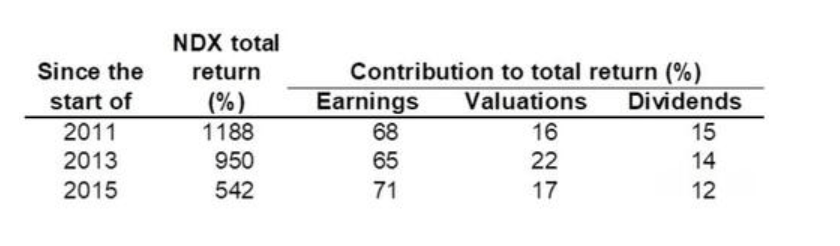
Group 1: Market Sentiment and Trends - Goldman Sachs emphasizes a rationally optimistic view on the market, supported by capital flows, historical trends, and Federal Reserve policies [1] - Recent capital flows indicate a strong buying trend in U.S. stocks, particularly in technology, with hedge funds recording the largest buy-in over the past three months [2] - The current market environment is characterized as a "stock picker's market," requiring selective investment strategies rather than broad-based approaches [1][19] Group 2: Sector Strategies - In a scenario where the Federal Reserve lowers interest rates amid economic growth, technology and discretionary consumer sectors are expected to perform well [4] - Small-cap stocks have shown strong performance recently, but there are concerns about their long-term fundamentals, suggesting that this may be a temporary opportunity [7] - The performance of the Nasdaq 100 index since 2009 has been driven primarily by earnings and dividends, rather than excessive valuation expansion [5][6] Group 3: Global Market Insights - The European market has shown stagnation after a strong start to the year, with several factors contributing to skepticism about its future performance [10] - In contrast, Japan's stock market is performing well, with expectations of positive impacts from the upcoming elections [11] - China is highlighted as another strong performer, although there is a cautious long-term outlook despite recent tactical openness [12] Group 4: Investment Themes - The ongoing developments in artificial intelligence are noted, with fluctuations in the narrative being a consistent feature over the past three years [17] - The options market shows resilience, with high implied volatility indicating increased demand for upside exposure, particularly in individual stocks [9] - The trend of the U.S. Treasury yield curve steepening contrasts with widening credit spreads in corporate bonds, indicating differing market dynamics [25]
欧洲学者: 关税战阴影下,美欧关系正面临前所未有挑战丨世界观
Zhong Guo Xin Wen Wang· 2025-09-25 03:50
Group 1: US-EU Relations - The current geopolitical landscape presents unprecedented challenges for both the US and Europe, particularly due to the EU's heavy reliance on the US and the impact of Trump's tariff policies [1][2] - The transatlantic alliance is undergoing profound changes, with increasing tensions stemming from various issues including trade conflicts and defense spending demands from the US [2][3] - Trump's administration has pushed for European countries to increase defense budgets, with a controversial proposal to raise NATO spending to 5% of GDP, exacerbating divisions between the US and Europe [2][3] Group 2: EU's Economic Position - The EU, despite its military limitations, remains a significant global economic force, comprising 27 member states that collectively wield substantial international influence [4][5] - The EU's trade dependency on the US is highlighted by the fact that over 30% of its exports go to overseas markets, with the US being particularly crucial for large economies like Germany [3][4] - Rising tariffs imposed by the US threaten to undermine the EU's economic growth, as exports to the US are vital for many European countries [3][4] Group 3: EU's Internal Dynamics - The EU's complex institutional structure poses challenges for cohesive foreign policy and trade negotiations, as individual member states have significant autonomy and veto power [7][8] - Major EU countries like Germany and France often lead foreign policy initiatives, but internal divisions can complicate collective decision-making [8] - The EU's single market facilitates trade among member states, but the intricate governance system makes it difficult to achieve unified external agreements [7][8] Group 4: China-EU Trade Relations - The current trade relationship between China and Europe is characterized by a significant trade deficit for Europe, prompting calls for greater market access for European companies in China [9][10] - Despite challenges, there is a mutual desire for cooperation, with an emphasis on diversifying supply chains to mitigate risks associated with over-reliance on any single market [9][10] - Upcoming dialogues, such as the 2025 China-EU summit, aim to deepen discussions on various issues, including medical equipment exports and technology collaboration [9][10]
小摩:美股回购潮或见顶,欧股迎来超配时刻
智通财经网· 2025-09-23 09:03
Group 1 - The core focus of the news is on the significant increase in stock buybacks in the US, with a record nearly $960 billion announced over the past twelve months, which is 1.5 times the average of the past three years [1] - The increase in buybacks is driven by strong cash flow, with S&P 500 earnings forecasts being continuously revised upward, and free cash flow yield remaining above 3% [1][2] - The passage of the Comprehensive Budget Act by Trump allows for full expensing of capital expenditures and R&D, contributing an estimated $5 per share to S&P 500 free cash flow, further supporting buyback plans [1] Group 2 - Capital expenditures are rising, with equipment investment as a percentage of GDP increasing from 2.2% to 2.5%, and the combined capital expenditures and R&D of the seven largest US companies reaching $450 billion, indicating a potential strain on cash flow as companies balance buybacks and capital spending [2] - In Europe, the Stoxx 600's buyback yield has risen to 1.5%, but remains lower than the US's 3.2%, with earnings growth projected to improve significantly in 2026 due to fiscal stimulus, providing more room for buybacks and dividends [2][3] - The asset pricing is shifting towards Europe, with the combined equity yield of buybacks and dividends showing a positive spread over German ten-year bonds, while the US market has turned negative, indicating a relative attractiveness of European equities [3] Group 3 - In the US, technology and communication services account for 64% of buyback volume, but there are concerns about the sustainability of cash flow in these sectors as AI capital expenditures rise and profitability lags [4] - The potential shift in the main players of buybacks from US tech to European traditional sectors is highlighted, with a focus on sustainable cash flow as a key determinant for future buyback activity [4] - The overall message emphasizes the importance of cash flow in investment decisions, with a clear distinction between the dynamics in the US and Europe regarding profitability and capital expenditures [4]
全球视角 | 关税威胁下,提供5500亿美元投资的美日协议能否重振美国制造业?
Sou Hu Cai Jing· 2025-09-19 23:57
Group 1 - The current capital expenditure sentiment among U.S. companies remains low, with hiring activities and investment intentions not recovering [2] - The U.S. government is exploring how to utilize Japan's commitment of $550 billion in investments to revitalize domestic manufacturing [2][5] - The latest data shows a significant decline in the U.S. manufacturing sector, with the New York Fed manufacturing index dropping from 11.9 to -8.7 in September [2] Group 2 - Economic uncertainty makes it difficult to predict a substantial return of U.S. manufacturing or re-industrialization [3] - Manufacturers are generally pessimistic about sales prospects, leading to reluctance in expanding production capacity [3] - The recent construction boom in factories was primarily driven by the Biden administration's Inflation Reduction Act and the CHIPS and Science Act, while the Trump administration cut related subsidies [3] Group 3 - The U.S.-Japan trade agreement includes a governance structure for investment distribution, with Japan expected to complete the allocation of $550 billion before the end of Trump's term [5] - Investments are targeted at sectors critical to economic and security interests, including semiconductors, pharmaceuticals, and energy [5] - An investment committee led by U.S. Commerce Secretary Ross will oversee the execution and management of specific projects [5] Group 4 - The mechanism established by the trade agreement provides significant control to the U.S. government, while Japan has limited power to influence project types [6] - Japan can technically reject U.S. proposals but is more likely to refuse funding due to lack of support for specific projects [6] - The U.S. retains the right to impose tariffs, which serves to enhance leverage over Japan to fulfill investment commitments [6] Group 5 - Recent statements from U.S. officials suggest that trade agreements will lead to unprecedented levels of factory construction in the U.S. [7] - The term "capital call" is used to describe the process of requesting funds from committed investors for project financing [7] Group 6 - Many multinational companies have announced billion-dollar investment plans since Trump took office, attributed to the "Trump effect" [8] - However, some of these investment plans were initiated or announced during the Biden administration [8] - The timeline for these investment commitments remains uncertain, with significant lead times required for factory construction [9] Group 7 - Current tariff policies have led to profit shrinkage and investment stagnation among U.S. companies [9] - For instance, John Deere reported a significant decline in sales and operating profits due to tariff-related costs [9] - The uncertainty surrounding economic policies has caused companies to adopt a wait-and-see approach, delaying investments and reducing hiring [9] Group 8 - Recent court rulings may lead to adjustments in tariff policies, with the legality of Trump's tariff actions under review [10] - Many U.S. companies are hesitant to seek government financial assistance due to concerns over long-term repayment obligations [10] - Even with new investments in the U.S., manufacturers remain heavily reliant on global markets for raw materials and components [10]

关税威胁下,提供5500亿美元投资的美日协议能否重振美国制造业?
Di Yi Cai Jing· 2025-09-19 06:46
Group 1: Economic Context - The willingness of U.S. companies to invest remains low, with recruitment activities and investment intentions not recovering [1] - The U.S. manufacturing sector is showing signs of weakness, as evidenced by the New York Fed manufacturing index dropping from 11.9 to -8.7 in September [1] - Consumer confidence has not shown significant improvement, contributing to the overall pessimism in the manufacturing outlook [1] Group 2: U.S.-Japan Trade Agreement - The U.S. government is exploring how to utilize Japan's commitment of $550 billion to revitalize domestic manufacturing [1] - The trade agreement includes a governance structure for investment decisions, with Japan required to complete the allocation of the $550 billion before the end of Trump's term [3] - Investments are expected to focus on sectors critical to economic and security interests, including semiconductors, pharmaceuticals, and energy [3][4] Group 3: Investment Mechanism - The investment mechanism allows the U.S. to submit project plans for Japanese review, with Japan required to respond within 45 days [4] - Profits from projects will initially be split evenly until Japan recoups its investment, after which the U.S. will receive 90% of profits [4] - The structure provides significant control to the U.S. government over the investment process, while Japan has limited power to influence project selection [4] Group 4: Uncertainty and Corporate Response - Many multinational companies have announced large-scale investment plans, but the actual implementation remains uncertain due to changing policy environments [6] - Tariff policies have led to profit shrinkage and investment stagnation among U.S. companies, with John Deere reporting a $300 million increase in costs related to steel and aluminum imports [6][7] - The current economic uncertainty has caused companies to adopt a wait-and-see approach, delaying investments and reducing hiring [7] Group 5: Supply Chain Dependencies - U.S. manufacturers remain highly dependent on global markets for raw materials and components, with 69% of intermediate inputs sourced domestically and nearly one-third reliant on imports [8] - Approximately 94% of U.S. imports by value are industrial goods, highlighting the importance of global supply chains for U.S. manufacturing operations [8]
美方不清楚 俄称波兰也不确定 波领空无人机事件依旧扑朔迷离
Yang Shi Xin Wen· 2025-09-14 01:15
Core Viewpoint - The incident involving drones entering Polish airspace has raised significant geopolitical tensions, with various parties attributing different origins and intentions to the drones, leading to a complex situation that may escalate further. Group 1: Incident Overview - On the night of the 9th, multiple drones entered Polish airspace, prompting the Polish military to take emergency measures and shoot down some of the drones. The Polish government claims the drones originated from Russia, while Russia denies this assertion [1]. - U.S. Secretary of State Rubio stated that it is unclear whether the drone incident was intentional or accidental, labeling it as "unacceptable and dangerous" [1][3]. - Polish Prime Minister Tusk refuted former President Trump's suggestion that the drone incident might have been a mistake, asserting that it was not an error [1]. Group 2: International Reactions - Russian UN representative Vasily Nebenzya criticized Poland for hastily blaming Russia without providing evidence, suggesting that the drones might have come from Ukraine [3]. - Ukrainian President Zelensky described the drone incursion as a "calculated" act and called for strong measures against Russia from allies [7]. - NATO Secretary-General Mark Rutte announced the initiation of "Eastern Sentinel" military operations to bolster defense in the eastern flank of the alliance, marking the drone incident as a significant breach of NATO airspace [7]. Group 3: Polish Military Response - On the 13th, Poland and its allies conducted "preventive" air operations in response to the drone threat, which included closing an airport in Lublin for about two hours [8]. - The Polish military began "Flame Storm" exercises involving real combat training with anti-tank missiles and drones, part of the larger "Steel Defender-25" exercise, which will involve over 30,000 troops from Poland and NATO countries [8]. Group 4: Speculations and Concerns - Some experts have expressed skepticism regarding the intentions behind the drone incident, suggesting that if Russia intended to provoke NATO, it could lead to broader conflict [11]. - The UN has stated it cannot verify the claims surrounding the drone incident, highlighting the uncertainty and complexity of the situation [11].